REVIEW · GENOA
2 Hours Private Historical Tour in Genoa
Book on Viator →Operated by Treecycle · Bookable on Viator
Genoa can feel like a puzzle—this tour helps you solve it. This 2-hour private historical loop gets you from the waterfront area into the medieval center with a local driver-guide, so you can focus on streets, churches, and palaces instead of buses, parking, or getting lost. I especially like how it starts in a practical spot and ends right back where you started, which makes it work even if you’re on a cruise day.
Two things I love: you save your legs for the best parts of the old town, and you get guided context at every stop, not just photo ops. I also like that you’ll see major highlights plus smaller corners that you’d likely skip on your own—especially around Piazza Sarzano, Via Garibaldi, and the port area.
One thing to think about: the experience needs good weather, and if the small vehicle has a mechanical hiccup, your pacing can slip (I saw this happen in a couple of accounts). If you’re planning a tight schedule, go in with a little buffer.
In This Review
- Key reasons this Genoa tour works so well
- Price and what you actually get for it
- Meeting point at Galata Museo del Mare: easy start, less chaos
- How the route feels: quick-moving, old-town focused
- Stop 1: Piazza Sarzano and Genoa’s earliest nucleus vibe
- Stop 2: Chiesa Santi Cosma e Damiano for a fast medieval hit
- Stop 3: Via Garibaldi—where the palaces start to flex
- Stop 4: La Casa di Colombo near Porta Soprana
- Stop 5: Piazza Banchi and the old grain-market system
- Stop 6: The parvis story around Il Cittadino / Arcidiocesi di Genova
- Stop 7: Giardini Luzzati for a quick atmospheric break
- Stop 8: Piazza Raffaele De Ferrari—Genoa’s main square energy
- Stop 9: Palazzo Di San Giorgio for palace-scale context
- Stop 10: The Old Port with Renzo Piano’s waterfront plaza views
- What the best guides do (and why it shows in the reviews)
- Practical tips so you enjoy every minute
- Is this the right tour for you?
- Quick FAQ
- FAQ
- How long is the Genoa private historical tour?
- How much does the tour cost?
- Is this a private tour?
- Is pickup available?
- Where does the tour start and end?
- What language is the tour in?
- Do the stops require paid entry?
- What happens if the weather is bad?
- Final call: book it or skip it
Key reasons this Genoa tour works so well
- You skip the stress of traffic and parking while still covering a lot of walking ground in a short time window
- It’s private for up to 2 people, so you can ask questions and move at your pace
- You hit a smart mix of places: early city nucleus sites, medieval churches, the grand streets of Via Garibaldi, and the Old Port
- Local driver-guides bring the city alive, with names like Eleonora, Yusuf, Sophie, and Giulia showing up in guides people were happy with
- All stops list free admission, which keeps the tour feeling low-pressure and straightforward
Price and what you actually get for it
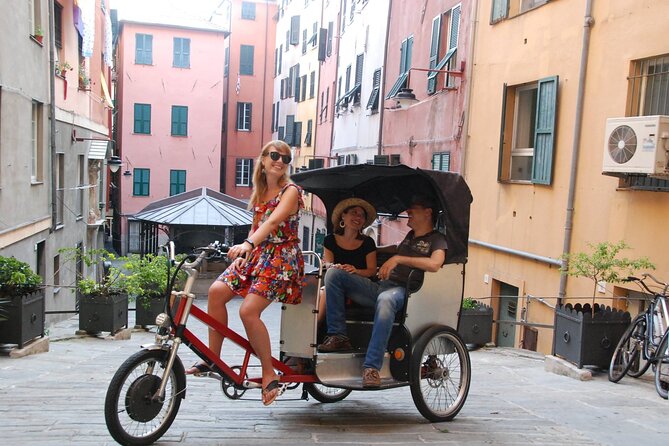
This tour costs $114.93 per group for up to 2 people, lasting about 2 hours. The value depends on your group size: if it’s just you, it’s pricier per person; if you have a second person (partner, friend, or family member), the per-person cost drops fast. Since it’s private, you’re not splitting time or attention with strangers—and you’re getting someone who can time the route around narrow lanes and the realities of walking in Genoa’s historic center.
To me, the best “money match” is this: you want a short, high-impact introduction that still feels local. If you’re spending only a day in Genoa (common with cruise schedules), two hours is often the sweet spot. You’ll come away with a mental map of where to wander next on your own.
Meeting point at Galata Museo del Mare: easy start, less chaos
The tour begins at Galata Museo del Mare, Calata Ansaldo De Mari 1, 16126 Genova (near the waterfront). The pickup detail says you’ll find the driver-guide in the square in front of the terminal exit, which matters because cruise passengers (and anyone arriving by transit) can waste time hunting for vague signs.
Also, the tour is described as near public transportation, so it’s not just for people who are already downtown. And because it ends back at the same meeting point, you avoid the common “now what?” moment that comes when tours drop you somewhere inconvenient.
How the route feels: quick-moving, old-town focused
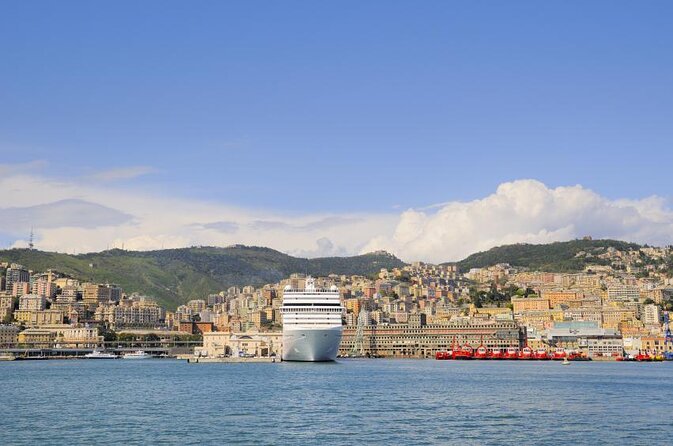
The itinerary is built as a loop through the medieval core and then back toward the port. The big practical benefit: you’re in motion without constantly negotiating tight streets on foot. That’s exactly what you want in Genoa—because the city is spectacular, but it’s also a place where you can lose time by going the wrong way.
Your guide drives while you look around. That means you can actually enjoy the views and architecture instead of spending the whole time checking a map on your phone. It’s also why so many people mention a “relaxing” pace: the vehicle handles the awkward logistics, and you spend your energy on questions, photos, and short walks when needed.
Stop 1: Piazza Sarzano and Genoa’s earliest nucleus vibe
Your first meaningful anchor is Piazza Sarzano, tied to the area said to be Genoa’s original nucleus, sometimes described with the idea of Ianua. Even if you don’t know the history terms yet, this stop gives you a strong sense of place.
Here, you’ll look toward the bell tower of Sant’ Agostino church and a small temple. On the background, you get a taste of the color and character of Ravecca street, which is the kind of narrow, living Genoa scene you’ll want to remember for later wandering.
Why it matters: this is where you start learning Genoa as a layered city—old roots, then grand expansions, then the modern port identity.
Watch for: it’s short (around 15 minutes), so keep your phone ready and take a few quick photos right away. You don’t have long here.
Stop 2: Chiesa Santi Cosma e Damiano for a fast medieval hit
Next is the Chiesa Santi Cosma e Damiano. The tour description is deliberately not over-specific, which usually means the guide is going to point out details you might miss if you arrived alone. Expect it to be part of that medieval center pattern: churches that look similar from the outside until someone explains what to look for.
Why it matters: in Genoa, a “tour of history” often means understanding how religious buildings shaped daily life, social space, and local identity.
Watch for: this stop is brief (around 5 minutes). It’s more about orientation and noticing than deep museum-style time.
Stop 3: Via Garibaldi—where the palaces start to flex
Via Garibaldi is one of Genoa’s headline streets. It’s known for majestic palaces and luxurious gardens, and it’s also a street with multiple names over time: originally Strada Maggiore, then Strada Nuova, and once called Via Aurea (the Golden Street) up until the nineteenth century. In 1882, it was renamed for Giuseppe Garibaldi.
When the route reaches this stretch, you’ll feel the city switch from “small lanes and surprise churches” to “big wealth, big architecture.” You get an easy way to see why Genoa mattered—this is the kind of street that signals power.
Why it matters: even if you only have two hours, this is the area that helps you understand the “why” behind Genoa’s grandeur.
Watch for: you’ll want to stand on the right side and angle your camera, because palace facades are tall and details are easy to miss at street level.
Stop 4: La Casa di Colombo near Porta Soprana
Then comes La Casa di Colombo, the so-called Columbus’ House, just outside the medieval walls near Porta Soprana. The current structure is probably an 18th-century reconstruction of an earlier building, and the story connects it to Columbus spending his youth here between about 1455 and 1470.
The background context is also important: it likely suffered destruction during the bombing by the French fleet under King Louis XIV during the 1684 Genoa attack. You also get a sense of how families worked from home—his father Domenico Columbus is described as running a workshop dealing with wool weaving and trade on the ground floor, with the family living upstairs.
Why it matters: history sites can feel like nameplates. This one gives you a human-scale picture of work, family life, and how conflict changes the built environment.
Watch for: it’s around 10 minutes, so don’t expect a full interpretive talk. Focus on the big story beats your guide points out.
Stop 5: Piazza Banchi and the old grain-market system
Piazza Banchi sits just off one of Genoa’s key docks. Long ago, it was the site of the old grain market. In the 12th century, it was known as piazza dei banchi because money-changers’ stalls were located under the porticoes of surrounding buildings.
This stop is a strong reminder that Genoa wasn’t only art and churches. It was trade math. Food supply, finance, shipping—those systems created the city’s power and wealth.
Why it matters: if you’re trying to connect the port to the old streets, this is a helpful bridge.
Watch for: it’s about 15 minutes—again, enough for a guided “what you’re seeing” lesson, not enough to linger.
Stop 6: The parvis story around Il Cittadino / Arcidiocesi di Genova
The tour calls out Il Cittadino – Arcidiocesi di Genova, and frames it around the idea that Genoa’s most important cathedral is the Cattedrale di San Lorenzo. The guide’s job here is to connect art on the walls and local legends to how the city grew.
You’ll get the key urban-planning idea: after the cathedral relocation and the construction of walls, the San Lorenzo area became the heart of the city. Since Genoa is known for having fewer squares than some cities, the parvis of San Lorenzo became an essential stage for social and political life in the Middle Ages.
Why it matters: this is where Genoa stops being just a pretty old town and starts becoming a civic machine.
Watch for: the listed time is about 15 minutes, so expect the key explanation and a few photo moments rather than a long walking tour.
Stop 7: Giardini Luzzati for a quick atmospheric break
Next is Giardini Luzzati, described as one of the beautiful places in the medieval historic center and treated like a bit of a surprise stop. This is one of those moments where the tour shifts from “major historical explanations” to “take in the atmosphere.”
Why it matters: it gives your brain a breather. After churches, streets, and palaces, a garden-like stop helps you remember the day as more than just dates and names.
Watch for: it’s short (around 10 minutes). Bring a bit of patience and focus; this is a “look, feel, then move on” stop.
Stop 8: Piazza Raffaele De Ferrari—Genoa’s main square energy
Piazza Raffaele De Ferrari is Genoa’s main square, dedicated to the Duke of Galliera. He donated a considerable sum in 1875 to projects that expanded the port—which ties the city’s civic life directly to maritime growth.
In the center is a monumental bronze fountain by Cesare Crosa of Vergagni (1936). The square also lines up with major buildings: Teatro Carlo Felice and the Accademia Ligustica di Belle Arti. Both were designed by Carlo Barabino. You also get edges of other landmarks, including Palazzo Ducale and palazzi linked to regional offices and the new stock exchange built in 1912.
Why it matters: by the time you reach De Ferrari, you’ve already learned “Genoa as medieval center.” This stop shows you “Genoa as a modern-minded city” with institutions and public space.
Watch for: keep an eye on the facades rather than only the fountain; Genoa rewards you for looking up and sideways.
Stop 9: Palazzo Di San Giorgio for palace-scale context
Palazzo di San Giorgio is another palatial stop in the medieval center, lasting about 10 minutes. It’s not described with heavy technical detail in the tour notes, but it still fits the route’s pattern: you’re learning how Genoa’s elite shaped the city’s built environment.
Why it matters: even a brief palace view helps you understand why Via Garibaldi and the port weren’t separate stories. Wealth flowed through shipping and banking, then materialized into architecture.
Watch for: short stop, so your guide’s pointing-out matters. Ask one question if something looks puzzling.
Stop 10: The Old Port with Renzo Piano’s waterfront plaza views
The tour ends at the Old Port, where you get a waterfront plaza designed by architect Renzo Piano. The area is set up for cultural and recreational events, panoramic views of the harbor, and easy access to well-known attractions.
Why it matters: after all the medieval lanes, this is the payoff view. Genoa’s identity is both old and maritime. The Old Port helps you connect the dots between earlier trade-focused history and what you’re seeing today.
Watch for: depending on the time of day, the light can be great for photos. Also, bring sunscreen—this is the part of the day where the sun and breeze often make the difference between comfortable and sweaty.
What the best guides do (and why it shows in the reviews)
One reason this tour has such strong ratings is how much the guide can shape the experience. People specifically praised guides like Eleonora, Yusuf, Sophie, Soufi, Giulia, Beatrice, and Lucia for being friendly, engaging, and very good at explaining what you’re looking at. That style matters because you’re not just sightseeing. You’re building a mental map.
Even in accounts where things went wrong—like a flat tire or a vehicle issue—the guide still had the job of keeping information moving and solving the problem. That’s where a good driver-guide earns trust: they can manage the city and the moment.
Practical tips so you enjoy every minute
- Start the day smart. If you’ve got limited time, schedule this earlier rather than after a long meal or day of wandering. It gives you bearings for whatever comes next.
- Dress for wind and sun. Genoa can be breezy near the water and warm in enclosed lanes. A hat and sunscreen help.
- Keep questions ready. Since many stops are short, asking one targeted question can turn a quick moment into a memorable takeaway.
- Have phone storage ready. You’ll take more photos than you expect—especially along Via Garibaldi and around the port.
Is this the right tour for you?
You should book this if:
- You want a 2-hour orientation that covers a lot of Genoa without long walks
- You’re visiting on a cruise or have a tight schedule
- You like historical context connected to streets, not just isolated landmarks
- You prefer a private experience for up to 2 people
You might choose something else if:
- You want a slow, museum-style pace with deep interior access at every stop
- Weather is likely to be rough, since the experience requires good conditions
Quick FAQ
FAQ
How long is the Genoa private historical tour?
It lasts about 2 hours.
How much does the tour cost?
It costs $114.93 per group (up to 2 people).
Is this a private tour?
Yes. It’s private, and only your group participates.
Is pickup available?
Pickup is offered. The driver is in the square in front of the terminal exit.
Where does the tour start and end?
It starts at Galata Museo del Mare, Calata Ansaldo De Mari 1, 16126 Genova, and it ends back at the same meeting point.
What language is the tour in?
The tour is offered in English.
Do the stops require paid entry?
All listed stops show admission ticket free.
What happens if the weather is bad?
The experience requires good weather. If it’s canceled due to poor weather, you’ll be offered a different date or a full refund.
Final call: book it or skip it
If you want Genoa in one organized hit, this is a strong choice. The route ties together the medieval center and the Old Port without turning your day into a leg-burning march. For the money, it’s especially worth it if you’re traveling as two people or you’re on a cruise and need the fastest path to real context. Just plan your day with a little weather and timing cushion, and you’ll get a smooth, friendly introduction to Genoa’s streets and stories.