Bologna rewards those who look up. This history-forward walking tour turns the city’s art and architecture into a story you can actually follow, from Piazza Maggiore to the university halls of Archiginnasio, with food moments added along the way. It runs about 3 to 4 hours, in English, for small groups (max 25).
I really like two things here. First, the way Riccardo Bacchi links details you’d normally miss—like the “speaking” corners and the old Council Palace clock—into how Bologna worked and thought. Second, you get major art-room stops that feel specific, not generic: the church with Niccolò Dell’Arca’s terracotta sculpture, and the university spaces with things like the wooden anatomical theatre and rare manuscripts (including Leonardo da Vinci–related material mentioned in the tour).
The main drawback is pacing. This is a fast walk with short timed visits, so if you want to park yourself for long museum hours, you may feel slightly rushed.
In This Review
- Key Points Worth Planning For
- Piazza Maggiore: Where Bologna’s Art Starts Talking
- Palazzo d’Accursio: Frescos, Chapel Corners, and Horse Stairs
- San Petronio: A Church That Acts Like a Giant Scientific Display
- Archiginnasio di Bologna: The Oldest University Comes Alive
- Quadrilatero: The Medieval Market Maze and Its Food DNA
- Santo Stefano: Roman Roots to Dante-Era Cloister Feel
- Santa Maria della Vita: Terracotta Emotion by Niccolò Dell’Arca
- Views of Asinelli and Garisenda: Bologna’s Tower Pair From Street Level
- Finestrella and a 13th-Century House: Water and Wood Tell the Trade Story
- Palazzo Comunale: Ceilings, Frescoes, and Bramante’s Horsemen
- Taste, Context, and the Pace: Is It Good Value for 175.36?
- Should You Book This Bologna Art and Walking Tour?
- FAQ
- How long is the Bologna historical art walking tour?
- What is the price per person?
- Is the tour offered in English?
- Where do we meet for the tour?
- What is the maximum group size?
- Are admissions included for all the stops?
- Does the tour include a mobile ticket?
- When should I book?
- What cancellation options are available?
- Does the tour end where it starts?
Key Points Worth Planning For
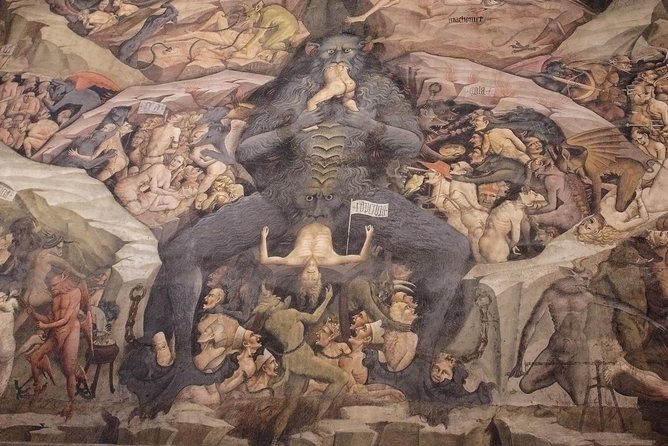
- Piazza Maggiore details: the “speaking” corners, textile market hints, and the Neptune fountain story
- San Petronio’s scale: the biggest sundial in the world plus standout medieval fresco areas
- Archiginnasio inside-access themes: the wooden anatomical theatre, coats of arms collection, and rare rooms including Stabat Mater materials
- Terracotta impact at Santa Maria della Vita: Niccolò Dell’Arca’s sculptural masterpiece and the way emotion shows in form
- UNESCO Finestrella canals: a rare medieval canal setup tied to silk and hemp textile work
- Tastings built into the walk: a rice cake from a medieval recipe and a local wine sample
Piazza Maggiore: Where Bologna’s Art Starts Talking
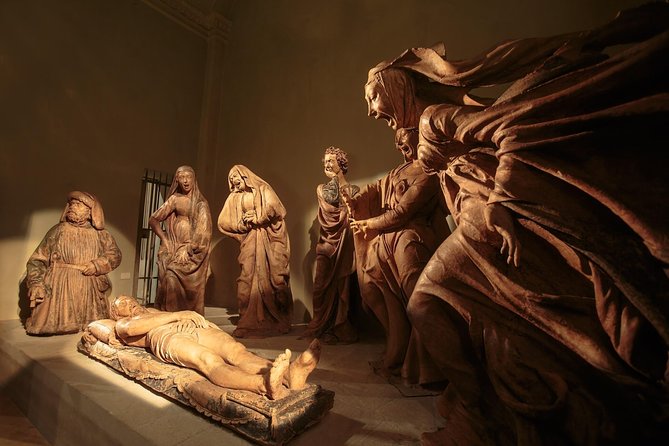
Your tour begins at Bar Vittorio Emanuele in Piazza Maggiore (right by the main square), so you start in the obvious place—but the guide helps you see it differently. Piazza Maggiore is surrounded by old medieval buildings, and the tour focuses on how the city used art and architecture to communicate power, wealth, and civic identity.
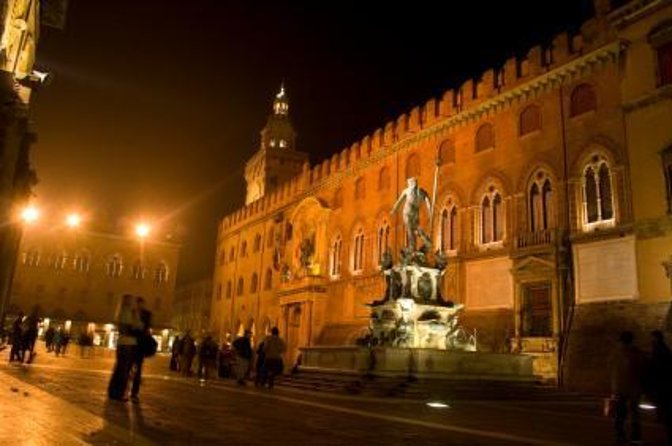
One thing I appreciate is the attention to the square’s “small” symbolism. You’ll hear about the four “speaking” corners—street-level storytelling in stone—and the secrets of the nearby textile market world. That matters because Bologna wasn’t just about churches and kings. It was also a working city of crafts, guilds, and trade. Then you move to the renaissance Neptune fountain, which is more than decoration: it’s part of the city’s public language of authority.
You’ll also spot the facade details of the Council Palace, including the old clock. It’s an easy thing to walk past, but the tour treats it like a historical object, not a background prop.
Time here is short—about 20 minutes—so don’t plan on “lingering.” Do bring your attention. This start works best if you like being given a lens for what to look at as you walk.
Palazzo d’Accursio: Frescos, Chapel Corners, and Horse Stairs
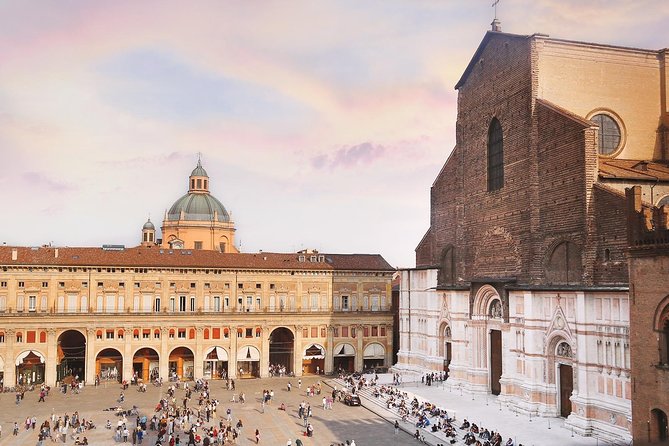
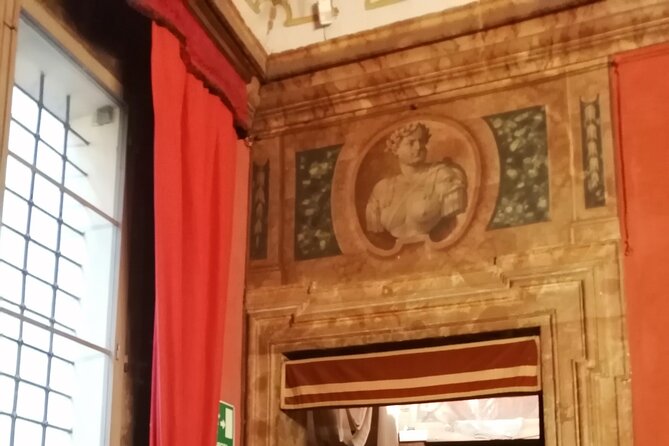
Next comes Palazzo d’Accursio, where the tour goes beyond the usual exterior photo. Inside, you’re looking at noble rooms on the first and second floors, with frescos, and even a private chapel linked to the bishop. This stop is about hierarchy—who had access, where art was placed, and how power felt in day-to-day city life.
A standout detail is Bramante’s famous big stairs for horses. Yes, horses—so suddenly you understand the building wasn’t designed only for polite walking. It had to handle real movement and status, with ceremonial arrival treated like part of the architecture.
You’ll also hear about the room of the seniors and the earthquake’s virgin by Francesco Francia (as described on the tour). That kind of specific artwork reference is exactly why I like this tour format: the names make the city feel less like a list and more like a network of meaning.
Entry time is about 30 minutes, and admission is free for this stop. That’s a strong value moment because you get a proper interior look without feeling like you’re paying again and again for rooms that don’t deliver.
San Petronio: A Church That Acts Like a Giant Scientific Display
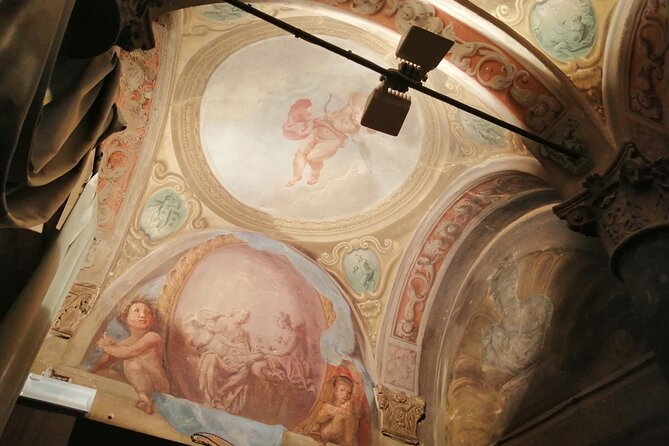
Basilica di San Petronio is one of the biggest “wow” stops on the walk. The headline is the biggest sundial in the world. But the tour doesn’t treat that as a trivia bite. It connects it to why Bologna kept mixing art, devotion, and observation.
Inside, you’ll look at medieval frescoes in the Cappella Bolognini area, plus the four ancient crosses. There are also highlighted works by Parmigianino and Lorenzo Costa. The tour frames these paintings not just as masterpieces, but as markers of changing taste—who commissioned what, and how artistic styles moved through the city.
This is the kind of church stop where you’ll want to keep your phone away unless you’re sure you can photograph. The important thing is to slow your eyes down: fresco details and symbols can look small if you’re rushing.
Time is about 35 minutes, and admission is included here. That’s smart for your money because you’re paying for the guide’s access to a key interior stop (not just passing by exterior monuments).
One more practical point: churches often mean cooler air and lots of stone surfaces. Dress in layers, even in warm months.
Archiginnasio di Bologna: The Oldest University Comes Alive
Archiginnasio di Bologna is where the tour becomes more than architecture sightseeing—it becomes a story about learning. This is the headquarters of the oldest university in Europe, and the guide uses that setting to explain Bologna’s role as a center for education and ideas.
You’ll see a renaissance palace setting and its huge collection of coats of arms. It’s a visual map of institutions and families. Then the tour points you toward “secret powerful medicine” references—essentially the way knowledge, authority, and status were linked in the university world.
Two elements I found especially compelling:
- The wooden anatomical theatre, which makes the idea of study feel physical. It turns “medical history” from abstract into something you can picture.
- The Stabat Mater room with precious books mentioned as including Leonardo da Vinci’s Flights of the birds, plus a longer hall described for books and ancient codes.
These details matter because they explain why Bologna was famous beyond art circles. It was a place where education had systems, spaces, and symbolism.
Time here is about 30 minutes, and admission is included. Value-wise, this is a high-payoff stop because university interiors can be confusing on your own. With a guide, you know what you’re looking at and why it mattered.
Quadrilatero: The Medieval Market Maze and Its Food DNA
After the monumental interiors, the tour drops you into the Quadrilatero area, known for its middle-age market feel. Think lanes and stalls layered over older commerce patterns—more labyrinth than boulevard. The guide’s focus is on what survived: old food shops, ancient coats of arms, and evidence of guilds.
This is where the tour earns its title connection to tastings. While you’re moving through the market area, you also get food moments—specifically a rice cake made from a medieval recipe and a local wine sample, as described in the experience notes. If you love learning through what you eat, this is the part where the city’s “past” turns into a flavor you can recognize.
Time is about 20 minutes with free admission. That short window is intentional. Quadrilatero can swallow time fast if you let it. The tour keeps you moving while still giving you the feel of the place.
If you’re someone who hates crowds, go in mentally prepared. Markets are busy by nature, and even with a guided group, you’ll share space with passersby.
Also: hold onto water. Tastings plus stone churches and walking add up.
Santo Stefano: Roman Roots to Dante-Era Cloister Feel
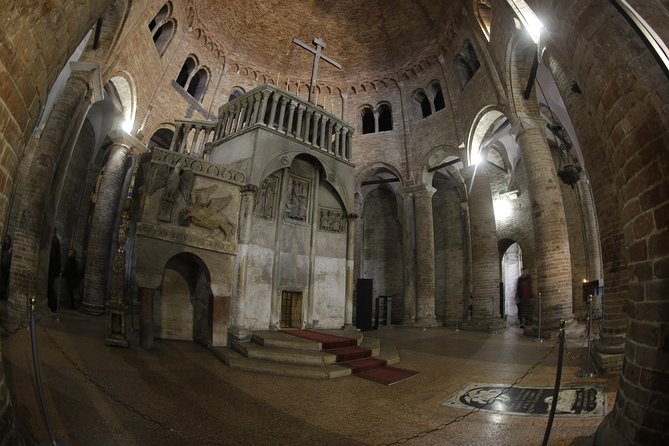
Then you get a long-feeling stop without it being long on the clock—Basílica / Santuario di Santo Stefano (about 40 minutes, free admission). The tour describes it as a single complex of churches that covers the whole history of Bologna: from a Roman temple on a natural spring to later layers around the cloister.
The standout image here is the Dante Alighieri cloister, surrounded by monk cells, plus capitals headed by animal faces. That’s the kind of detail you’d miss if you were just ticking off “another church.” The tour nudges you toward reading symbols—where the building language shifts across eras.
Because the complex includes multiple church spaces, it can be visually dense. I’d suggest you pick one or two details to focus on: the animal-faced capitals are a great anchor. Once you have one anchor, the rest becomes easier to understand.
The time given works well for a general overview without turning into an all-day church crawl. Still, expect a lot of looking and some stairs or uneven floors typical of old complexes.
Santa Maria della Vita: Terracotta Emotion by Niccolò Dell’Arca
Chiesa di Santa Maria della Vita is where Bologna gets very human. The tour highlights the terracotta masterpiece sculptured in 1470 by Niccolò Dell’Arca. The description isn’t just about what it is; it’s about what it does. You’re told to pay attention to an avantgarde interpretation of movement and emotions.
This is the stop that turns “art history” into felt experience. Terracotta can look fragile, but in this case it’s used to communicate intensity. If you care about how artists shape emotion through bodies—faces, hands, posture—this is one of the best hours you’ll spend in Bologna.
Admission is included, and the time is about 20 minutes. That’s short, but not weak. It’s enough time to get the main view and let the details register if you’re paying attention.
A practical tip: art like this can be hard to process if you’re rushed. Slow your pace when you’re inside, even if your group moves faster.
Views of Asinelli and Garisenda: Bologna’s Tower Pair From Street Level
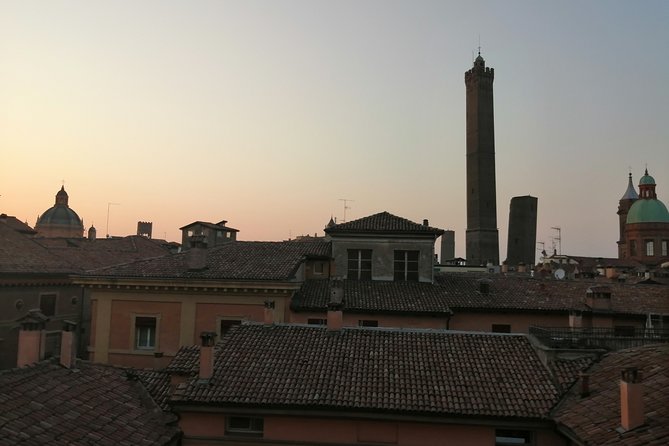
Between interiors, the tour gives you an outdoor payoff: a great view from street level of Bologna’s 98 meters tall Asinelli Tower and the leaning Garisenda Tower. The guide keeps it grounded—no need to climb just to understand why Bologna is defined by these towers.
This is a good reset in the middle of the walk. You stop staring at ceilings and frescos and instead look at the city’s vertical identity. It also helps you “place” what you saw earlier, because you start seeing where districts sit relative to each other.
Time here is brief (it’s more of a viewpoint moment), but the effect can last. When you later walk around on your own, those tower silhouettes become a map.
Finestrella and a 13th-Century House: Water and Wood Tell the Trade Story
Finestrella is a rare medieval canal designed to supply silk and hemp textiles manufacture. The tour also notes it as UNESCO heritage, which matters because it confirms you’re looking at something preserved not just for beauty but for cultural importance.
This stop (about 10 minutes, free admission) is small by time, but it’s a big correction to a common travel mistake. People think art cities are only about painted walls and statues. Bologna shows you another side: infrastructure that made crafts possible.
Right after, you’ll also get a look at a surviving example of a 13th-century house maintaining original wooden pillars. The guide uses this to connect building techniques to the city’s history of occupation. It’s a reminder that the medieval era is not always “ruins.” Sometimes it’s carpentry you can still see.
If you’re traveling with someone who loves details like construction methods and trade logistics, this portion will score big.
Palazzo Comunale: Ceilings, Frescoes, and Bramante’s Horsemen
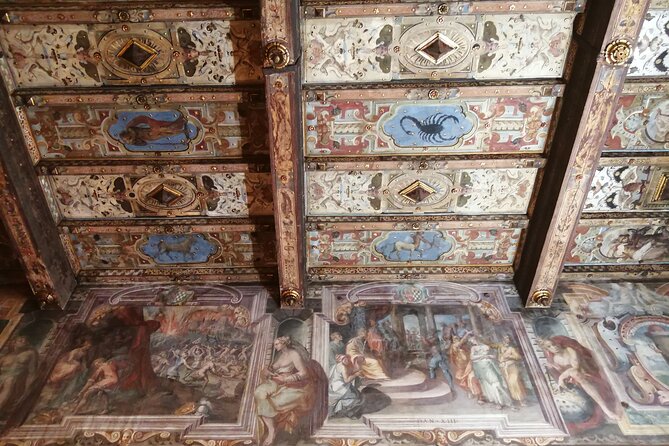
Palazzo Comunale wraps up more civic art. The tour highlights renaissance and baroque ceilings, frescoes, sculptures, and Bramante staircases for horsemen—again returning to a theme you saw earlier: Bologna’s buildings were stage sets for power.
This stop is quick—about 10 minutes, free admission. That brevity can be perfect if you’re starting to feel museum-fatigued. It keeps the final stretch from dragging.
If you’re the type who takes photos of ceilings and loves comparing styles, you’ll enjoy this. If you’re tired, just do the minimum: look up, then listen. The guide’s explanations are built for quick moments like this.
Taste, Context, and the Pace: Is It Good Value for 175.36?
The price is $175.36 per person for a 3 to 4 hour guided walk. On paper, that might sound like a lot for “just walking.” In practice, the value comes from two places: (1) included admissions for key interior sites, and (2) the guide’s ability to connect art objects to how Bologna functioned.
Admission is included for San Petronio, Archiginnasio di Bologna, and Santa Maria della Vita. Several other major stops are free, like Piazza Maggiore and the market area. So you’re not paying for every single stop equally—you’re paying for the guide’s access to the rooms that need context.
The tastings also add weight. A medieval-recipe rice cake plus a local wine sample isn’t a full meal, but it gives you a Bologna flavor note that matches the historical theme. It turns the tour from sightseeing into cultural sampling.
The pace is fast. Many guides spread out time evenly. This one stacks short visits, so you’ll cover more ground than you would on your own in half a day. The tradeoff is you won’t get long, quiet time in each room. If you like action and stories, you’ll love it. If you prefer slow wandering and extended museum reading, you might want to pair this with one longer self-guided afternoon later.
Logistics are simple: the tour uses a mobile ticket, and it’s in English for groups up to 25. It’s a near-public-transport route too, which helps you stitch it into a broader day.
Should You Book This Bologna Art and Walking Tour?
Book it if you want a structured way to understand Bologna fast—especially art, architecture, and the city’s educational and civic backbone. I’d also recommend it if you’re the kind of person who loves being taught what to look for: “speaking” corners, fresco names, the meaning behind a sundial, and why a university room has an anatomical theatre.
Skip it if you want long quiet time inside museums, or if you get cranky with brisk schedules. This is a lot of stops, short on lingering, and you’ll cover many major themes in one go.
If you’re staying for just a few days, this is a strong first-day plan. It gives you a set of landmarks and stories so your later walks feel like you’re reading the city instead of just passing it.
FAQ
How long is the Bologna historical art walking tour?
The tour lasts about 3 to 4 hours.
What is the price per person?
It costs $175.36 per person.
Is the tour offered in English?
Yes, it is offered in English.
Where do we meet for the tour?
The meeting point is Bar Vittorio Emanuele at Piazza Maggiore, 1, 40124 Bologna.
What is the maximum group size?
The group size is limited to a maximum of 25 travelers.
Are admissions included for all the stops?
No. Admission is included for Basilica di San Petronio, Archiginnasio di Bologna, and Chiesa di Santa Maria della Vita. Other stops listed are admission free.
Does the tour include a mobile ticket?
Yes, the tour uses a mobile ticket.
When should I book?
On average, this tour is booked 54 days in advance.
What cancellation options are available?
You can cancel for free up to 24 hours in advance for a full refund.
Does the tour end where it starts?
Yes, it ends back at the meeting point.