REVIEW · SETUBAL DISTRICT
Évora Jewish History Tour: Private walking tour with tickets
Book on Viator →Operated by Évora Cultural Experience · Bookable on Viator
One square. One temple. Then a whole story stitched into the streets of Évora. This private Évora Jewish History Tour blends famous sights like the Chapel of Bones with quieter signs of Jewish presence, from hamsa door handles to spots where mezuzahs once were. I especially like how the route makes you notice symbolism in everyday places, not just big-ticket landmarks, and how the guide (like Paulo, when he’s leading) ties religious change in Portugal to what you can actually see.
My only real caution is focus: this isn’t a long, fully Jewish-quarter deep study. If you’re hoping for a heavier, strictly Jewish, hour-after-hour tour, you may feel it leans broader into Portuguese religious and historical change as well.
Quick hits before you go
- Private, English, 2.5 hours: only your group, so you can move at your pace.
- Chapel of Bones ticket included: you save time and don’t have to hunt admissions day-of.
- Symbols you’ll spot: hamsa shapes and mezuzah placements get explained.
- Inquisition angle, in real locations: Praca do Giraldo and inquisitor-related cues show up.
- Roman temple connection: the Templo de Diana ties back to the Jewish diaspora story.
In This Review
- Jewish history in Évora lives in plain sight
- Price and value: $116.80 per person, plus tickets handled
- Stop 1: Praca do Giraldo and the Jewish quarter context
- Stop 2: Chapel of Bones and the Counter-Reformation mood
- Stop 3: Forum Eugenio de Almeida and inquisitor clues on the outside
- Stop 4: Templo Romano de Évora (Templo de Diana) and the diaspora link
- Stop 5: Centro Histórico medieval streets and the Jewish symbolism walk
- What Paulo-style guiding looks like on this route
- Who this tour suits best
- Practical tips so your tour feels smooth
- Should you book the Évora Jewish History Tour?
- FAQ
- How long is the Évora Jewish History Tour?
- Is this tour private?
- What language is the tour offered in?
- What does the price include?
- Are admissions included for all stops?
- Where do I meet the guide?
- How much walking is involved?
- What is the cancellation policy?
Jewish history in Évora lives in plain sight
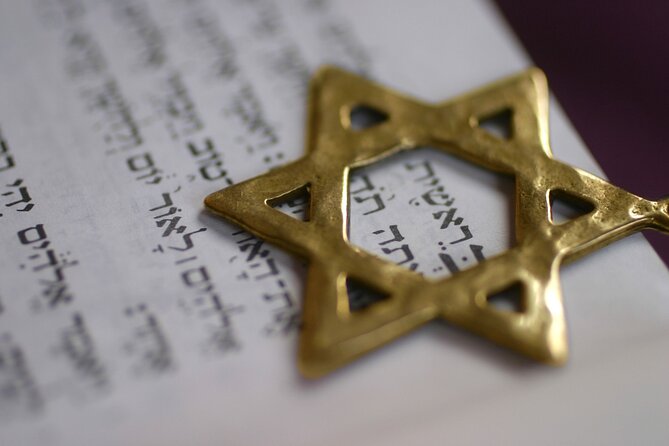
Évora has a way of telling its past without spelling everything out. On this tour, you’re not just looking at monuments like a checklist. You’re training your eyes for small reminders of Jewish life—and the pressures that followed—woven into streets and buildings.
The tour’s best trick is pacing. You’ll cover major stops in about 2 hours 30 minutes, but the guide keeps shifting attention from stone to meaning. One moment you’re standing where executions happened; the next you’re reading the city like a clue trail.
You also get a private format, which matters here. There’s a “you” quality to tours like this: you can ask why a symbol matters, or how Jewish presence changed under shifting rules, and your guide can steer the conversation instead of racing a big group.
One more practical note: it’s listed as moderate physical fitness. You’ll be walking through historic streets, and the route is designed for comfort, not marathon speed.
Price and value: $116.80 per person, plus tickets handled

At $116.80 per person, this is not a budget add-on. But it can feel fair when you look at what’s included and how the tour is run.
Here’s what you’re paying for:
- a private walking experience (only your group)
- English guide attention
- mobile ticket delivery
- and key admissions support: the Chapel of Bones includes admission on this itinerary, while other major stops are listed as free
Also, there are group discounts, which can reduce the per-person cost if you’re traveling with friends or family. If you’re a solo traveler, the price may feel steep; if you have 2–4 people, it often becomes much more realistic.
Timing-wise, this is commonly booked about 31 days in advance. That’s a good sign for demand—but also a reason to lock it in early if your dates are popular.
Stop 1: Praca do Giraldo and the Jewish quarter context
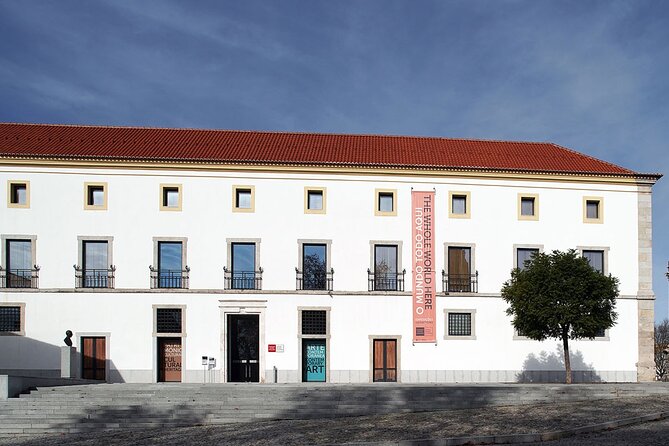
Your walk starts at Praça do Giraldo 7, at the fountain in the square. This is a strong opening choice because it anchors the tour in a real, specific place tied to the Portuguese Inquisition.
You’ll spend about 30 minutes here. The square is presented as the spot where Inquisition executions took place, and the guide also connects that to the Jewish quarter. Even when the pace stays relaxed, it sets a serious tone fast. You’re not just sightseeing; you’re learning how power and faith collided in public.
One of the most helpful ways to handle a stop like this is to slow your brain down. Look for what feels symbolic rather than just what feels historic. This tour nudges you to notice how Évora’s Jewish story isn’t only preserved in dedicated museums. It also survives in the city’s layout and in references that only make sense after the guide explains them.
Potential drawback: if you arrive wanting more space inside the Jewish quarter itself, the time here is limited. The tour includes a visit, but the overall itinerary spreads attention across multiple sites.
Stop 2: Chapel of Bones and the Counter-Reformation mood
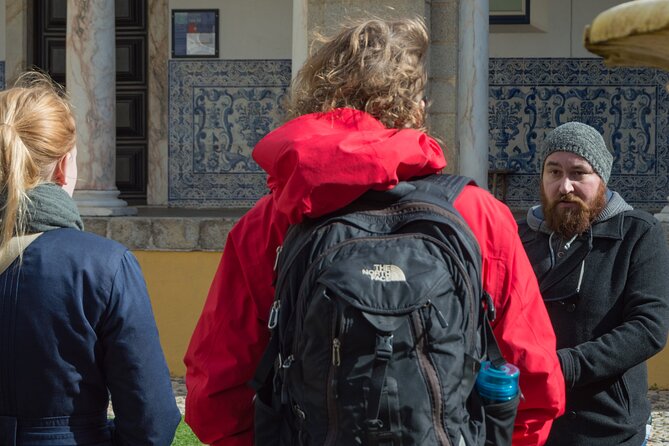
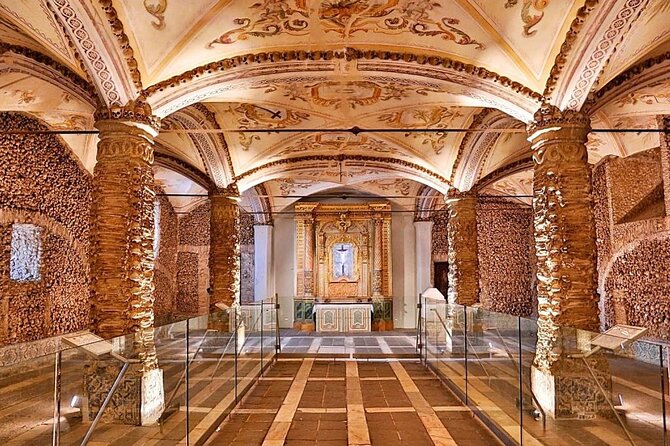
After the square, you move to Évora’s best-known macabre monument: the Chapel of Bones. Plan for about 50 minutes. The admission ticket is included, so you can focus on the experience instead of ticket logistics.
This stop matters because it’s not just strange art. It’s described as illustrating the spirit of the Counter-Reformation. In plain terms: you’re seeing how religious conflict and reform shaped public messaging, and how that mood connects to what happened to Jewish communities across Portugal.
What makes this part of the tour click is that the guide connects the visual to the wider story. One review example mentioned how the guide linked the Chapel of Bones to the atmosphere of religious intolerance during that period. If you care about how belief systems show up in architecture and public spaces, you’ll probably find this stop one of the highlights.
Tip for making the most of it: give yourself time to look twice. First pass is for what you see. Second pass is for what the guide wants you to understand about why it was made and what it would have meant to people then.
Stop 3: Forum Eugenio de Almeida and inquisitor clues on the outside
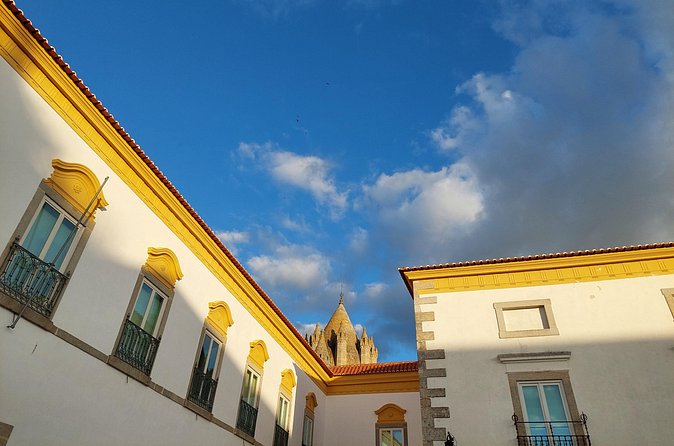
Next is a lighter, shorter stop: Forum Eugenio de Almeida, about 10 minutes. You’re not going inside here. You’re getting an exterior view and learning about links to the inquisition palace, including cues and symbols associated with the inquisitor’s house.
This is a good example of how the tour works. It doesn’t treat every stop as equal time. Instead, it uses quick stops to point you to evidence you might otherwise miss.
Why this helps you as a visitor: exterior symbolism is often easy to overlook when you’re only scanning for landmarks. A quick guided moment can teach you how to read facades, how to spot meaning in detail, and how to connect a building to the broader religious pressure theme.
Drawback to keep in mind: if you’re expecting interiors and long explanations at every site, this segment may feel brief. But that brevity is also what keeps the tour moving smoothly across a compact historic area.
Stop 4: Templo Romano de Évora (Templo de Diana) and the diaspora link
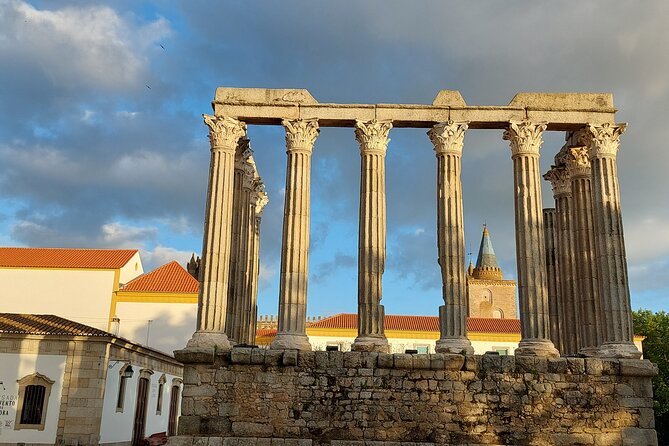
Now you get a different kind of pause: the Templo Romano de Évora, also called the Templo de Diana. You’ll have about 20 minutes, and the itinerary lists this as free admission.
This stop is where the guide makes a bigger timeline connection. The tour ties the Roman temple to the early phase of the Jewish diaspora story, linked to the destruction of Jerusalem by the Roman Empire.
Even if you’re not a Roman-history fanatic, this is a smart moment. It shows that Évora’s Jewish story isn’t only about later forced conversions and persecutions. It’s also about how Jewish presence and movement connected to huge events across the Mediterranean world.
The key is to listen for how the guide connects a Roman monument to Jewish history. The tour is built to keep you from treating the city as separate time periods. Instead, it invites you to see layers.
If you’re short on attention span, don’t worry. The guide’s job here is to keep the connection clear and relevant to the Jewish-history theme, not to turn it into a lecture.
Stop 5: Centro Histórico medieval streets and the Jewish symbolism walk
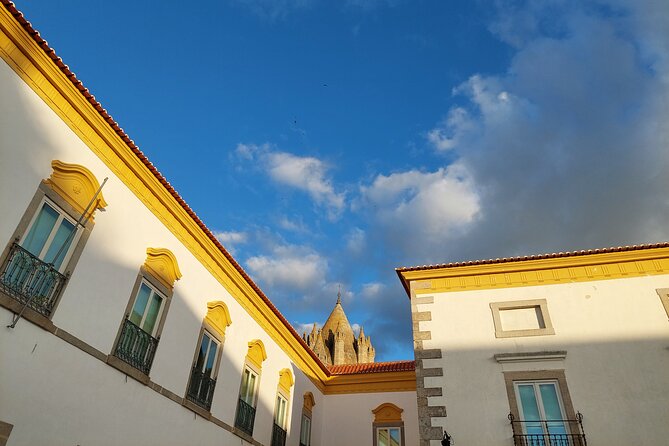
The final stretch is where the tour feels most like a story you’re walking through: Centro Histórico de Évora. You’ll get about 30 minutes here.
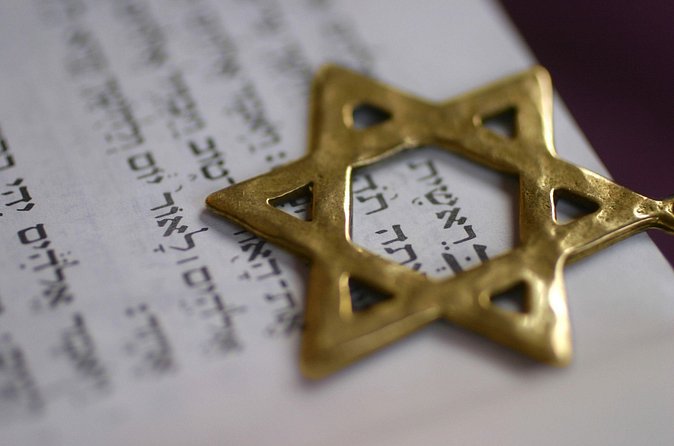
This part is focused on strolling the medieval streets and spotting unexpected symbols of the Jewish presence in the city. One review example highlighted very concrete details you might look for, such as hamsa door handles and places where mezuzahs used to be.
That type of detail is the reason this tour earns such a high recommendation rate. It turns your experience from passive learning into active noticing. You leave not only knowing names and themes, but also knowing what to look for.
The other thing this segment helps with is balance. The earlier stops are heavier in tone—Inquisition executions, religious intolerance, and the Counter-Reformation mood. Walking through the medieval streets with explanations lets you process the story without feeling stuck in one grim theme.
One consideration: this is also where heat and comfort can matter. If you’re sensitive to sun, pace yourself. Bring water if you can, and don’t be afraid to ask for a slower moment. Since it’s private, you’ll have more flexibility than on fixed large-group tours.
What Paulo-style guiding looks like on this route
One guide name came through in the feedback: Paulo. When he leads, the tour is described as engaging and tied tightly to Évora’s long story, with explanations that help you connect Portuguese history to what you see on the street.
That matters because Jewish history in Portugal can feel abstract until a guide gives you anchors. In this itinerary, anchors are built-in: Praca do Giraldo, the Chapel of Bones, inquisitor-linked exterior cues, the Roman temple connection, and the medieval street symbols.
If you like tours where you can ask questions and get straight answers, this setup is a good match. If you prefer only museum-style fact dumps, you might still like it—just know the tour leans heavily on interpreting place and symbolism.
Who this tour suits best
This tour fits you if:
- you want a private, walking experience with time at multiple iconic sites
- you care about how Jewish presence shows up in Portugal through symbols and public spaces
- you’re interested in the Portuguese Inquisition and how religious change affected communities
It may feel less satisfying if:
- you’re expecting a long, exclusively Jewish-quarter itinerary with lots of time inside that area
- you want only tangible artifacts, not the tour’s emphasis on cultural and symbolic traces
The good news: because it’s private, you’re more likely to be able to steer the conversation toward what matters most to your group.
Practical tips so your tour feels smooth
A few small choices can make this easier.
- Wear comfortable shoes. Évora’s medieval streets are not made for fashion sneakers.
- Plan for sun. Historic centers can feel warm, especially if you’re walking between sites.
- Use the mobile ticket. It’s meant to reduce time waiting around.
- If you have specific interests, say them early. For example, ask the guide to spend a bit more time on the door-handle and mezuzah clues, since that kind of detail is part of what makes the tour special.
Also, since the tour ends back at the meeting point, you won’t be stranded far from where you started. You can loop straight into lunch or a cathedral-area wander afterward.
Should you book the Évora Jewish History Tour?
I’d book it if your goal is to understand Évora through the lens of Jewish life and the forces that reshaped it—using the city itself as your textbook. The mix of major monuments and street-level symbolism is the recipe here, and that balance is where the tour earns its reputation.
Don’t book it blindly if you need a heavily Jewish-quarter-focused, long-form exploration of that neighborhood alone. This itinerary spreads attention across Inquisition-linked sites, the Counter-Reformation tone at the Chapel of Bones, and even a Roman-temple connection. That’s not a flaw—it’s the concept.
If you want a private guide who helps you read Évora like a map of meaning, this is a strong pick. Just go in expecting symbolism and interpretation, not only a single-area museum tour.
FAQ
How long is the Évora Jewish History Tour?
It runs for about 2 hours 30 minutes.
Is this tour private?
Yes. It’s a private tour/activity, and only your group participates.
What language is the tour offered in?
The tour is offered in English.
What does the price include?
The tour price is $116.80 per person and includes a mobile ticket. The Chapel of Bones admission is included on the itinerary.
Are admissions included for all stops?
Chapel of Bones is listed as ticket included. Other stops on the itinerary are listed as free admission.
Where do I meet the guide?
You meet at the Giraldo Square fountain area: Praça do Giraldo 7, 7000-508 Évora, Portugal.
How much walking is involved?
The tour is listed for travelers with a moderate physical fitness level, and it’s a walking route through historic parts of Évora.
What is the cancellation policy?
You can cancel for free up to 24 hours in advance for a full refund.