REVIEW · CISTERNINO
Ostuni: E-bike Tour, Ancient Olive Trees & Oil Tasting
Book on GetYourGuide →Operated by TOURS PUGLIA · Bookable on GetYourGuide
Old olive groves beat city sightseeing here. In three hours you glide out of Ostuni and back again, with centuries-old olive trees and an extra virgin olive oil tasting that feels tied to the land you just pedaled through.
Two things I like a lot: the ride keeps you moving at a comfortable pace through the Coastal Dunes Regional Park on quiet paths, and you also get history in small, walkable bites at the Montalbano Dolmen and along the Via Francigena. It’s not just cycling for cycling’s sake.
The one thing to think about is the bike situation. If you don’t bring your own, the rental e-bike options and pricing depend on height and type, and you’ll want to go a little slower on any rougher dirt sections you encounter.
In This Review
- Key things you’ll notice right away
- Why an e-bike tour works so well near Ostuni
- Cooperativa L’Agricola Montalbanese to the Coastal Dunes trails
- Pedaling among ancient olive trees (and what that really means)
- Montalbano Dolmen: stepping back thousands of years
- A short Via Francigena walk you’ll actually enjoy
- Inside the oil mill: from olives to extra virgin olive oil
- EVO tasting: how to get more out of it
- E-bike rentals vs bringing your own: what to plan for
- Pace, group size, and guide style (this is why it feels smooth)
- Price and value: $55 for a reason
- Who should book this Ostuni e-bike and oil tasting
- Should you book it?
- FAQ
- How long is the Ostuni e-bike and olive oil tour?
- How many people are in the group?
- What languages is the live guide available in?
- Can I bring my own e-bike?
- What if I don’t bring an e-bike, can I rent one on site?
- What’s included in the $55 price?
Key things you’ll notice right away
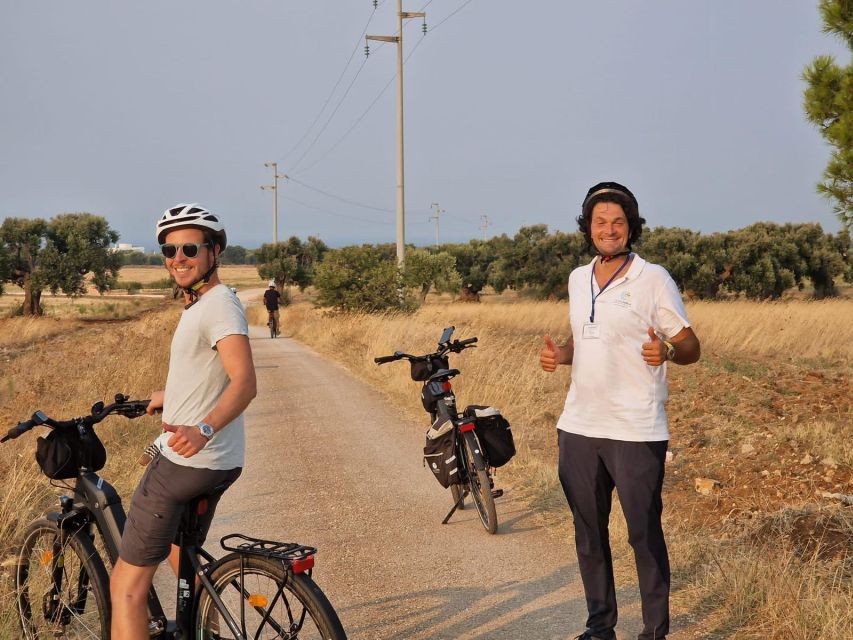
- Centuries-old olive groves on easygoing rural routes with frequent photo stops
- Montalbano Dolmen plus a short scenic walk linked to the Via Francigena
- A real oil mill visit where you follow olives to bottling
- Guided EVO tasting with simple tips for picking up aroma and key traits
- Small group feel (up to 9) with hands-on help throughout
Why an e-bike tour works so well near Ostuni
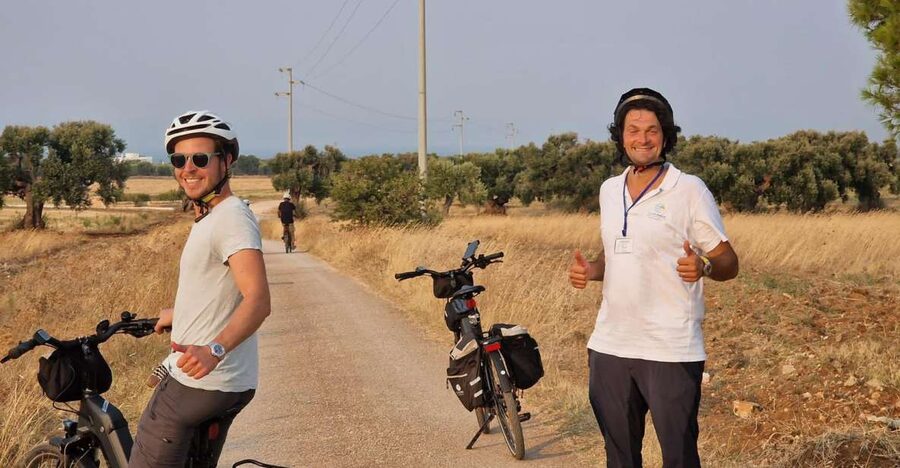
Ostuni can be great on foot, but the countryside around it is a different story. This tour uses an e-bike so you spend your energy on enjoying the views and the olive groves, not fighting hills.
The format is also smart for a short stay. At 3 hours, you get a full arc: ride, historic stop, scenic walk, then the olive oil experience at the end. I especially like tours like this because they compress context into one afternoon.
You’ll go out with a local guide (Rocco is often the one leading) and you’ll ride with full assistance. That matters more than people think, because comfort and confidence on the bike makes the history stops and the tasting part feel relaxed, not rushed.
Cooperativa L’Agricola Montalbanese to the Coastal Dunes trails
Your tour begins at Cooperativa L’Agricola Montalbanese, the kind of starting point that makes it clear you’re going to end where the olive oil story lives. Right away, you roll along quiet lanes and easy paths, with the e-bike doing the heavy lifting.
Expect regular pauses for photos and small bits of local insight while you move. If you’re the type who likes capturing details—winding stone edges, olive tree trunks, that Apulia light—bringing a GoPro (or any small camera) is a good idea.
As you leave Ostuni behind, the air and vegetation change. You’ll pedal through areas described as Mediterranean scrub, alongside dry-stone walls, and through settings that feel far removed from the center of town. If you’re in spring, you may also spot more wild growth and colors along the way.
Pedaling among ancient olive trees (and what that really means)
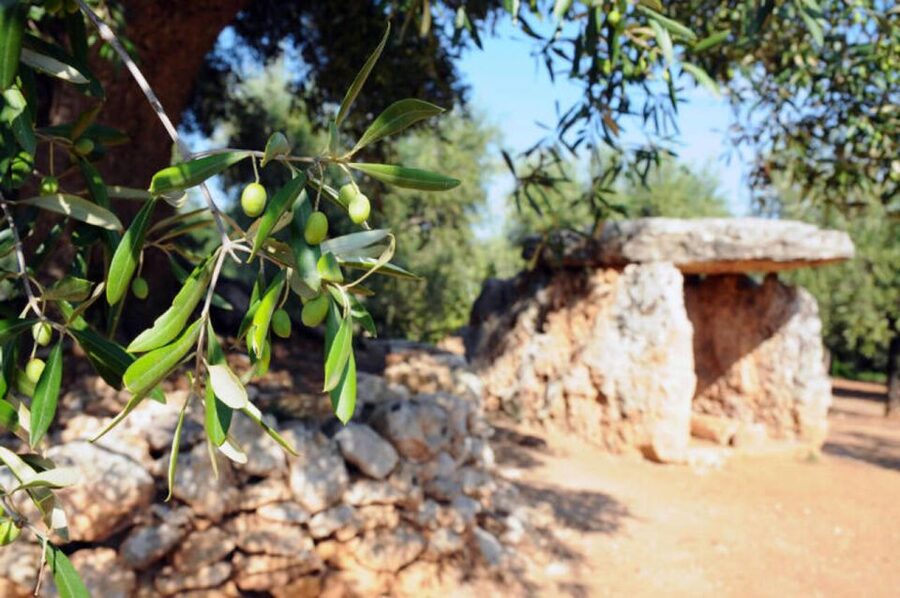
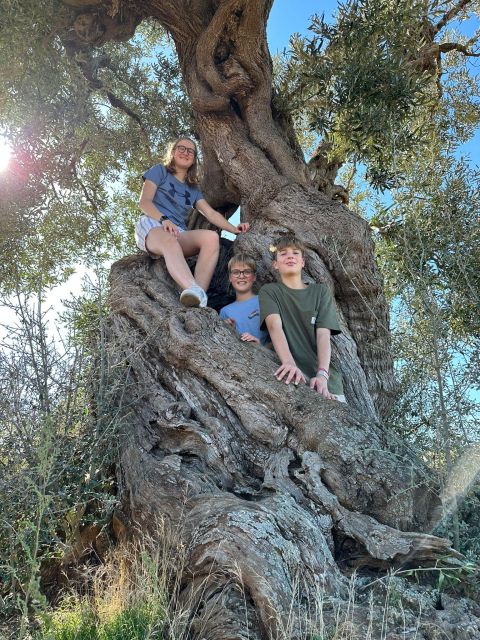
This ride’s heart is the time in the olive groves near Ostuni. The point isn’t just to look at trees—it’s to feel how old the cultivation here really is. Olive trees can live for centuries, and when you’re riding among them, it changes your sense of scale fast.
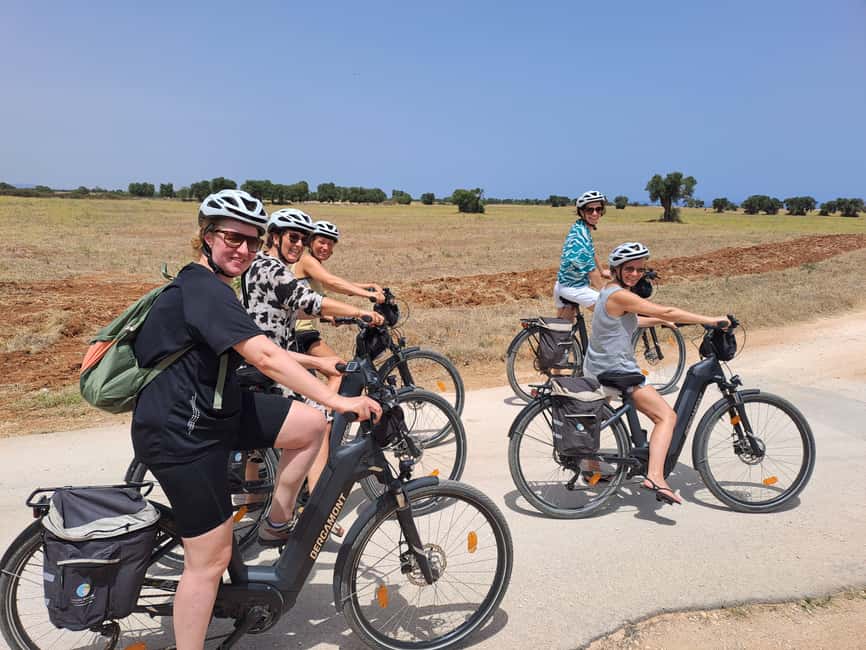
You’ll also notice how practical the terrain is for e-bikes: you’re on a mix of rural lanes and easy paths rather than constant steep climbs. One review note that stood out to me was how the group can move at a leisurely pace, which helps if you want to stop often and actually take in the details.
What you might spot along the route varies by season, but you could see the surrounding mix of Apulian land uses: prickly pear, figs, almonds, carob, even pears, depending on timing. These aren’t random sights. They’re clues that this is a working countryside, not just a scenic set.
One tiny practical tip: if you’re sensitive to sun or bugs, plan for it. A reviewer even suggested mosquito spray. That’s not a deal-breaker, but it’s the kind of real-world detail that can make the difference between enjoying the stops and thinking about swatting.
Montalbano Dolmen: stepping back thousands of years
After the cycling, the tour shifts gears into deep-time. You’ll arrive at the Montalbano Dolmen, described as prehistoric and tied to the region’s deep past.
The dolmen stop is especially valuable because it’s not a museum-only moment. You walk in a natural setting and connect the idea of settlement and ritual to the land itself—olive groves, stone edges, and that long view of the countryside. It’s the kind of stop that makes the olive oil part later feel less like a separate activity and more like the same landscape repeating itself in different eras.
If you like history but don’t want an all-day lecture, this is a nice compromise. You get a guided connection point, then you’re back outside again.
A short Via Francigena walk you’ll actually enjoy
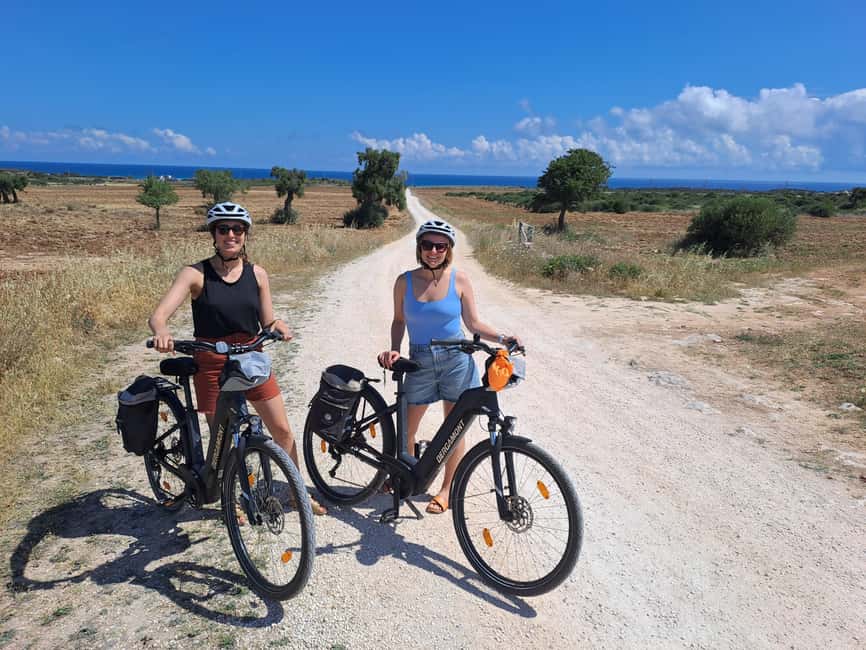
After the dolmen, you walk a scenic stretch along the Via Francigena, framed by olive groves and dry-stone walls. “Short” is important here: you don’t need to be a serious hiker to enjoy it, and it keeps the pacing aligned with the rest of the tour.
I like Via Francigena stops that include walking instead of only driving. The path context matters. You can feel the route logic—stone lines, long sightlines, and the sense that this was a real corridor for people moving through the region.
Also, because the walk is guided, you’re not left guessing what you’re looking at. Your guide can point out what to notice without turning it into a trivia contest.
Inside the oil mill: from olives to extra virgin olive oil
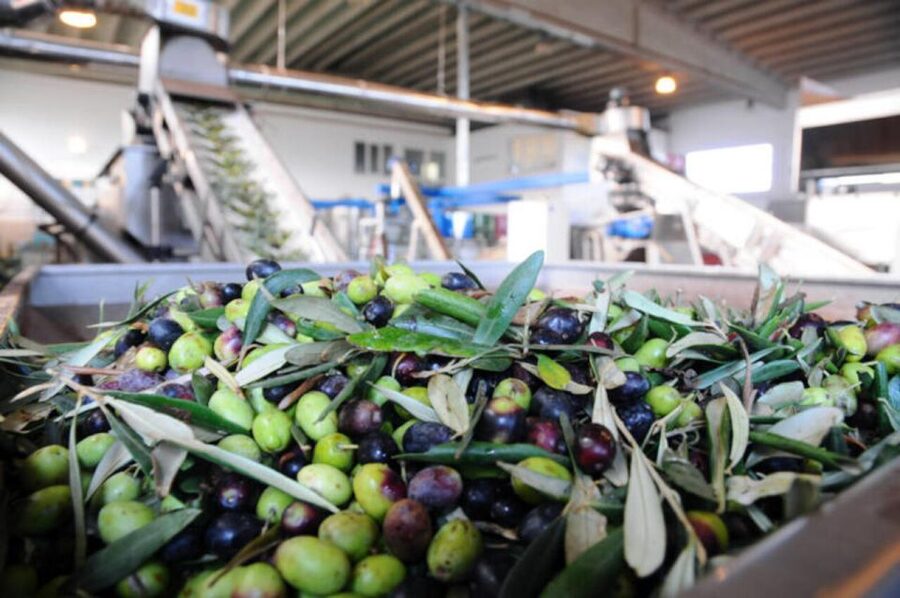
The tour’s final act is the most hands-on. You visit a traditional oil mill, and you follow the key steps that turn olives into extra virgin olive oil—from harvesting and pressing to storage and bottling.
Even if you already know the basics, watching the process in person tends to make it click. Olive oil isn’t just a bottle on a shelf here. It’s a chain of steps tied to timing and quality.
This part is also where the group’s curiosity tends to show. People usually start asking good questions about why certain olives taste different, what “extra virgin” means in practice, and how storage and bottling affect the final oil. The tour is guided, so you won’t be stuck trying to figure it out alone.
And yes, you’ll get water as part of the experience. Small detail, big comfort on a warm day.
EVO tasting: how to get more out of it
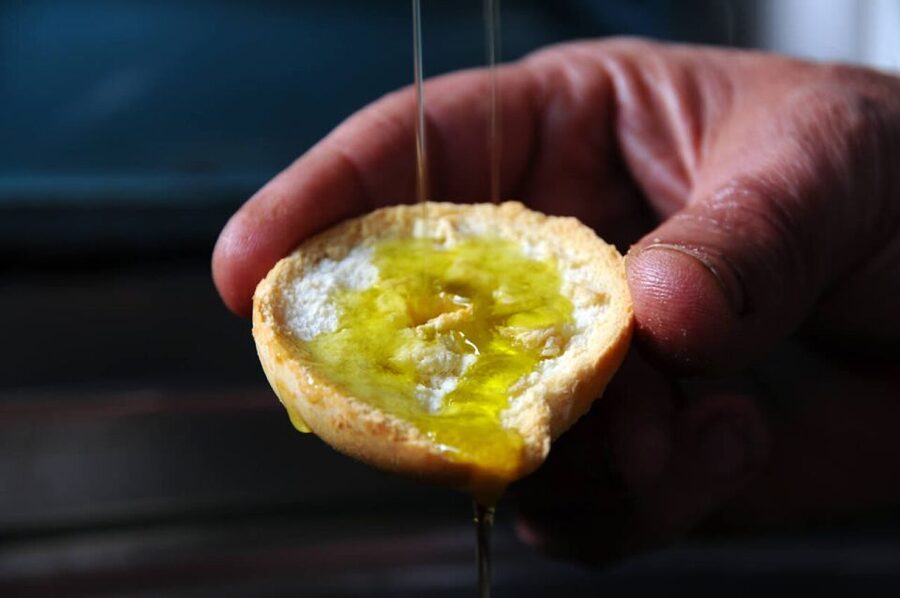
After the mill visit, you’ll do an olive oil tasting of EVO oil produced on site. What I like is that it’s not only drinking oil by the spoonful—it comes with simple tips to recognize aromas and the main characteristics.
So instead of tasting blindly, you can approach it like a mini sensory workout. Smell first, note the feel and impression, then compare. That makes the experience more memorable, and it helps you leave with something you can describe later.
If you’re shopping for olive oil afterward, this tasting gives you a personal reference point. Even if you don’t become an oil expert overnight, you’ll know what you personally prefer, which is more useful than getting lost in technical labels.
E-bike rentals vs bringing your own: what to plan for
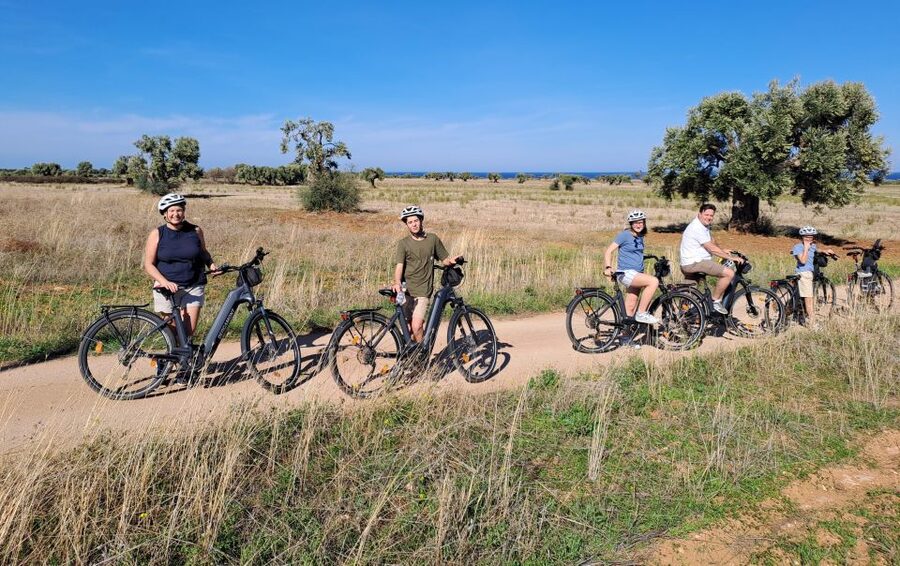
You have two paths:
- Bring your own e-bike and join at no extra cost.
- Or use an e-bike provided on site, with payment made locally.
If you rent, the options are priced based on size and setup:
- Adult e-bike (over 150 cm), helmet + bags: €45
- Small e-bike (under 150 cm), helmet: €40 (check availability at least 2 days before)
- Semi child tandem, helmet: €30 (check availability at least 2 days before)
- Child seat, helmet: €15 (check availability at least 2 days before)
If you’re unsure which option fits, don’t guess too late. E-bike fit affects comfort right away, and on a 3-hour ride, comfort is the difference between enjoying the countryside and thinking about your back the whole time.
One more real-world note from past participants: the bikes are described as easy to navigate, but the tour can include a few rocky dirt roads in the second half. The fix is simple—slow down and let the guide set the pace.
Pace, group size, and guide style (this is why it feels smooth)
The group is small, limited to 9 participants, which makes the tour feel personal instead of like you’re herding people down a path.
Guide support is also a big part of the experience. One review specifically highlighted how Rocco helped with planning and adjustments—up to and including solving bike challenges for someone who wasn’t sure they could ride. That kind of flexibility is rare, and it’s worth appreciating as you decide if this tour matches your comfort level.
Another practical detail: the tour has a reputation for planning for weather and comfort. For example, some departures have included warm items, gloves, and rain ponchos, plus bottles of water. You can’t assume weather will be perfect, but it’s comforting to know they think about what you’ll need.
Also, the guide is happy to help with photos. If you want pictures where you’re actually in them (not just phone selfies), this can be a nice bonus.
Price and value: $55 for a reason
At $55 per person for a 3-hour experience, you’re paying for more than bike time. The price includes:
- a local tour escort with full assistance
- water
- the oil mill visit
- the extra virgin olive oil tasting
That mix matters. If this were only a cycling excursion, it might feel like a simple sightseeing transfer. Instead, you’re getting a working food production visit and a guided tasting at the end, which makes the time feel fuller.
If you don’t bring your own bike, you’ll add the local e-bike rental fee. But even with that, you’re still paying for guidance, equipment support, and a structured countryside route rather than figuring everything out on your own.
To me, the value sweet spot is when you want both nature and a food-focused cultural stop, without spending an entire day. This tour hits that balance.
Who should book this Ostuni e-bike and oil tasting
This is a strong match if you:
- want a short, guided countryside experience outside Ostuni
- enjoy cycling but don’t want to be limited to only flat roads or long distances
- care about food traditions, especially olive oil production
- like history that’s connected to place, not just a stop with a sign
It’s also a good option for many family setups, since the tour offers child-related gear options like tandem and child seats (if available when you reserve).
Think twice if you:
- have very limited mobility and can’t handle being on and off the bike during frequent stops
- don’t want any uneven surfaces at all (there can be rocky dirt segments, and you’ll go slower)
If you’re on the fence about effort, remember: the e-bike is doing most of the work, and the tour is built around a comfortable pace with guidance.
Should you book it?
Yes, if you want an efficient way to understand Apulia beyond the white town of Ostuni. I’d book this when you want a morning or afternoon plan that combines countryside riding, a prehistoric monument stop, a Via Francigena walk, and a real olive mill tasting in one smooth arc.
I’d also do it early in your trip if you want the olive oil context to shape how you notice the region later. After you’ve seen the steps from olives to bottling, you’ll start spotting the meaning behind the landscape details you pass every day.
FAQ
How long is the Ostuni e-bike and olive oil tour?
The tour lasts 3 hours.
How many people are in the group?
The experience is a small group with a maximum of 9 participants.
What languages is the live guide available in?
The live tour guide speaks English, French, and Italian.
Can I bring my own e-bike?
Yes. You can join with your own e-bike at no extra cost.
What if I don’t bring an e-bike, can I rent one on site?
You can rent an e-bike locally. Adult e-bike (over 150 cm) with helmet + bags is €45, small e-bike (under 150 cm) with helmet is €40, semi child tandem with helmet is €30, and child seat with helmet is €15. Availability for some options should be checked at least 2 days in advance.
What’s included in the $55 price?
Included are the local tour escort and full assistance, water, the oil mill visit, and the extra virgin olive oil tasting.