REVIEW · PULA
Pula Roman Heritage Walking Tour
Book on Viator →Operated by Divine Croatia · Bookable on Viator
Roman ruins, sorted fast. This Pula Roman Heritage Walking Tour strings together Pula’s best-known Roman landmarks into a tight, walkable 2-hour loop. You start at the Pula Arena, then move through Roman temple and theatre remains, with an easy coffee-or-tea break built in.
I especially like how the tour gives you the story behind what you’re seeing—your local guide explains Pula’s Roman history on the move. I also like the value mix: a small group (max 15), English speaking format, and admission for the first stop included in the price.
One thing to think about: there’s no hotel pickup or drop-off, and one stop is on a hillside (Zaro area), so you’ll want to wear comfortable shoes and plan to do some walking.
In This Review
- Key highlights at a glance
- Why this two-hour Roman walk works so well in Pula
- Starting at Pula Arena: where gladiators stole the show
- Tempio di Augusto: a free stop with real meaning
- Small Roman Theatre on Zaro’s hillside: the surprise stop
- The coffee or tea break: a small inclusion that changes the experience
- Guides and pacing: what you should expect from the experience
- Price and value: is $107.06 a fair deal?
- Logistics that matter: meeting point, timing, and group size
- What to wear and bring for a smooth walking experience
- Who this Pula Roman Heritage Walking Tour suits best
- Should you book it
- FAQ
- How long is the Pula Roman Heritage Walking Tour?
- What is the price per person?
- Is the tour offered in English?
- Where do I meet for the tour, and where does it end?
- What are the main stops on the tour?
- Are any admission tickets included?
- Is coffee or tea included?
- Can I cancel for a full refund?
Key highlights at a glance
- A focused two-hour Roman route that hits multiple Pula highlights without turning into an all-day project
- Pula Arena first, with an included admission ticket so you don’t have to figure out pricing on the fly
- Free entries for the temple and small theatre remains, making the schedule feel especially efficient
- Choose morning or afternoon, so you can match the tour to your day instead of reorganizing it
- Guides with strong follow-through, including named favorites like Dina, Jadranka, and Maslinka in the feedback
Why this two-hour Roman walk works so well in Pula
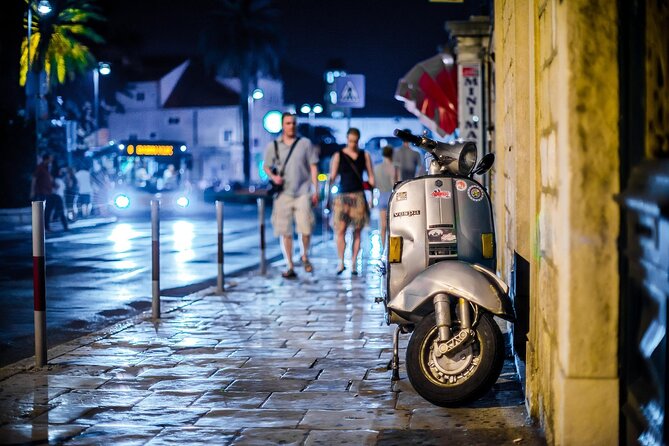
Pula has Roman bones everywhere, but you can’t see it all in one day without turning into a sprinting historian. This tour is built for people who want the headline sights and the context, without losing an entire morning or afternoon. The whole experience is about 2 hours, and it stays compact enough that it fits neatly between meals and other sightseeing.
I also like that you get a real rhythm: one ticketed stop, then two free additions that keep the pace moving. It’s the kind of plan that helps you get your bearings fast, especially if you’re still learning the layout of the Old Town area around the arena.
If you’re traveling with a strict schedule, the morning-or-afternoon choice is a practical win. If you’re the type who hates rushing, the short total duration helps you stay in control of your day. Just keep in mind you’ll be walking between sites, and one location is described as being on the hillside of Zaro.
Starting at Pula Arena: where gladiators stole the show
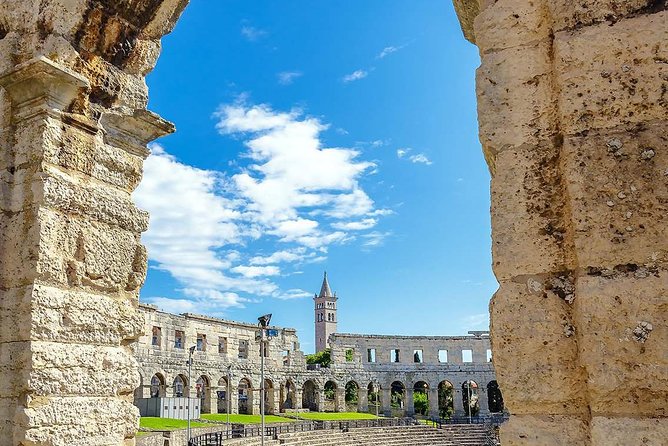
You begin at the Pula Arena on Flavijevska ul. It’s one of those places that grabs you instantly, even if you don’t know the exact details yet. The tour frames it as an amphitheater where Roman gladiators fought, and your guide’s job is to translate what you’re looking at into a clear story.
The time here is about 15 minutes, and the admission ticket is included. That matters more than it sounds. Instead of budgeting time to buy tickets, hunting for ticket rules, or trying to time an audio guide, you can just show up and start learning right away.
One drawback to flag: a 15-minute stop means you won’t get a “deep and slow” museum-style experience. It’s a guided highlight visit. If you’re the kind of person who likes to linger over every carved detail, you might want to come back later on your own time.
Tempio di Augusto: a free stop with real meaning
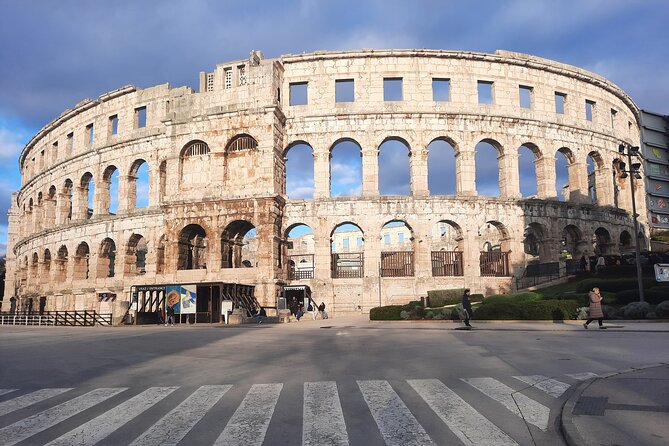
Next up is Tempio Di Augusto, the Temple of Augustus. This one is brief—around 10 minutes—and it’s free to enter. Your guide connects the dots, explaining it was dedicated to the goddess Roma and its namesake emperor.
I like free stops that still feel purposeful. Too often, free entries become filler. Here, the temple is treated like a storytelling anchor, not an afterthought. Even in a short visit, you get the sense that Pula wasn’t just a place Romans visited—it was a place where Roman power and belief systems left visible marks.
Because your time is limited, focus on the big takeaway your guide emphasizes. Treat this stop like a “meaning moment” rather than a “stand and stare forever” moment. You’ll get a better payoff if you listen for the point the guide is making, not just the architecture.
Small Roman Theatre on Zaro’s hillside: the surprise stop
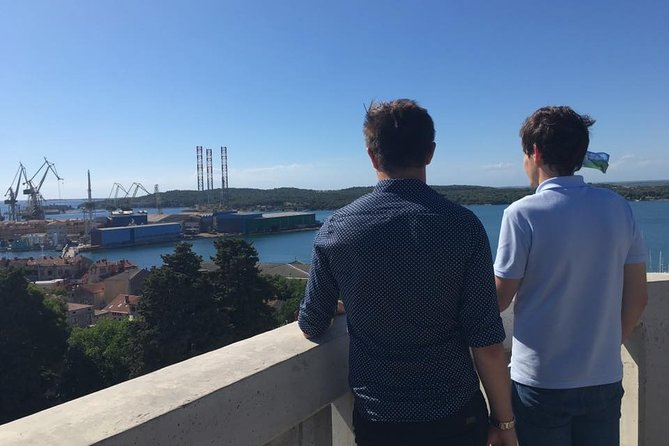
Stop 3 is the Small Roman Theatre—remains of an amphitheater that once stood outside the city walls on the hillside of Zaro. It’s also about 10 minutes, and it’s free. This stop has a different vibe from the arena: more of a “place-reads-like-a-ruin” feeling, and that change of scenery helps the tour from becoming repetitive.
This is the stop you’ll want to consider most if you have mobility concerns or you dislike slopes. Since it’s on a hillside, you should expect some change in elevation as you move and stand. The upside is that the location gives you a sense of how Roman structures were placed relative to the city’s boundaries.
If you’re trying to understand how Romans used space—inside walls versus outside, staged performances versus arena spectacles—this is the part of the route that can click. It’s small, but it has a strong “how a city was organized” angle.
The coffee or tea break: a small inclusion that changes the experience
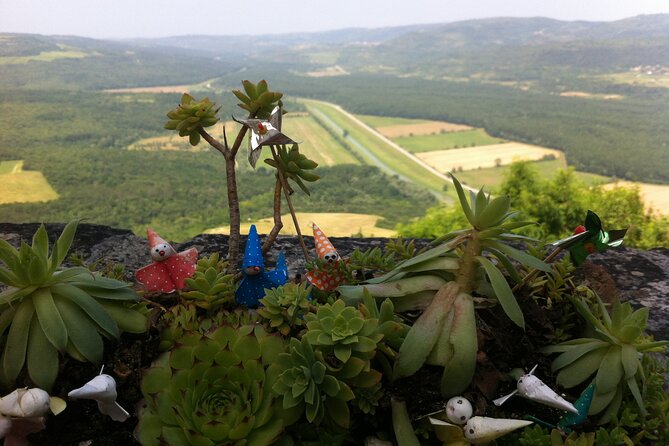
This tour includes a coffee or tea break during the walk. It’s not a huge, flashy perk, but it’s a smart one. In a short tour, energy dips are real. A pause also helps you reset your attention so you can actually absorb what the guide is saying at the next stop.
I appreciate that it’s not framed as a long stop at a café. You get a drink and keep moving, which helps preserve the 2-hour schedule. If you’re sightseeing in warmer months, this kind of break can be the difference between feeling good at the end versus counting the minutes.
Guides and pacing: what you should expect from the experience

The real fuel for a walking tour is the guide, and the feedback on this one is consistently strong. You’ll see named guides like Dina, Jadranka, and Maslinka praised for being professional, fun, and tuned into what people want to learn next. The common thread is that the guide doesn’t just recite dates. They explain what you’re looking at and why it mattered.
Another pattern in the feedback: tours sometimes run longer than the advertised 2 hours when the group’s interests call for it. That’s not something you should plan your day around, but it’s a sign that the guide approach can be flexible. If you ask good questions, you’re more likely to get good answers.
Also, the group is capped at 15 travelers, and that matters for how the guide can move with you. In a smaller group, you’re less likely to feel invisible at the back. You’re also more likely to get a better match between your interests and what the guide emphasizes.
Price and value: is $107.06 a fair deal?
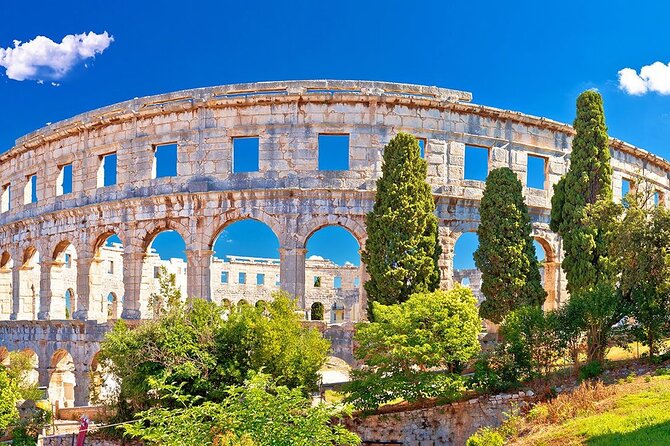
At $107.06 per person, it’s not the cheapest way to see Pula’s Roman sites—but it also isn’t trying to be. Here’s how the value stacks up based on what’s included:
- A local guide for the full experience
- Admission ticket included for the Pula Arena stop
- Free entry at Tempio di Augusto and the Small Roman Theatre remains
- A coffee or tea inclusion
- A small group limit of max 15, with an English format
What you should watch is what isn’t included: there’s no hotel pickup or drop-off. So you’ll need to make your way to the meeting point at Pula ArenaFlavijevska ul., 52100, Pula. If you’re starting from far away, that logistically becomes your hidden cost.
Still, for many visitors, paying for a guided plan that bundles admission and keeps you on a tight schedule is easier than piecing things together solo. If you’re only spending a short time in Pula, this tour can act like a high-impact “foundation layer” for the rest of your exploring.
Logistics that matter: meeting point, timing, and group size
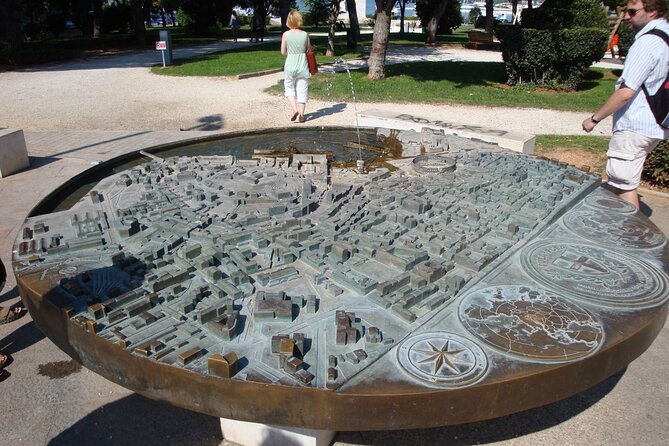
This is a meeting-point tour. You start at the Pula Arena and the activity ends back at the same place. That loop-back detail sounds minor, but it makes your day smoother. You don’t have to worry about where you’ll end up, especially if you’re connecting to dinner or another plan.
The tour requires a minimum number of full-price adult bookings to operate. If that minimum isn’t met, you get a full refund or an offered alternative date/experience. The good news: this isn’t “you might not go.” It’s handled with a refund if the tour cancels.
The group size is limited to 15 travelers, which helps keep the experience from feeling like a marching band. You’ll usually be able to hear the guide and stay oriented through each transition.
What to wear and bring for a smooth walking experience
The dress code is smart casual. That doesn’t mean stiff clothes; it means don’t show up in pure workout gear or beachwear if you can avoid it. Comfortable walking shoes matter more than anything, especially since one of the stops is described as being on a hillside of Zaro.
You’ll receive confirmation at booking, and the tour uses a mobile ticket. Plan to keep your phone battery topped up. Also, the tour is offered in English, so you won’t have to translate or guess what’s going on.
Service animals are allowed, and the tour is near public transportation, which is helpful if you’re not staying right in the arena area.
Who this Pula Roman Heritage Walking Tour suits best
This is a strong fit if you want a guided highlights plan with clear structure. It’s ideal for visitors who:
- Want to see the Pula Arena and understand what you’re looking at
- Appreciate short, organized stops rather than slow museum-style wandering
- Like having a guide explain Roman sites instead of reading alone for hours
- Prefer small-group pacing (max 15)
It’s also a good match if you’re traveling on a schedule where morning and afternoon availability matters. The tour offers both time options, so you can choose what best fits your day.
If you dislike walking or don’t like slopes, the Zaro hillside stop is the one to think about first. Also, since there’s no hotel pickup, you’ll want to plan your route to the arena meeting point.
Should you book it
Yes, I think you should book the Pula Roman Heritage Walking Tour if you want a guided, efficient Roman overview that doesn’t eat your whole day. You get three Roman stops in about two hours, with a mix of included and free admissions, plus coffee or tea to keep the pace humane.
I’d skip it (or at least reconsider the fit) if you’re looking for an unhurried, deep archaeological experience or if you need hotel pickup. Also, if walking on a hillside is a deal-breaker, focus on whether the Zaro stop works for you.
If you’re visiting Pula for the first time and want the Roman story tied together quickly, this tour is a smart way to start—and it leaves you free to explore the rest of Pula with a better sense of what you’re seeing.
FAQ
How long is the Pula Roman Heritage Walking Tour?
It lasts about 2 hours (approximately).
What is the price per person?
The price is $107.06 per person.
Is the tour offered in English?
Yes, the tour is offered in English.
Where do I meet for the tour, and where does it end?
You start at Pula Arena, Flavijevska ul., 52100, Pula, Croatia. The tour ends back at the same meeting point.
What are the main stops on the tour?
You’ll visit the Pula Arena, Tempio di Augusto (Temple of Augustus), and the Small Roman Theatre remains (on the hillside of Zaro).
Are any admission tickets included?
Yes. Admission ticket to the Pula Arena is included. Tempio di Augusto and the Small Roman Theatre remains are listed as free.
Is coffee or tea included?
Yes, the tour includes a coffee or tea.
Can I cancel for a full refund?
You can cancel for a full refund up to 24 hours in advance of the experience’s start time.