REVIEW · SRINAGAR
Srinagar Old City Heritage Walking Tour with Kahwa Tea
Book on GetYourGuide →Operated by Wildfloc Adventures · Bookable on GetYourGuide
Srinagar’s alleys tell stories if you slow down. This Heritage Walking Tour turns the Old City into a living classroom, with a local historian leading you past shrines, Mughal-era architecture, quieter courtyards, and everyday market life, then pausing for real conversations. It’s a short, focused outing (small group, 3 hours) that’s designed for understanding what you’re seeing—not just checking boxes.
What I like most is the storytelling that connects buildings to the people who shaped them, and the Kashmiri kahwa tea stop that feels like a local pause rather than a tourist prop. One consideration: this is still a walking route through winding alleys, so if your fitness is low or you need accessibility support, it may not work well for you.
In This Review
- Key things you’ll notice on this Srinagar Heritage Walk
- Entering the Old City from Pather Masjid
- How the 3-hour pacing works (and why it feels doable)
- Pathar Masjid to the shrine highlights: what the guide helps you see
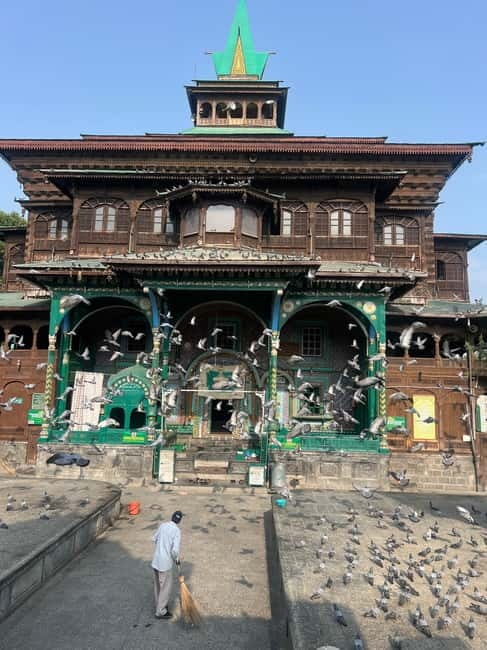
- Khanqah-e-Budshah and Budshah Tomb: the story you’ll remember
- Jamia Masjid Srinagar finish: why the ending feels meaningful
- Markets, courtyards, and crafts: the human side of heritage
- The Kahwa tea stop: the most relaxing part
- Price and value: is $32 a good deal?
- Who should book, and who should skip
- Should you book this Srinagar heritage walk with kahwa tea?
- FAQ
- Where does the tour start and end?
- How long is the Srinagar Old City Heritage Walking Tour?
- What group size is this tour?
- What languages is the live guide available in?
- Is kahwa tea included?
- What’s included besides the walking guide?
- What should I bring?
- Is transport included?
Key things you’ll notice on this Srinagar Heritage Walk
- Start at Pather Masjid: the walk begins right in the fabric of the neighborhood, not at a museum entrance.
- A real historian-led format: guides such as Syed (Wildfloc Adventures) and Mr. Furqan are known for connecting architecture to stories and legends.
- Khanqah-e-Budshah and Budshah Tomb context: you get the why behind what you’re seeing, not just the what.
- Artisan conversations: you’ll meet local craftspeople and learn how age-old work continues today.
- Shopping time built in (15 minutes): you can pick up small souvenirs without the whole tour turning into a mall detour.
- Kahwa tea at the end: a warm finish that matches the tone of the old city—slow, friendly, and human.
Entering the Old City from Pather Masjid
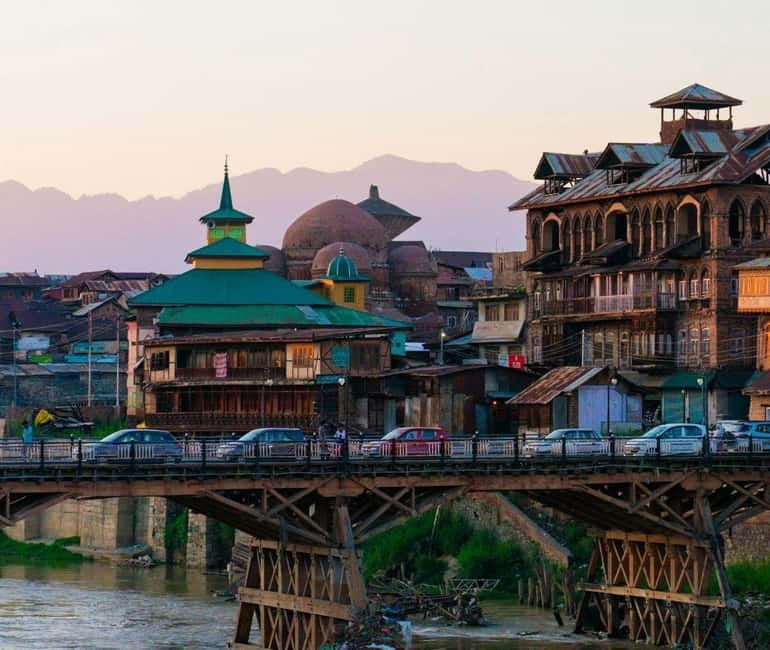
The tour kicks off at Pather Masjid, which is a smart choice because it immediately places you inside Srinagar’s everyday geography. From the first briefing, you’re not staring at monuments like they’re random landmarks. You’re learning how to read the area: where religious influence shows up, how styles changed over time, and why certain places became anchors for community life.
This opening segment is also where your guide sets the pace. Expect a guided intro of about 30 minutes, then a short walk to get you oriented. The route is designed so the walking stays manageable while still giving you that “I’m actually in the old city” feeling.
Practical note: wear comfortable shoes from the start. Even when the breaks are frequent, you’ll be on foot through narrow paths where footing matters more than speed.
How the 3-hour pacing works (and why it feels doable)
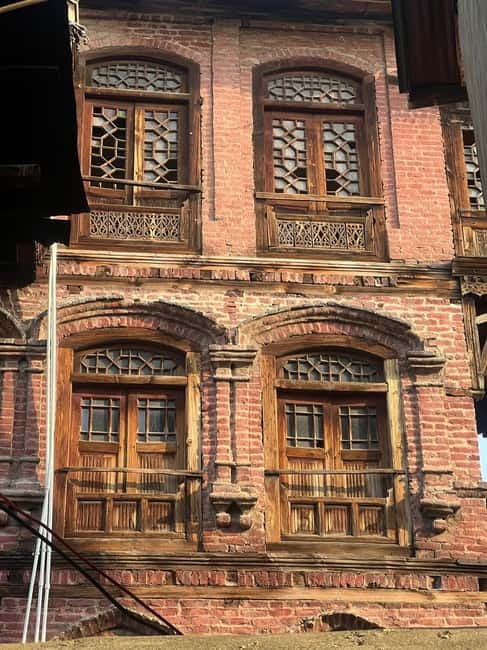
This is a small-group tour capped at 10 participants, which changes the vibe in a good way. You can ask questions, you’re not shouted at over a crowd, and the guide can adjust if people want extra explanation.
Time-wise, you’ll get a rhythm of:
- guided segments (roughly half-hour blocks),
- short transitions on foot,
- and a built-in shopping stop.
In other words, it doesn’t feel like one long march. It’s more like a sequence of “story stops,” where you pause, listen, look, and then move again.
If you’re coming from a hotel and expect a relaxed, sit-down experience, adjust your expectations. This is a walk-first tour, and the talking is designed to match the walking pace.
Pathar Masjid to the shrine highlights: what the guide helps you see
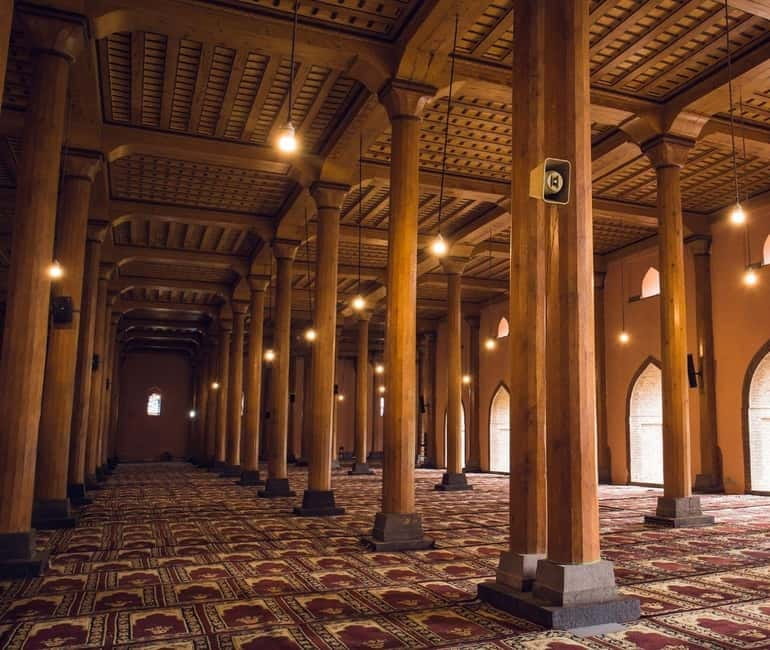
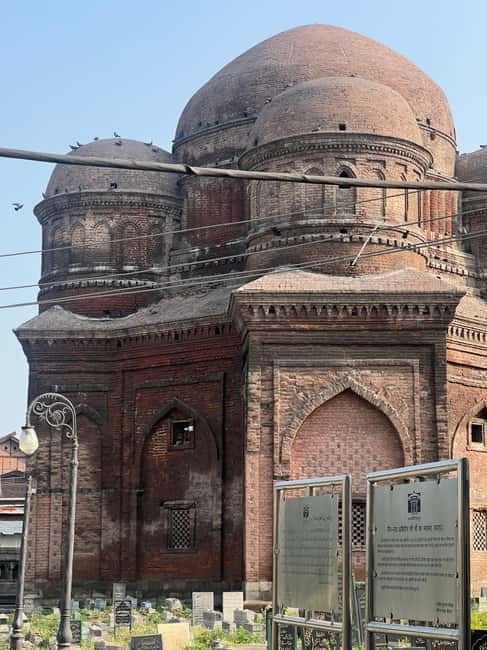
After the first orientation, the tour builds toward the religious and architectural highlights of Srinagar’s old city. You’ll move through areas tied to different layers of influence—places that reflect shifts in faith, empire, and cultural exchange over time.
The big takeaway: you learn to spot details while you’re standing there. Guides tend to point out how design choices signal purpose—where you’ll notice changes in style, what certain spaces were meant to do, and why some sites became pilgrimage magnets.
This matters because Srinagar’s old city isn’t just pretty. It’s meaningful. When you understand the purpose of a shrine or mosque, the architecture stops looking like decoration and starts looking like communication.
Khanqah-e-Budshah and Budshah Tomb: the story you’ll remember
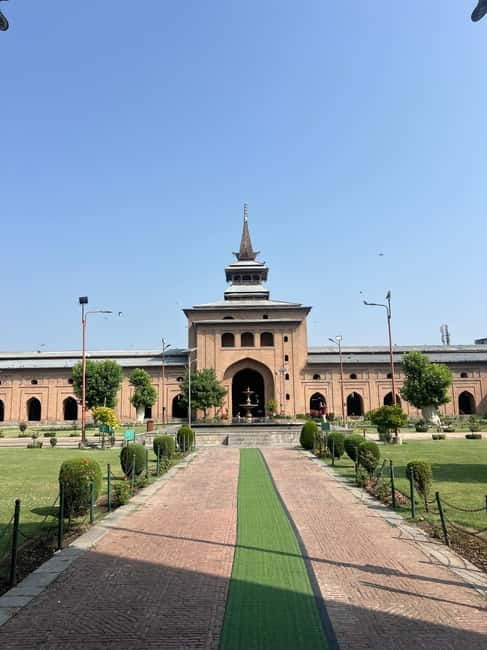
One of the most praised parts of the experience is the visit connected to Khanqah-e-Budshah, including the Budshah Tomb area. Many people end up calling this the favorite stop because the guide’s storytelling makes the complex feel personal and legible.
This is where the tour shifts from general “history talk” to place-specific meaning. You’ll hear legends and facts tied to the site, and you’ll also get guidance on how to read the architecture—what looks like it’s just decoration often has a functional reason, a symbolic role, or a story behind it.
If you’re even mildly interested in how past rulers and spiritual leaders left their mark, this portion usually clicks fast. The pace here is set up for attention: enough time to look closely, and enough explanation to make those details connect.
Jamia Masjid Srinagar finish: why the ending feels meaningful
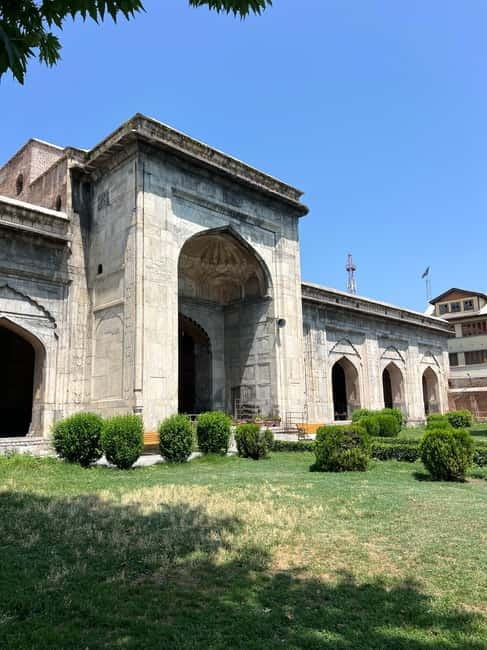
The tour ends at Jamia Masjid Srinagar, with a guided visit that brings everything together. If you’ve been paying attention earlier, you’ll notice the guide uses the final stop to reinforce themes you encountered along the way: how religious architecture anchors a neighborhood, how past influences show up in style, and how people use these spaces in daily life.
This ending approach works well because it gives you a satisfying arc. You start with orientation at Pather Masjid, you learn through multiple stop-and-go sections, and then you close with one of the most important landmarks in the area. It feels like a complete learning loop rather than a random selection of stops.
Tip: take a breath here. Many tours rush your exit. This one gives you time to absorb before you move on with your day.
Markets, courtyards, and crafts: the human side of heritage
Not every heritage walk is built to show real life, but this one includes busy markets, quiet courtyards, and time that connects you to local makers.
You’ll visit areas where daily trade and neighborhood activity spill into the story of the old city. The guide helps you understand what you’re seeing and why it belongs in the heritage conversation—not just as scenery.
You’ll also meet local artisans, which is one of the best ways to understand culture without turning it into a staged performance. You’ll get to hear about crafts and traditions that people keep going, not just objects people sell.
Small shopping time (15 minutes) is included, which I like because it prevents the whole outing from turning into shopping-only mode. You get a chance to ask prices and look around, then the tour moves on.
One practical consideration: market areas can be warm and full of movement. Bring sunscreen and sunglasses, and plan to move calmly through narrow sections.
The Kahwa tea stop: the most relaxing part
The tour includes kahwa tea at a local spot—traditional Kashmiri tea served during the walk. This isn’t only about the drink. It’s about how the old city hospitality feels when you’re sitting with strangers who are now your temporary hosts.
Kahwa works as a reset button. You stop, warm up, and get a small window for casual conversation with locals. It also gives you a contrast to the architecture-focused time before and after.
If you’re sensitive to spice or strong flavor, kahwa can still be intense in taste, but it’s usually part of the gentle, communal tone of the region. Treat it like a cultural meeting point, not a quick snack.
Price and value: is $32 a good deal?
At $32 per person for about 3 hours with a live guide, this tour is priced like a focused experience rather than a long sightseeing package. You’re paying for:
- a guide-led walking route,
- multiple guided stop segments,
- visits to shrines and architectural landmarks,
- artisan contact,
- and the included kahwa tea.
For value, the big question is whether you want context. If your travel style is “tell me what I’m looking at,” this tends to be a good fit. If you mainly want a self-guided photo stroll, you might feel constrained by the schedule and guided stops.
The small group size (up to 10) also matters here. In a crowded city center, fewer people often mean better explanations and easier pacing.
Who should book, and who should skip
This tour is best for you if you enjoy:
- learning through guided storytelling,
- religious and architectural sites,
- neighborhood markets and craftspeople,
- and taking a break for a cultural tea moment.
It’s not suitable for children under 10, pregnant women, wheelchair users, visually impaired people, or anyone with low fitness. The route is through winding alleys, and the format assumes you can walk comfortably.
Also remember the dress and behavior rules. You’ll be visiting religious places, and the tour explicitly doesn’t allow things like pets, weapons or sharp objects, baby strollers, intoxication, vaping, alcohol and drugs, and making noise. Short skirts are also not allowed, and bare feet are specifically restricted.
Bring what’s listed: comfortable shoes, sunglasses, sun hat, and sunscreen.
Should you book this Srinagar heritage walk with kahwa tea?
I’d book it if you want Srinagar’s old city to make sense quickly. The tour’s strongest angle is the guide-led connections—how Khanqah-e-Budshah/Budshah Tomb and Jamia Masjid Srinagar become more than impressive buildings once someone explains what to notice. Add artisan conversations and a proper kahwa break, and you get a mix that feels local rather than staged.
I would skip it if you need accessibility support, you don’t handle walking well, or you’re hoping for a relaxed “hop on, hop off” experience. This is structured, guided, and mostly on foot.
If your priority is understanding culture through places—shrines, architecture, crafts, and conversation—this is a solid way to spend a half-day in Srinagar.
FAQ
Where does the tour start and end?
The tour starts at Pather Masjid and finishes at Jamia Masjid Srinagar.
How long is the Srinagar Old City Heritage Walking Tour?
The duration is 3 hours.
What group size is this tour?
It’s a small group, limited to 10 participants.
What languages is the live guide available in?
The guide is available in English, Hindi, Urdu, and Kashmiri.
Is kahwa tea included?
Yes. Kahwa (traditional Kashmiri tea) is included at a local spot during the tour.
What’s included besides the walking guide?
The experience includes guided heritage walking, visits to ancient shrines, forgotten temples, Mughal-era architecture, markets, and quiet courtyards, plus meeting local artisans and conversations with locals.
What should I bring?
You should bring comfortable shoes, sunglasses, a sun hat, and sunscreen.
Is transport included?
No, transport is not included.