REVIEW · DALI
9 days Ancient Town Tour
Book on Viator →Operated by Ciel Yunnan · Bookable on Viator
Tea Horse Road towns take center stage here. This 9-day Yunnan trip mixes big-ticket sights with smaller villages, so you get variety instead of only “Instagram highlights,” all while moving by air-conditioned vehicle with an English-speaking guide. I like how the route builds a clear thread through the region’s old trading history and multiple ethnic cultures.
I especially like the day-by-day rhythm: you’ll start with a guided visit, then get time to wander on your own in places like Dali Old Town, Shaxi, and Lijiang Ancient Town. The included meal plan (most breakfasts plus several lunches and dinners) also takes pressure off. One thing to consider: it’s a marathon pace with several long drives, and if you want the highest-altitude options around Jade Dragon Snow Mountain, you should flag it in advance.
In This Review
- Key things I’d focus on before you book
- Price and what $1,820 buys you (and what it doesn’t)
- Dali’s arrival day: Old Town first, with an easy transfer
- Day 2: Xizhou Morning Market, a Hui village stop, then Weishan
- Day 3: Weibaoshan Taoist temples and the “Millennium Bai” of Nuodeng
- Day 4: Shaxi Ancient Town and bridge views on the way
- Day 5: Shibaoshan Caves, Baoxiang Temple, then a bike ride/horse option
- Day 6: Tiger Leaping Gorge and then Shangri-La Old Town
- Day 7: Tibetan market time, then Ganden Sumtseling Monastery (Little Potala)
- Day 8: Early Lijiang Ancient Town, Black Dragon Pool, Baisha, Shuhe, and Yuhu
- Day 9: Departure from Lijiang airport or railway station
- Logistics that matter: pace, private groups, and what to pack
- Should you book this Ancient Town Tour with Ciel Yunnan?
- FAQ
- How long is the Dali Ancient Town 9-day tour?
- Where does the tour begin and where does it end?
- Is pickup from the airport or railway station included?
- Is this a private tour?
- What is included in the price?
- Are admission tickets included or free?
- What should I budget for that is not included?
- What’s the cancellation timeline?
Key things I’d focus on before you book
- Private-group tour feel: only your group participates, not a big cattle-call lineup.
- Tea Horse Road coverage: you’ll see more than just the famous cities.
- English-speaking guidance: your guide helps you make sense of temples, villages, and architecture.
- A real mix of cultures: Bai, Hui, and Tibetan areas show up in the plan.
- Comfort details built in: air-conditioned transport and bottled water are included.
- Time for wandering: multiple stops include free time to explore at your own pace.
Price and what $1,820 buys you (and what it doesn’t)
At $1,820 for roughly 9 days, the value mostly comes from what’s bundled. You’re getting accommodation, an air-conditioned vehicle, an English-speaking guide, bottled water, plus a meal plan: 8 breakfasts, 7 lunches, and 3 dinners. On top of that, some key admissions are listed as included, like Dali Old Town and several temple/scenic stops.
What’s not included is also clear: tips for driver/guide, travel insurance, flights, and the Chinese visa fee (if you need one). Personal expenses are on you, which is normal, but it’s still worth budgeting for snacks and any optional add-ons.
If you prefer a stress-free trip—where someone lines up transport, timing, and most meals—this kind of package can feel efficient. If you’re the type who loves building a route yourself and bargaining through local tickets, you might find it less flexible. The math is really about your style: do you want control, or do you want everything handled?
Dali’s arrival day: Old Town first, with an easy transfer

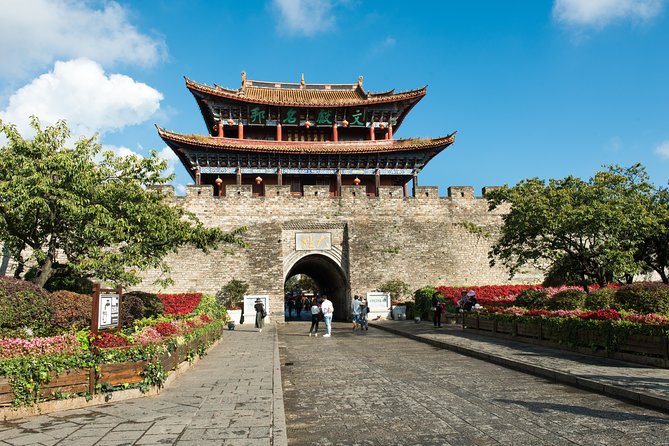
Your first day is built around getting you settled. A guide meets you at the airport or railway station with a nameplate and transfers you to your hotel by private car, with the hotel check-in typically after 14:00. After that, you start in Dali Ancient/Old Town, tied to the old Nanzhao imperial capital story.
This is a good choice for jet lag. You’re not driving immediately to something remote; you’re in an area where you can stretch your legs, grab dinner, and get your bearings. The guided portion also helps you understand what you’re seeing, instead of wandering blind among street layouts and restored facades.
One practical note: the included entrance ticket is listed, so you know that part won’t be a last-minute cost. The rest of the day’s flexibility depends on your arrival time, since the hotel handoff uses that 14:00 cutoff.
Day 2: Xizhou Morning Market, a Hui village stop, then Weishan
Day 2 leans into local life rather than only monuments. You’ll head to Xizhou Town for the Morning Market. It’s especially famous for old, well-preserved folk houses associated with Bai culture, and it’s scheduled as about an hour of sightseeing with the admission listed as free.
Next comes Donga Lianhua Village, a Hui minority settlement. On the way to Weishan, you visit the Tea and Horse Museum and a local mosque. For me, the value here is simple: the Tea and Horse Road wasn’t only about trade routes; it shaped food, religion, and community identity across centuries. Seeing the museum plus a working mosque helps you understand that history as something lived, not just displayed behind glass.
Then you land in Weishan Ancient City, with free time to wander wooden houses, small stalls, and a museum featuring unique artifacts. This is the day’s decompression window. You get to slow down and absorb the streets without being rushed.
Day 3: Weibaoshan Taoist temples and the “Millennium Bai” of Nuodeng
Day 3 begins with Weibaoshan Mountain and its Taoist temples. It’s described as one of China’s 13 famous Taoist mountains, with temples built across the Ming and Qing dynasties. Your guided visit runs about three hours with admission included.
This stop is worth it if you like architecture and symbolism. Taoist sites can feel repetitive at a distance, but Weibaoshan’s multi-temple layout over multiple dynasties gives you a clearer timeline of styles and religious art. Even if you don’t read Chinese, a guide can explain what each space is doing there.
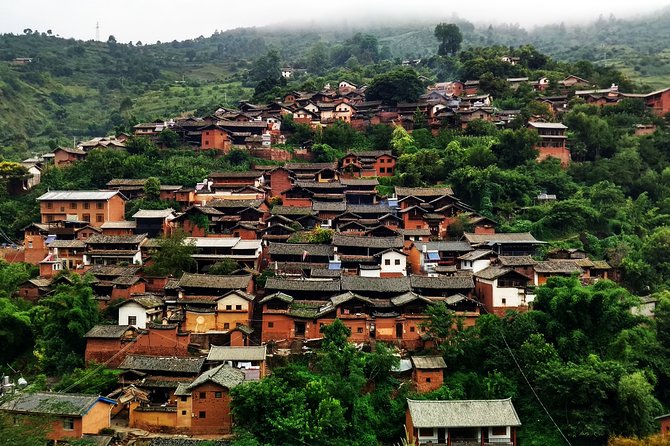
After that, you drive to Nuodeng (long day: about 220 km, roughly 4 hours). Nuodeng is often framed as a historic cultural village and described as the Millennium Bai Village. Admission here is listed as free, with time to wander and admire Ming and Qing-era buildings and cultural relics.
The drawback to this day is travel time. You’ll be spending a big chunk on the road, and that can make the sightseeing feel like it comes fast. If you’re prone to motion sickness, pack what you normally use—this route has multiple long transfers.
Day 4: Shaxi Ancient Town and bridge views on the way
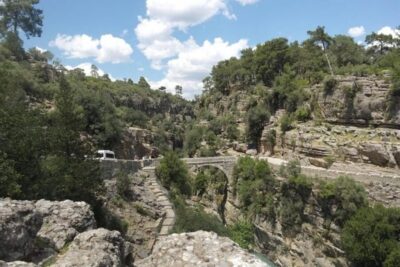
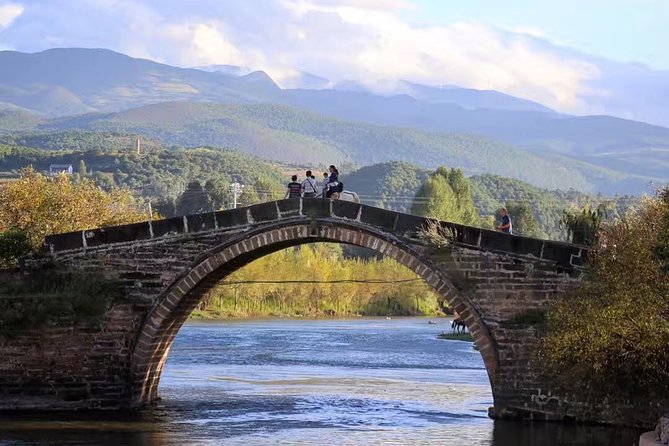
By Day 4, you start seeing the region’s personality sharpen. You head to Yunnan Shaxi Ancient Town after a drive (about 210 km, roughly 4–5 hours). On the way, you stop to see ancient bridges, then arrive for a couple hours of walking and exploring.
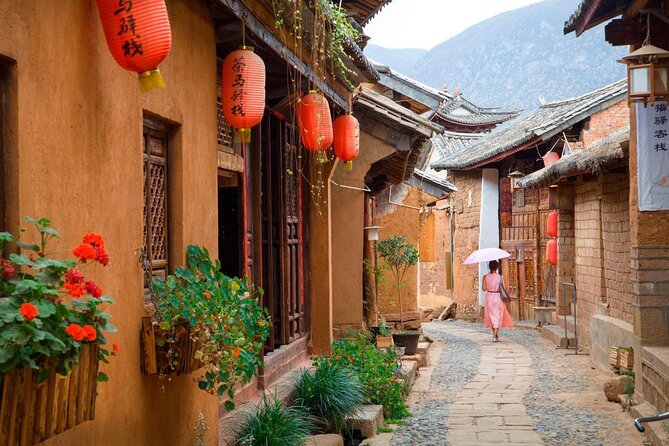
Shaxi is one of those places where you’ll enjoy the atmosphere as much as the sights. You’ll have time around the Shaxi River, plus spots like Xingjiao Temple and stage areas (the plan lists those as part of the wander time). Admission for this day is also listed as free for key portions.
This is the day where you can choose your energy. If you feel good, you’ll walk; if you’re tired, you can focus on river views and temple exteriors and just let the town work its way into your brain.
One practical consideration: Shaxi is scheduled as a shorter block compared with some other days. That can be a plus (less rushed), but it also means you should plan to prioritize what you want most—bridges and river for me, temples if you’re into spiritual architecture.
Day 5: Shibaoshan Caves, Baoxiang Temple, then a bike ride/horse option
Day 5 starts with a cliff-temple style experience. You’ll visit Shibaoshan Town, including a walk between Shibaoshan Caves and Baoxiang Temple. The temple is described as hanging on the cliff, with magnificent colorful Buddha statues kept inside, and admission is included.
This stop reads like a mix of hiking and looking—your time is about three hours for the morning. A highlight for many visitors is the sense of scale when you see Buddhist art installed in dramatic settings. If you have limited mobility, you’ll want to judge this carefully when you’re on the ground.
After the cave and temple time, you shift to Shaxi Ancient Town again in the afternoon. You can explore the surrounding countryside by bike or ride a horse, which is listed as included for the afternoon block. That optional choice is a big deal: it turns a “look at town” day into an actual change of pace.
If you go by bike, remember your comfort level. If you choose the horse ride, keep your expectations realistic: this is a practical travel service, not a luxury safari.
Day 6: Tiger Leaping Gorge and then Shangri-La Old Town
This is the day that changes scenery fast. You head to Tiger Leaping Gorge (Hutiao Xia), a dramatic canyon on the Jinsha River, and you’ll spend about two hours there with admission included.
Tiger Leaping Gorge is famous for a reason, but what makes it work on this itinerary is the context. You’re not just dropping in for a photo stop. You arrive after days of villages and temples, so the canyon feels like a reward: the natural “high drama” after cultural and architectural days.
From there, you continue to Shangri-La County (about 100 km, roughly 2.5 hours). You’ll stroll through Shangri-La Old Town and visit Guishan Temple, home to a massive prayer wheel. Admission for the Old Town portion is listed as free, while the temple visit has included items earlier in the day’s structure.
Evening time is listed as free, which matters because Shangri-La can be pleasantly walkable after a travel day. Just keep it realistic: this day is long on the road.
Day 7: Tibetan market time, then Ganden Sumtseling Monastery (Little Potala)
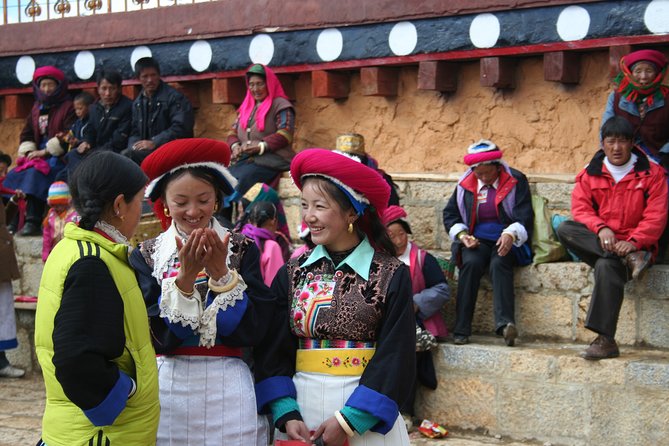
Day 7 is where Yunnan’s Tibetan side takes the lead. You’ll visit a local Tibetan market first, then move to the Ganden Sumtseling Monastery, described as the largest Tibetan monastery in Yunnan and nicknamed Little Potala. This part is about two hours with admission included.
The phrase Little Potala is a clue about what you’re seeing: a monumental, spiritually focused complex with strong visual identity. Even if you’re not a religion-history person, a monastery visit can hit differently when you understand how Tibetan communities organize daily life around prayer and learning.
After Shangri-La, the plan drives you to Lijiang (about 180 km, roughly 4–5 hours). That’s another big transit block, so expect the day to feel stretched. When you arrive, your best move is to stay calm and conserve energy for the next day’s Lijiang exploring.
Day 8: Early Lijiang Ancient Town, Black Dragon Pool, Baisha, Shuhe, and Yuhu
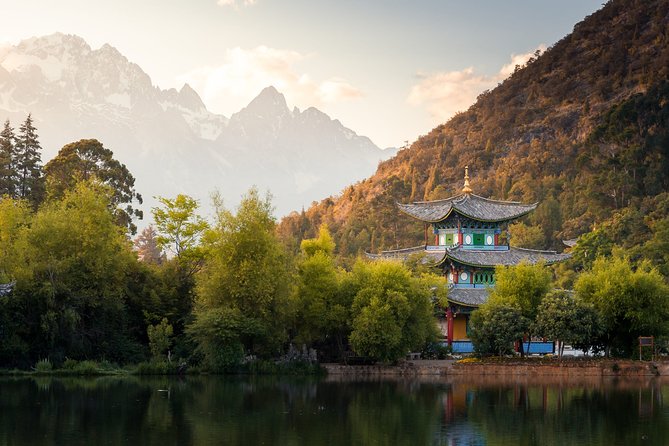
Day 8 is the packed highlight day. You start in Lijiang Ancient Town, with a plan to explore before crowds arrive. Later you visit Black Dragon Pool, plus watch or join local square dancing (the schedule lists it as an activity you may watch or join).
This mix is a plus. Ancient towns can become museum-like if you arrive late in the day, but starting earlier keeps it more human. Black Dragon Pool also provides a softer, scenic pause after temple days.
In the afternoon, you head to Baisha Village for a Lijiang mural experience, then to Jade Lake Village (Yuhu) for views over the Jade Dragon Snow Mountain. The plan ends with visits to Naxi Baisha village and Shuhe village.
Here’s the one you should pay attention to: altitude. If you want the higher-altitude options around Jade Dragon Snow Mountain, you need to tell your team in advance so they can arrange timing and support. That’s not just a comfort issue; it can affect whether you enjoy the day or spend it struggling.
Day 9: Departure from Lijiang airport or railway station
Your final day is designed to be simple. A driver picks you up at your hotel and takes you to Lijiang airport or the railway station, depending on your departure plans. Then you leave from Lijiang.
This is a good ending if you want your last day to feel low-stress rather than filled with another “must-see” stop. Just plan your hotel checkout time around your pickup, since the itinerary’s control ends when you head to the station.
Logistics that matter: pace, private groups, and what to pack
This tour is a private tour/activity, meaning only your group participates. That’s a real quality-of-life improvement: you’re not waiting on a dozen unrelated schedules. It also helps the guide explain things faster and adjust pacing to your comfort.
Still, the itinerary is not slow. You have multiple long drives, such as roughly 4–5 hours and 220 km segments. Even with breaks, the overall feel can be like a careful sprint across Yunnan.
You also need moderate physical fitness. The cave and cliff-temple day in particular is a “pay attention to your comfort” day. If you’re not used to walking up stairs or uneven surfaces, it’s worth mentioning to your guide early so they can guide you on what to prioritize.
For packing, stick to basics: comfortable shoes, light layers (temple areas can feel cooler), water (you’ll have bottled water included), and anything you use for motion sickness if you’re sensitive. Bring a small bag for entrance tickets and personal items, even if you’ll use a mobile ticket for some entries.
Should you book this Ancient Town Tour with Ciel Yunnan?
I’d book this if you want an organized route through Dali, Shaxi, Shangri-La, and Lijiang without spending your vacation managing logistics. The mix of ancient towns, minority village visits, and major spiritual sites is hard to assemble yourself—especially if you don’t speak Mandarin.
This is also a strong pick if you like early exploration. The plan specifically targets less-crowded time in Lijiang Ancient Town, and that often makes the difference between a frantic photo run and a more relaxed wander.
I would not book it if you want a slow, “stay put” style trip. The schedule includes long transfers and a fairly full set of stops across nine days. If you’re chasing rest above all else, you might feel squeezed.
FAQ
How long is the Dali Ancient Town 9-day tour?
The tour is approximately 9 days.
Where does the tour begin and where does it end?
It begins in Dali, with pickup from the airport or railway station, and it ends in Lijiang, with transfer to the Lijiang airport or railway station.
Is pickup from the airport or railway station included?
Yes. On Day 1, a guide picks you up at the airport or railway station and transfers you to your hotel by private car.
Is this a private tour?
Yes. It’s a private tour/activity with only your group participating.
What is included in the price?
Included items are an air-conditioned vehicle, an English-speaking guide, bottled water, accommodation, and meals (8 breakfasts, 7 lunches, and 3 dinners). Some admission tickets are also listed as included.
Are admission tickets included or free?
Some admissions are listed as included (for example, Dali Ancient and several scenic/temple stops). Other items are listed as free. The exact mix changes by day, based on the schedule.
What should I budget for that is not included?
Tips for the driver and guide are not included (they’re appreciated). Also not included are personal travel insurance, flight tickets, the Chinese visa fee, and personal expenses.
What’s the cancellation timeline?
You can cancel up to 6 days in advance for a full refund. Canceling 2–6 days before gives a 50% refund, and less than 2 days before is not refunded.