REVIEW · ATHENS
Athens: Combo Ticket for Acropolis & 6 ancient sites
Book on Viator →Operated by KeyTickets · Bookable on Viator
Seven sites, one pass, and you choose the pace. This combo ticket pairs a pre-booked Acropolis timeslot with free entry to six major archaeological stops, all usable across a 5-day window. It’s a smart way to see more of Athens without locking yourself into one frantic, single-day route.
I especially like two things about it: first, you get that fixed Acropolis entry time, which helps you manage your day on a hill that’s usually packed. Second, you can bounce between the other monuments at your convenience, as long as they’re open and you activate the pass when you arrive at the Acropolis.
One drawback to plan around: the audio experience is optional, and the audio setup may be finicky—also, earphones aren’t included, so you’ll want to have your own. If you’re counting on the audio working perfectly every step, budget a little patience (and charge your phone).
In This Review
- Key points before you go
- How the Athens combo pass really works (and why timing matters)
- Acropolis of Athens: Parthenon views with a 3-hour plan
- Ancient Agora: Hephaistos and the Church tied to St. Paul
- Roman Agora and a quick Zeus Temple stop near Syntagma
- Lyceum of Aristotle: a place linked to big ideas
- Hadrian’s Library: the One Hundred Column Library effect
- Kerameikos: potters, vases, and Athens beyond the postcard route
- Audio tours, earphones, and your phone setup (don’t skip this part)
- A smart way to plan your time across 1 to 5 days
- Value check: why this combo can be worth it
- Should you book this Athens combo pass?
- FAQ
- Do I choose a time slot for the Acropolis only?
- How long do I have to use the ticket?
- What sites are included with this combo ticket?
- Does the ticket include the Acropolis Museum?
- Is there a guide on this experience?
- Are earphones included for the audio tours?
- Is the audio tour included?
- Who is this ticket for?
- Can I cancel or change the booking?
- What if I have trouble using my ticket at a site?
Key points before you go

- Timed Acropolis entry: choose the date/time for the Acropolis visit, then use the rest of the sites during opening hours.
- Five-day activation window: once you activate at the Acropolis, you have up to 5 days to visit the other 6 sites.
- Parthenon + Agora power combo: you’ll pair the iconic Acropolis views with major classical stops like the Ancient Agora.
- High-value add-on sites: Hadrian’s Library and Kerameikos round out the experience beyond the usual headline attractions.
- Optional self-guided audio: audio is offered for Acropolis, Ancient Agora, and Monastiraki–Kerameikos if you select it.
How the Athens combo pass really works (and why timing matters)
This ticket is built around a simple idea: you only have to commit to one strict moment—your Acropolis visit. You pick a date and timeslot that applies to the Acropolis itself, then you use the pass to enter the other 6 included monuments anytime within their opening hours and within 5 days of activating at the Acropolis.
That design matters because the Acropolis is the bottleneck. When your timed entry is set, you can structure your day around it, instead of waiting around while your ticket time slips away. It also means you can split the rest of the sites across multiple days if Athens traffic, museum visits, or just sheer energy levels get in the way.
You can also read our reviews of more tours and experiences in Athens.



Acropolis of Athens: Parthenon views with a 3-hour plan
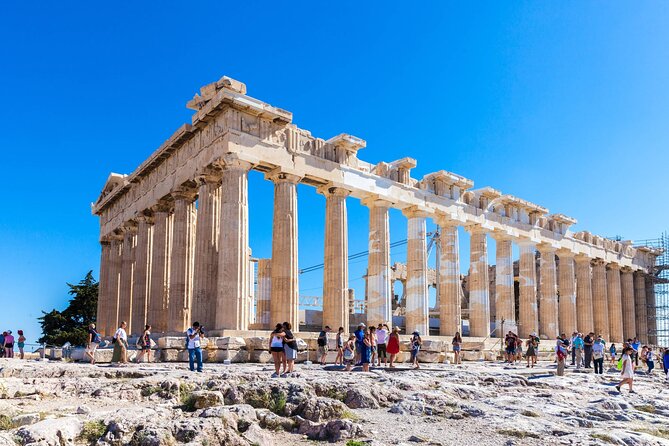
At the Acropolis, you’re stepping onto a hill about 150 meters high, dominated by the Parthenon. This is the spot that pulls most people to Athens, and it’s easy to see why: the ruins are iconic, and the viewpoints over the city can be jaw-dropping.
The pass includes admission to the Acropolis with a recommended 3-hour visit window. That’s long enough to take your time around the main areas without feeling like you’re sprinting between photo stops. If you choose your Acropolis timeslot well, you’ll likely spend less time reacting to crowds and more time actually looking at what you came for.
A practical note: the Acropolis is partly a work-out. Even if you’re not a big “stairs” person, plan for uneven ground and some climbing. Bring water, wear shoes that won’t slip, and keep your phone ready in case you want the optional audio.
Ancient Agora: Hephaistos and the Church tied to St. Paul
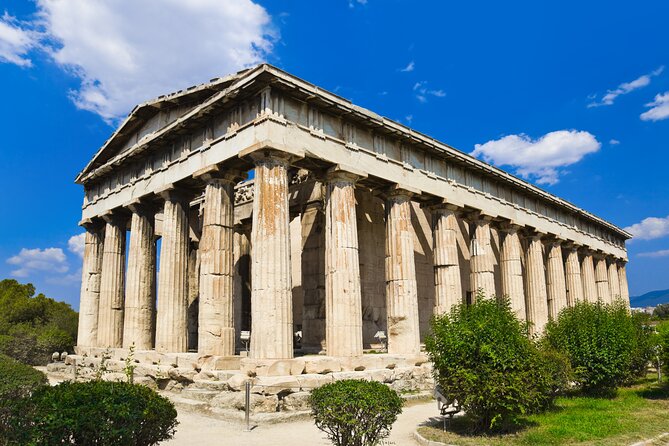
If the Acropolis is Athens at full volume, the Ancient Agora is where the city feels more human scale. You’ll find two standout inclusions here: the Temple of Hephaistos and the Church of the Holy Apostles.
Here’s why I like this stop: the Temple of Hephaistos is described as the world’s best-preserved ancient Greek Doric temple. That means you’re not only looking at ruins—you’re looking at something that still reads clearly, with lots of structure surviving. The Church of the Holy Apostles adds another layer: St. Paul is noted as having visited and preached there, which creates a bridge between eras in the same neighborhood.
You get up to 2 hours for this section, and that’s a good length. In that time, you can wander slowly, stop when a detail catches your eye, and still have energy left for the next sites.
Roman Agora and a quick Zeus Temple stop near Syntagma
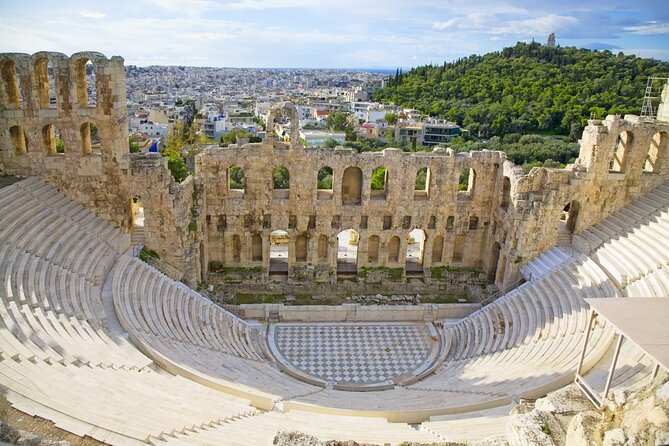
Between the Acropolis and the rest of the city lies another important slice: the Agora Romaine. This Roman Agora area was once the focus of public life in Athens, so it’s a reminder that Athens didn’t stop being a center after the classical period. Even if you move quickly, it’s worth stepping into this zone to see how the city kept evolving.
Then there’s Tempio di Zeus Olimpio. This one is great for people who like a “short stop with context.” The site sits near the center of Athens, about a quarter mile southeast of the Acropolis, and within about a quarter mile south of Syntagma Square and the Parliament Building.
What makes Zeus Olympios interesting is the scale story: until 2 AD, it was the largest temple in Greece, bigger than the Parthenon, and it reportedly consisted of 104 pillars. The scheduled time for this stop is very short (just about 2 minutes), so treat it as a quick look-plus-linger moment rather than a long deep read.
Lyceum of Aristotle: a place linked to big ideas
The Archaeological Site of the Lyceum of Aristotle is included with up to 1 hour access. Even without turning it into a classroom, the name alone points you toward why people care about this area. It’s associated with Aristotle, and the Lyceum is part of the Athens story about learning, debate, and schools of thought.
This is also a nice counterweight to the heavier crowd magnets. After the Acropolis and major Agora zones, the Lyceum helps you broaden your Athens picture without demanding a huge time commitment.






Hadrian’s Library: the One Hundred Column Library effect
Hadrian’s Library is one of those sites where the details help you imagine what it once felt like. It’s located north of the Athenian Acropolis and is sometimes called the One Hundred Column Library. The description you’re given focuses on a spacious setting and a gallery decorated with one hundred columns.
This stop works well if you like architecture and proportions—because even at a glance, it’s easier to picture the original function when you understand the layout. With about 1 hour allocated, you have time to slow down, look around, and get a feel for the scale.
If you’re doing this across multiple days, Hadrian’s Library is a strong “second-day anchor” stop. It’s central enough that it fits into a wider plan, but it doesn’t dominate the entire experience the way the Acropolis does.
Kerameikos: potters, vases, and Athens beyond the postcard route
Kerameikos sits on the northwest edge of the city, and it’s included with about 1 hour access. This is the kind of site that changes how you think about ancient Athens because it’s tied to craft and everyday production, not only politics or temples.
The key detail here: Kerameikos was a settlement of potters and vase painters, and it was the main production center of the famous Attic vases. That means you’re not just looking at stones—you’re looking at the kind of place where art, trade, and technique were made day after day.
If you want a break from the biggest crowd corridors, Kerameikos is a solid choice. And it pairs nicely with the optional self-guided audio tour for Monastiraki–Kerameikos, if you select that add-on.
Audio tours, earphones, and your phone setup (don’t skip this part)
This experience may include self-guided audio tours for the Acropolis, Ancient Agora, and Monastiraki–Kerameikos if you choose the option. The audio can be helpful because it gives you a way to connect the dots while you walk, especially when your eyes are already busy with monumental ruins.
However, earphones aren’t included. If you want audio, bring your own headphones or earbuds before you head out. It’s also worth saving your ticket access in a way you can use on the spot. Wi‑Fi can be unreliable in travel, and you don’t want to be stuck troubleshooting your pass while the site door opens and crowds start moving.
If the audio doesn’t load instantly, don’t panic. Keep moving, try again when you have a moment, and treat audio as a bonus rather than the backbone of your visit. The ruins themselves still do the heavy lifting.
A smart way to plan your time across 1 to 5 days
You don’t have to do everything in a single day. In fact, you’ll enjoy it more if you split it up.
Here’s a practical approach I’d use:
- Day 1 (Acropolis + a nearby classic): Put your timed Acropolis slot first. Then plan either Ancient Agora or the Roman Agora zone after, depending on your energy.
- Day 2 (Zeus + Lyceum + Hadrian’s Library): Keep the city-center stop(s) together. Zeus Olympios is close to Syntagma, and Hadrian’s Library is north of the Acropolis, so you can build a smooth arc without backtracking.
- Day 3 (Kerameikos): Give yourself time here to slow down and look at the craft story without rushing.
If you only have one day, you can still do a lot—but be realistic about walking time. Athens archaeology feels best when you aren’t forcing every stop into a narrow time window.
Value check: why this combo can be worth it
This pass is designed for tremendous savings versus paying for each site separately, because you’re buying a bundle of major entrances in one go. Even if you don’t plan to visit all 6 of the extra sites immediately, the “up to 5 days” flexibility can turn the ticket into a low-stress way to catch what you missed.
You also gain a kind of strategic value: your Acropolis visit is timed, while the rest are flexible. That combo is great if you want control. Athens can throw you curveballs—weather, lines, fatigue—and flexibility helps you keep the day from unraveling.
What you should keep in mind: the ticket is for the 7 archaeological sites listed. The Acropolis Museum is not part of the included set, so if you want museum time, plan it separately.
Should you book this Athens combo pass?
I’d book it if you want maximum payoff from a planning-light approach. The timed Acropolis entry is the real advantage, and the extra sites let you shape your trip around your pace instead of someone else’s timetable.
Skip it or think twice if you know you’re the type who gets frustrated by audio tech on the road. Bring earphones, keep your phone ready offline if possible, and remember the audio is optional.
If you’re excited by the big-name monuments and the less-famous-but-fascinating places like Hadrian’s Library and Kerameikos, this is an efficient way to see more of Athens without paying for each stop one by one.
FAQ
Do I choose a time slot for the Acropolis only?
Yes. The requested timeslot applies to your visit at the Acropolis site. You can visit the other included archaeological sites at any time within opening hours after activation.
How long do I have to use the ticket?
You can visit the other 6 monuments within 5 days from the activation of your pass at the Acropolis.
What sites are included with this combo ticket?
The included sites are: Acropolis of Athens, Ancient Agora of Athens, Agora Romaine, Temple of Zeus Olympios, Archaeological Site of the Lyceum of Aristotle, Hadrian’s Library, and Keramikos Archaeological Site.
Does the ticket include the Acropolis Museum?
No. The included admissions list the 7 archaeological sites, and the Acropolis Museum is not mentioned as part of the included entry.
Is there a guide on this experience?
No. A guide/escort is not included, and the format is self-guided with optional audio.
Are earphones included for the audio tours?
No. Earphones are not included.
Is the audio tour included?
It’s included only if you select that option. Self-guided audio is available for Acropolis, Ancient Agora, and Monastiraki–Kerameikos.
Who is this ticket for?
This ticket is for travelers over 25 years. Reduced-price tickets are not available online.
Can I cancel or change the booking?
The experience is non-refundable and cannot be changed for any reason, and the amount paid will not be refunded if you cancel or ask for an amendment.
What if I have trouble using my ticket at a site?
If there’s a problem at the site despite the ticket being official, you should contact the provider directly as soon as possible so they can investigate and help resolve it.