REVIEW · BAKU
Baku’s Ancient Heart
Book on Viator →Operated by Guide Baku Heydar · Bookable on Viator
Old Baku rewards slow walking. This small-group Old City walk strings together UNESCO landmarks and street-level stories, starting at Maiden Tower and ending with a smart mix of mosques, baths, and surprising museums.
I like this tour because it keeps you moving while still giving you short, focused time at each place—so you actually learn what you’re looking at. Another plus: with Heydar (licensed guide) at the front, the pace stays relaxed and the explanations feel human, not like a script.
There is one real consideration. The route includes uneven old-street walking, and the Maiden Tower climb (if you choose to go up) is on a narrow staircase with no elevator.
In This Review
- Key highlights to look for
- Getting oriented in Baku’s Old City (and why that start matters)
- Maiden Tower: views, legends, and stairs (no elevator)
- Open-air museum and grave stones: the market-place story
- Caravanserais: Multani and Bukhara, the Silk Road at street level
- Legends you can feel: Lovers and Cats, khans, and the Tree of Life
- Bath culture below ground: Yeraltı hamam and the Aptek area
- Mosques in layers: 11th-century origins, women’s prayer spaces, and ongoing change
- Museums and crafts that slow you down (in a good way)
- Price and what you actually get for $25
- Timing, meeting point, and how to plan your walk
- Who should book this Old City walk (and who might not)
- Should you book Baku’s Ancient Heart?
- FAQ
- How long is the Baku Old City walking tour?
- How much does the tour cost?
- What languages will the guide speak?
- What is the group size limit?
- Where does the tour meet, and where does it end?
- Can I go up the Maiden Tower, and is there an elevator?
- What happens if the weather is bad?
- When can I cancel for a full refund?
Key highlights to look for
- Maiden Tower orientation right at the start, with a view that helps everything else click
- Silk Road clues through open-air grave stones and small caravanserai stops
- Legend stops you can actually picture, like the monument to lovers and cats
- Bath culture below street level, including the 17th-century underground hamam
- Miniature books museum with a Guinness World Records angle since 2014
- Small group format, max 15 travelers, led by Heydar in English or Russian
Getting oriented in Baku’s Old City (and why that start matters)
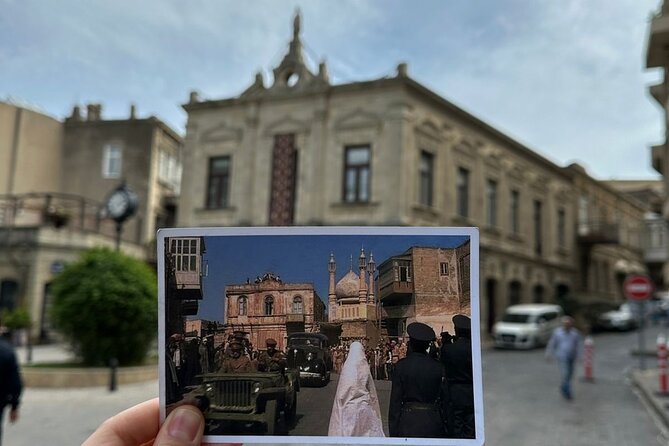
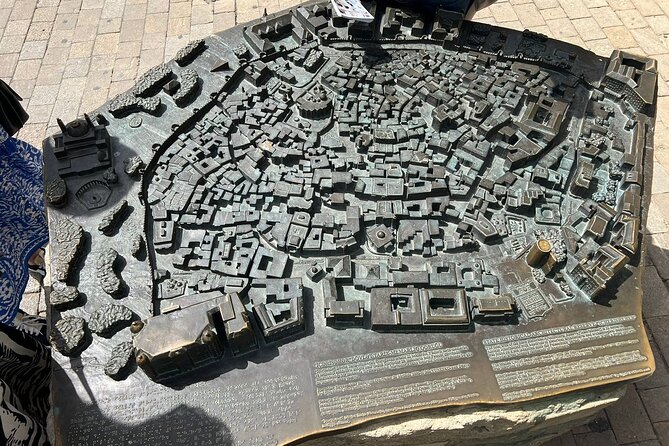
Baku’s Old City can feel like a maze at first. You get cobblestones, curves, archways, and walls that look the same until you know what each landmark is telling you. This tour helps you build that mental map fast, because it begins at the most obvious anchor: Maiden Tower.
Starting there is smart. From the top (if you go), you can connect the old lanes to the newer city beyond the walls. Without that first “overview moment,” it’s easy to walk past sights without fully understanding where you are. With it, the rest of the stops become more readable.
I also appreciate how the route stays compact. You’re not trapped in one big museum block. Instead, you’re guided through a sequence of small, meaningful stops that match how the Old City actually works: clusters of sacred buildings, trade history around caravanserais, and everyday craft along side streets.
You can also read our reviews of more tours and experiences in Baku.


Maiden Tower: views, legends, and stairs (no elevator)
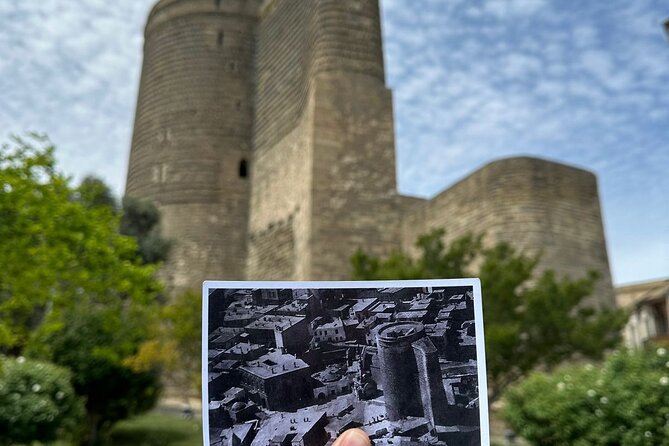
The tour kicks off at Maiden Tower, the main sightseeing spot and a symbol of Azerbaijan. The guide uses the tower as a jumping-off point: what it is, why it matters, and what you’re meant to notice while you’re there.
You’ll likely have around 15 minutes here, with the option to buy a ticket and go up. The upside is the view. From height, you can observe the Old City layout and the modern city beyond, and you may also catch glimpses toward the Caspian Sea area when the sky cooperates. That “big picture” helps you understand why the Old City grew where it did.
Here’s the practical catch: the upstairway is narrow and there is no elevator. If you don’t feel comfortable with tight stairs, you can still enjoy the area around the tower and get the story from the ground. Just don’t plan on an easy elevator-style climb.
Open-air museum and grave stones: the market-place story
Right by Maiden Tower you’ll see what the tour calls an open-air museum area connected with the remains of Saint Bartholomew chapel. This stop focuses on a set of more than 50 grave stones found there, and locals have a story for the place: they refer to it as a market place where merchants during the Great Silk Road had traded.
What I like about this stop is that it turns archaeology into something you can picture. Grave stones don’t sound like a “fun stop” until you frame them as part of lived history—people passing through, buying and selling, moving through the same streets you’re standing in now. You don’t need a long time here to get the meaning; the guide keeps it short and pointed.
If you’re the type who enjoys small details more than big exhibits, you’ll get a lot out of this.
Caravanserais: Multani and Bukhara, the Silk Road at street level
A caravanserai is basically a travel-and-trade checkpoint with walls. These next two stops bring the Silk Road concept down from big history books into recognizable building shapes.
First comes the Multani Caravanserai. The story is that merchants—especially those from Multan—stayed inside this little fortress when the Silk Road route ran right in front of Maiden Tower. You get a better sense of how safe “overnight” worked for travelers in earlier centuries: security for people and their goods.
Then you’ll move to the Bukhara Caravanserai. The name has a specific reason: after Tatato-mongol troops and the campaigns linked to general Tamerlan, the territory of modern Azerbaijan came under influence. The caravanserai ends up named for the city in Uzbekistan, which is a neat example of how geography, power, and commerce get mixed into place names.
Both stops are brief, but that’s the point. You get the idea of trade routes and the physical reality of where travelers could rest and regroup.
Legends you can feel: Lovers and Cats, khans, and the Tree of Life
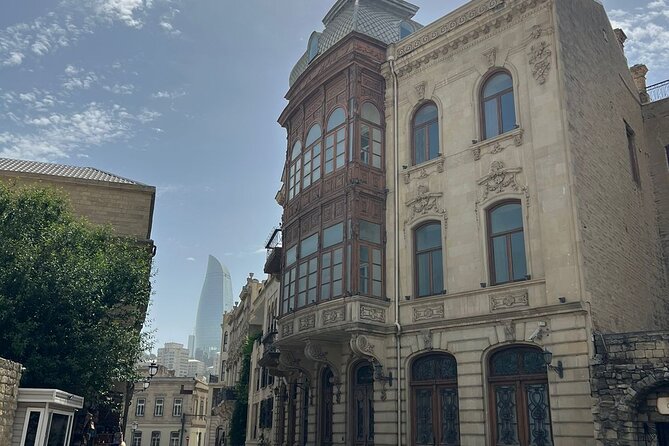
Not everything in the Old City is a monument with an official plaque. Some places come with legends people still repeat.
One such stop is the Monument to Lovers and Cats. The guide shares legends connected to the site, including love stories that are described as sad and stories that are more heartwarming. Even if you don’t remember every detail, you’ll remember the vibe: this is a place with a human story attached, not just a date range.
Next, you’ll visit the House of Baku Khans. This one is crucial for understanding Baku’s political layer. Since the 19th century Azerbaijan was annexed by the Russian Empire, you could say the Old City shifted under new rule—but the house represents a time when local khans ruled within the city. The building ties to the period from 1747 to 1806, when khans lived there.
Then comes a different kind of cultural stop: Vahid Monument, linked to the Azerbaijani poet Vahid and described as a Tree of Life theme. The guide explains how the head of Aliagha Vahid depicts how life begins and ends. If you like symbolism—how art mixes with belief and storytelling—this is a satisfying detour.
Bath culture below ground: Yeraltı hamam and the Aptek area
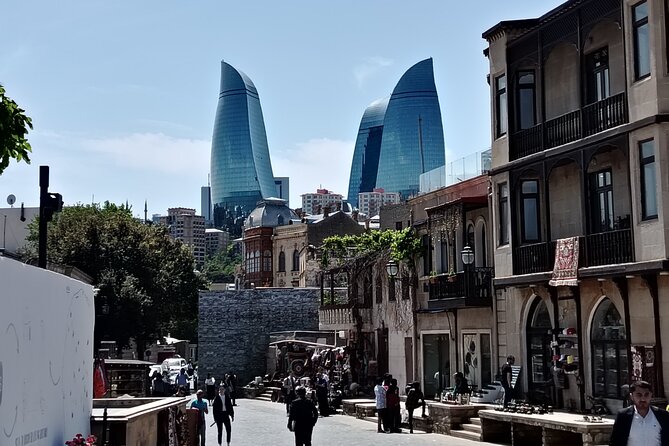
If you want a “wait, that’s still here?” moment, don’t rush past the bath stops.
The tour includes Yeraltı hamam (Underground Bathhouse), located just next to the main entrance of the Old City. It’s described as a 17th-century underground bathhouse. The fact that it’s right by the entrance is a reminder that old life wasn’t separated into museum zones. Comfort, hygiene, and routine happened in the middle of daily street life.
Later you’ll visit the Aptek Museum and Bathhouse area. This stop comes with extra context that’s especially fun if you’re Russian-speaking, because you can ask about a filming location tied to the Soviet comedy movie Brilliant Hand shot in 1968. The tour also notes that in the Old City there were several bathhouses built hundreds of years ago, and that one is still functioning as a bathhouse (a hammam) and has been since the 18th century until present.
Even if you don’t care about the film connection, the bathhouse theme is powerful. It helps you see the Old City as a living system, not just a sightseeing checklist.
Mosques in layers: 11th-century origins, women’s prayer spaces, and ongoing change
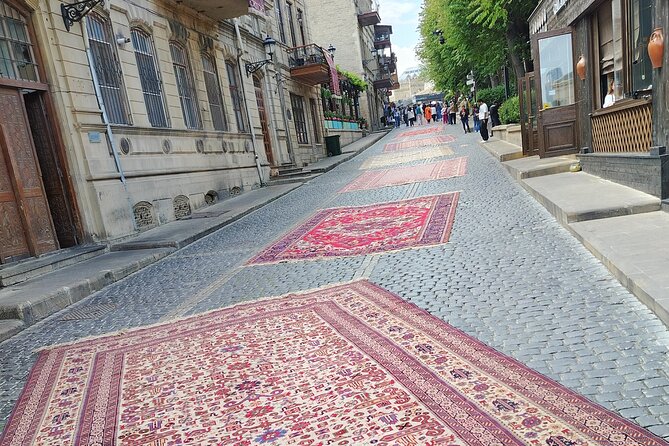
Baku’s Old City doesn’t just have one religious story. It has multiple, and the tour gives you examples across time.
First is Muhammad Mosque, described as the oldest mosque in the Old City, built in the 11th century on a site that may once have been a Zoroastrian fire temple. The tour notes that traces of the fire were found under the prayer hall along with spiritual artifacts. Locals even refer to it as a broken tower. The guide shares the reasoning behind the nickname—exactly the kind of street legend that makes older places feel real.
Next is Juma Mosque, described as the biggest mosque in the Old City and one where women are allowed to pray inside. It was built in the 12th century and restored in the beginning of the 20th century. This stop adds a practical cultural note: different mosques have different rules and roles, and the tour helps you notice that.
Finally, you’ll pass the Lezgi Mosque, once one of many mosques in a smaller area (the tour describes that there were 28 mosques in the small city). Today, the stop notes it is under reconstruction, though it was built in the 12th century by Ibragim Ashur, also known as Lezgian mosque.
This mosque sequence is also a reminder of something you may feel yourself while walking: the Old City isn’t frozen in time. Some buildings are stable, some are changed, and some are actively being worked on.
Museums and crafts that slow you down (in a good way)
The tour includes a few short stops that are easy to skip on your own, and that’s exactly why they’re useful.
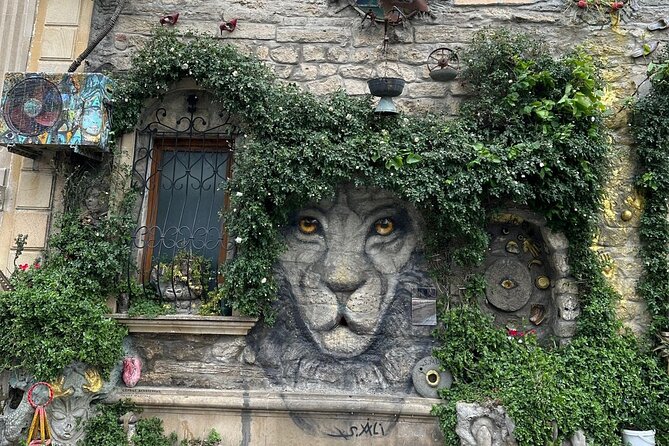
Ali Shamsi workshop/art gallery is one. The tour points out a wall with a big lion head depiction and explains that it’s connected with Ali Shamsi art. It’s the kind of street detail you’d miss if you were just walking without a guide.
Then there’s the Baku Museum of Miniature Books. The big idea here is scale. You’ll see books sized down to something like the nail-sized concept described, and the museum has been included in the Guinness World Records list since 2014 for the biggest collection of miniature books. There’s also a mention of the smallest Holy Koran from the 17th century in the collection. Even with a short stop, this is one of those moments that stops your brain for a second.
You’ll also visit the House Museum of Vagif Mustafazadeh. The key story is that Vagif Mustafazadeh mixed Azerbaijani Mugam folk music with American jazz. If you care about cultural crossovers, this is a great “you can’t un-know it now” stop.
Two more quick culture touches:
- Absheron Sharab Wine Shop, tied to Azerbaijan’s pomegranate wine. You can degustate it if you wish (the tour presents tasting as optional).
- Workshop and poetry sculpture stops elsewhere on the route, which keep you from feeling like it’s all monuments only.
Price and what you actually get for $25
At $25 per person, this is one of those deals that makes sense if you’re spending time in the Old City anyway. The price covers the walking tour itself, and you also get a licensed guide speaking English and Russian. Most stops are described as admission free within the tour structure, so you’re largely paying for the guide’s explanation and the time-efficient route.
Tips are not included, so plan to budget for that if you feel like your guide earn it.
What you should think about, value-wise, is your own travel style:
- If you like learning what you’re seeing, a guided Old City walk is usually better value than wandering without context.
- If you already know Baku’s history well and only want photos, you might feel the time is short at each stop.
For most first-timers, the small-group size helps. With a max of 15 travelers, you’re not stuck behind a crowd forever. And with Heydar leading, the tour is described as patient and conversational, not just lecture-mode.
Timing, meeting point, and how to plan your walk
This is a 2-hour walking tour (approx.). That timeframe matters because the itinerary is made of many short stops, not a few long ones. You’ll get time to look, ask questions, and move on, so bring the mindset of a guided walk rather than a deep museum session.
You start at meeting point 16 Asəf Zeynallı küç, Bakı, Azerbaijan, and the tour ends back at the meeting point.
A few practical points from the tour data:
- A mobile ticket is used.
- The tour is near public transportation.
- It requires good weather. If it’s canceled due to poor weather, you’ll be offered a different date or a full refund.
- Most people can participate, and service animals are allowed.
What I recommend you do as you plan:
- Wear shoes that work on cobblestones.
- If you want the Maiden Tower top view, accept the narrow stairs reality.
- Bring a little patience for crowd moments, especially around the tower and mosque areas.
Who should book this Old City walk (and who might not)
I’d book this tour if:
- You want a first-time orientation in Baku’s UNESCO Old City.
- You like history tied to physical places you can point at.
- You enjoy short stops with stories you can take with you.
- You’re traveling with teens or family and want the route to feel paced rather than strict. Heydar is mentioned as doing family-friendly tours and keeping the pace appropriate for different energy levels.
I’d think twice if:
- You dislike stairs or you’re not comfortable with narrow staircases at Maiden Tower.
- You want long time inside large buildings. This tour is short-stop focused, and one major palace area is not entered in the tour because it would need extra time.
If your goal is to understand what you’re looking at while walking through a compact set of highlights, this one fits.
Should you book Baku’s Ancient Heart?
Yes, if you want a practical, story-driven way to see Baku’s Old City in about two hours. For $25, you’re getting a licensed guide in English or Russian, a small-group format, and a route that covers major landmarks like Maiden Tower and Palace of the Shirvanshahs from the outside—plus baths, caravanserais, mosques, and surprisingly specific museum stops like miniature books.
Just go in with two expectations: it’s a walking tour with uneven streets, and some of the biggest experiences happen from viewpoints and legends, not long museum stays.
If that sounds like your kind of travel, this is an easy yes.
FAQ
How long is the Baku Old City walking tour?
The tour lasts about 2 hours.
How much does the tour cost?
It costs $25.00 per person.
What languages will the guide speak?
The guide is licensed to speak English and Russian.
What is the group size limit?
The tour has a maximum of 15 travelers.
Where does the tour meet, and where does it end?
You meet at 16 Asəf Zeynallı küç, Bakı, Azerbaijan, and the tour ends back at the meeting point.
Can I go up the Maiden Tower, and is there an elevator?
You may buy a ticket to go to the top, but there is no elevator, and the staircase is narrow.
What happens if the weather is bad?
The tour requires good weather. If it’s canceled due to poor weather, you’ll be offered a different date or a full refund.
When can I cancel for a full refund?
You can cancel up to 24 hours in advance for a full refund. Canceling less than 24 hours before does not refund the amount paid.