REVIEW · BAKU
Baku Oil Heritage & Old Town Walking Tour
Book on Viator →Operated by Azerbaijan Traveller · Bookable on Viator
Baku’s oil story still walks with you. This half-day walk ties together Icherisheher’s UNESCO core and the neighborhoods shaped by the oil boom, Soviet-era change, and the people who profited from it. You’ll hear how ordinary Baku life evolved alongside oil money, not just dates on plaques.
What I like most is the way you get a real sense of place in a short time, with photo and diagram-style storytelling that helps the past make sense. Another big plus is the pace and focus: with guide-led stops like Gani (and sometimes Lina), you’re not stuck waiting while the group figures things out.
One thing to plan around: it’s a walking tour and it relies on good weather, so if rain is on your schedule you’ll want to have a flexible mindset.
In This Review
- Key things you’ll notice on this tour
- Oil heritage in Baku: why this walk makes sense
- Fountain Square start: a practical meeting point with the right mood
- Icherisheher Old City: UNESCO highlights, explained from the edges
- The narrow-street effect: why you should wear comfy shoes
- Istiglaliyyat Street: the oil-baron era written in architecture
- Philharmonic Fountain and Ali and Nino: art, place, and memory
- Town Hall and the oil boom’s European influence
- Saadet Sarayi: a love story you can still visit
- The Former Taghiyev School for Girls and Azerbaijan’s modernization
- Ismailiyya Palace: Venetian Gothic and a son’s memory
- Price and value: $70 for 2.5 hours that actually make the city click
- What the guide experience feels like (and why names matter)
- Weather, walking, and timing: how to set yourself up
- Should you book the Baku Oil Heritage & Old Town Walking Tour?
- FAQ
- Where does the tour start and end?
- How long is the walking tour?
- How much does it cost?
- Is bottled water included?
- What’s not included?
- Do I need to buy tickets for the stops?
- Is it a private tour or a group tour?
- What should I expect to see in the Old City?
- Is the tour dependent on weather?
- Are service animals allowed?
- How far in advance should I book?
Key things you’ll notice on this tour
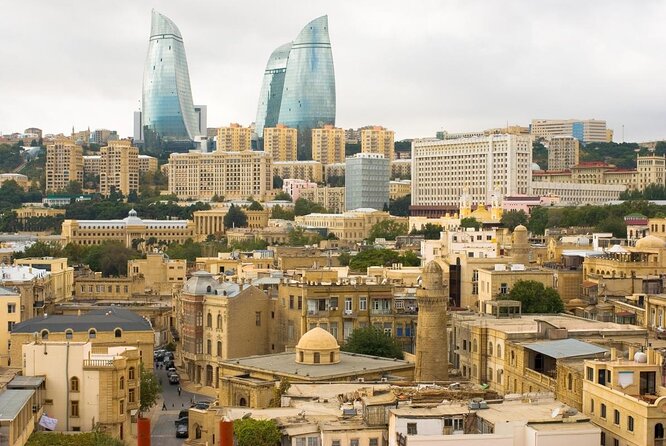
- UNESCO Old City stops without entry pressure, with explanations right at major points like the Maiden Tower area and palace exterior viewing areas
- Oil-baron architecture, explained clearly, from Town Hall scale to the stories behind mansions and marriage-registry history
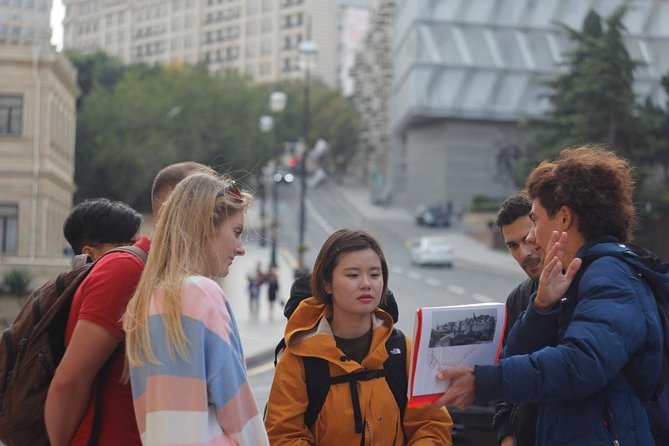
- Storytelling with visual aids, including photos/diagrams the guide carries to connect building shapes to historical events
- Baku’s “outside the walls” expansion, linked to places you’ll pass along Istiglaliyyat Street
- Short, efficient segments, designed so you see the main highlights in about 2.5 hours
Oil heritage in Baku: why this walk makes sense
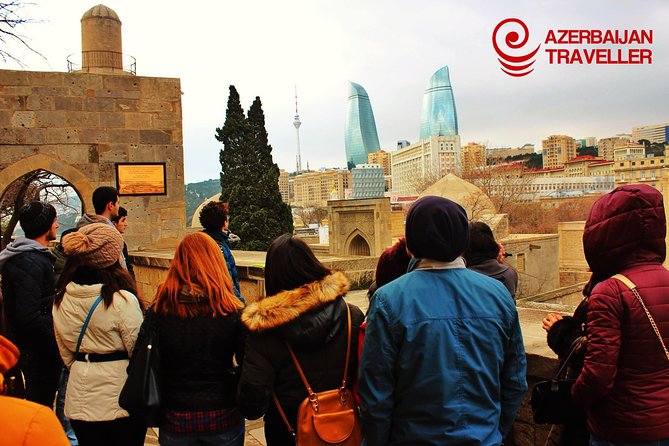
Baku can feel like two cities at once. You’ve got the medieval feel of Icherisheher (Old City), tight streets, fortress walls, and monuments that make you slow down. Then you step into wide avenues, European-influenced civic buildings, and mansions that look like they were financed by big ambition.
This tour’s value is that it doesn’t treat those areas separately. It connects the dots between the oil boom, the quest for personal fame by oil barons, and the broader political shifts people lived through, including Soviet influence.
The goal is simple: you’ll get your bearings fast and understand why certain streets, fountains, and buildings exist. You won’t just take photos; you’ll know what you’re looking at and why it matters.
You can also read our reviews of more tours and experiences in Baku.
Fountain Square start: a practical meeting point with the right mood
The walk begins and ends at Fountain Square (downtown, entertainment and leisure center). It’s a good first stop because you’re already in a place that feels like Baku’s everyday rhythm, not an empty monument district.
The tour framing also helps. Fountain Square is presented as more than a modern plaza. It connects back to the late XIX and early XX century oil boom, when this part of town became a main trading street for the boom years.
If you’re trying to orient yourself on day one, this is a friendly anchor. You’ll know where you’re coming from and where you’ll return, and you won’t lose time figuring out transport mid-walk.
Icherisheher Old City: UNESCO highlights, explained from the edges
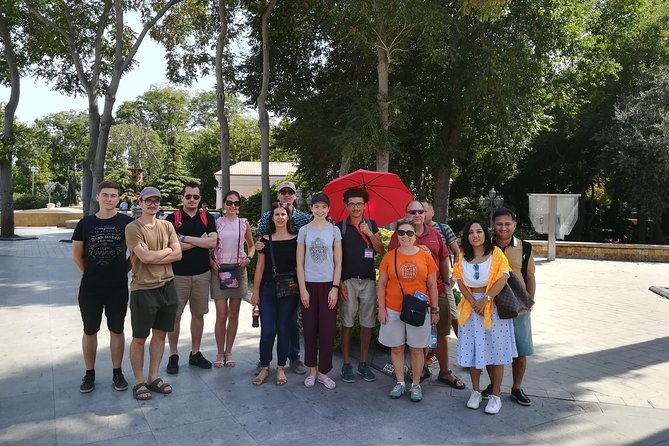
Your Old City segment focuses on major UNESCO points while avoiding the hassle of paid entry stops. The route keeps you moving through the feeling of the place: narrow streets, fortress walls, and key monuments that you can spot even if you’re not going inside museums.
You’ll spend about an hour in Icherisheher, with stops that cover the big hitters:
- Gosha Gala gate: described as the main entry to Old City. This is your threshold moment. You feel the shift from modern street life into the fortified old-town logic.
- Citadel walls (XII century): explained as part of the UNESCO-protected complex. Even if you don’t walk the full circuit, you get the idea of how the city controlled access.
- Maiden Tower (XII century): you get an explanation at entry rather than entry itself. The guide’s job here is important; without context, you can miss why this tower is such a focal symbol.
- Muhammad Mosque (XI century): you’ll cover it as another UNESCO site on the route, tying religious architecture to the city’s older layers.
- Shirvanshakh’s Palace (XV century): again, you don’t enter, but you’ll get explanation offered at the area. That matters because the palace shape and setting make more sense when you understand who used it and why.
You’ll also pass the Museum of Miniature Books, included as part of the Old City experience. Since the tour notes explanation and stops without making you commit to entrances, it’s a good fit if you want history without a long ticket-and-queue schedule.
Drawback to know: you don’t get full interior access to the major structures mentioned. If you’re the type who likes spending time inside museums, you may want to add a separate visit later.
The narrow-street effect: why you should wear comfy shoes
Old City streets in Baku are the kind that make you slow down, turn your head, and realize you’re walking on layers of time. That’s the best part of a guided approach here: the guide points out what to watch for, not just where to stand for a photo.
The tour also carries a practical rhythm. You’re not there all day, so it’s designed to keep motion steady while the guide gives explanations at key moments. You’ll likely feel the difference between the fortified Old City logic and the later street planning outside the walls.
If your feet run hot, bring breathable shoes. Two and a half hours isn’t a marathon, but the Old City segments can add up faster than you expect once you’re turning corners and stopping for viewpoints.
Istiglaliyyat Street: the oil-baron era written in architecture
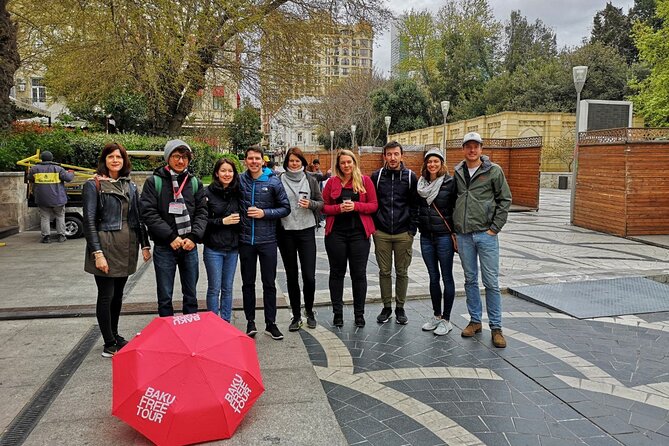
After the Old City core, the tour shifts to the “imperial and oil money” streetscape. Istiglaliyyat Street (formerly Nikolayevskaya and Kommunisticheskaya) is presented as one of the major Imperial Russian-era roads in Baku.
Here’s where the tour becomes more than heritage sightseeing. It focuses on urban transformation driven by oil barons and their need for recognition and status. In other words: money changed the city’s shape, and you can read that change in building styles and civic spaces.
Along this stretch, you’ll be directed toward landmarks and institutions tied to that story, including:
- Governor’s Garden
- Town Hall
- Philharmonic Hall
- Palace of Happiness
- Institute of Manuscripts of Azerbaijan
- Ismaliyya Palace
- Literature Museum
- Statue of Nizami
The big benefit is that the guide links each stop to the wider theme: modernization, European influence, and the push for prestige. Without that thread, these buildings can look like a nice set of architecture photos. With it, they become a map of power and ambition.
Philharmonic Fountain and Ali and Nino: art, place, and memory
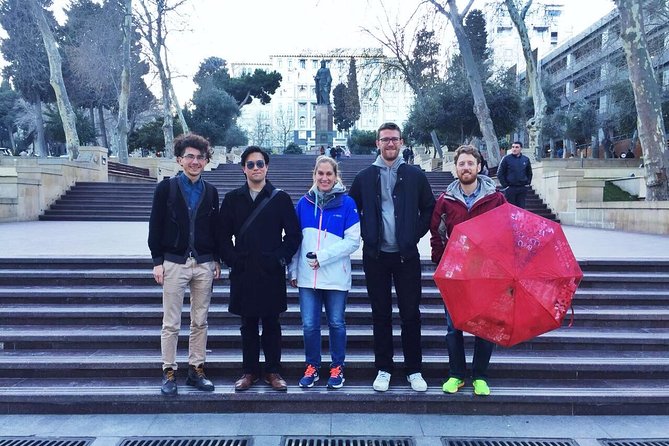
The tour includes the Philharmonic Fountain, described as part of Baku’s expansion beyond the fortress wall. It’s also tied to a book-story connection: Ali and Nino.
That detail matters because it gives the fountains and gardens a cultural layer, not only a physical one. You’re not just looking at water features; you’re picking up the way Baku got written into literature and identity.
This stop is short (around 10 minutes), which works well because it gives you a breather. It’s also a chance to notice how public spaces were designed as part of a city trying to look modern and international.
Town Hall and the oil boom’s European influence
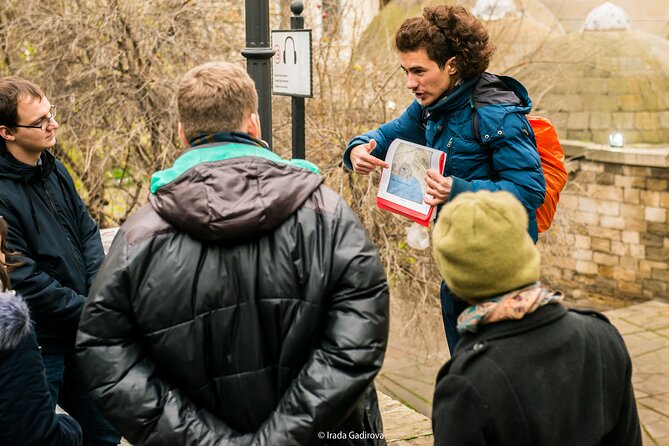
Next is Baku City Executive Power, with the Baku Town Hall as a key landmark. The explanation focuses on why this building is so visible: it’s treated as a monumental example from the oil boom era, with architectural influences from Europe.
This is one of the tour’s strongest “how to read a city” moments. You’ll walk past civic architecture and learn to connect the dots between:
1) international design cues,
2) a wealthy period driven by oil, and
3) the idea that Baku wanted to be seen as cosmopolitan.
Even if you’re not an architecture person, this is still worth it. The guide helps you interpret shapes and scale as a statement, not just a façade.
Saadet Sarayi: a love story you can still visit
The walk continues to Saadet Sarayi, described as the story of an oil baron and his wife. The romance here isn’t treated as a soap opera detail; it’s presented as a piece of how elite wealth became public-facing.
The tour says the building now serves as a marriage registry, which turns a private mansion story into a living tradition. That’s the kind of continuity I like in history tours: the setting changes meaning over time, and you get to witness that shift.
This stop also gives you contrast. You’re moving from grand civic buildings and fortress walls to a personal, human-scale story shaped by wealth.
The Former Taghiyev School for Girls and Azerbaijan’s modernization
Another standout is the Former Taghiyev School for Girls, tied here to the Institute of Manuscripts of Azerbaijan. The tour presents it as the story of one of the first secular schools for Muslim women in the region.
The guide’s framing connects the school to modernization in Baku and how those changes tie into larger national developments, including Azerbaijan’s first independence. Even though the stop is brief, it’s a powerful theme jump: you’re not only talking about oil money and political shifts. You’re talking about education and cultural transformation.
If you’re looking for a tour that covers more than just buildings, this is where it starts to deliver real depth.
Ismailiyya Palace: Venetian Gothic and a son’s memory
The final major architecture stop is Ismailiyya Palace, described as commissioned by an oil baron in memory of his son. The style noted is Venetian Gothic, which explains why the building can look both European and distinctly Baku.
The emotional backstory matters because it changes how you see the structure. It’s not only about money or style. It’s also about grief turned into an enduring landmark, built in a period when private wealth had public impact.
This stop is also helpful for photos. Venetian Gothic details can be easier to appreciate when you understand the story behind why it was commissioned.
Price and value: $70 for 2.5 hours that actually make the city click
At $70 per person for a tour that runs about 2 hours 30 minutes, you’re paying for guided interpretation, not just walking time. For a city like Baku, that interpretation can be the difference between collecting photos and building a real understanding of the city’s layers.
You also get practical perks:
- Bottled water included
- Mobile ticket
- Group discounts
- A group size cap is listed at 30 travelers, which is one reason the tour can stay efficient
One subtle value point: many stops are presented with free admission for the listed segments and a lot of the Old City coverage is explanation-focused rather than entry-focused. That can help keep the tour from turning into surprise extra costs.
The only caution is this: if you want lots of interior museum time, you may need to pair this tour with separate site visits later.
What the guide experience feels like (and why names matter)
The guide is the product here. Reviews consistently praise guides like Gani and mention Lina for a strong introduction style. The strongest recurring theme is story-first pacing: explanations come at the right moments, with humor, and with visual materials the guide carries to make the past easier to picture.
You’ll also get practical help that goes beyond history facts. Some guides provide recommendations for what to eat next and even basic Azerbaijani language tips, plus suggestions for what to see afterward. That kind of follow-through matters if you don’t want to spend your limited time hunting for answers on your own.
Weather, walking, and timing: how to set yourself up
This tour is designed for about 2.5 hours and covers both the Old City and areas beyond the fortress walls. It’s a walking experience, so plan for time on your feet.
It also requires good weather. If your travel dates include rain, don’t assume the tour will run without changes. The upside is that the tour is built around a schedule that returns you to Fountain Square, so you’re not getting stranded far from your base.
Should you book the Baku Oil Heritage & Old Town Walking Tour?
Yes, if you want a fast, guided way to understand Baku’s oil-era transformation and its medieval core without spending the whole day inside tickets and waiting lines. This is especially smart for first-timers who want context: why the Old City and the oil boom neighborhoods belong to the same story.
Book it if:
- you like your history told through streets, buildings, and everyday power stories
- you want a guide to keep pace smooth and stop time meaningful
- you’re visiting for a short trip and want the highlights within half a day
Pass or plan differently if:
- you’re mainly interested in deep museum time and full interior visits
- you’re traveling on a tight weather schedule and can’t shift plans if conditions aren’t good
If you do book, go into it ready to walk, watch details, and ask questions. The best part is that the tour doesn’t just show you where things are. It gives you a way to read Baku once you’re back on your own.
FAQ
Where does the tour start and end?
The tour meets at KFC9RCP+28F, Nizami St, Baku, Azerbaijan, and it ends back at the same meeting point (Fountain Square area).
How long is the walking tour?
It lasts about 2 hours 30 minutes (approx.).
How much does it cost?
The price is $70.00 per person.
Is bottled water included?
Yes. Bottled water is included.
What’s not included?
The tour does not include lunch, private transportation, and admission fees.
Do I need to buy tickets for the stops?
The tour notes that admission tickets are free for the listed stops. Still, admission fees are marked as not included, so if any site you want to visit requires entry, plan to pay separately.
Is it a private tour or a group tour?
It’s described as private in the sense that you won’t be waiting on other travelers, but it also has a maximum group size of up to 30 travelers.
What should I expect to see in the Old City?
You’ll cover major UNESCO-related points in Icherisheher such as Gosha Gala gate, citadel walls, the Maiden Tower (explanation at entry), Muhammad Mosque, narrow streets, Shirvanshakh’s Palace (explanation at entry), and the Museum of Miniature Books.
Is the tour dependent on weather?
Yes. It requires good weather. If it’s canceled due to poor weather, you’ll be offered another date or a full refund.
Are service animals allowed?
Yes. Service animals are allowed.
How far in advance should I book?
On average, this tour is booked 25 days in advance.