REVIEW · AUGSBURG
Classic city tour in the World Heritage City of Augsburg
Book on Viator →Operated by Regio Augsburg Tourismus GmbH · Bookable on Viator
Augsburg’s highlights in two hours feels doable. This classic guided walk strings together the big UNESCO World Heritage beats—Augsburg Town Hall, the Augustus Fountain, the Lech canal area, and the centuries-old Fuggerei—so you get a clear picture fast. I especially like that several entrances are built into the price, and I also like the way the route walks through the city’s water-and-trade past rather than just ticking off buildings.
One thing to plan for: if you end up off to the side or too far back, the narration can be hard to catch. Bring headphones (and use the optional elysium® sound amplifier system if it’s available), especially on busy or windy days.
In This Review
- Key things you’ll notice on this Augsburg walk
- Augsburg in 2 hours: the UNESCO highlights that actually fit a schedule
- Augsburg Town Hall: Golden Hall now, Roman Camp or Brecht House later
- Augustus Fountain (Augustusbrunnen) on Rathausplatz: the easy orientation landmark
- Lechviertel canals and old crafts lanes: where Augsburg’s water smarts show
- Fuggerei: the included admission stop that can steal the spotlight
- Price and audio: why $16.20 can be a good deal
- Practical logistics that actually matter: starting on time and ending where you want
- Should you book this classic Augsburg city tour?
- FAQ
- What is the meeting point for the Augsburg city tour?
- Where does the tour end?
- What time does the tour start, and how long is it?
- How much does the tour cost?
- What’s included with the Town Hall visit?
- Is the Fuggerei admission included?
- Is there an optional audio system for better hearing?
- Can I cancel and get a full refund?
- How many people are in the tour?
Key things you’ll notice on this Augsburg walk
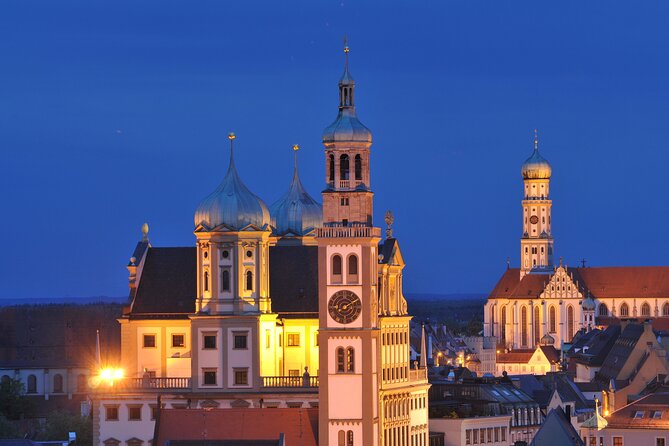
- Town Hall interior changes by season: Golden Hall until end of July 2024; then Roman Camp (Tue–Fri) or Brecht House (Sat–Sun) from August 2024 onward.
- Fuggerei visit comes with admission: over 500 years old, and included in the tour price.
- Augsburg’s water story is the real thread: you’ll move through the Lechviertel canals and small lanes that helped shape the city.
- Augustusbrunnen is the quick wow moment: it’s right by the Town Hall Square, so it’s easy to orient yourself.
- Your smartphone can improve the audio: optional, free elysium® support via your phone + headphones + internet.
- Small group by city-tour standards: max 25 people, which usually keeps the pace lively.
Augsburg in 2 hours: the UNESCO highlights that actually fit a schedule
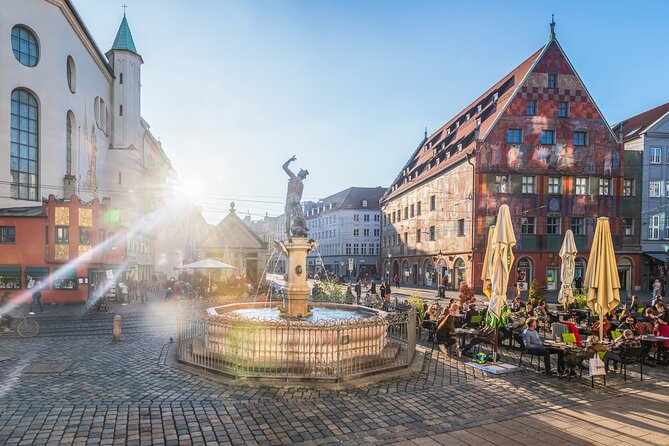
This is the kind of tour you book when Augsburg is on your list but time is tight. In about two hours, you cover the core old-town landmarks that explain why Augsburg matters—especially as a UNESCO World Heritage city tied to trade, crafts, and water-powered life.
The route has a smart flow. You start at the Tourist-Information Augsburg on Rathausplatz 1, then work your way from the civic center (Town Hall and square) into the canal district (Lechviertel). From there, you finish at the Fuggerei on Jakoberstraße 26. That matters because you’ll end your walk right where many people want to continue exploring independently: an atmospheric historic site, not just another photo stop.
Pace-wise, the timing is tight at each stop. The Town Hall portion is about 30 minutes, Augustusbrunnen and the canal area are shorter photo-and-explanation blocks, and the Fuggerei visit runs about 30 minutes too. That structure is great for first-timers, but it also means you won’t get long, slow wandering at every corner.
Here’s how I’d think about it: this tour is built to help you get your bearings fast. If you’re the type who likes a guided “map in motion” before you strike out on your own, you’ll get a lot from it.
Augsburg Town Hall: Golden Hall now, Roman Camp or Brecht House later
Your first major stop is Augsburg Town Hall, and the key detail is that what you see inside depends on when you visit. Until the end of July 2024, you visit the Golden Hall. From August 2024 onward, the included visit switches to either:
- Roman Camp (Tuesday–Friday), or
- Brecht House (Saturday–Sunday)
That date-based change is worth planning around. If you care about a specific interior experience, check the schedule for your travel week so you know what’s included that day. Either way, you do get an admission ticket as part of the tour, so you’re not paying extra at the door for the main civic highlight.
Why this stop is valuable: the Town Hall is more than a pretty facade. It’s where Augsburg’s civic power shows up in stone and ceremony. The guide typically ties it to the larger city story—how Augsburg organized itself, prospered, and built institutions that still frame the old town today.
Potential drawback: because the interior access changes by date, two people going in different months won’t have the exact same “wow moment.” It’s still included either way, but if you were hoping for one specific room, don’t assume it’s always the Golden Hall.
Augustus Fountain (Augustusbrunnen) on Rathausplatz: the easy orientation landmark
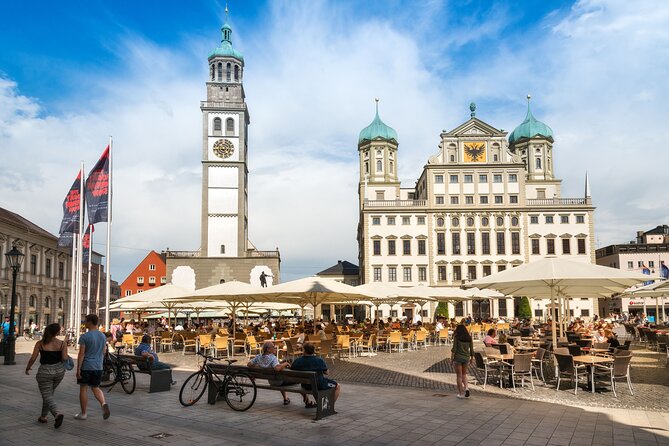
Next up is Augustusbrunnen, the Augustus Fountain on Town Hall Square. This is a short stop—about 15 minutes—but it’s a smart one. The fountain is one of Augsburg’s standout monuments, and being so close to the civic center helps you anchor the rest of the walk in your mind.
What I like about this kind of stop is that you can quickly connect the dots. From Rathausplatz, the city’s layout starts to make sense: you’re close to the official core, and soon you’ll shift into the canal quarter where industry and daily life used to hum.
If you’re the sort of traveler who enjoys architecture and public art, don’t rush the photos. The fountain sits in a location where you can also spot the surrounding historic angles that you’ll keep seeing later in the Lechviertel area.
Short time note: yes, it’s brief. But that’s by design. The tour wants you moving before you start craving a coffee break—use that energy later along the canals.
Lechviertel canals and old crafts lanes: where Augsburg’s water smarts show
Then comes the part that often makes people feel like they learned something real: the Lechviertel. You get about 15 minutes to explore the canals and small alleys—an area tied to Augsburg’s water systems and the everyday mechanics of how the city worked.
This is where the tour shifts from “look at the building” to “understand the logic.” Augsburg’s canals and water management weren’t decoration. They supported crafts, trade, and the practical flow of city life. Even if you don’t go deep into engineering, you’ll walk away with the sense that the waterways are part of the city’s identity.
You may also hear connections to notable historic residences and crafts-related buildings along the way. One guide-driven route element that shows up in people’s recollection is a move through the old center’s building types (including crafts-house references), plus a glimpse of how the richer merchant families helped shape what you see today.
Potential drawback: because this segment is short, you won’t get the full “wander until it feels magical” experience. If you want a slower canal stroll after the tour ends, plan that on your own. The guided walk is best for getting the basics and a few key stories, then letting the streets do the rest.
Fuggerei: the included admission stop that can steal the spotlight
The final anchor is the Fuggerei, with an admission ticket included and a visit of about 30 minutes. It’s over 500 years old, and it’s widely known as a major historic example of organized social housing.
This is a strong stop for two reasons. First, it’s not just a landmark—it’s a functioning historic idea, so the visit feels purposeful. Second, it connects directly to Augsburg’s wealth and civic responsibility, which is a theme that tends to come up when you talk about why the city grew the way it did.
Because the Fuggerei visit is included and built into the tour timing, it naturally takes a bigger share of the story. For some people, that’s exactly what they wanted. For others, it can feel like there’s less time for the broader religious and cultural threads they hoped to hear about.
So here’s my practical suggestion: if your main interest is Augsburg as a political and religious center (not just its social history), keep your expectations aligned with what this tour gives you. You’ll still get important context, but the Fuggerei is not a quick detour—it’s one of the main beats.
If you want to go deeper afterward, you’ll be well placed to continue around the site on your own. You finish at the Fuggerei itself, so there’s no awkward “now transfer somewhere else” problem.
Price and audio: why $16.20 can be a good deal
At $16.20 per person for a 2-hour guided walk, this tour can be great value—mostly because it includes admission tickets for the Town Hall interior (varies by date) and the Fuggerei. For a short itinerary, that’s a key point. You’re paying for more than narration; you’re paying for guided access to places you’d likely want to enter anyway.
Also note the format: you’ll use a mobile ticket. That removes one common hassle—finding paper tickets at the last minute. Just make sure your phone battery is healthy. City walking plus photos plus maps can drain it faster than you expect.
Now the listening piece. There’s an optional, free elysium® sound amplifier system. The idea is simple: you bring your own smartphone, plus headphones and an internet connection, and the system can help make the guide’s voice easier to hear. This matters because several people flagged that the narration can be hard to hear if you’re not positioned well or if the guide speaks softly.
My advice:
- Bring headphones even if you think you won’t need them.
- If the group is large or windy, don’t hang in the back.
- If you’re mainly an English listener, aim to be where you can clearly hear the guide’s primary speech first.
Language can also vary. Some people describe bilingual delivery, while others note German-led narration with English to follow. With that in mind, being in a good listening position is your best “insurance.”
Practical logistics that actually matter: starting on time and ending where you want
This tour starts at 2:00 pm. The meeting point is Tourist-Information Augsburg, Rathausplatz 1. The walk ends at Fuggerei, Jakoberstraße 26.
Two practical bits that can make a big difference:
- Punctuality is strict. People have reported being left behind for being about a minute late, with no refund. So give yourself a buffer—arrive early enough to check in and settle.
- Group size stays manageable. With a max of 25 travelers, you’re unlikely to feel swallowed, but you still shouldn’t expect a quiet, private pace.
Accessibility notes from the operator information: service animals are allowed, and the meeting point is near public transportation. Also, most travelers can participate, which fits the “classic city walk” style—mostly walking, lots of short stops, not a museum marathon.
Finally, the tour is run by Regio Augsburg Tourismus GmbH, and you’ll receive confirmation at booking. Since the average booking is about 11 days in advance, booking earlier is smart if you’re trying to lock in a specific day and you know your schedule.
Should you book this classic Augsburg city tour?
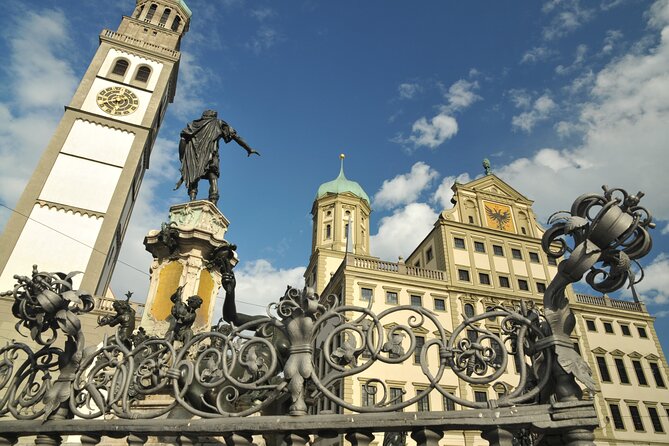
Book it if you want an efficient, guided first look at Augsburg with the main UNESCO-flavored stops in a sensible order. The price works best because key entrances are included, and the canal district plus the Town Hall + Fuggerei combo gives you a clear story fast.
Skip it—or at least adjust expectations—if you’re picky about hearing every word in English throughout. The narration can be hard to hear for some people, and the delivery style can vary depending on the guide and how the languages are handled. If that’s your worry, use headphones and the optional elysium® audio setup, and arrive early so you can position yourself for sound.
If you love short, story-driven walks where you end with a place you can keep exploring on your own, this is a very solid choice for an afternoon in Augsburg.
FAQ
What is the meeting point for the Augsburg city tour?
The meeting point is Tourist-Information Augsburg, Rathausplatz 1, 86150 Augsburg, Germany.
Where does the tour end?
The tour ends at the Fuggerei, Jakoberstraße 26, 86152 Augsburg, Germany.
What time does the tour start, and how long is it?
It starts at 2:00 pm and lasts about 2 hours.
How much does the tour cost?
The price is $16.20 per person.
What’s included with the Town Hall visit?
Admission is included for the Town Hall stop. What you see depends on the date: Golden Hall until end of July 2024, and from August 2024 you visit Roman Camp (Tue–Fri) or Brecht House (Sat–Sun).
Is the Fuggerei admission included?
Yes. The tour price includes entrance to the Fuggerei, including the Römerlager/Brechthaus entrance.
Is there an optional audio system for better hearing?
Yes. There’s an optional and free elysium® sound amplifier system. You need your own smartphone with headphones and internet connection.
Can I cancel and get a full refund?
Free cancellation is available up to 24 hours before the experience start time for a full refund.
How many people are in the tour?
The tour has a maximum group size of 25 travelers.