REVIEW · CHONGQING
Chongqing: Surreal Urban, Ancient Town, and Secret Viewpoint
Book on GetYourGuide →Operated by SKYMATZ RESOURCES LIMITED · Bookable on GetYourGuide
Chongqing feels like sci-fi on rails. In one day you ride the Liziba Monorail as the train threads through a high-rise neighborhood, then cross the river on the sky-high Yangtze cableway for skyline views in every direction.
I especially like the way this route mixes big-city weirdness with everyday street life, from Ciqikou Ancient Town port lanes to quiet river viewpoints. Kuixing Tower adds a different kind of magic too, with steep levels and a view over the Jialing River that makes you question where you are.
One possible drawback: the day runs about 10 hours, and some spots get crowded fast, so you’ll want comfortable shoes and a flexible pace. It’s also not suitable for wheelchair users, and traffic congestion can mean short taxi transfers instead of staying in one private vehicle the whole time.
In This Review
- Key points you’ll care about
- One day in Chongqing: why this “8D Magic City” feels real
- Liziba Monorail: the train that runs through your view
- Kuixing Tower and the Jialing River: 8D levels that mess with your brain
- Yangtze River Cableway: the air bus that connects two river worlds
- Ciqikou Ancient Town: port-town streets and the fun of slowing down
- City Planning Exhibition Gallery: the city explained with a skyline view
- Longmenhao Old Street and local teahouse time
- Price and value: what $216 buys you in Chongqing
- Guides make the difference: Diego, Hao, Linxin, Flora, and Sofia
- Who should book this Chongqing day, and who might skip it
- Should you book this Chongqing one-day experience?
- FAQ
- FAQ
- How long is the Chongqing tour?
- What is the price per person?
- How big is the group?
- Where do you get picked up and dropped off?
- What does the tour include for tickets and entry?
- Are meals included?
- Do I need a passport or ID?
- What should I bring for comfort?
- Is the tour suitable for wheelchair users?
- What languages are available for the guide?
Key points you’ll care about
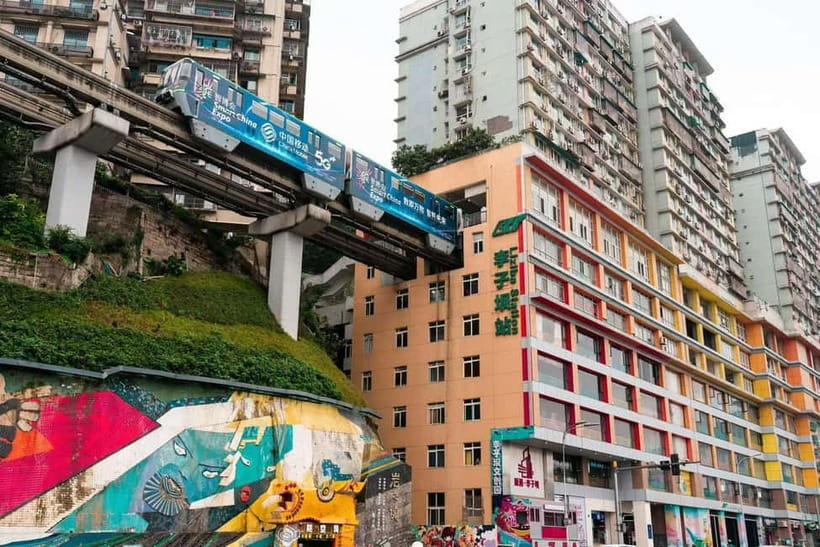
- Liziba Monorail ride-through-building views that look impossible until you’re on the train
- Kuixing Tower for Jialing River panoramas and the famous Chongqing “8D” level confusion
- Yangtze cableway tickets included for the air-bus river crossing
- Ciqikou Ancient Town for port-town streets, shops, smells, and quick local bites
- City Planning Exhibition Gallery for a massive model and skyline views from the riverside promenade
One day in Chongqing: why this “8D Magic City” feels real
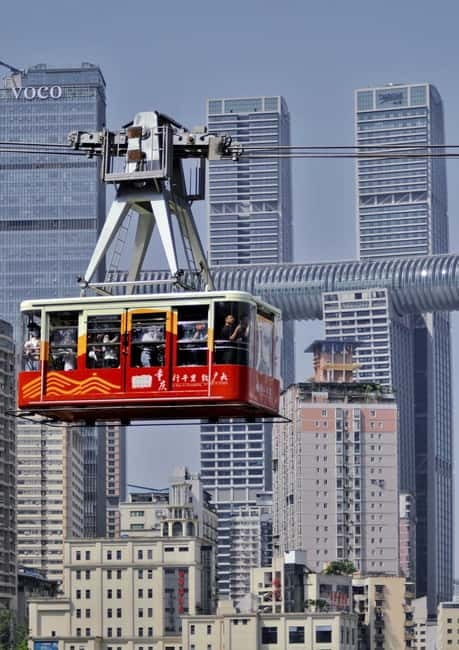
Chongqing earns its nickname because the city is stacked. Hills, rivers, and neighborhoods build upward in layers, and the result feels like the world got rearranged while you weren’t looking. This one-day plan is designed around that feeling: you start with transit that plays tricks on scale, then you move to viewpoints, heritage streets, and a museum that explains why Chongqing looks the way it does.
What I like about this style of tour is that it doesn’t just point at famous sights. You get time in places where you can actually watch daily life happen—people chatting, shops selling, river boats moving—so the surreal parts don’t feel staged. And with a small group of 1–12, you’re not stuck in the slow shuffle.
The guidance matters, too. I’ve seen plenty of cities where a good itinerary still falls apart if you can’t navigate local traffic or find the right angle. Here, the tour is built to help you move smoothly and keep the day coherent, especially when the city’s steep terrain turns “a short walk” into a workout.
You can also read our reviews of more tours and experiences in Chongqing.
Liziba Monorail: the train that runs through your view
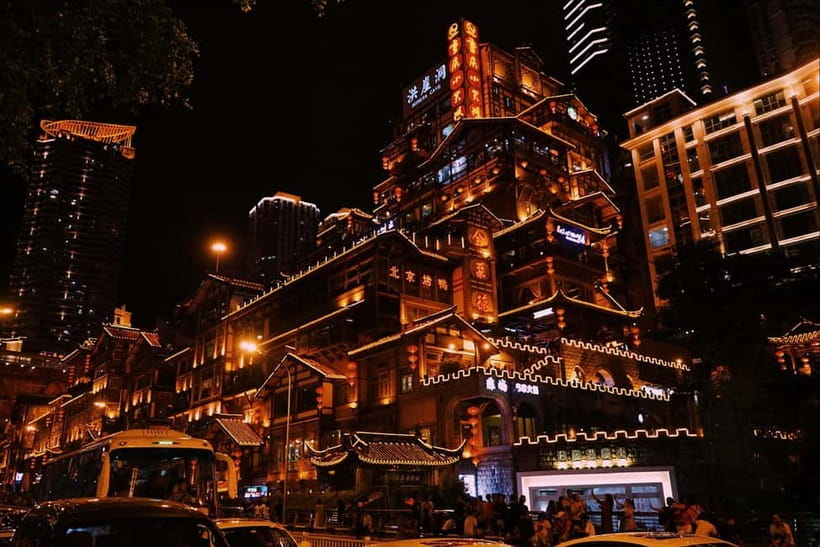
The day’s first big wow is the Liziba Monorail—the kind of place that looks fake in photos until you’re there. The signature moment is when the monorail train passes through a residential building, with apartment windows and balconies framing the track from close range. It’s one of those city designs that makes you stare twice because your brain expects the rail line to go somewhere simple.
Then you do the best part: you ride it. Being on the monorail turns the viewpoint into a lived experience. You get that light adrenaline feeling of gliding through the middle of a high-rise neighborhood, not just watching it from a platform. Bring your camera, because the cleanest shots depend on where you stand, and the guides are clearly good at getting people to the right spot for photos.
Practical tip: the Liziba area can be crowded, and the angles matter. Wear comfortable shoes and keep your phone strap secure. If you’re traveling with family—especially older relatives—having an attentive guide helps because it’s easier to keep everyone together without turning the day into a parking-lot reunion game.
Kuixing Tower and the Jialing River: 8D levels that mess with your brain
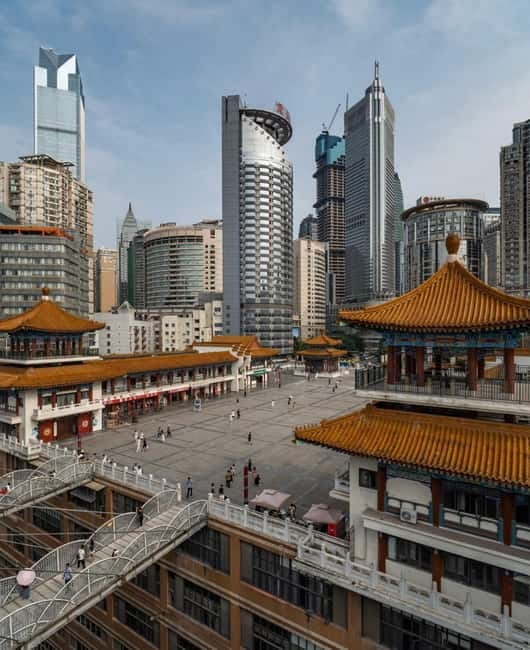
After the monorail, you shift to a viewpoint stop that explains the “8D” feeling in a more grounded way: Kuixing Tower. This is a lesser-known style of sight, in the best way. You’re not just chasing a photo—you’re getting a sense of how Chongqing’s vertical layout changes how people move, shop, and gather.
A detail I really like is the human story behind the place. Kuixing Tower is tied to the old tradition of locals praying for academic success. That means the tower isn’t just a scenic platform. It’s part of how people imagined better outcomes for their families, and that gives the views extra weight.
The Jialing River panoramas help you connect the dots. From the tower, the city’s layers make sense—but only for a minute. Then Chongqing reminds you again. You may feel slightly lost in the vertical reality, like are you on the ground floor or on a higher level. That sense of disorientation is exactly what makes Chongqing memorable, as long as you’re ready for it.
If you want a calm moment in the middle of the day, this stop delivers. The pace here is more about looking and absorbing than rushing through shops.
Yangtze River Cableway: the air bus that connects two river worlds
Next comes one of Chongqing’s biggest ticket-included rides: the Yangtze River Cableway, sometimes called the city’s air bus. This is the classic river-crossing experience, and it’s iconic for a reason. You glide high above the water, connecting two riverbanks, with a long view over skyline, mountain terrain, and the Yangtze itself.
The value of including this ticket in the package is simple: it removes decision fatigue. You don’t have to line up transport details or hunt down the right counter. You just show up with ID and step into the ride.
What you’ll notice from the cableway is how Chongqing builds upward from the water. The river gives you a reference line, so the steep terrain and layered neighborhoods look dramatic instead of confusing. Even if you’re not a “big view” person, this ride makes the city’s geography click.
Crowd note: cableway stations can get busy. That’s normal. Go with a relaxed mindset, and take photos when you have a clear moment rather than trying to catch everything at once. The guides can also help you time simple photo stops around the flow of people.
Ciqikou Ancient Town: port-town streets and the fun of slowing down
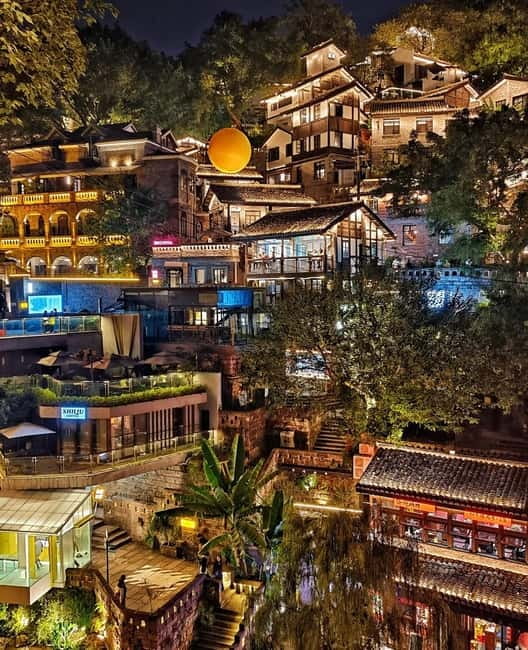
Ciqikou Ancient Town is where the day turns from city mechanics into city culture. You’re walking in a heritage area tied to Chongqing’s role as a port town, so the streets feel shaped by trade—shops, snack spots, and architecture that carries an older identity.
What I like about Ciqikou is the sensory overload in the best way. You’ll smell food, see crafts and souvenirs, and spot people living their routine in a place built for visitors. It’s not only about photographing old walls. It’s about wandering at a human speed.
You’ll want to keep your energy for wandering because this is where the city becomes personal: you can pause for a snack, pick a lane and follow it, or turn back when something catches your eye. If your group includes someone who prefers action, Ciqikou still works because there’s plenty to watch—people negotiating prices, sellers calling out, and constant small movement.
One consideration: this is a popular area, so expect crowds. If you hate tight spaces, wear shoes that let you keep moving without slipping and be ready to step aside when the densest pockets form.
City Planning Exhibition Gallery: the city explained with a skyline view
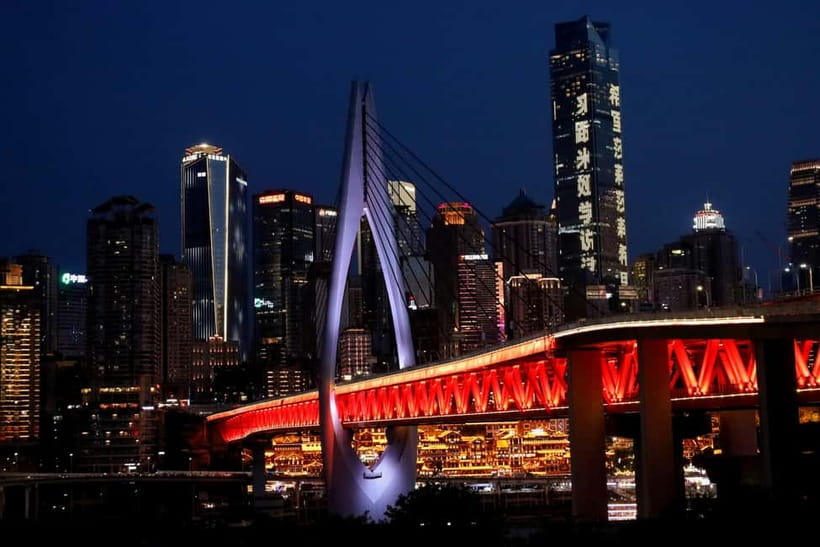
After the street wandering, you get the brain part of Chongqing. The Chongqing Urban Planning Exhibition Gallery is modern and interactive, and it helps you understand how “Mountain City” became a blueprint for building upward.
The big draw is the massive city model. You can see Chongqing’s structure in a way that’s hard to get just by walking around. Then multimedia exhibits and rotating displays add context about past, present, and plans for the future. It’s a museum designed for people who want a story, not just a room full of text.
Here’s the practical perk: you also get skyline views from the riverside setting. You’re not trapped indoors looking at pictures of a view. You can take in the contrast between futuristic high-rises and the steep hillsides that surround them. If you enjoy urban design, this stop is a satisfying reset point. If you don’t, it still works because it explains what you already felt during the rail rides.
It’s also a nice break from walking intensity. Even if you keep moving through exhibits at a relaxed pace, your feet get a chance to recover.
Longmenhao Old Street and local teahouse time
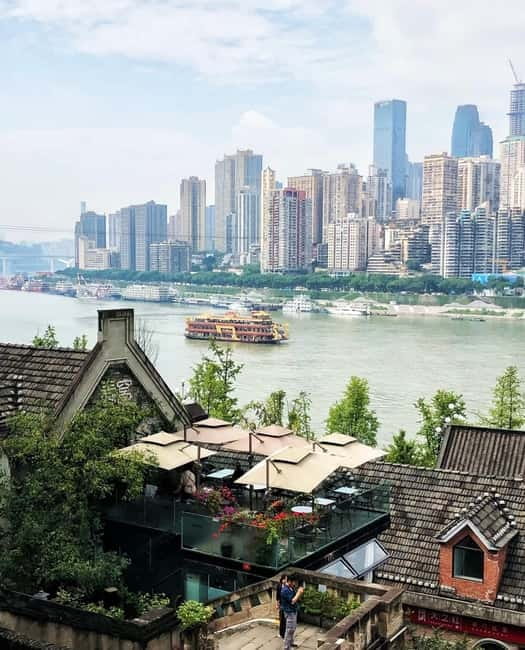
To round out the day, the tour includes a more lived-in old-street feeling at Longmenhao Old Street. Restored buildings, older trees, and teahouses set the tone, and the vibe is slower than the big commercial areas. This is the side of Chongqing that feels like it has a daily rhythm, not just a visitor schedule.
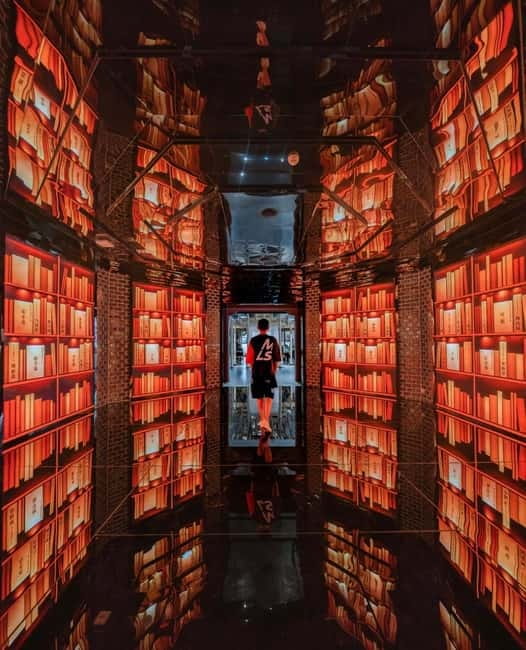
In places like this, I look for the small details—indie bookstores, side-cafes, and artist spaces that show up when you walk a little off the main flow. You can find that kind of texture here, and it makes the day feel like more than a list of landmarks.
A highlight from the experience is how some guides encourage real interaction. One guide took people to a teahouse experience where they could talk with locals in a relaxed setting. That matters because Chongqing isn’t only a skyline. It’s also how people spend an afternoon: sipping tea, chatting, and playing cards.
Tip: if you’re serious about photos, ask your guide where the best angle is before you start walking. Several guides are known for helping people get clear pictures even when crowds are shaping the scene.
Price and value: what $216 buys you in Chongqing
At about $216 per person for roughly 10 hours, the value depends on how you travel. This price isn’t just paying for sights. It includes several things that would cost you time and effort on your own:
- pickup and drop-off from anywhere in Chongqing city
- guided narration in your selected language
- included tickets for the Yangtze River cableway and the Urban Planning Exhibition Gallery
- two local snacks and drinks during the day
If you’re visiting Chongqing for the first time, time is your real currency. Getting across the city efficiently while also hitting both “iconic” and “explain-it-to-me” stops is exactly what this package is built to do.
Also, group size helps the math. With 1–12 people, the tour has a better chance of moving fluidly. That matters in Chongqing, where traffic congestion can shift plans and sometimes requires a taxi transfer for certain congested areas.
Guides make the difference: Diego, Hao, Linxin, Flora, and Sofia
One of the strongest signals from the experience is guide quality. Different guides bring different strengths, but the consistent theme is confidence and care.
Diego, for example, is praised for making logistics easier and for being friendly and patient. Spanish-speaking guidance helped people feel safe and comfortable, which matters a lot when you’re navigating a city with steep terrain and traffic patterns you don’t know.
Hao is highlighted for going beyond expectations and helping even an older family member feel looked after throughout the day. That kind of attention turns a long day into a manageable day.
Linxin stands out for being attentive to interests and shaping the conversations accordingly, which can make the day feel more personal than a rigid checklist.
Flora is especially noted for helping with photos and steering people toward less tourist-frequented spots when avoiding crowds is important.
Sofia gets top marks for storytelling and for photo help at Liziba Station, plus the teahouse conversation with locals that adds a human layer to all the views.
If you’re the kind of traveler who cares about how the day feels—safe, paced well, and not confusing—this is where the tour earns its price.
Who should book this Chongqing day, and who might skip it
This one-day plan is a strong fit if you want:
- a high-impact overview of Chongqing’s surreal layout
- iconic transit experiences you can’t easily DIY without a lot of research
- a guide who can help you find good photo angles and avoid crowd chaos
- cultural stops that include both heritage streets and an urban planning explanation
It might be less ideal if:
- you can’t handle long walks and a day around 10 hours
- you need wheelchair-friendly routes, since the experience is not suitable for wheelchair users
Should you book this Chongqing one-day experience?
Yes, if you’re short on time and you want Chongqing’s signature “8D” feeling in a single day. The mix is the whole point: you ride the Liziba Monorail, take the Yangtze cableway, enjoy Ciqikou Ancient Town, and pair it with the City Planning Exhibition Gallery so the city stops feeling like random chaos and starts feeling like a system.
If you’re unsure, use this rule: if you like transit, viewpoints, and guided navigation in a city that can feel confusing at first, you’ll likely enjoy this format. Bring comfortable shoes, keep your camera ready, and let the guide handle the hard part—getting you from layer to layer without losing your momentum.
FAQ
FAQ
How long is the Chongqing tour?
It runs for approximately 10 hours.
What is the price per person?
The price listed is $216 per person.
How big is the group?
The group size is 1–12 people, with larger groups available by inquiry.
Where do you get picked up and dropped off?
Pickup and drop-off are available from anywhere in Chongqing city. The tour team confirms pickup details the evening before.
What does the tour include for tickets and entry?
Yangtze River Cableway tickets and admission to the Chongqing Urban Planning Exhibition Gallery are included.
Are meals included?
Lunch is not included. You get two local snacks and drinks during the day, and you’ll receive recommendations for lunch.
Do I need a passport or ID?
Bring a passport or ID card.
What should I bring for comfort?
Wear comfortable walking shoes and bring a camera for photos.
Is the tour suitable for wheelchair users?
No, it is not suitable for wheelchair users.
What languages are available for the guide?
Guides are available in English, Chinese, Spanish, Japanese, Korean, Russian, French, and Italian.