REVIEW · MTSKHETA
Day trip to ancient history-Mtskheta,Gori,Uplistsikhe
Book on GetYourGuide →Operated by Argo Travels Georgia · Bookable on GetYourGuide
Four ancient stops, one well-paced route. This day trip strings together Jvari, Gori, and Uplistsikhe in a way that feels organized instead of rushed, with enough stops to actually take in the place. The professionalism and punctuality set the tone fast, and the guide works hard to match what your group wants—photo time, extra questions, or simply moving at a comfortable rhythm.
I especially like the contrast between viewpoints and underground stone. You get that classic panorama from Jvari over Mtskheta, then you switch gears to cave-carved rooms at Uplistsikhe, where the setting does half the storytelling for you. The big bonus is that the guide doesn’t treat it like a checklist; the explanations are built around what you’re seeing, including at the Stalin sites in Gori.
One thing to watch: the day is long, and lunch isn’t included in the price. If you’re the type who wants a short, efficient meal break, plan to manage expectations—this trip includes a restaurant lunch stop, but it can take time.
In This Review
- Key highlights worth planning for
- Getting started in Old Tbilisi: punctual, simple, and actually smooth
- Jvari Monastery: that first view over Mtskheta
- Gori: Stalin’s birthplace house-museum and the armored carriage
- Uplistsikhe: the stone city of priests and slaves
- Mtskheta: Svetitskhoveli Cathedral as Georgia’s living center
- Lunch and small pleasures: wine, wine ice cream, sweets, souvenirs
- Timing and comfort: plan for walking, not lounging
- Guides and group energy: when explanations really work
- Who should book this day trip?
- Should you book this Mtskheta–Gori–Uplistsikhe tour?
- FAQ
- How long is the day trip?
- How much does the tour cost?
- Where is the meeting point?
- What languages are available for the guide?
- What is included in the price?
- What is not included?
- Is free cancellation available?
Key highlights worth planning for
- Jvari (6–7th century) first stop with a dramatic view over Mtskheta
- Gori Stalin house-museum plus the armored carriage, explained by the guide
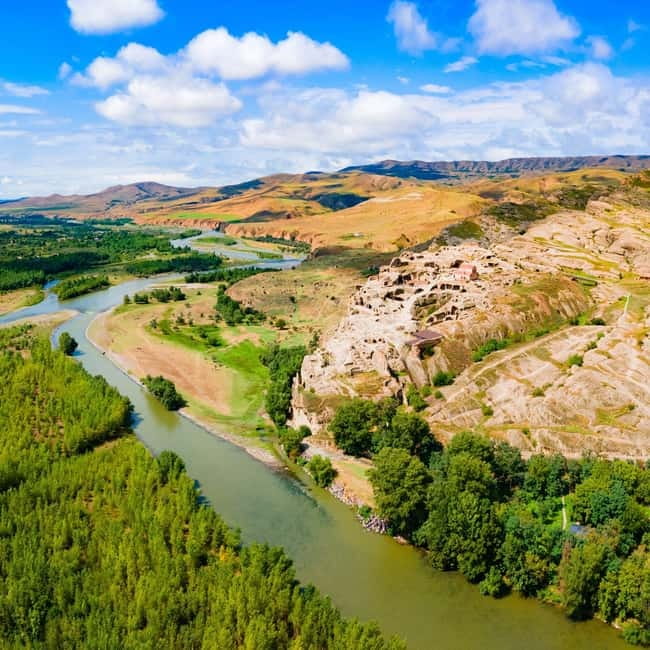
- Uplistsikhe cave city with stone-carved grottoes and a lot of walk-through exploring
- Svetitskhoveli Cathedral in Mtskheta, a major Georgian religious center
- Food moments: wine, wine ice cream, sweets, and souvenir chances along the route
Getting started in Old Tbilisi: punctual, simple, and actually smooth
This tour is built for an 8-hour day, starting at 21 Ovanes Tumaniani St, in the heart of Old Tbilisi near the I LOVE TBILISI sign. From the way it’s run—professionalism, punctual timing, and a clear plan—you can tell they aim for fewer surprises and more time at the sights.
You’ll be traveling with an English-speaking guide (and Russian is also available). The pace matters here: each major stop has set time for photos and guided viewing, so you don’t spend your day lost between places.
Price-wise, at $25 per person it’s easy to justify if you’d otherwise rent a car or pay separate transport for multiple sites. What you need to budget for is also clear up front: lunch and museum entry tickets cost extra.
Jvari Monastery: that first view over Mtskheta
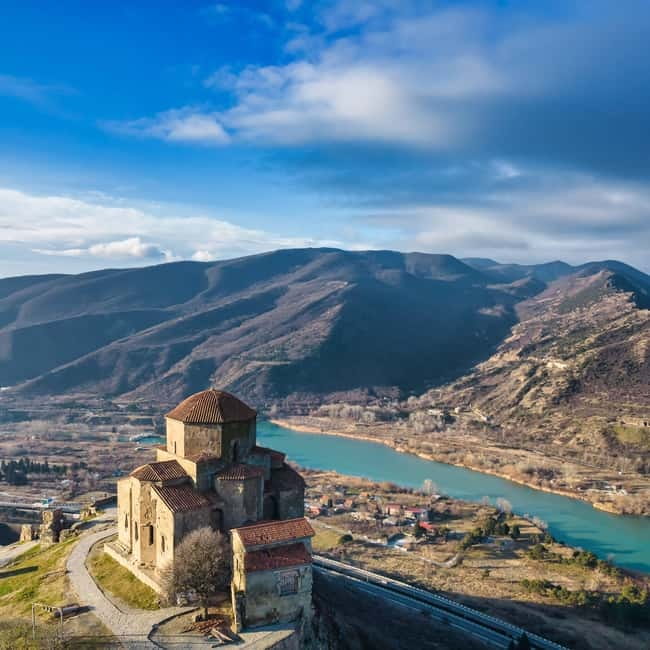
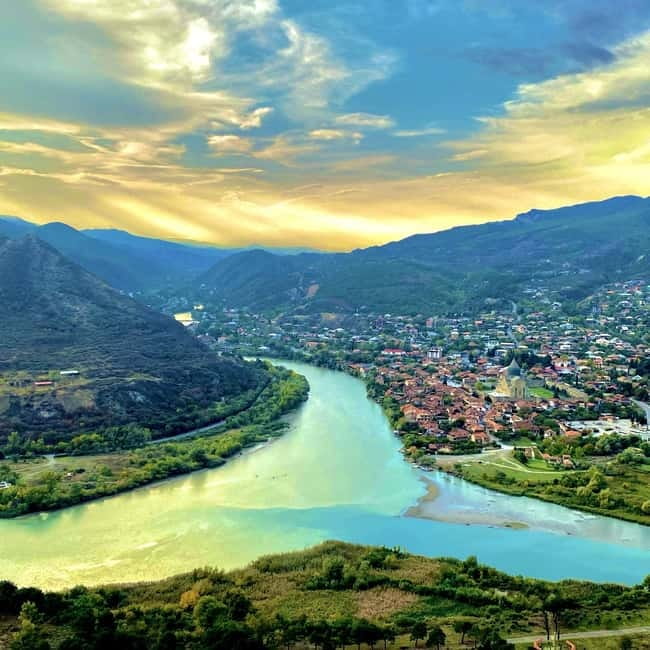
Jvari is where the day turns from driving to wow. You arrive at the monastery-temple dating to the 6th–7th centuries, and the setting gives you sweeping views over Mtskheta, the ancient capital of Georgia.
This is one of those stops where timing is everything. You get a dedicated window for photos and a proper visit, plus a break along the way (coffee and other refreshments are part of the rhythm). If you’re prone to skipping viewpoints, this is the one place on the itinerary where I’d still say it’s worth slowing down.
Because it’s a viewpoint monastery, bring comfy shoes and expect uneven spots where you’ll pause for photos. And if your group likes history more than photos, you’ll still get something here—the church setting is tied to how this region’s faith centers formed over time.
Gori: Stalin’s birthplace house-museum and the armored carriage
After Jvari’s serenity, Gori brings a different kind of intensity. It’s a smaller provincial city, but it became globally known because of I. V. Stalin (Dzhugashvili), and the tour focuses on his house-museum, the house where he was born, and an armored carriage tied to his life.
What I like about this stop is how the explanation stays connected to objects you can actually look at, not just distant summaries. The museum guide shares stories about Stalin’s life, and that makes the history feel less abstract—especially if you’ve ever wondered how an event-driven political story becomes physical reality in a small town.
You’ll have about 2 hours here, including sightseeing time and photos. It’s enough time to do both: hear the story, then walk the rooms and courtyard with your own eyes.
A practical note: museum visits often come with separate entry costs, and this trip does not include them. If you’re trying to keep the final spend predictable, check the museum ticket situation early and budget a bit more than the tour price.
Uplistsikhe: the stone city of priests and slaves
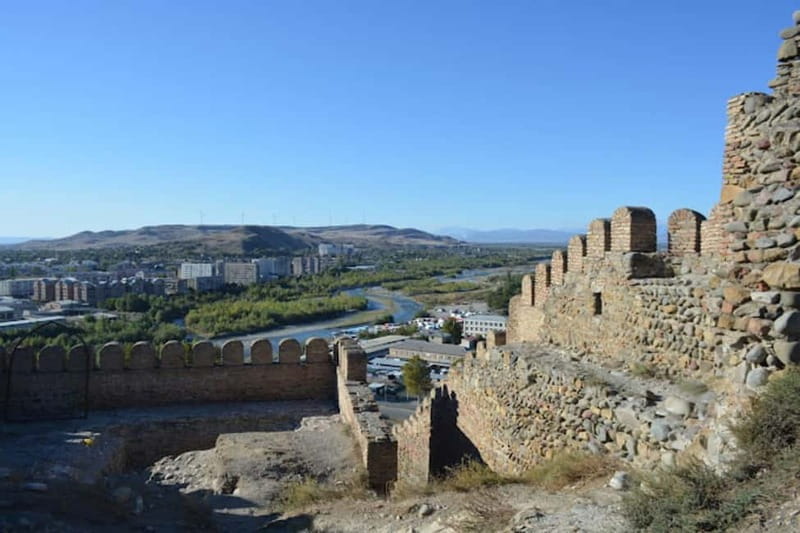
Then comes the part that feels most like stepping into a different era. Uplistsikhe is often described as a city of priests and slaves, and it’s tied to the first millennium before our time. The big idea here is the setting: a stone city formed into the rock, with cave grottoes that look almost like giant openings in the landscape.
You’ll get around 3 hours for Uplistsikhe, including guided tour time plus walking and sightseeing. This is the stop where a little stamina helps, because you’re moving through stone-carved spaces and exploring the cave-like rooms. It’s not just a wall you look at from one angle—you actively go inside and around.
One useful comparison from experience: Uplistsikhe can feel less extreme than other famous cave cities like Vardzia, which makes it a strong choice if you want “cave city vibes” without feeling like you’re signing up for a full day of rugged trekking.
If you’re into photography, this is also a great place to slow down. The mix of rock textures and carved openings gives you angles that look different after every turn.
Mtskheta: Svetitskhoveli Cathedral as Georgia’s living center
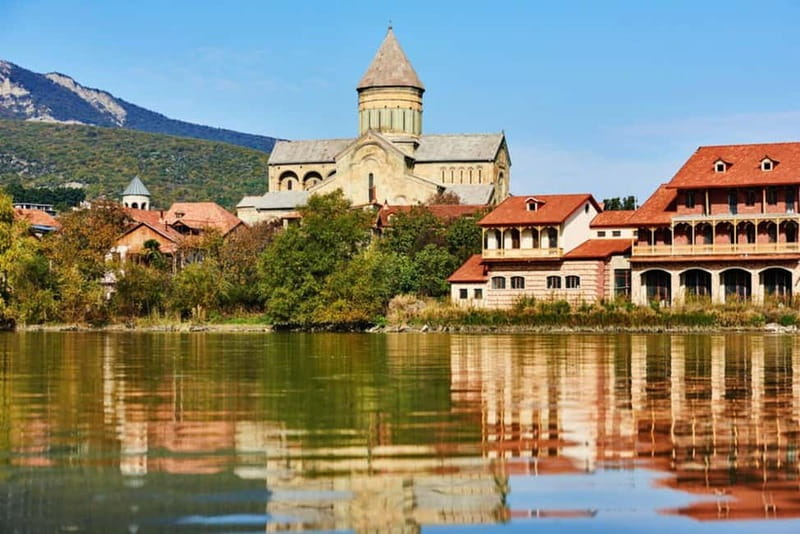
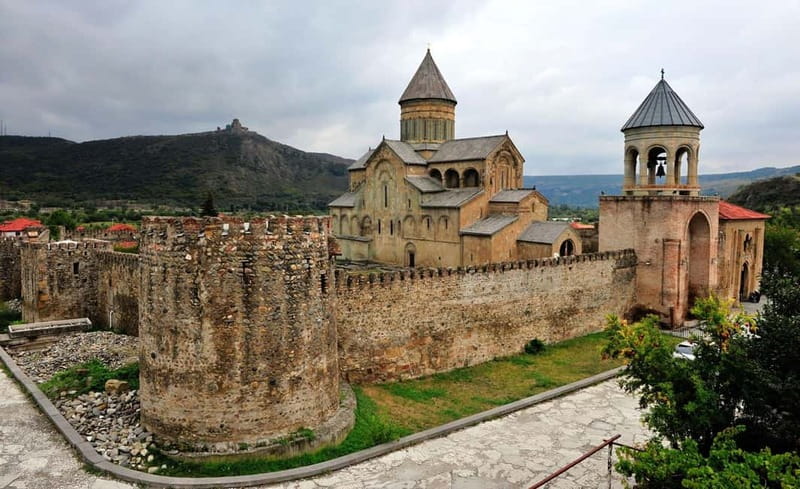
Back in Mtskheta, the focus shifts to something more formal and sacred: Svetitskhoveli Cathedral. It’s known as the second largest temple in Georgia, and it has long been described as the heart of the Georgian church—something that still matters today.
You’ll have about 1.5 hours here, which is just right for a guided visit plus time to absorb the scale and details at a comfortable pace. I like this kind of timing because it prevents the “see it and rush off” feeling that can happen at big churches.
Svetitskhoveli is also a visual anchor for the whole day. You start with Jvari’s viewpoint monastery, then move through Gori’s human history, then end with a Georgian religious center. The itinerary quietly tells you how places in this region connect: faith, power, and everyday life all leave physical marks.
Lunch and small pleasures: wine, wine ice cream, sweets, souvenirs
This trip includes a restaurant lunch stop, described as a cozy place to recharge before the final stretch. The catch is simple: lunch expenses are not included, so plan on paying separately.
What makes lunch more interesting here is what can happen along the route. You’ll have a chance to taste wine, wine ice cream, local sweets, and also buy souvenirs. Even if you’re not a big shopper, those tasting moments add flavor—literally—and they help you feel what “local” means in a day-trip format.
Now for the one practical drawback to consider: lunch time can feel long if you’re hoping for a quick bite and straight back out the door. If you like efficient breaks, treat this day as sightseeing-heavy, not food-heavy.
Timing and comfort: plan for walking, not lounging
The total duration is 8 hours, and the schedule is built around several stops with breaks (including photo time and guided time). You’ll also receive mineral water (0.5L per person), which is a nice touch for a warm day.
Still, this isn’t a sit-and-watch kind of outing. Uplistsikhe and the church areas involve walking, moving between viewpoints, and spending time outdoors. The tour also lists that it isn’t suitable for people with heart problems or epilepsy, so if either applies, it’s best to look for a different format.
For everyone else, the best preparation is boring and effective: comfortable shoes, sun protection if it’s bright, and an open attitude toward both religious sites and political history.
Guides and group energy: when explanations really work
One of the best signs of value on a tour like this is how the guide handles the group. This one is praised for professionalism, punctuality, and a clear desire for excellence—plus the guide’s ability to consider guest wishes.
In particular, names like Levani, Misza, and George show up as strong guides, including with the ability to administer the tour in both Russian and English. That matters because you don’t want one language group to miss key context while the other group gets the real story.
The overall feel is that the stops are spaced well enough to keep momentum without turning into a blur. Each section gets its moment, and the day moves forward with purpose.
Who should book this day trip?
Book it if you want a single-day route that covers major Georgian highlights with guided context. This fits well if you’re visiting Tbilisi for a few days and want to see beyond the city without planning logistics.
It’s also a good match if you like variety: monasteries with views, a museum built around Stalin’s life (including the armored carriage), a cave-carved ancient city, and then a major cathedral in Mtskheta. The mix keeps the day from feeling repetitive.
Skip it if you prefer totally flexible pacing, or if you strongly want lunch included and priced-in. Also skip if you need a low-walking tour—Uplistsikhe and viewpoints are part of the experience.
Should you book this Mtskheta–Gori–Uplistsikhe tour?
I think this is a solid choice for most first-time visitors who want real variety in one day and appreciate a guide who explains what you’re actually looking at. The combination of Jvari, Gori’s Stalin museum and carriage, Uplistsikhe’s cave city, and Svetitskhoveli Cathedral is a practical way to cover big geographic and historical ground without extra planning headaches.
If you book, go in with two expectations: budget for lunch and museum tickets, and dress for walking and outdoor time. With that in mind, you’ll likely come away with photos you’ll actually want to sort, plus stories that make the stones and churches make more sense.
FAQ
How long is the day trip?
It lasts 8 hours.
How much does the tour cost?
The price is $25 per person.
Where is the meeting point?
You meet at 21 Ovanes Tumaniani St, in the heart of Old Tbilisi at I LOVE TBILISI.
What languages are available for the guide?
The live tour guide is available in English and Russian.
What is included in the price?
The tour includes transport, an English-speaking guide, and mineral water (0.5L per person).
What is not included?
Lunch expenses and museum entry tickets are not included.
Is free cancellation available?
Yes. You can cancel up to 24 hours in advance for a full refund.