REVIEW · GIRONA
Girona Jewish Heritage small group from Girona
Book on Viator →Operated by Girona Experience Tours · Bookable on Viator
Girona’s Jewish past is still written into the streets. This Girona Jewish Heritage small-group tour pairs a guided walk through the medieval Jewish quarter with included entry to the Museum of Jewish History, tied directly to the story of Jewish life in Spain and the 1492 expulsion. You’ll also get help spotting the details that most people miss when they wander on their own.
Two things I especially like: you don’t have to manage museum logistics because entry fees are included, and the walk is built around the quarter’s remarkably preserved street layout and surviving landmarks. One heads-up: Girona is famous for slopes and steps, so this isn’t the best pick if your mobility is limited.
In This Review
- Key highlights to look for
- Starting at Plaça de Sant Feliu: how the tour gets you oriented
- Strolling the Girona Jewish Quarter’s street plan (and what to spot)
- Museum of Jewish History visit: last synagogue and the 1492 turning point
- Why this tour tells the Jewish story as part of Girona’s story
- Small-group dynamics in English (and why your guide matters)
- Steps, slopes, and practical comfort in Girona
- Price and value: what you’re really paying for at $54.31
- Who should book this Girona Jewish Heritage tour?
- Should you book this Girona Jewish Heritage tour?
- FAQ
- How long is the Girona Jewish Heritage tour?
- What does the tour include?
- Is the Museum of Jewish History entry included in the price?
- What language is the tour offered in?
- How big is the group?
- Where do I meet the guide?
- Is the tour wheelchair or mobility-friendly?
- Are service animals allowed?
- Can I get a refund if I cancel?
Key highlights to look for
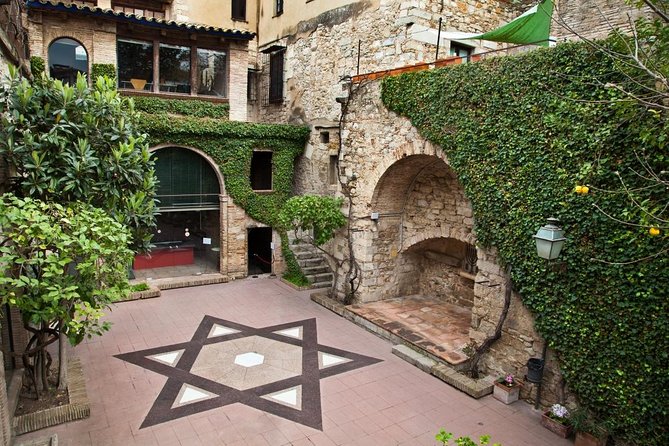
- Medieval street plan you can still follow in today’s Girona’s Jewish quarter
- Museum entry included, focused on the last synagogue before the 1492 expulsion
- Up to 10 people, so you can actually ask questions on the spot
- Small, specific local stops, like wall remnants and carved door details you might not notice
- Guides with real storytelling, including names like Ona, Miguel, Mike, Pete Cesar, Pere, Julia, Susana, and Monica
Starting at Plaça de Sant Feliu: how the tour gets you oriented
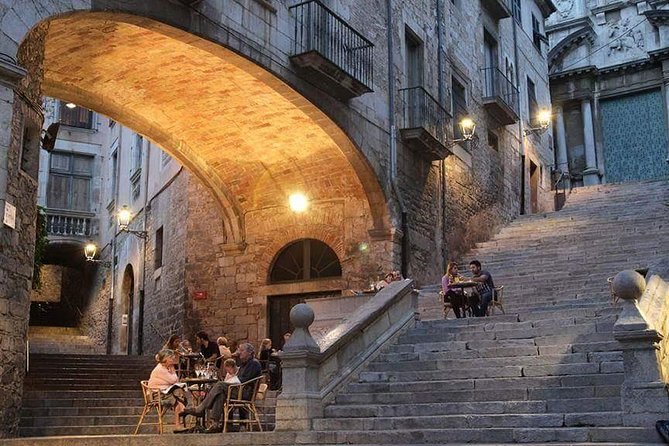
You meet at Plaça de Sant Feliu (17004 Girona). That matters more than it sounds. From here, your guide sets the scene so the Jewish quarter doesn’t feel like random narrow streets. Instead, you start seeing how the neighborhood fit into the broader city—where life happened, how it moved, and what boundaries shaped daily routines.
This isn’t a “stand in one place and read a plaque” kind of experience. The format is active: you’ll walk, stop, and look up. You’ll also spend time inside the Museum of Jewish History later, but the big win is how the street walk gives you context first, so museum objects won’t feel like disconnected artifacts.
The group size is capped at 10 travelers, which usually means less waiting at every corner. You’re not competing for attention, and it’s easier for your guide to adjust the pace if someone has questions. The tour is offered in English, and you’ll receive a mobile ticket.
You can also read our reviews of more tours and experiences in Girona.

Strolling the Girona Jewish Quarter’s street plan (and what to spot)
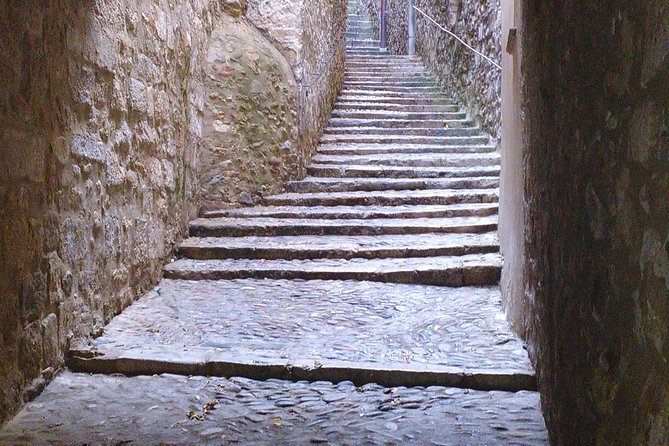
Girona’s Jewish quarter is one of the best preserved from the Middle Ages. That’s not marketing fluff; it changes how the visit feels. When you can still follow the neighborhood’s layout—its tight streets, the way blocks relate to each other—you start to understand how a community lived in real space, not just in a textbook.
As you walk, your guide points out things tied to long Jewish presence in Girona and how that story connects to the city around it. Expect stop-and-look moments where the setting becomes evidence. One recurring theme in the guide feedback is that you’ll see reminders carved into stone and surviving structures—small but powerful details.
Here are a few examples of what you may be shown as you move through the quarter:
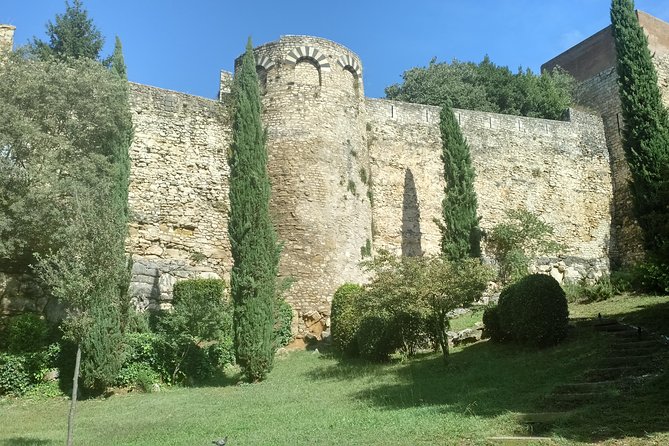
- Remnants of the wall that enclosed the Jewish quarter
- Mezuzah indents carved into the stones of homes
- A micve preserved from the period (a key marker of religious life)
- Notable houses tied to community leadership, including the House where the last governor of the Aljama (Lleó Avinay) lived, and references to places like the Palace of the Ravaia
Even if you don’t catch every historical name, you’ll leave with something more useful: a mental map. You’ll know what you’re looking at and why it mattered. That’s where a guided walk earns its keep.
A practical consideration: the tour is built for walking. Girona has steps and slopes, and you’ll be outdoors for much of the experience—so go in with comfortable shoes and a realistic pace.
Museum of Jewish History visit: last synagogue and the 1492 turning point
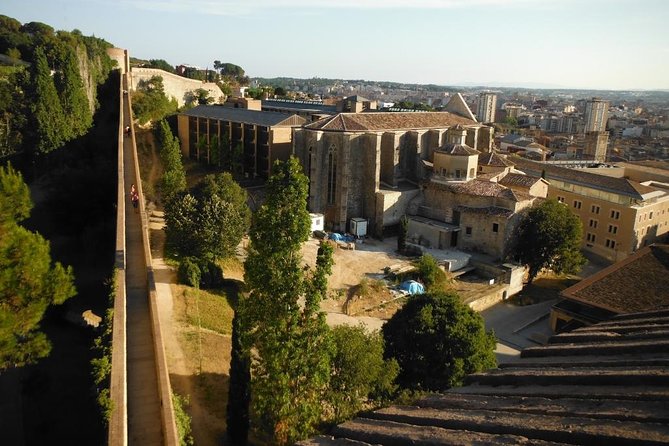
The museum visit is where the tour’s theme tightens. You’re not just hearing about Jewish history—you’re seeing it connected to the place itself. The museum focuses on the last synagogue of the city before the expulsion in 1492, and that anchor date changes how you interpret everything you saw outside.
The museum portion is about 30 minutes, which is a good length for most people. It’s enough time to get orientation and learn what matters, without dragging you through every display in a way that turns history into a chore. You’ll also have the advantage of already walking the quarter first. The objects start to feel personal because you’ve seen the neighborhood they relate to.
Look for how the museum explains:
- Jewish community life in Girona across centuries
- How Jewish religious practice shows up in built spaces
- The relationship between Jewish presence and the larger Spanish/Catalan story
Because entrance is included, you avoid the annoying “Ok, now what?” moment at the ticket desk. You can stay focused on the ideas.
If you prefer learning by listening, this part is usually satisfying. A number of guides on this tour have been praised for explaining how the Jewish and civic histories overlap in Girona, not treating them like separate worlds.
Why this tour tells the Jewish story as part of Girona’s story
A big reason this tour gets strong ratings is its framing. It doesn’t treat Jewish history as a side note. It presents Jewish presence as a real thread in Girona’s cultural fabric—something that shaped buildings, neighborhood structure, and daily life.
You’ll hear history with an eye on cause-and-effect: how communities formed, how spaces were used, and what changed over time. The tour’s approach makes 1492 feel less like a random year and more like the culmination of policies and social pressures that had been building.
This matters for you if you want more than names and dates. Girona can be beautiful and historic on the surface, but it’s easy to miss the human story inside the stones. A guided approach helps you read the city. It also helps you notice how later history in Spain is affected by what was present—and what was lost.
Another value: the guide is usually able to shape the level of explanation. Some guides have been noted for adjusting to the group’s comfort with Jewish religious knowledge, which helps if you’re coming in with questions or if you want to keep things simple.
Small-group dynamics in English (and why your guide matters)
This is a small group tour of up to 10 people, and that’s not just a comfort feature. It changes the learning experience. With fewer people, guides can slow down at key moments and answer questions without turning the walk into a rushed slideshow.
The guide lineup varies by day, and that’s reflected in the reviews’ focus on specific people. You might have a guide such as:
- Ona
- Michael (Miguel)
- Mike
- Pete Cesar
- Pere
- Julia
- Susana
- Monica
Across those names, the common praise points are clear: guides explain Girona and Jewish life in a way that sticks, and they’re friendly and respectful while answering questions.
There’s one potential drawback to keep in mind. On at least one occasion, a guest felt the guide spent extra time with another person who was being trained for the tour. If you’re the type who wants a steady flow of story with no detours, that could be annoying. The good news: even on days when things feel different, the core structure is still the same—Jewish quarter walk plus the museum—so you’re not left with nothing to do.
Also, if you’re the only booking or the group is unusually small, the tour may run more privately, which can be a plus if you want more dialogue.
Steps, slopes, and practical comfort in Girona
This part is important. The tour notes that Girona has a lot of steps and slopes, so it’s not recommended for people with mobility problems. Service animals are allowed, and the tour is near public transportation, which helps you get there and out.
So what should you do if you’re on the fence?
- If you can walk for 2+ hours with hills, you’ll probably be fine.
- If you use a mobility aid or find stairs hard, consider a different Girona tour route.
- Bring shoes with grip. Old stone streets can be slick, especially if you hit any mist or rain.
Even if you’re fit, pace yourself. This isn’t a cardio event, but it is a “keep moving” experience. The better you feel physically, the more you’ll notice the architectural details your guide wants you to see.
Price and value: what you’re really paying for at $54.31
At $54.31 per person for about 2 hours 30 minutes, the pricing is doing a few jobs at once.
First, museum admission is included, which reduces decision fatigue. Second, you’re paying for interpretation—turning a set of streets and displays into a connected story. The difference between reading signs and having a guide connect the dots can be huge, especially in a place like Girona where the most meaningful parts are often small: a carved indent, a doorway detail, the way street layout shapes movement.
Now, here’s the balanced take. If you’re the DIY type who loves reading slowly and hates group timing, you might feel the museum alone is easy to handle on your own. But this tour isn’t only about the museum. The street walk is the “why” behind what you see inside.
For best value, you should book this if:
- You want context, not just facts
- You enjoy walking tours with real stopping points
- You care about how Jewish history is embedded in Spanish and Catalan culture
If you’re short on time in Girona and want one focused cultural experience that isn’t generic, this also works well. You’ll get the key sights plus museum time without needing to juggle tickets or plan routes.
Who should book this Girona Jewish Heritage tour?
This tour is a great fit if you:
- Want a focused introduction to Jewish life in Girona, anchored to the last synagogue and the 1492 expulsion
- Prefer a small group experience with time for questions
- Enjoy learning how religion, community life, and city planning overlap
- Like the idea of seeing evidence in the built environment (stone, street plan, and preserved features)
It may not be the best fit if:
- You need step-free access
- You expect a wide range of sites beyond the preserved quarter and the museum
- You get impatient if the guide spends extra moments on training-related logistics during the tour
Should you book this Girona Jewish Heritage tour?
Yes—if you want the Jewish quarter explained in a way that helps you read Girona. The strongest reason to book is the pairing: a guided walk through one of the best preserved medieval Jewish quarters plus included entry to the Museum of Jewish History connected to the last synagogue before 1492.
I’d book it especially if you have even a little curiosity about how Jewish culture shaped daily life in Spain and what the city still shows today. Just plan for hills and steps, and show up with comfy shoes and a willingness to slow down and look.
If that sounds like you, you’ll likely come away with more than a few photos—you’ll leave with a map in your head and details you can point out the next time you pass that stone.
FAQ
How long is the Girona Jewish Heritage tour?
The tour runs for about 2 hours 30 minutes.
What does the tour include?
It includes entrance fees to the Museum of Jewish History, a guided visit to the museum, and guided history of Girona from an expert guide. Food and drinks are not included.
Is the Museum of Jewish History entry included in the price?
Yes, museum entrance is included.
What language is the tour offered in?
The tour is offered in English.
How big is the group?
The tour is a small group experience with a maximum of 10 travelers.
Where do I meet the guide?
The meeting point is Plaça de Sant Feliu, 17004 Girona, Spain. The tour ends back at the meeting point.
Is the tour wheelchair or mobility-friendly?
It’s not recommended for people with mobility problems because Girona has many steps and slopes.
Are service animals allowed?
Yes, service animals are allowed.
Can I get a refund if I cancel?
You can cancel for a full refund up to 24 hours before the experience’s start time.