REVIEW · GIRONA
Private: Girona and Besalu Jewish History Tour from Girona
Book on Viator →Operated by Girona Experience Tours · Bookable on Viator
A mikveh underground is rare anywhere. On this private day in Girona and Besalú, you’ll connect the streets of the medieval Jewish quarter with one of Catalonia’s most striking Jewish sites: a 12th-century underground mikveh. I like that the tour includes context up front through Girona’s Museum of Jewish History (including the story of Nahmanides), so the sights don’t feel random. One thing to plan for: it’s a full day with real walking and views from Girona’s old walls, so comfy shoes matter.
You meet at Plaça de Sant Feliu in Girona at 9:00am, then ride by air-conditioned minivan. The group stays small (up to 7), so your guide can keep the pace human and answer questions without rushing you through the alleys. In the past, guides such as Miguel and Marc (with Carmen also showing up as a guide/driver pair) have a knack for making the day feel tailored to the people in the car and on the street.
By afternoon, you’re crossing the Fluvià River on a Romanesque bridge, learning about Besalú’s long Jewish presence, and stepping into the remnants of a 13th-century synagogue. You end back where you started, with a day’s worth of medieval atmosphere (plus a few big “how is this real?” moments).
In This Review
- Key highlights worth your attention
- Girona and Besalú: why this pairing clicks
- Timing, group size, and the day’s real pace
- Meeting in Girona and settling into the medieval lanes
- The Museum of Jewish History: where Nahmanides makes sense
- Girona’s extra medieval stops: cathedral, walls, and the Onyar River
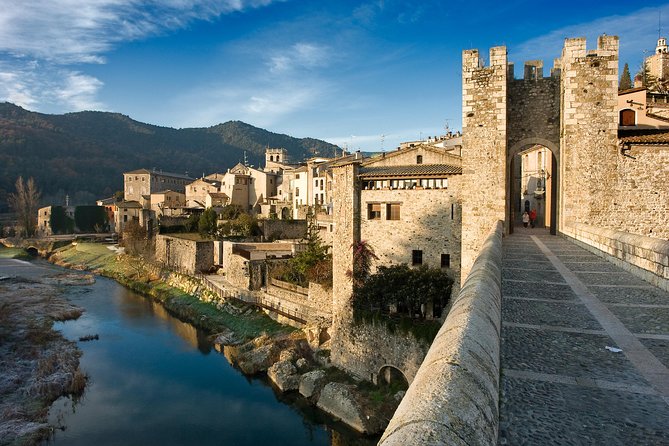
- Besalú by afternoon: crossing the Fluvià River and spotting Jewish remnants
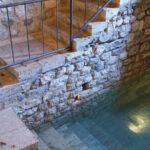
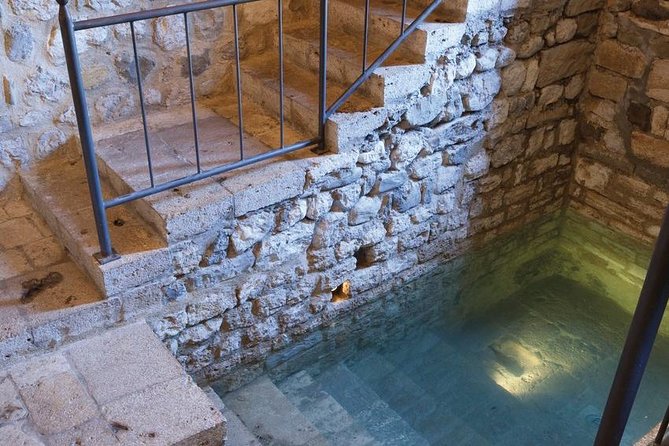
- The underground mikveh: the standout moment of the whole day
- Price and value: what you’re really paying for
- Who this tour is best for
- Should you book this Girona and Besalú Jewish History tour?
- FAQ
- How long is the Girona and Besalú Jewish History Tour?
- What’s the group size for this private tour?
- What time does the tour start, and where do we meet?
- What language is the tour offered in?
- Is admission to the Museum of Jewish History included?
- Does the tour include transport?
- Is lunch included?
- What’s included in the tour besides guiding?
- Do I get a ticket for entry?
- Can I cancel for a full refund?
Key highlights worth your attention
- Private pace, max 7 people: more questions, less waiting, easier photo stops
- Girona Museum of Jewish History included: about a 1-hour guided visit
- The Call (Jewish quarter) stroll: narrow medieval streets in Girona for around 2 hours
- Fluvià crossing and Romanesque bridge in Besalú: a scene-change that feels big even on foot
- Remnants of a 13th-century synagogue: you see what’s left, not just what’s described
- Besalú’s underground mikveh (ceremonial bath): dating to the 12th century
Girona and Besalú: why this pairing clicks
If you want Jewish history in Catalonia, Girona and Besalú fit together in a very practical way. Girona gives you the urban layer: tight lanes, medieval city structure, and the Call—the Jewish quarter known as the Call—right where you can still walk it. Then Besalú answers with the “stop you in your tracks” layer: a specific physical artifact of Jewish life that still exists underground.
What I love about this tour’s structure is that it doesn’t treat the day like a checklist. You start with the museum and the Call, so you understand why certain buildings and street patterns matter. Then you move outward to Besalú, where the story becomes more tangible: the mikveh, the synagogue remnants, and the town’s setting.
Girona also brings extra medieval sightseeing that doesn’t feel like filler. You’ll see iconic landmarks along the way, including the Cathedral of Santa Maria and viewpoints from the old walls, plus a walk near the Onyar River, which splits the medieval area from the modern part of town. That mix helps you remember the day as a real place—not only a set of religious sites.
You can also read our reviews of more tours and experiences in Girona.
Timing, group size, and the day’s real pace
This is a 7-hour private outing, starting at 9:00am at Plaça de Sant Feliu. The route is set, but the private format matters. With a max of 7 people per booking, you’re not stuck listening over a crowd, and your guide can adjust based on your questions.
The tour also includes transport by air-conditioned minivan. That sounds like a small comfort, but in practice it helps you stay focused. You spend less energy on logistics and more on noticing details: how the city is laid out, what changes as you cross rivers, and where key sites sit in the medieval geography.
There’s a lunch break, but it’s not included. That can be fine because it gives you flexibility, but it’s also the one place where timing can feel tight if your group has different hunger levels. In one case, a guest wished there had been no lunch stop, which is a good reminder: if you want a short lunch or a quick bite, ask your guide to keep the schedule moving.
Finally, the tour includes a walk along Girona’s old walls to view the city from the top. That means you should expect some climbing. One traveler later noted that climbing in Girona was too difficult for their husband. So if stairs are a concern for you, bring it up early and plan for a pace that fits your needs.
Meeting in Girona and settling into the medieval lanes
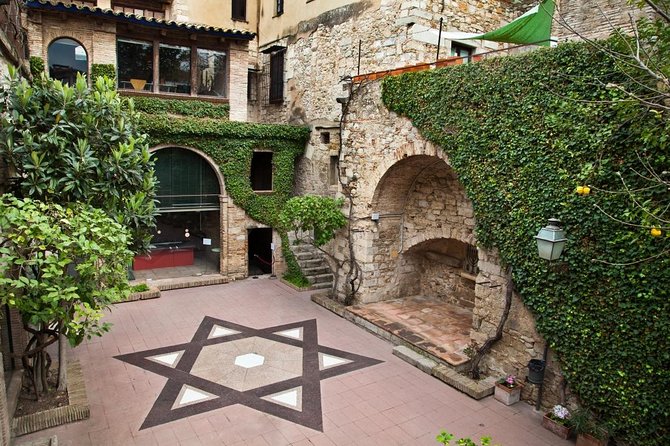
Your day begins at Plaça de Sant Feliu, a central starting point that makes it easier to get oriented in Girona quickly. From there, you’ll spend your morning in the Call, and the guide’s job is to help you slow down enough to see what your eyes usually skip.
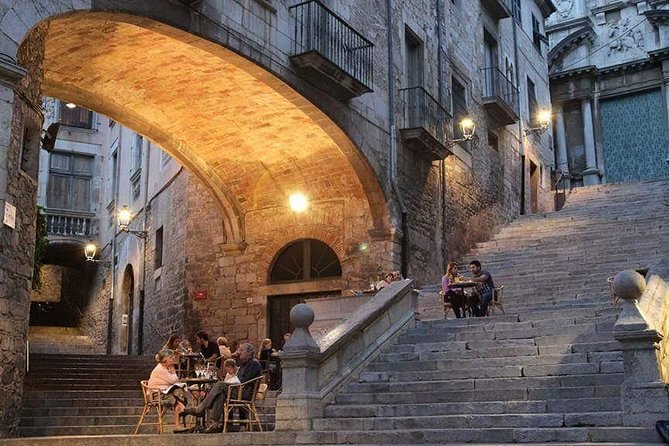
A big reason this works is that the Call isn’t just “a neighborhood.” It’s an entire medieval street pattern. The tour includes time at Patronat Call de Girona, where you’ll stroll narrow lanes for about 2 hours. I like how this part of the tour teaches you to read the street layout like a map: smaller spaces, winding routes, and the sense of how people moved through the city in earlier centuries.
If your group includes teens and adults, this is where private guiding shines. In one family day described as memorable for all ages, the guide managed to keep both teens and adults engaged. That’s not magic. It usually means the guide is using details—names, dates, and everyday context—so people can connect emotionally to what they’re seeing.
Practical note: medieval streets can be uneven and tight. Wear shoes that handle cobbles and small climbs without complaint.
The Museum of Jewish History: where Nahmanides makes sense
After you’ve walked the streets, you step into a museum visit that lasts about 1 hour, with admission included. This timing is smart. The museum gives you context so you understand what you saw outside—and what you’ll see later in Besalú.
You’ll learn about Girona’s Jewish past and notable residents, including the scholar Nahmanides. That name matters because it helps you move past generic “there was a Jewish community here” and into real people, ideas, and influence. Even if you don’t know the details already, a guided museum visit helps you build a mental framework fast.
From a value standpoint, this is one of the easiest “yes, worth it” elements of the day. You don’t need to hunt down tickets, you get a guided visit instead of wandering alone, and it anchors your morning so the afternoon has meaning.
Girona’s extra medieval stops: cathedral, walls, and the Onyar River
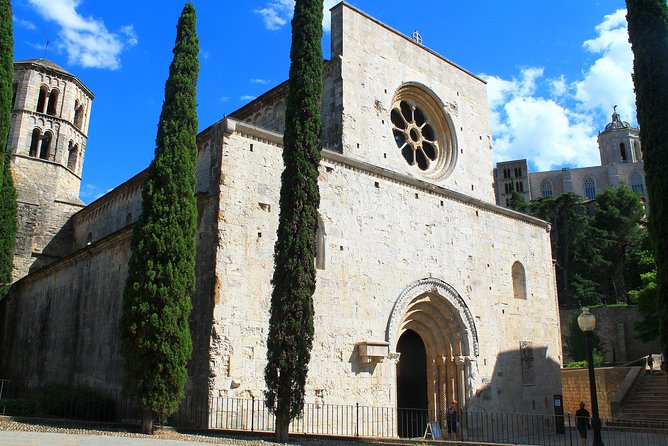
Not everything in Girona on this tour is strictly Jewish-focused, and that’s actually a benefit. The Jewish story lived inside a functioning medieval city, so you’ll see important landmarks that help the broader setting click into place.
One stop highlights the Cathedral of Santa Maria, specifically noting the widest Gothic nave of the world. Even if you only catch the interior at a quick pace, it helps you understand why Girona’s medieval core became so visually memorable.
You’ll also get a walk that includes the old city walls. This is your chance to see the city from above. The viewpoint is useful because it shows relationships: where the river sits, how neighborhoods connect, and why Girona felt defensible and organized in medieval times.
Then there’s the Onyar River moment. The tour points out how the river passes through the city and divides the medieval part from the modern part. This kind of detail is worth paying attention to because it changes how you understand the city when you look at it later on your own.
And yes, you’ll also hear a fun fact connected to a bridge. The tour highlights that Girona’s most popular bridge was built by Gustave Eiffel ten years before the Eiffel Tower in Paris. It’s a good example of why the guide matters: you walk past a structure thinking it’s just another bridge, then suddenly it becomes a piece of engineering and history you can place in time.
Besalú by afternoon: crossing the Fluvià River and spotting Jewish remnants
After lunch on your own, the day shifts to Besalú. The ride keeps you comfortable, and the setting changes quickly enough that it feels like a real second act.
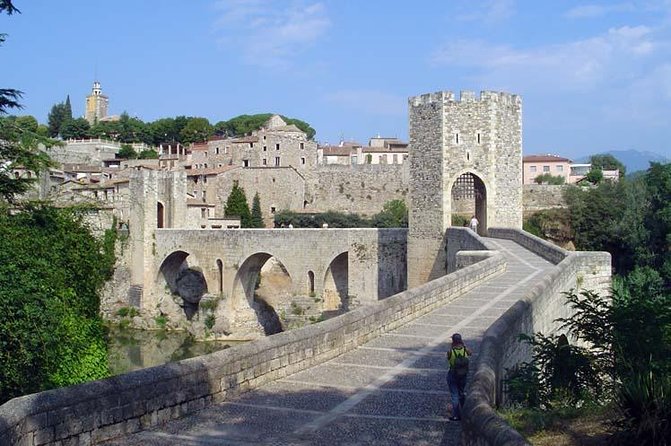
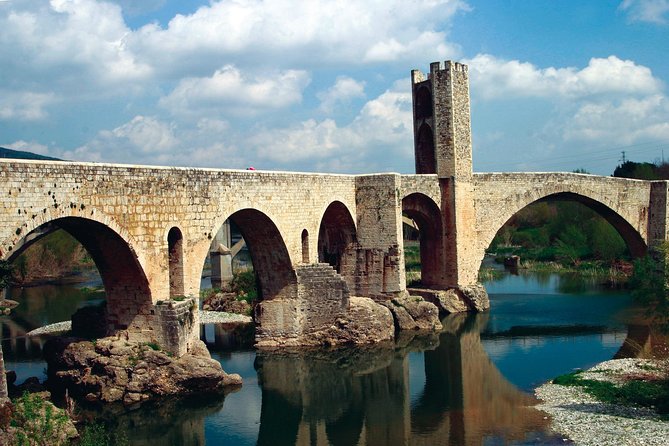
One of the key visual beats is crossing the Fluvià River via a Romanesque bridge. Romanesque architecture has a particular weight to it—solid, rounded, and built for permanence—and crossing it gives you a “you’re somewhere old” moment fast.
In Besalú, you’ll learn about the town’s long Jewish heritage. The tour includes seeing remnants of a 13th-century synagogue. That matters because it anchors the story in physical remains. You aren’t only imagining what used to exist; you’re seeing what survived.
This is also the time when a good guide helps you notice what others might miss. For example, one group mentioned that their guide even adjusted the day for Game of Thrones fans, using clips on an iPad to connect story locations to real spots. Even if you’re not into that series, it shows you how the best guiding style is about connecting details to people’s interests.
The underground mikveh: the standout moment of the whole day
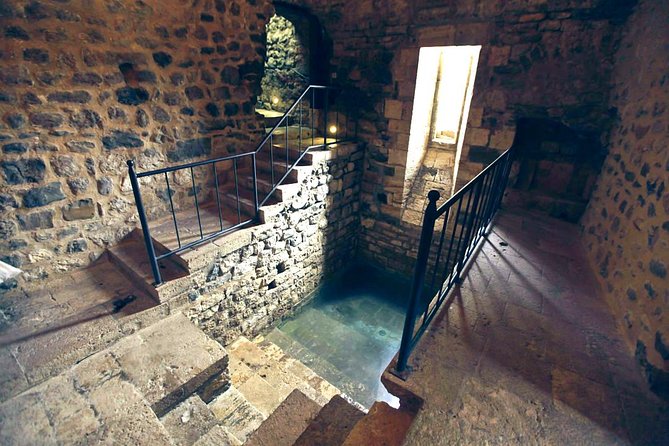
If you want one reason to book this tour, it’s the mikveh in Besalú. The tour visits an underground ceremonial bath dating back to the 12th century—one of the most impressive and specific Jewish sites you can see in this region.
This stop is special for two reasons. First, it’s physical and local. You’re not hearing about a tradition in the abstract; you’re standing near a place built for ritual life. Second, it adds a different texture to the day. Earlier you’re in streets and a museum. Here, you get something hidden—literally underground—that reframes how you picture Jewish life in a medieval town.
The mikveh is also the point where private guiding tends to leave a lasting impression. Because the day stays small, you can focus. You’re not getting pushed along by a crowd rhythm. And if you have questions—about function, timing, or what the structure tells you—this is where you’ll actually get answers.
In at least one described highlight, the mikveh was called out as not to be missed. That’s not just enthusiasm. It’s because this site changes how the rest of the day lands in your mind.
Price and value: what you’re really paying for
The price is $708.90 per group, up to 6 (private), for about 7 hours. That can feel high if you compare it to public tours. But you’re not just buying a route. You’re buying three practical things:
- A private guide for a full day
You’re paying for interpretation. That museum hour and the time in the Call can turn into real understanding instead of sightseeing blur.
- Admission value built in
Girona’s Museum of Jewish History admission is included, and you don’t have to manage that logistics step during the day.
- Comfortable transport and time saved
Air-conditioned minivan keeps the day smooth, especially if you’re doing a lot of standing and walking.
Also, this is a tour that can be especially good for mixed groups—adults plus teens—because the guide can pace attention and explanation. One review-style story described it as a highlight week-long, even for teenagers. That fits with what you’d hope from a private day: it can stay engaging across ages without turning into a lecture.
If you’re traveling as a single person, the price still works best when you’re okay splitting attention with a guide rather than roaming on your own. If you’re in a group of 2 to 6, this is where the cost becomes easier to justify because the day stays private but amortized.
Who this tour is best for
This tour is a strong fit if you:
- care about Jewish heritage sites in Catalonia and want them tied together into a story
- prefer private guiding so you can ask questions and not get swept along
- want a day that includes medieval sightseeing beyond the strict religious sites
- like history that includes people (like Nahmanides) and places you can still stand in
It’s also a good option for families with teenagers, as long as your family can handle the walk and the Girona viewpoint stop. If walking uphill is an issue, talk to the provider ahead of time and plan for a slower pace on the wall section.
Should you book this Girona and Besalú Jewish History tour?
Yes—if you want a structured Jewish history day that doesn’t feel like a drive-by. The combination of the Call streets, the guided Museum of Jewish History (including Nahmanides), and Besalú’s underground mikveh gives you both context and a truly memorable physical site.
Book it especially if you value private pace, small group size, and a guide who can tailor the day with stories and connections. Skip it only if you strongly prefer a low-walking pace or if stairs/climbing in Girona’s wall-view section would be difficult for you. If that’s you, you can still consider the museum and key streets, but you’ll want to confirm a comfortable route.
FAQ
How long is the Girona and Besalú Jewish History Tour?
It runs for about 7 hours.
What’s the group size for this private tour?
It’s private, with a maximum of 7 people per booking and a minimum of 2 people per booking.
What time does the tour start, and where do we meet?
The tour starts at 9:00am and meets at Plaça de Sant Feliu, 17004 Girona, Spain.
What language is the tour offered in?
The tour is offered in English.
Is admission to the Museum of Jewish History included?
Yes. Admission to the Museum of Jewish History in Girona is included, and the museum visit is about 1 hour with a guided visit.
Does the tour include transport?
Yes. You travel by air-conditioned minivan.
Is lunch included?
No. Food and drinks, including lunch, are not included.
What’s included in the tour besides guiding?
The tour includes bottled water, a local guide, transport by air-conditioned minivan, and the Museum of Jewish History admission fee.
Do I get a ticket for entry?
Yes, you receive a mobile ticket.
Can I cancel for a full refund?
Yes. You can cancel up to 24 hours in advance for a full refund.