REVIEW · DOMINICAN REPUBLIC
Historical Tour in the Colonial City of Santo Domingo
Book on Viator →Operated by Coprixa Travels · Bookable on Viator
Colonial Santo Domingo feels like walking history. This guided walk through the UNESCO World Heritage–listed Colonial Zone gives you a focused way to see the big-name sites and understand what they meant, fast. I like that the route is stop-by-stop and paced for real explanations, and I also like that the guide is serious about culture and details—exactly what you want when the buildings are doing the talking.
One thing to consider: if you’re craving a super lively, hype-you-up style, the delivery can feel a little slow. In other words, the facts are strong, but the energy level may not match everyone’s taste.
In This Review
- Key things you’ll notice on this walk
- Why the Santo Domingo Colonial Zone is worth a guided walk
- Starting at Parque Colón: the plaza that sets your bearings
- Catedral Primada de las Américas: what to look for beyond the façade
- National Pantheon: a mausoleum with a strange detail
- Museo de las Casas Reales: two 16th-century palaces, real political context
- Alcázar de Colón: Columbus-era architecture you can actually picture
- Timing, walking pace, and how to plan your day
- Price and value: does $40 feel fair here?
- Who should book this and who might skip it
- A few practical tips before you go
- Should you book this Colonial City walk?
- FAQ
- How long is the historical tour in Santo Domingo?
- How much does the tour cost?
- What’s included in the tour price?
- Are admission tickets included?
- Where does the tour start?
- Where does the tour end?
- Is this tour private or group-based?
- What’s the cancellation policy?
- Does the tour run in any weather?
Key things you’ll notice on this walk
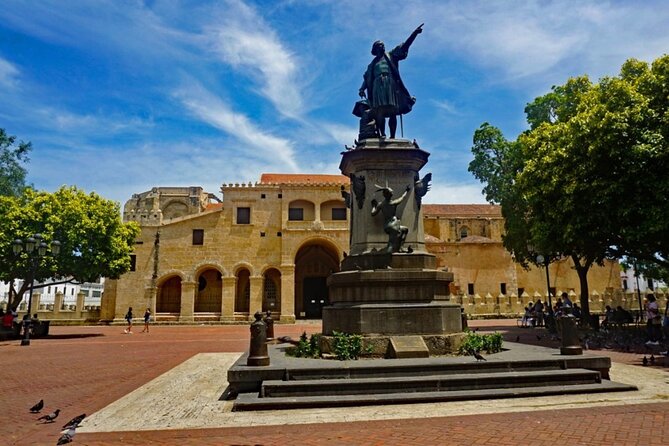
- Parque Colón as the hub for the whole Colonial Zone circuit, so you get oriented right away.
- Catedral Primada de las Américas with its dedication to Saint Mary of the Incarnation (the Annunciation), a key thread through the site.
- National Pantheon’s layout and symbolism, including the note about many empty spaces inside the enclosure.
- Museo de las Casas Reales in two 16th-century palaces, where royal administration becomes visible through architecture.
- Alcázar de Colón (1511–1514), with design inspiration traced to a Spanish castle in Mancera de Abajo (Salamanca) that still shows up in ruins.
- Short, efficient time blocks at each stop (about 15–20 minutes), so you see a lot without feeling dragged.
Why the Santo Domingo Colonial Zone is worth a guided walk
Santo Domingo’s Colonial Zone isn’t just pretty streets and old stones. It’s a place where the layers of power, religion, and colonial administration still show up in the layout. Walking is the best way to understand that because the sights aren’t isolated—they connect through streets, sightlines, and the way visitors naturally move from plaza to church to civic buildings.
This tour’s value is that it doesn’t treat the landmarks like a checklist. You get a guided route that aims to slow you down at the right moments, then speed you through the rest. The full experience runs about 1 hour 45 minutes, which is short enough for a half-day plan, but long enough for your guide to add context at each major point.
Also, the price is hard to ignore for a guided museum-and-monument mix: it’s $40 per person. That’s not bargain-basement cheap, but for a professional guide and multiple iconic stops, it often lands in the “good value” zone—especially if you’re the type who likes knowing what you’re looking at.
Starting at Parque Colón: the plaza that sets your bearings
Most people arrive in the Colonial Zone wanting to see the famous buildings. The smart move is to start with the place that helps your brain organize it all. That’s where Parque Colón comes in.
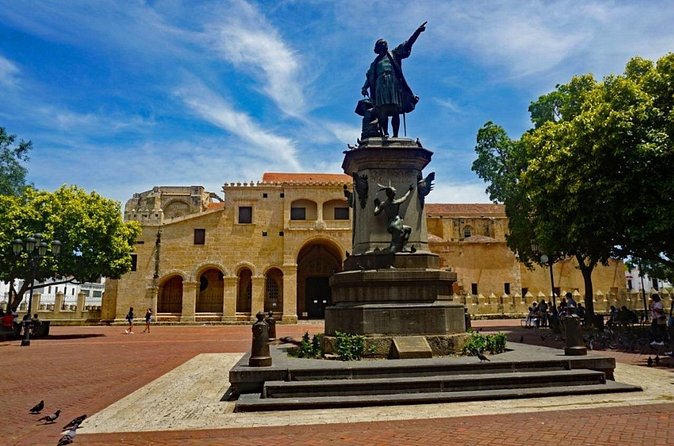
You begin in Parque Colón, described as the epicenter of the Colonial City and a central recreation space. That means it’s not only a pleasant open area; it’s also the easiest starting point to make sense of where you are. From here, you can quickly spot how the monuments cluster in the tourist core, so later stops feel less like random stops and more like one connected story.
This stop is brief—around 15 minutes—but it’s the kind of quick orientation that pays off. You’re not just taking photos of another plaza. You’re setting your mental map of the Colonial Zone and preparing for the religious and political buildings that follow.
A small plus: admission here is free, so you don’t waste your budget or time hunting for tickets.
Catedral Primada de las Américas: what to look for beyond the façade
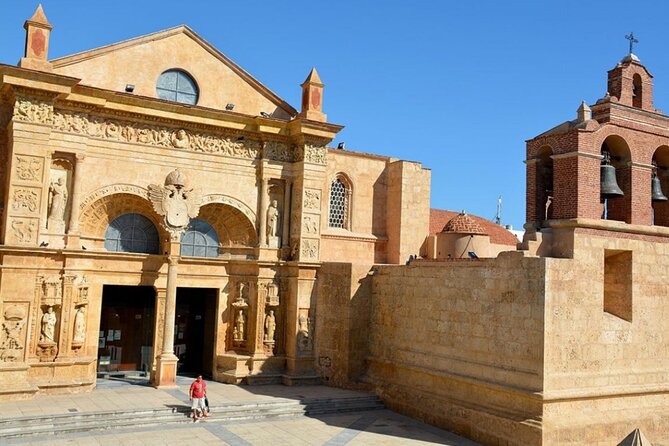
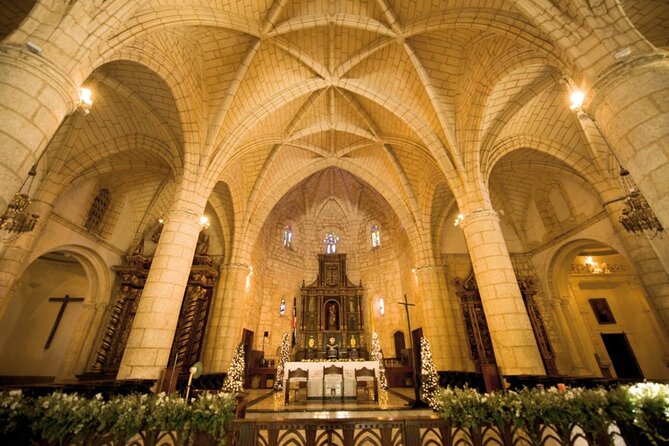
Next comes Catedral Primada de las Américas de Santo Domingo, one of the anchor landmarks of the Colonial Zone. This cathedral and minor basilica is consecrated to Saint Mary of the Incarnation, also known as the Annunciation. Even if you don’t consider yourself a religious-history person, the dedication matters. It shapes how you read the church’s identity and why it became such a central point in the city.
Plan for about 20 minutes here. That’s enough time to notice the major exterior features and to understand what makes it significant, without turning the visit into a long sit-down inside.
One important practical note: admission is not included for the cathedral. So if you’re budgeting carefully, you should assume you may need to pay separately to enter and experience the interior fully.
Why I think this stop is worth it: cathedrals can become visual wallpaper if you don’t know what they’re about. A good guide helps you connect the dedication and historical status to what you see—so you leave with a memory that’s more than just architecture.
National Pantheon: a mausoleum with a strange detail
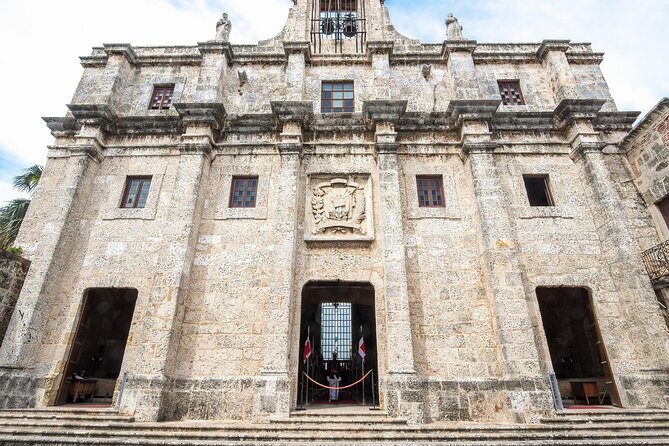
After the cathedral, you shift from worship to remembrance at the National Pantheon. This site functions as a mausoleum where mortal remains of prominent figures in the Dominican Republic are preserved. In other words, it’s a civic monument to national identity, not just a stop for photos.
This stop runs about 15 minutes, with admission listed as free.
What makes the National Pantheon especially interesting is the structural note included in the site description: the enclosure has around 36 empty spaces. That detail isn’t something you’d guess just by looking at the building from outside, and it gives you a hook to pay attention while you’re there. It suggests an ongoing or planned aspect to how the place holds names and memory.
If you like your monuments to mean something—politically, historically, emotionally—this is one of the places where the “why” hits faster than the “what.” You’ll probably feel the difference between a religious site and a national memorial in how the guide frames the space.
Museo de las Casas Reales: two 16th-century palaces, real political context
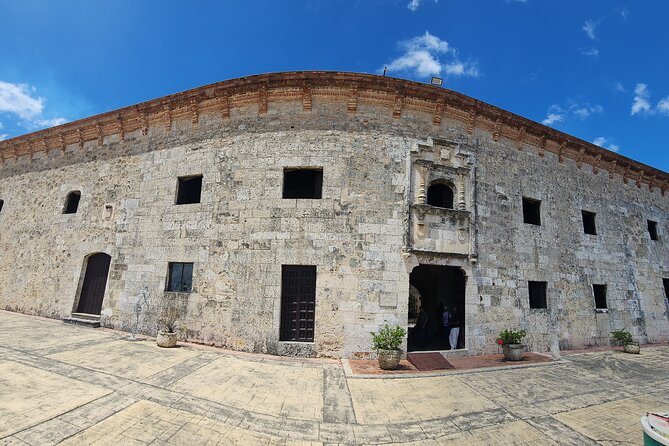
Then you go into museum mode at Museo de las Casas Reales (Museum of the Royal Houses). The key idea here is that this isn’t a generic museum building filled with random displays. It’s based in two palaces dating from the 16th century, and the site was formerly known as the Royal Palaces during the era of the Captaincy General and the province.
So you’re not only looking at objects. You’re stepping into the kind of space where governance and authority physically lived.
This stop is about 15 minutes. Admission is not included, which means you should treat it as a “plan for ticket cost” moment rather than expecting everything to be bundled into your $40.
Why it’s good value even with the extra admission: royal or administrative buildings can be hard to understand unless someone gives you the context of what they were for. A short guided museum stop can help you focus on the points that reveal power—like how palaces were designed for the people who ran the system.
If you’re the kind of traveler who gets more out of architecture and setting than from long indoor museum time, this is the sweet spot. You won’t be stuck for hours, but you’ll still get the sense of what these buildings were built to do.
Alcázar de Colón: Columbus-era architecture you can actually picture
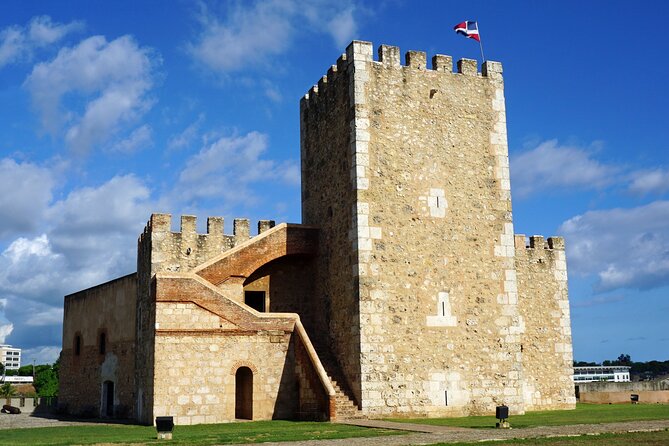
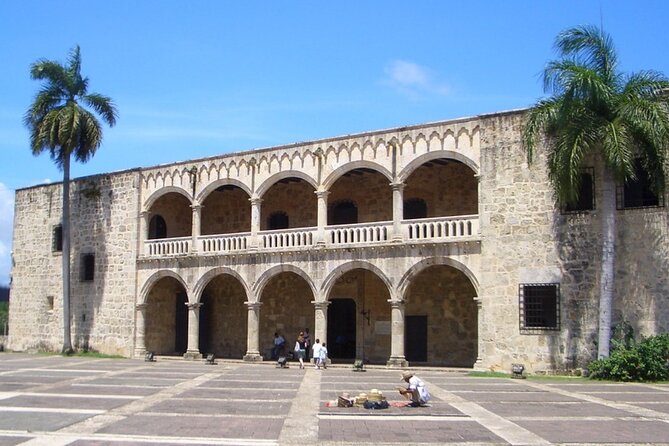
The last major stop on the walk is Alcázar de Colón, also called the Alcázar of Columbus. This one has built-in intrigue because it was erected between 1511 and 1514.
The description of its design is especially useful for your imagination. It says the Alcázar was inspired by the design of a castle in Mancera de Abajo, Salamanca (Spain), and that there are still vestiges in ruins. That means your guide can connect this building to a broader Atlantic story, not just a local one.
This stop lasts about 15 minutes and admission is listed as free, so it’s a nice way to end with minimal extra cost.
I like endings like this because you leave with a “final image” you can explain: a recognizable Colonial Zone landmark tied to early European design influences, with a clear date range you can remember.
Timing, walking pace, and how to plan your day
The whole experience runs about 1 hour 45 minutes, with stops averaging 15–20 minutes each. That short timing is exactly why a guided walk like this works: you get a meaningful cultural orientation without eating up an entire morning or afternoon.
Here’s how to plan around it:
- If you have limited time in Santo Domingo, this tour helps you see the biggest hits in the Colonial Zone while still learning what matters.
- If your schedule allows more time, consider pairing this with extra independent wandering afterward—Parque Colón and the surrounding blocks are easy to revisit at your own pace.
- Wear comfortable shoes. The guide is only responsible for context; your feet still have to do the walking.
Also, remember this is described as a guided group experience and, importantly, it’s listed as private for your group. So even though it’s organized, you shouldn’t feel like you’re fighting crowds or trying to hear over a huge group. That helps the guide deliver the explanations clearly.
Price and value: does $40 feel fair here?
At $40 per person for about 1 hour 45 minutes, the real question isn’t just “Is it cheap?” It’s “What are you buying?”
You’re paying for:
- A tour guide service (professional guidance is the core value here).
- A route that hits major landmarks in the UNESCO Colonial Zone.
- Time at multiple key sites, including a mix of free and ticketed entries.
You’re not paying for:
- Cathedral and museum admissions, since those are listed as not included.
- Any fees and taxes not included in the tour price.
So the value depends on how you plan to enter those two ticketed locations. If you’re someone who wants to go inside the cathedral and the Museo de las Casas Reales, the cost can feel more reasonable, because you’re covering guide time across several major stops. If you only want exterior views, you might decide to do some visits later on your own.
Booking-wise, it’s typically reserved about 16 days in advance on average. That doesn’t mean you can’t book last-minute, but it’s a good sign that this walk is a popular, practical way to see the Colonial Zone. If your dates are fixed, booking earlier gives you more control.
Bottom line: for a short, guided UNESCO-zone walk with multiple iconic landmarks, $40 is a solid deal—especially if you care about interpretation, not just sightseeing photos.
Who should book this and who might skip it
This is a good match for you if:
- You want a guided framework through Santo Domingo’s Colonial Zone without spending all day.
- You like cultural and historical explanations tied to specific landmarks.
- You prefer a structured route that tells you what’s worth noticing.
This may be less ideal if:
- You need a highly energetic, “tell me stories like a performer” guide. The style can lean formal, and one review note flags that the experience can feel a bit boring if you want more lively delivery.
- You hate any situation where part of your visit depends on separate museum or cathedral tickets. Those admissions are listed as not included.
A few practical tips before you go
A guided walk is smooth only if you arrive ready. Here are the small things that make a big difference:
- Bring water and keep an eye on shade. You’re outdoors in key moments, and Santo Domingo weather can change your comfort quickly.
- If you plan to enter the cathedral and the Museo de las Casas Reales, budget for admission separately since it isn’t included.
- Have your eyes open at the National Pantheon for the “around 36 empty spaces” detail. It’s the kind of fact that makes the visit stick.
Also, if your plans are flexible, note that the experience requires good weather. If the weather doesn’t cooperate, you may be offered a different date or a refund.
Should you book this Colonial City walk?
I’d book it if you want an efficient, guided route through the Colonial Zone with real context at the biggest stops: Parque Colón, Catedral Primada, National Pantheon, Museo de las Casas Reales, and Alcázar de Colón. The guide service is clearly the heart of the experience, and the site selection hits the landmarks most people come to Santo Domingo for.
I’d think twice if you’re chasing a high-energy tour style. This one can be more thoughtful than theatrical, so if your ideal guide is all momentum and punchlines, you might not love the pacing.
FAQ
How long is the historical tour in Santo Domingo?
It runs for about 1 hour 45 minutes (approx.).
How much does the tour cost?
The price is $40.00 per person.
What’s included in the tour price?
The tour guide service is included.
Are admission tickets included?
Not for all stops. Admission is not included for the Catedral Primada de las Américas and the Museo de las Casas Reales. Admission is listed as free for Parque Colón, the National Pantheon, and Alcázar de Colón.
Where does the tour start?
It starts at Plaza de la Hispanidad or Spain, on SpainC. La Atarazana 2, Santo Domingo 10212, Dominican Republic.
Where does the tour end?
The activity ends back at the meeting point.
Is this tour private or group-based?
It’s listed as private for your group, meaning only your group participates.
What’s the cancellation policy?
Free cancellation is available. You must cancel at least 24 hours in advance for a full refund.
Does the tour run in any weather?
It requires good weather. If it’s canceled due to poor weather, you’ll be offered a different date or a full refund.