REVIEW · LILLE
Historical tour of Lille by a passionate local resident
Book on GetYourGuide →Operated by AntoineVisiteLille · Bookable on GetYourGuide
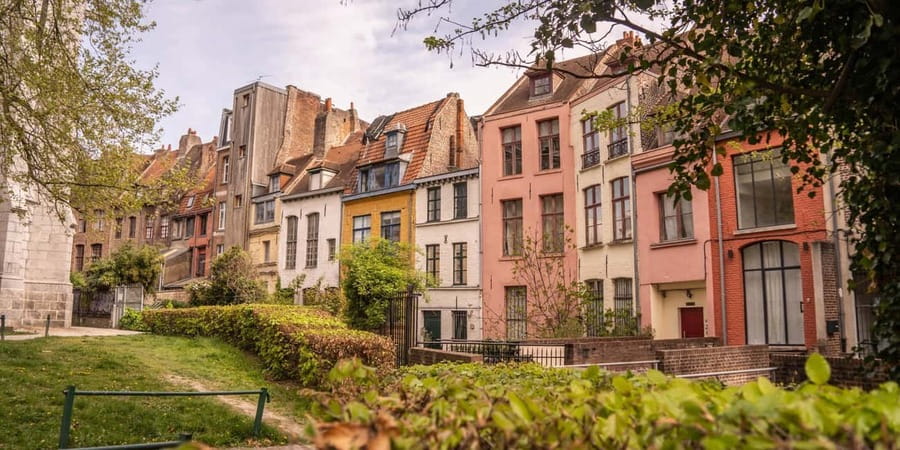
Lille’s past is one corner away. This historical walk through old Lille is fast, friendly, and told by someone who knows the streets from the inside, with Antoine bringing the stories to life in a tight 90 minutes. For a first look at Hauts-de-France history, it’s an easy win.
I especially like the small group limit (up to 8), which means you can actually ask questions and get real answers instead of listening to your guide at arm’s length. I also like how the tour connects legends and dates to what you can see right in front of you, from the cathedral area to the city’s shifting power under France.
One possible drawback to plan for: the tour runs in French only, and some parts are shown in the original language. If you don’t speak French, you’ll want a translation plan.
In This Review
- Key things you’ll notice on this Lille tour
- Entering Lille’s story at Place de la Treille
- Notre-Dame de la Treille and the Virgin Mary people still honor
- Counts of Flanders versus Kings of France: rivalry you can walk through
- Louis XIV annexation: seeing power in the city’s architecture
- Wars, sieges, and loyalty: what keeps Lille tied to France
- Colonne de la Déesse and the old Stock Exchange finish line
- Price and pace: why $16 for 90 minutes feels fair
- What kind of traveler this suits best
- Should you book this Lille walking tour?
- FAQ
- FAQ
- How long is the Lille historical walking tour?
- What is the price per person?
- What language is the tour guide?
- How big is the group?
- Where do I meet the guide?
- Where does the tour end?
- Is this tour wheelchair accessible?
- Is free cancellation available?
- Is there an option to pay later?
Key things you’ll notice on this Lille tour
- Local storytelling from AntoineVisiteLille: lively, professional, and built around anecdotes you can picture in your head.
- 90 minutes on foot, not a long slog: ideal when you want history without losing the rest of your day.
- Legend + landmarks in the same walk: origins of Lille, then straight to places you can stand in front of.
- Power struggles made simple: the rivalry between the Counts of Flanders and the Kings of France, explained clearly.
- Louis XIV and the architecture you can spot: the political shift shows up in the city’s look.
- A memorable finish tied to 1792: Colonne de la Déesse and the old Stock Exchange close the loop.
Entering Lille’s story at Place de la Treille
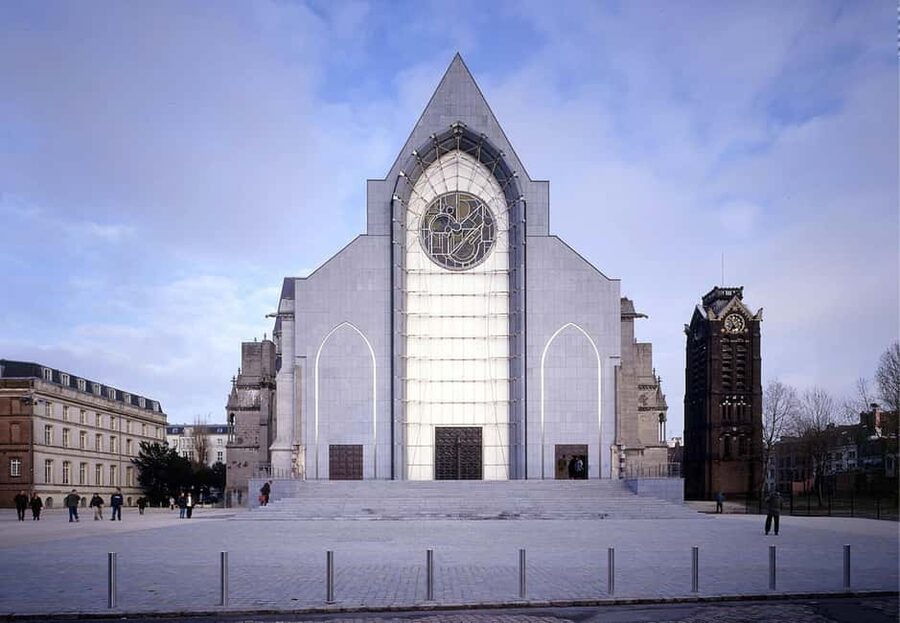
Most guided walks start with directions. This one starts with meaning. You meet at the square opposite Notre Dame de la Treille Cathedral at Place de la Treille (listed near Pl. Gilleson), which is a smart move because the cathedral area gives you a clear “home base” while you learn how Lille grew into what it is today.
Early on, Antoine covers the origins of Lille, including the city’s name and the castle mound. You also get the legend behind how Lille was created—exactly the kind of story that helps you stop treating history like a list of dates and start treating it like a place where people made choices.
If you like walking tours that don’t waste time, you’ll appreciate that the opening lands fast: you’re not just looking up at buildings, you’re learning how the neighborhood earned its identity. The vibe is relaxed, but the history is structured—so you leave with a sense of how things connect.
Notre-Dame de la Treille and the Virgin Mary people still honor
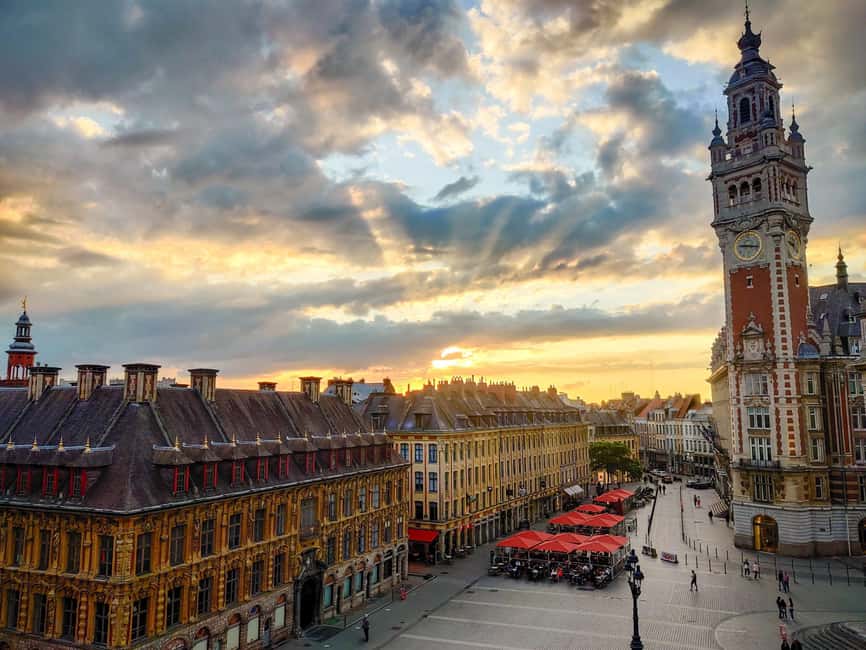
Next comes the cathedral focus, and this is where the tour feels both historical and human. You talk about the cathedral and its statue of the Virgin Mary, which is venerated by the people of Lille and has survived through ages and turmoil.
That detail matters because it’s not just “a pretty monument.” It’s a symbol that kept its meaning even when the city faced upheaval. When your guide points out what the locals long kept honoring, the building stops being background and starts being a witness.
Practical tip: take a moment to look slowly at what you’re standing near—façade lines, the square space, the general setting—before the story moves on. Even if you only catch some details in French, the physical geography helps you follow the narrative.
Counts of Flanders versus Kings of France: rivalry you can walk through
After the origins and faith angle, the tour shifts into political tension. Antoine explains the rivalries between the Counts of Flanders and the Kings of France, and you experience that conflict as a walk through recognizable Lille landmarks.
One stop that helps anchor the era is Avenue du Peuple Belge. It’s an iconic landmark on the route, and it functions like a signpost while your guide lays out how control and influence changed hands. Instead of history being “over there,” it’s tied to something you can point at.
If you’re the type who gets lost when history gets too abstract, this part helps. The goal isn’t to cover every ruler—it’s to show you the push-and-pull between regions and kingdoms, and why that mattered to daily life in Lille.
Louis XIV annexation: seeing power in the city’s architecture
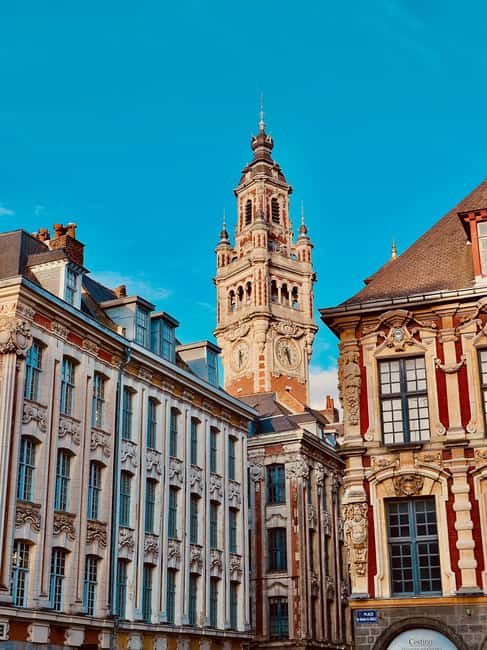
The big political turning point is the annexation of Lille under Louis XIV. You get to understand how that shift reshaped the city, and Antoine shows you how the change ends up visible in the architecture.
This is one of the most rewarding sections for me, because architecture is a “readable” source. When your guide points out how buildings and city design can reflect power, you start spotting patterns instead of just admiring façades.
The takeaway isn’t that one era is better. It’s that political decisions leave physical traces. You’ll walk away more alert to the way different periods can sit side by side—street corners where you can feel the timeline if you know what to look for.
Wars, sieges, and loyalty: what keeps Lille tied to France
The story then moves into the long stretch of tension that shaped loyalty. You hear the main events that made the people of Lille remain loyal to France despite wars and sieges, leading up to the French Revolution.
This portion is useful because it gives the “why” behind the city’s endurance. Lille wasn’t spared disruption, and that’s the point—your guide frames the resilience as something people carried through repeated pressure, not something that happened once and then stopped.
I like that the tour doesn’t treat the Revolution as a sudden cliff. Instead, it builds toward it, so the final chapters feel earned. Even when the details are heavy, the pace stays manageable because the tour stays on foot and keeps returning you to places you can see.
Colonne de la Déesse and the old Stock Exchange finish line
To close, the tour heads to the area in front of Colonne de la Déesse, which commemorates the siege of Lille in 1792. It’s a powerful way to end: you get a landmark tied directly to the conflict you were just learning about, so the lesson lands with a visual anchor.
And don’t miss the stop for the iconic old Stock Exchange. It’s a reminder that Lille wasn’t only surviving wars—it was also organizing life, trade, and civic identity. Ending with that kind of contrast helps the tour feel more complete, like a city story rather than a battlefield slideshow.
The tour route ends near Place du Général de Gaulle, keeping everything walkable within the historic core.
Price and pace: why $16 for 90 minutes feels fair
At about $16 per person for a 90-minute walking tour, this is strong value—especially because the group stays small (limited to 8). You’re not paying for a long bus ride. You’re paying for a guide who can explain what you’re seeing, at the speed of a real conversation.
The length also makes sense. Ninety minutes is long enough to build a storyline—origins, rivalry, Louis XIV, the lead-up to the Revolution, and then the 1792 siege connection. But it’s short enough that you can still enjoy the rest of your day in Lille without feeling “tour fatigue.”
If you’re deciding whether to stack this with other activities, this one fits well as an early grounding tour. It helps you get your bearings fast, and then you can wander the rest of the historic center with a clearer sense of what period you’re in.
What kind of traveler this suits best
This is ideal if you want:
- A straightforward history walk in Lille without overloading your schedule.
- A guide who’s passionate and professional and can keep things moving with humor.
- A route that balances legend, politics, and architecture—so the city feels like a story, not a slideshow.
It may be less ideal if you:
- Need an English-speaking guide. The tour is French only, with some content shown in the original language.
- Want a deep academic lecture with heavy detail. This tour is built for clarity and flow, not for research-level complexity.
If you enjoy asking questions, you’ll probably have a good time here. The format and small group size make it easier to follow up on whatever sparked your curiosity.
Should you book this Lille walking tour?
Yes, if you want a budget-friendly, small-group introduction to historic Lille that doesn’t waste time. The best sign is the combination of tight structure and lively delivery from Antoine—plus the fact that you end at memorable landmarks tied to major moments like 1792.
Book it especially if this is your first trip to Lille, or if you only have a limited window and need something that gives you context fast. Just make sure you’re comfortable with French narration, or plan to use a translation app so you don’t miss the key points.
FAQ
FAQ
How long is the Lille historical walking tour?
It lasts about 90 minutes.
What is the price per person?
The price is listed as $16 per person.
What language is the tour guide?
The live tour guide speaks French. Some content may be shown in its original language.
How big is the group?
The group is small, limited to 8 participants.
Where do I meet the guide?
You meet on the square opposite Notre Dame de la Treille Cathedral (near Pl. Gilleson).
Where does the tour end?
The tour finishes at Place du Général de Gaulle.
Is this tour wheelchair accessible?
Yes, it is wheelchair accessible.
Is free cancellation available?
Yes. You can cancel up to 24 hours in advance for a full refund.
Is there an option to pay later?
Yes. You can reserve now and pay later.