REVIEW · ALBEROBELLO AND LOCOROTONDO
Historical Tour of Rural Park with 3 Apulian Wines Tasting
Book on Viator →Operated by Masseria Spina Resort · Bookable on Viator
Wine and ancient stone paths in one stop. This rural Masseria Spina tour mixes real site seeing—rupestrian settlements, churches, and fortified structures—with a hands-on 3-wine Apulian tasting guided by staff like Davide, who explains what you’re tasting in plain language. I like that it moves through specific places you can point to and learn from, not just vague countryside stops near Alberobello and Locorotondo.
One possible drawback: cats can be around the property, and there’s at least one review mentioning allergies and bites. If you’re sensitive, plan ahead.
In This Review
- Key things to know before you go
- Rural Masseria Spina: why this fits well into a short day in Puglia
- Where the tour starts near Monopoli (and how to think about timing)
- The guided walk: rupestrian settlement, necropolis, and the Minor Church
- Spina Piccola fortified tower and its citrus grove
- Underground olive press and dye-works: seeing production, not just ruins
- Masseria Spina Grande: the red main structure and the Baroque church contrast
- Wine tasting of 3 Apulian labels: how Davide’s guidance changes the way you taste
- Group size, pacing, and what to expect in the real world
- Price and value: is $50.61 per person worth it?
- Who should book this Masseria Spina tour (and who should reconsider)
- Helpful staff names you might meet
- Should you book this Masseria Spina tour and tasting?
- FAQ
- How long is the Masseria Spina historical tour with wine tasting?
- What does the tour include?
- Where does the tour start?
- Is there alcohol served to minors?
- How big are the groups?
- Do I need to bring a paper ticket?
- Can I cancel for free?
- Is the location easy to reach and are service animals allowed?
Key things to know before you go
- Rupestrian settlement, necropolis, and a Minor Church: you’ll see multiple layers of the area’s past in one walk
- Spina Piccola fortified tower with a citrus grove: watch for how farming and defense overlapped
- Underground olive press and dye-works: practical clues about how the estate worked day to day
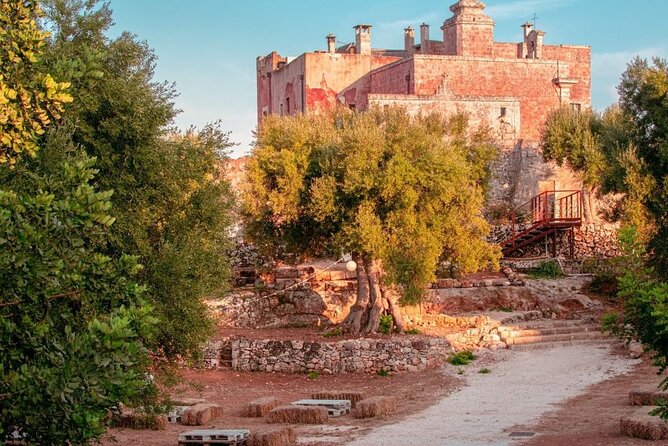
- Masseria Spina Grande and its red main structure: buildings that visually tell the story
- Baroque Church of the Immaculate Conception: a contrasting style at the end of the tour trail
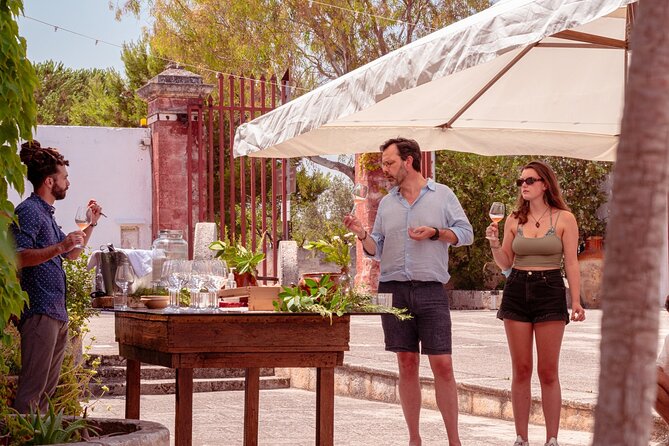
- A guided tasting of 3 Apulian wine labels with a sommelier and a salty welcome
Rural Masseria Spina: why this fits well into a short day in Puglia
This is the kind of experience that makes Puglia feel close-up. In about 2 hours, you get a guided route through rural historic spaces tied to daily life, not just viewpoints. Then you shift gears to a structured wine tasting where a sommelier guides you through how to read a glass.
I like the pacing because it stays practical. You’re not wandering for hours with nothing “to do” besides look. Each stop has a purpose, from defensive architecture to production spaces like the underground olive press. And when the tasting starts, you’re not left guessing what you’re supposed to notice—someone explains the main features and details that make a wine what it is.
Where the tour starts near Monopoli (and how to think about timing)
The meeting point is Parco Rurale – Historical Tour, Tasting & Experiences on Viale Aldo Moro, 27, 70043 Monopoli (BA), Italy. The activity ends back at the meeting point, which is helpful if you’re lining up dinner plans.
Because it’s timed and relatively short, you’ll want to treat it like a firm appointment. If you’re basing your day around Alberobello or Locorotondo, this works best when you plan a clean travel window and give yourself a little buffer for parking or public transport. The tour uses a mobile ticket, so have it ready on your phone.
A final timing note from experience with similar small historic tours: they’re better when you’re not rushed at the start. If you arrive flustered, it’s harder to enjoy the slow details—stone textures, layout of spaces, and how the buildings were used.
The guided walk: rupestrian settlement, necropolis, and the Minor Church
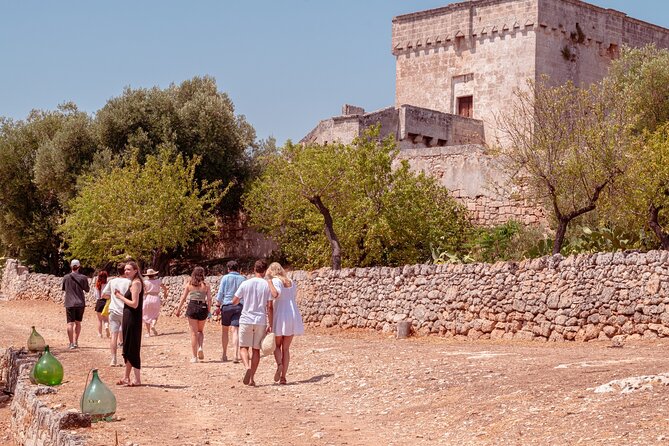
The story begins with the older layers of the area. You move through the rupestrian settlement, where the rock itself shaped living and survival. This is one of those stops where the guide’s job matters. A good explanation helps you stop seeing it as “old caves” and instead understand what people built, and why, in this setting.
From there, you’ll head to the necropolis, which shifts the tone. Even if you’re not a “tombs person,” a necropolis stop gives you context for how communities organized memory and burial. It’s not just scenery—it’s a clue to social structure and long-term settlement.
Then comes the Minor Church. I like this part because it helps you connect the earlier sites to later religious life in the region. It’s a different kind of architecture and a different feeling, and it breaks up the tour so you don’t only get stone-to-stone explanations.
Practical tip: bring something light but warm enough for shaded sections. Historic rural properties can feel cooler once you step into spaces like churches or underground production areas.
Spina Piccola fortified tower and its citrus grove
Next is Spina Piccola Fortified Tower, described as the first fortified structure. That matters. When you hear it’s the first, you can understand it as a starting point for how protection became part of rural estates here.
Inside the tower area, you also get the citrus grove connection. It’s a smart pairing. You’re not just looking at walls—you’re seeing how food growing and security could sit side by side. For me, that’s where the tour feels most “real.” It’s not history as a museum. It’s history as land use.
Drawback to consider: this is still a walking tour. If you’re someone who prefers long sits and short strolls, you may want to pace yourself, take water breaks, and wear supportive shoes. The route is short overall, but rural paths can be uneven.
Underground olive press and dye-works: seeing production, not just ruins
Two of the most interesting stops on this route are the ancient underground olive press and the dye-works.
The olive press is especially valuable because it explains how olive oil production used the environment. Underground spaces usually aren’t just for dramatic effect; they can help with temperature control and protection. Even if you don’t get every technical detail, you’ll come away knowing that oil wasn’t a vague agricultural concept—it was made here, with tools and workflows.
Then you hit the dye-works, which widens the picture beyond food production. It’s a reminder that rural estates weren’t only about eating and sleeping. They supported crafts and processing too. This is one reason I think this tour is more satisfying than tours that only show pretty building facades.
If you’re the sort of person who likes to connect dots, these two stops do it for you: farming fed daily life, and production spaces supported materials and trade.
Masseria Spina Grande: the red main structure and the Baroque church contrast
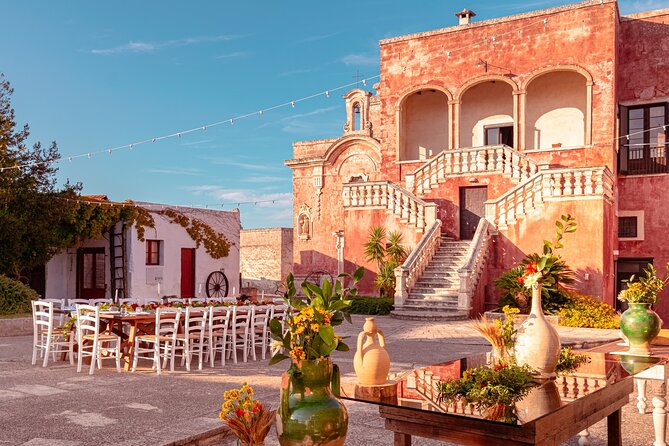
As the walk continues, you’ll see the external facade of the Masseria Spina Grande and then the majestic main structure with its defining red colour. The red main building isn’t just a color cue—it helps you orient the site while the guide explains relationships between parts of the estate.
After that, the tour concludes at the Baroque Church of the Immaculate Conception. I like ending with a church because it changes your brain from “how did people work here” to “how did they pray, celebrate, and mark community life.” Baroque churches in general tend to feel more theatrical than older rural spaces, so it gives your senses a clear finish line.
From the practical side, this is also where you’ll appreciate the pacing. The route is built so you’re not only seeing underground and defensive spaces. You also get a more open, brighter end point.
Wine tasting of 3 Apulian labels: how Davide’s guidance changes the way you taste
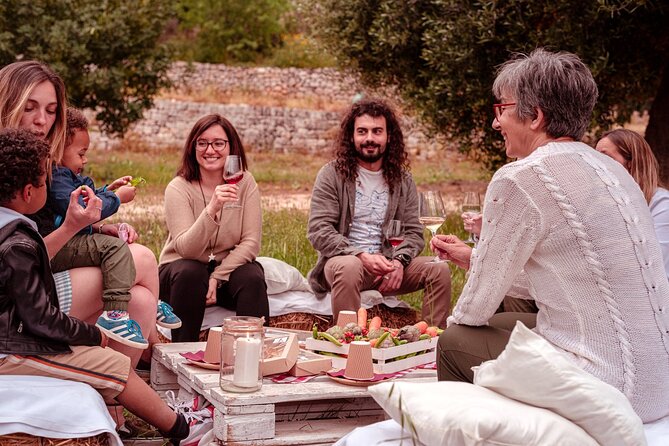
After the historic walk, the focus switches to wine. You’ll do a tasting of three Apulian wine labels selected from their wine cellar. A sommelier guides you through the main features and details that make a wine what it is.
This is where the experience becomes more than a “drink and go.” The difference is the explanation. If you’ve ever had tastings where you’re handed glasses and told to enjoy, this isn’t that. The guide’s job is to help you notice things on purpose—aroma patterns, taste structure, and how the wine should feel in your mouth.
There’s also a salty welcome with the tasting, and at least one visit included a food tasting pairing. That combination matters. Salty bites help reset your palate and make each wine feel clearer instead of all blending together.
If you’re choosing this as a wine experience in Puglia, I’d call it a good fit if you want help without feeling talked down to. The reviews highlight that staff like Davide bring real wine knowledge paired with hospitality and warmth.
Group size, pacing, and what to expect in the real world
The tour has a maximum of 25 travelers, which usually keeps it conversational and manageable. In smaller groups, the guide can answer questions and adjust pace when needed. That’s also one reason the tasting works—there’s time for guidance rather than a quick pour-and-run.
You also have confirmation at booking time, and a free cancellation window if plans shift. Since it’s scheduled and relatively short, you’ll get the best results when you treat it as a central activity rather than a last-minute shuffle.
One more real-world note: the cats issue is not universal, but it’s real enough to mention. If you have allergies, wear appropriate protection, don’t sit where you can’t control contact, and tell the staff immediately when you arrive. One review specifically warns to watch for cats under tables.
Price and value: is $50.61 per person worth it?
At $50.61 per person, you’re paying for two things: a guided rural historic route and a guided tasting of three wines, with a salty welcome. For Puglia, that’s a straightforward value equation: you’re not paying separately for transportation inside a countryside property, and you get instruction from a sommelier instead of just buying a tasting flight.
Where the value really shows up is time efficiency. In roughly 2 hours, you get:
- multiple historic site stops tied to how the estate functioned
- structured wine tasting across three labels
- pairing support with salty welcome and local food components
So if your day already includes Alberobello or Locorotondo, this can be a cost-effective way to add something more grounded than viewpoints. You’re getting context, and you’ll likely remember specific places and the differences between the wines.
Who should book this Masseria Spina tour (and who should reconsider)
This tour is a great match if you:
- want history you can connect to real land use (oil, defense, processing)
- enjoy wine tastings where explanations matter
- like small-group guided walks more than self-guided ruins
It’s a harder fit if:
- you’re highly sensitive to animals like cats or have had allergy reactions before
- you dislike any walking on uneven rural ground
If you’re visiting with kids under 18, note that the tour’s wine service has an age rule: people who haven’t reached the legal alcohol age in Italy won’t be served alcoholic drinks. The tour itself still runs as a historical experience, so the learning part remains.
Helpful staff names you might meet
A couple of guide names show up in reviews, and that’s useful because it hints at the style of the experience. Maria Lucia has been praised for English and for strong explanations covering history and geography. For the wine portion, Davide is mentioned as an excellent sommelier with careful pairing finesse and warm hospitality. On the operations side, Stella and Rosa have been noted for helping resolve issues and for guiding people to the right places on-site.
You don’t need to memorize staff names to enjoy the tour, but it does suggest you’ll likely get clear, human guidance rather than a rushed script.
Should you book this Masseria Spina tour and tasting?
I’d book it if you want a short, guided mix of rural historic sites plus a real wine tasting with explanation. The combination is what makes it work: you see how the estate functioned, then you taste what comes from that kind of regional understanding.
I’d pass or at least prepare carefully if you have cat allergies. Also think twice if you hate walking. Otherwise, this is a strong pick for an enjoyable half-day block in Puglia, especially if your itinerary includes Alberobello or Locorotondo and you want something more hands-on than a quick stop.
FAQ
How long is the Masseria Spina historical tour with wine tasting?
It lasts about 2 hours.
What does the tour include?
You get a guided historical walk through the Masseria Spina rural sites, followed by a tasting of three Apulian wine labels, with a salty welcome.
Where does the tour start?
The meeting point is Parco Rurale – Historical Tour, Tasting & Experiences, Viale Aldo Moro, 27, 70043 Monopoli BA, Italy.
Is there alcohol served to minors?
No. If you are under 18, you will not be served alcoholic drinks.
How big are the groups?
The tour has a maximum of 25 travelers.
Do I need to bring a paper ticket?
No. You’ll use a mobile ticket.
Can I cancel for free?
Yes. Free cancellation is available if you cancel up to 24 hours in advance for a full refund.
Is the location easy to reach and are service animals allowed?
The meeting point is near public transportation, and service animals are allowed.