REVIEW · NEPAL
Kathmandu: Guided -Day Tour of World Heritage Sites
Book on GetYourGuide →Operated by Nepalaya Treks & Expedition · Bookable on GetYourGuide
Kathmandu’s UNESCO sites are close, yet easy to miss. This one-day tour is built for first-timers who want a clear route through the Kathmandu Valley’s standout Hindu temples and Buddhist stupas, without the stress of figuring out transport on your own. What I like most is the private car with hotel pickup/drop-off (including Thamel and Hotel Nepalaya), and the English-speaking guide who helps you read what you’re seeing. The one catch: sightseeing entry fees aren’t included, so budget a bit extra once you’re on the ground.
Also, this day works well because the valley spreads its big sights across different corners—Pashupatinath, Boudhanath, Swayambhunath, and Patan Durbar Square—so a guided plan saves real time. You’re not just collecting photos; you get context for why each place matters to the people who use it every day. The schedule includes photo stops and walking, so wear comfortable shoes and don’t pack too much before/after.
In This Review
- Key highlights you’ll feel right away
- Why the Kathmandu Valley works as a one-day plan
- Pashupatinath Temple by the Bagmati: where the day gets serious
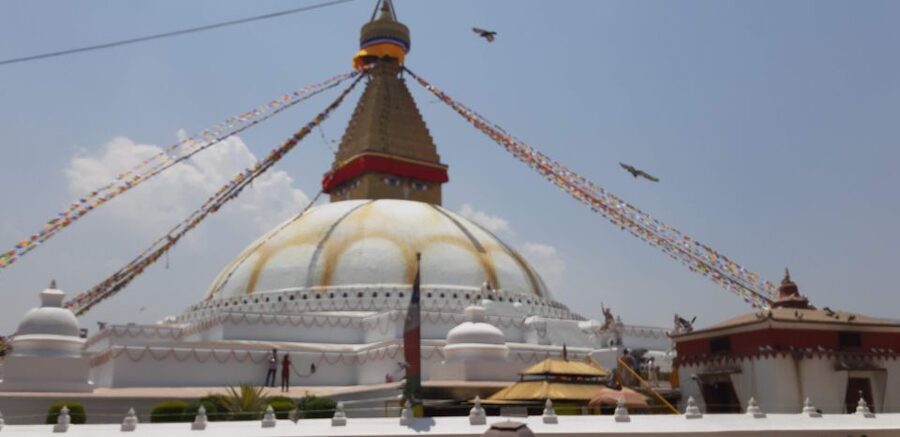
- Boudhanath Stupa: the skyline feature you can’t ignore
- Swayambhunath (Monkey Temple): hilltop views and a different pace
- Patan Durbar Square in Lalitpur: carvings, palaces, and old city energy
- The flow of the day: hotel pickup to photo stops to guided walking
- Price and value: $37 isn’t just a number here
- What to bring (and what to skip)
- Who this tour suits best
- Should you book? My take
- FAQ
- How long is the Kathmandu UNESCO World Heritage sites day tour?
- What sites will I visit during the tour?
- Do I get hotel pickup and drop-off?
- Is transportation included?
- What’s included in the price, and what isn’t?
- What languages will the guide speak?
- What should I bring with me?
- Are drones allowed?
- What’s the cancellation policy?
Key highlights you’ll feel right away
- Hotel pickup that actually helps: meet your driver at your hotel in Kathmandu or Thamel (or at Hotel Nepalaya).
- Four UNESCO-worthy stops in one day: Pashupatinath, Boudhanath, Swayambhunath, and Patan.
- Pashupatinath’s pagoda-style, two-storied temple beside the Bagmati River.
- Boudhanath Stupa at massive scale (about 100 m diameter and 40 m high).
- Swayambhunath hilltop views plus the famous Monkey Temple atmosphere.
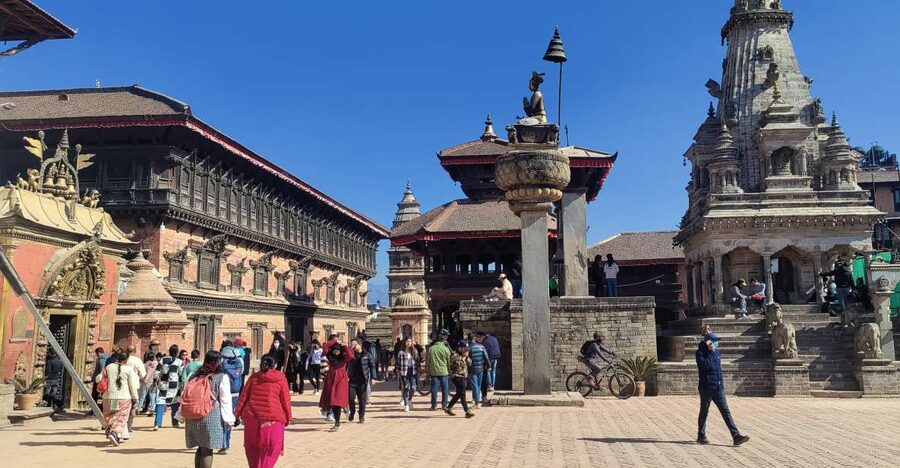
- Patan Durbar Square’s stone and wood carvings in Lalitpur.
Why the Kathmandu Valley works as a one-day plan
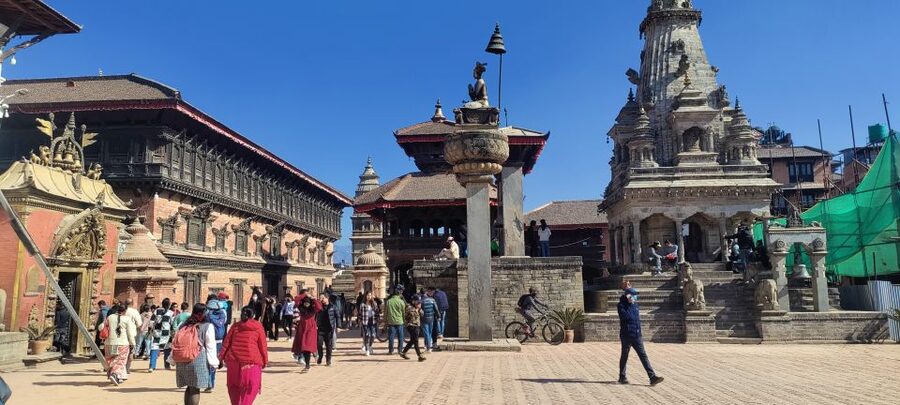
Kathmandu Valley can feel like an “open-air museum,” but the big sights aren’t bunched neatly on one street. They’re scattered across multiple districts, which is exactly why this tour format is practical. In a single day, you’ll cover the spiritual heavy-hitters that define the valley’s mix of Hindu temples and Buddhist stupas.
The tour also keeps things moving with a private car, so you’re not stuck waiting for public transit or getting lost between neighborhoods. The guide’s job is to connect the dots—what you’re looking at, what rituals people do there, and how these places fit into the UNESCO story.
For value, this is priced at $37 per person with hotel transfers, a guide, and government tax/service charge included. That’s the kind of setup that matters in Kathmandu, where “cheap” can turn into “expensive” if you spend half your day negotiating rides or searching for directions.
Pashupatinath Temple by the Bagmati: where the day gets serious
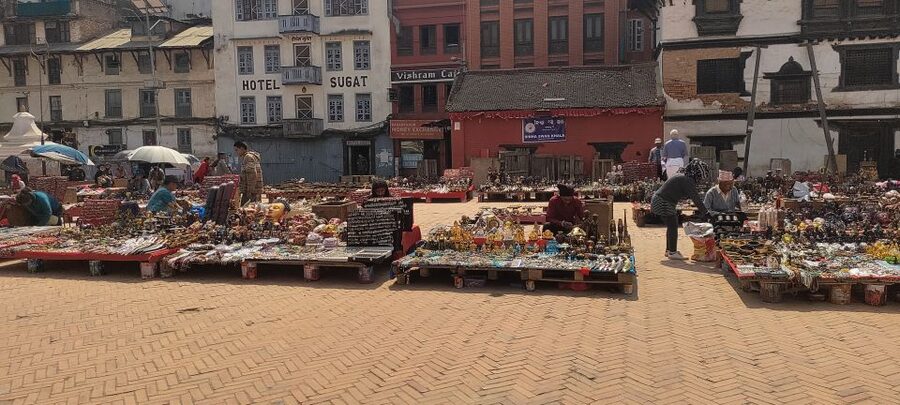
Pashupatinath Temple is one of the most important Hindu sites in Nepal, and it sits directly on the banks of the holy Bagmati River. It’s a UNESCO World Heritage Site (inscribed in 1979), which is a formal tag—but the real impact is how the site functions day to day as a living place of worship.
What to look for:
- The two-storied, pagoda-style temple design
- The riverfront setting, since the Bagmati is central to how people practice here
- The scale of devotion during major festivals, when over 1 million devotees come for Maha Shivaratri
A practical note: temple areas can mean crowds and tight spaces. Plan for short walks and keep your eyes open for respectful viewing zones your guide points out. If you’re hoping to witness real ceremonies, don’t treat it like a museum stop—this is a working religious site, and part of the meaning comes from that.
Boudhanath Stupa: the skyline feature you can’t ignore
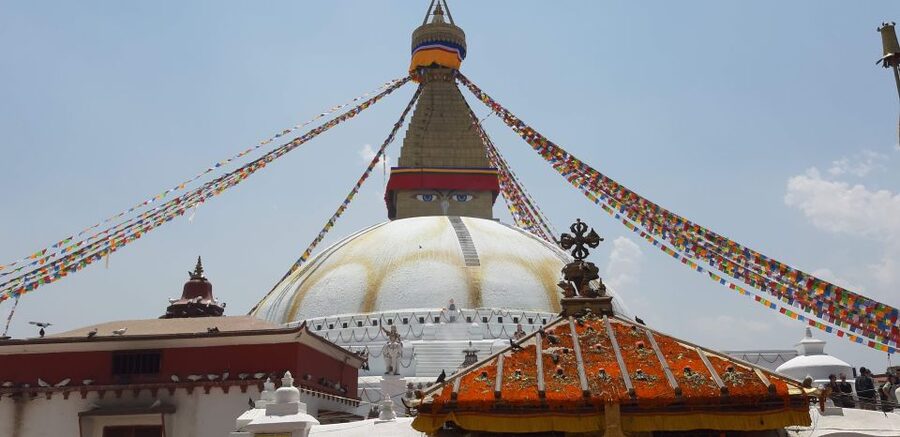
Then you shift to Boudhanath Stupa, which dominates the skyline in its own neighborhood. This is one of the world’s largest stupas and it’s UNESCO-listed, with a reported about 100 m diameter and 40 m height. Even if you’ve seen photos before, seeing it in person hits differently because of scale and the sheer density of religious activity around it.
This stop is especially strong if you like spiritual architecture with a “readable” layout. You’ll see how people orient themselves around the stupa—religion here isn’t tucked away. It’s active, visible, and social.
What I’d take from this stop:
- You’ll appreciate how the Kathmandu Valley blends cultures without needing a translation chart.
- The stupa’s size makes it a landmark you can use to orient yourself in the city later, even after your tour ends.
Swayambhunath (Monkey Temple): hilltop views and a different pace
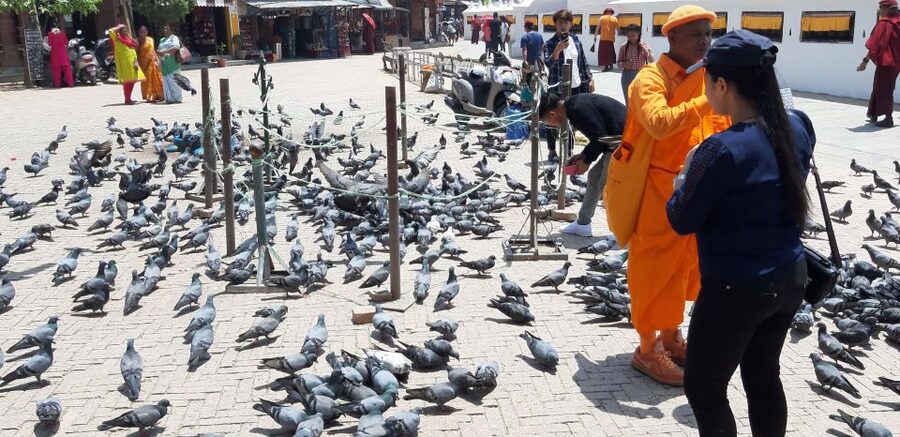
Swayambhunath is famous as the Monkey Temple, and it’s also one of the best places in the valley for panoramic views. It sits on a hillock northwest inside the Kathmandu Valley, so your experience starts to change as you approach—more elevation, more wind, more sightlines.
This stupa has a longer origin story tied to the valley’s mythology: it’s believed to have been built when the valley was once a lake more than 2,000 years ago. Whether you treat that as legend or history, it shapes the way the site is discussed and understood.
What to do with your time here:
- Use it for photos, yes, but also for the views—this is where Kathmandu starts to feel like a real basin of neighborhoods and temples.
- Keep an eye on your belongings and your footing around active temple areas and the monkeys.
A small reality check: because it’s a hilltop site, it’s more about steady movement than long scenic drives. Bring comfortable shoes and expect some stairs.
Patan Durbar Square in Lalitpur: carvings, palaces, and old city energy
Most first-time visitors focus only on Kathmandu’s center. This tour adds Patan, known as Lalitpur, and that choice pays off because Patan is often where you get more of the “city of craft” feeling.
Patan Durbar Square is described as being full of ancient temples, palaces, and monuments, with standout wood and stone carvings. It’s also often framed as the oldest of the three cities in the Kathmandu Valley, which helps explain why it can feel slightly different from the Kathmandu sites you saw earlier.
Why this stop feels worth it:
- You get contrast: from riverfront and massive stupa scale to detailed, close-up architecture.
- The carvings reward slow attention, even if your schedule keeps things brisk.
Practical tip: carvings mean you’ll want to look up and sideways. If you’re the kind of person who takes time with details, ask your guide to point out what to notice so you don’t just walk through.
The flow of the day: hotel pickup to photo stops to guided walking
This tour is structured to work for people with limited time in Nepal. You start with pickup from your chosen point—Hotel Nepalaya, or central Kathmandu/Thamel—then you head out by private car to cover the main UNESCO sites in one sweep.
The pacing includes:
- Photo stops and guided visits
- Time to walk at each stop
- Scenic drive segments between locations
One of the best parts, from a comfort standpoint, is that the private car reduces the “random Kathmandu day” problem. You don’t have to ask three different people how to get somewhere, or wonder if you’ll end up backtracking. Your guide and driver do the logistics so you can focus on what you’re there to see.
In the reviews tied to this experience, guide names like Ramesh and Sujan show up, along with drivers such as Tirtha. Even if your guide is someone else, the consistent theme is clear explanations and punctual, careful driving—exactly what you want in a day with several religious sites.
Price and value: $37 isn’t just a number here
At $37 per person for 1 day, you’re paying for several things that often cost extra when booked separately in Kathmandu: pickup/drop-off, a private car, a guide, and government tax/service charge.
What’s included:
- Hotel pickup and drop-off
- Private car
- English-speaking guide
- Government tax and service charge
What you should plan to pay separately:
- Food and drinks
- Sightseeing entry fees
- Personal expenses
That last point matters for value. If you assume entry fees are included and they aren’t, you’ll feel it at the worst time. A simple fix is to carry a little extra cash and/or confirm costs at each site with your guide before you pay.
Where you’ll probably save money the most is time. In a city where routes can be confusing, paying for a planned circuit can keep your day from turning into a string of transit frustrations.
What to bring (and what to skip)
For a one-day cultural and religious circuit, pack light and practical. The basics are straightforward:
- Passport or ID card
- Comfortable shoes
- Water
From the rules provided, also note what’s not allowed:
- Drones
- Alcohol and drugs
Temple days usually reward simple planning: bring water, wear shoes you can walk in for 60–90 minutes total (depending on the crowd and stairs), and keep your phone/charger ready if you like photos.
Who this tour suits best
This is ideal if:
- You’re visiting Kathmandu for the first time and want a high-impact overview
- You prefer a guided route through scattered landmarks
- You want English support for context, not just access to sites
- You care about both Hindu and Buddhist landmarks in one structured day
It’s also a good fit for solo travelers who want a safer, clearer plan with a guide meeting you at your hotel. In the feedback, people specifically called out feeling safe and supported during the day, which is exactly what you want when you’re navigating a busy city.
Should you book? My take
If you’ve only got one full day in Kathmandu Valley, I’d book this. The price is low enough that it doesn’t feel like a luxury, but the structure is strong: pickup, private transport, English-speaking guidance, and a route that hits key UNESCO sites without wasting hours.
You might pause if you:
- Want a super flexible, slow travel style with long free time at just one place
- Don’t want to deal with additional site entry fees (since they’re not included)
- Are trying to fit too many other commitments into the same day, because you’ll be on the move between sites
If your goal is a solid first Kathmandu day—with real context for what you’re seeing—this one-day UNESCO circuit is a smart way to spend your time.
FAQ
How long is the Kathmandu UNESCO World Heritage sites day tour?
It runs for 1 day.
What sites will I visit during the tour?
You’ll visit Pashupatinath Temple, Boudhanath Stupa, and Swayambhunath (Monkey Temple), plus Patan Durbar Square.
Do I get hotel pickup and drop-off?
Yes. Hotel pickup and drop-off are included, with pickup options including Hotel Nepalaya and Thamel (and Kathmandu).
Is transportation included?
Yes. You travel by private car.
What’s included in the price, and what isn’t?
Included: hotel pickup/drop-off, private car, English-speaking guide, and government tax/service charge. Not included: food and drinks, sightseeing entry fees, and personal expenses.
What languages will the guide speak?
The live guide speaks English, Hindi, and Nepali.
What should I bring with me?
Bring your passport (or an ID card), comfortable shoes, and water.
Are drones allowed?
No. Drones are not allowed.
What’s the cancellation policy?
You can cancel up to 24 hours in advance for a full refund.