REVIEW · NEW DELHI
Delhi: Qutub Minar UNESCO World Heritage Site Walking Tour
Book on GetYourGuide →Operated by Crystal India Holidays · Bookable on GetYourGuide
Delhi’s Qutub Minar complex hits hard from the first step. This 2–3 hour walking tour takes you around the 73-meter Qutub Minar, then slows down to read the details: Mamluk-era inscriptions, geometric patterns, and storey-by-storey design choices. I also like how you don’t just look at monuments—you get the context that makes them feel connected instead of random stops.
One thing to plan for: you’ll be walking through an older, uneven stone site with lots of time spent outdoors, so comfortable shoes matter more than you think.
In This Review
- Key highlights in plain terms
- Why Qutub Minar feels bigger than the number
- Mamluk carvings you can actually spot
- Quwwat-ul-Islam Mosque: the first mosque in India
- The Iron Pillar and the story behind rust resistance
- Alai Darwaza and the unfinished Alai Minar idea
- Walking route, timing, and what to wear
- The guide experience: English or Hindi, with names worth noting
- Price and value: $9 for a UNESCO-style walkthrough
- Who should book this walking tour
- Should you book the Qutub Minar walking tour?
- FAQ
- How long is the Qutub Minar walking tour?
- What does the tour include?
- Is the tour available in English and Hindi?
- Is there wheelchair access?
- How much does it cost?
- Can I cancel and get a full refund?
Key highlights in plain terms
- 73-meter Qutub Minar up close for a real sense of scale, not a postcard view
- Mamluk carvings and storeys with distinct designs as you walk around
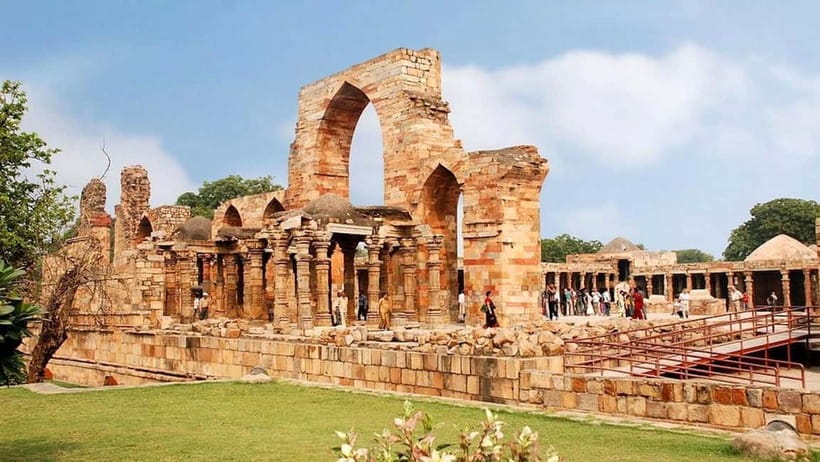
- Quwwat-ul-Islam Mosque with early Indo-Islamic layout plus reused pillars
- Iron Pillar and why its reputation for rust resistance still fascinates people
- Alai Darwaza and Alai Minar-in-progress for the story of ambition and interruption
- English or Hindi guide who explains what you’re seeing (and why it matters)
Why Qutub Minar feels bigger than the number
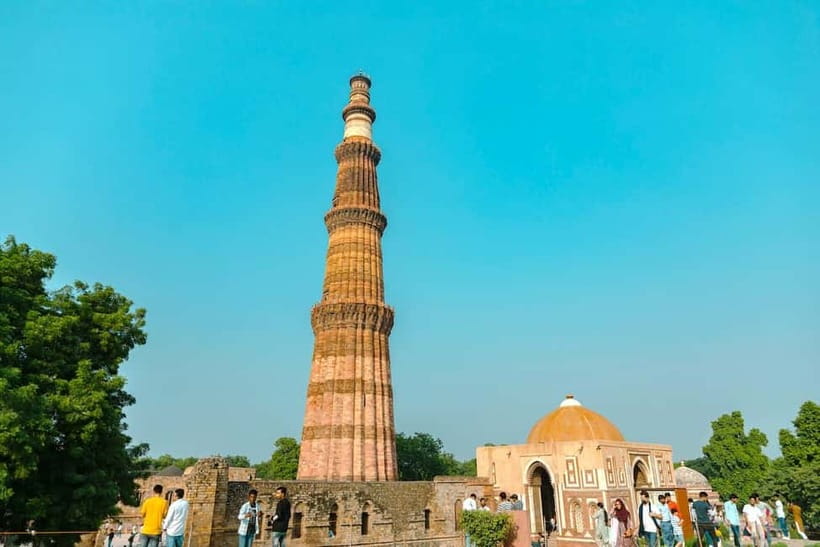
The headline here is simple: Qutub Minar is about 73 meters tall, and standing at its base gives you a mind-jolt. Even if you know the figure, your body reacts to that height in a way that photos can’t match. The minaret is built in red sandstone and marble, and that mix shows up visually as you move your viewpoint from one side to another.
What makes the start so satisfying is that your eyes keep finding new edges and transitions. Each storey has its own design character, so you’re not stuck staring at one wall. As you walk around, you start to notice how rulers left their mark through details—shape, carving style, and pattern.
It’s also worth remembering this is an active UNESCO World Heritage Site area. That means you get a concentrated dose of Delhi’s layered past in a relatively short walk, which is great when your schedule is tight.
You can also read our reviews of more tours and experiences in New Delhi.



Mamluk carvings you can actually spot
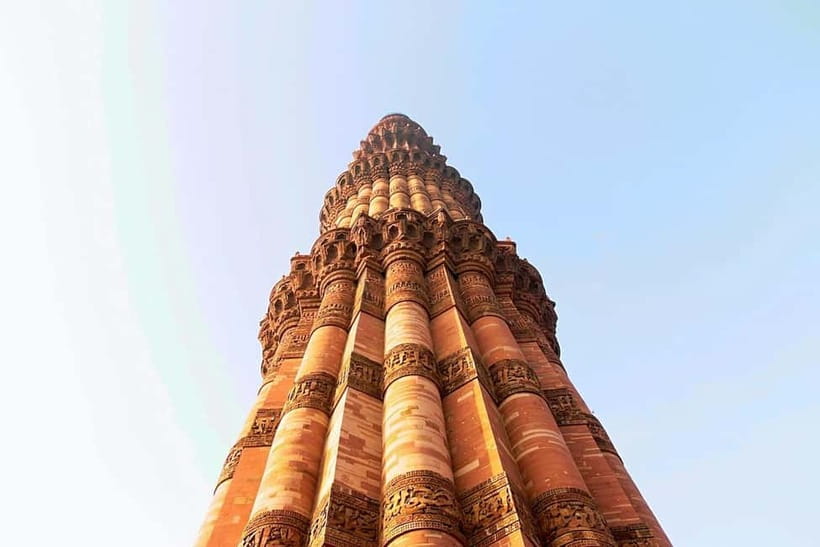
One of the best parts of this walk is learning how to read the surface. The intricate carvings, including Arabic inscriptions and geometric patterns linked to the Mamluk dynasty, can look like decoration at first glance. With a good guide, they become clues.
Here’s what you’ll want to do during your loop: stop briefly, angle your body slightly, and look for repetition. Mamluk work often uses disciplined geometry—shapes that feel ordered even when they’re complex. Then shift your position and see how the motifs align differently across storeys. You’ll realize the minaret isn’t just tall; it’s deliberate.
A quick practical tip: if you can, take a slow walk around before you take serious photos. Otherwise, you end up photographing too fast and missing the “why.” The tour’s short, focused format helps here. You get enough time to notice the craftsmanship without turning it into a long, exhausting slog.
Quwwat-ul-Islam Mosque: the first mosque in India
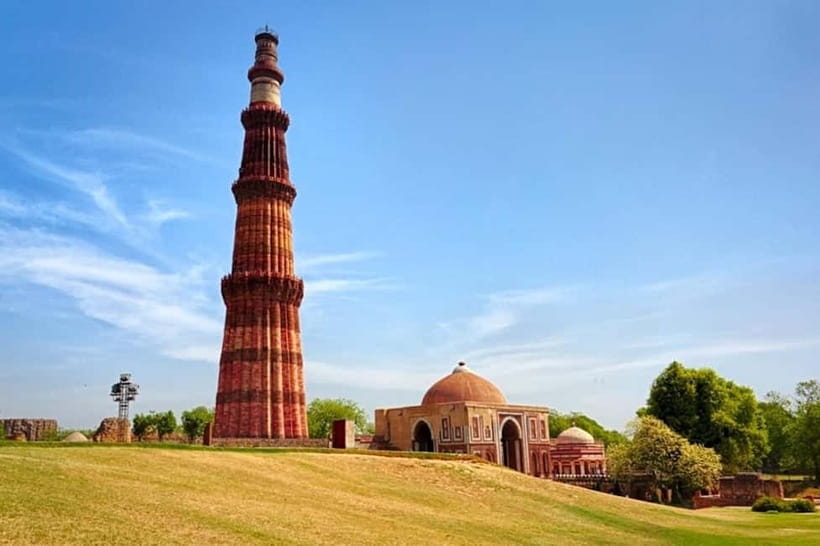
Nearby is the Quwwat-ul-Islam Mosque, described as the first mosque built in India. That phrasing matters, because it points to a moment when new religious architecture was being introduced, but not created from a blank slate.
What you should look for are the arched gateways and the pillars. The site is striking because it uses pieces that were repurposed from earlier Hindu and Jain temples. That creates a visual blend: older craftsmanship techniques meeting new architectural purpose.
The effect is more interesting than it sounds. You’re not seeing one clean style era replace another. You’re seeing materials and artistic habits transferred, reused, and recontextualized. For many visitors, this is where the tour becomes more than sightseeing—it starts to feel like studying how cultures interact on the ground.
There’s also a practical benefit here: the mosque structures give you sheltered viewpoints and ledges where you can pause for a moment, refocus, and let the guide’s explanation land before you move back into open-air walking.
The Iron Pillar and the story behind rust resistance
Then there’s the Iron Pillar, the kind of object people remember even after they forget the rest of a tour plan. The key detail is that it’s known for rust-resistant qualities, which points to impressive ancient Indian ironworking knowledge.
You don’t need to be a metallurgy expert to appreciate the fascination. The pillar works as a “proof object” in a visual way. It sits there, steady and durable, and invites the question: how did they make something that resists time so well?
As you see it in the complex, try to think of it as technology made visible. This tour helps because it puts the pillar in the same space as religious and political architecture. That pairing matters. You’re not separating “science” from “monuments.” In this site, the achievements sit side by side—craft, engineering, and design.
If you’re the type who likes to ask questions (even quietly in your head), this is the stop where you’ll feel the payoff. It turns the walk from visual-only to visual-plus-meaning.
Alai Darwaza and the unfinished Alai Minar idea
Next up: Alai Darwaza and the unfinished Alai Minar. This is where Delhi’s story feels human—ambitious plans meeting real-world limits.
Alai Darwaza is known for stunning Indo-Islamic architecture. Even without deep technical terms, you’ll likely feel the balance of form: the gateway reads as confident and designed, not improvised. It’s the kind of stop where you should take your time with angles. Gateways are made to be approached, viewed, and passed through, so the perspective you choose changes the whole impression.
Then you shift gears to the unfinished Alai Minar. Seeing a project that wasn’t completed adds a different flavor to the site. Instead of a polished “finished product,” you get evidence of interruption—what happens when a grand plan meets shifting priorities or constraints.
For me, this contrast is one of the tour’s smartest choices. It prevents the experience from becoming only admiration of completed masterpieces. You also see that history includes stops, starts, and unfinished chapters.




Walking route, timing, and what to wear
The tour lasts 2–3 hours, which is a sweet spot for this kind of dense sightseeing. You get real time on the major structures, but you’re not stuck for half a day in one place.
Since the duration is short, it helps to travel light and move efficiently. You’ll be outdoors and moving between points, so wear shoes with grip. Stone surfaces around old monuments can be uneven, and you’ll want stable footing when you pause to look up at carvings or when you stop to listen to explanations.
Also, consider hydration. Delhi heat can be unforgiving depending on season, and the tour doesn’t advertise indoor time as the main feature. Bring water, even if you think you won’t need it.
If you have a tight schedule, plan your day so you can arrive and then simply follow the flow. This isn’t a “wander for hours” experience; it’s built around a clear circuit through the Qutub Minar complex.
The guide experience: English or Hindi, with names worth noting
A walking tour stands or falls on the guide. The tour includes a professional live guide in English or Hindi, and that language choice matters because it affects how much you actually understand while you’re standing in the middle of it.
One verified booking specifically highlights a guide named Madhuvan for being very engaging. That matches what you want from a guide here: someone who can connect the dots between the minaret’s details, the mosque’s layout, and why a pillar like the Iron Pillar becomes a cultural touchstone.
Another piece of feedback points to the guide’s command of the complex background—exactly what you need when you’re surrounded by architecture with multiple layers. Without that guidance, it’s easy to see “old buildings” and move on. With it, you start noticing what differs between storeys, what reuse of pillars implies, and why certain structures were meant to make statements.
If you care about explanations you can use later, this is a good fit.
Price and value: $9 for a UNESCO-style walkthrough
At around $9 per person for a 2–3 hour guided walk, the value comes from three things:
- You get a trained guide to interpret carvings, layout, and the meaning of key objects like the Iron Pillar.
- You cover several major stops in one compact time window, which reduces your need for extra tickets or separate guides.
- The experience is a structured route through a world-famous site, so you spend less time figuring out what matters and more time actually seeing.
If you’re traveling on a budget, this is the kind of tour that makes the math work. If you’re not on a budget, it still makes sense because Qutub Minar rewards attention to detail. Paying a small amount for context usually improves your results, not just your comfort.
There’s also an option for private car transfer if selected. That can help if you’d rather not deal with last-mile logistics before and after your walk, especially when your day has multiple stops.
Who should book this walking tour
This tour is a great match if you:
- Want a high-impact site visit in a short window
- Like architectural details like Arabic inscriptions and geometric carvings
- Enjoy guided context more than self-directed wandering
- Prefer a private group format, which usually makes it easier to ask questions and keep your pace
You might think twice if you:
- Need a lot of seated breaks or expect mostly flat ground
- Want a slow, open-ended museum-style experience rather than a guided circuit
The tour is listed as wheelchair accessible, which is encouraging. Still, with any older monument complex, you’ll want to plan for the real-world details on the day, like uneven areas and how close you can get to certain viewpoints.
Should you book the Qutub Minar walking tour?
I’d say yes if you want to get smart quickly at one of Delhi’s most famous heritage sites. For a low price, you’re packing in Qutub Minar, the Quwwat-ul-Islam Mosque, the Iron Pillar, Alai Darwaza, and the unfinished Alai Minar concept—all with a guide who explains what you’re looking at.
The one reason not to book is simple: if you strongly dislike walking on older stone grounds or you want long, slow free time with no structure. Otherwise, this is an efficient, detail-friendly way to see a UNESCO site without turning your visit into a guessing game.
If you can, choose the language you’re most comfortable with (English or Hindi). Then wear good shoes and give yourself permission to pause and look up. This tour works best when you treat it like a guided “reading” of a place, not just a photo stop.
FAQ
How long is the Qutub Minar walking tour?
The duration is listed as 2–3 hours.
What does the tour include?
It includes a professional tour guide. If you select the option, it also includes transfer in a private car.
Is the tour available in English and Hindi?
Yes. The live tour guide operates in English and Hindi.
Is there wheelchair access?
The tour is listed as wheelchair accessible.
How much does it cost?
The price is listed as $9 per person.
Can I cancel and get a full refund?
Yes. Free cancellation is available up to 24 hours in advance for a full refund.