REVIEW · LUANG PRABANG
Luang Prabang: UNESCO World Heritage City Highlights Tour
Book on GetYourGuide →Operated by Manifa Travel Co Ltd · Bookable on GetYourGuide
Dawn in Luang Prabang hits different. This guided highlights tour strings together the big sights and the daily rhythms that make UNESCO Luang Prabang feel real, not staged. I like that it’s timed well: you can choose the early 6am start to catch the monks’ almsgiving and the morning market before crowds build up.
What I love most is the mix: temple-hopping (with Wat Xieng Thong) and history stops like the Royal Palace and Luang Prabang’s museum circuit. I also like how the day finishes with an honest viewpoint on the city, from the climb up Phousi Hill, and then (on longer options) the payoff of Kuang Si Falls.
One consideration: it’s a packed route, and temple tickets are on you (cash on site). If your priority is slow, lingering photography, you’ll want to manage your expectations and move with the group.
In This Review
- Quick hits before you book
- How the tour feels: highlights, but with a reason
- Picking the right option: half-day, full-day, and the 6am start
- 6am alms-giving and the morning market: why it’s worth the sleep loss
- Morning temple circuit: from Wat Xieng Thong to royal-era history
- Where the tour gets oriented
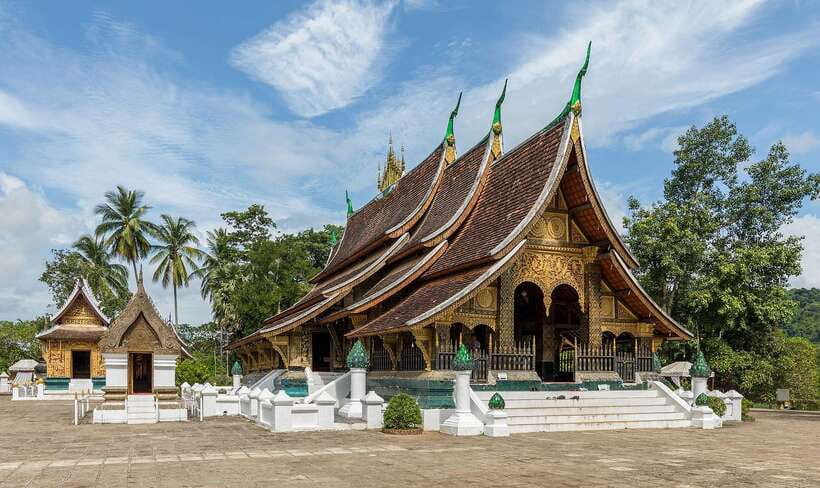
- Wat Xieng Thong: the revered centerpiece
- More temple hopping and quick stops
- The Royal Palace museum stop
- Phousi Hill climb: the best view, but plan your pace
- Kuang Si Falls: what you actually get on the longer options
- Full-day extensions: paper village, UXO history, and temple scale
- Ban Xang Khong paper village
- UXO Lao Visitor Center: war memory you can’t ignore
- Wat Wisunarat and Wat Mai
- Guides make the difference: former monks, strong English, and real stories
- Price and value: $35 works best when you budget for cash fees
- Pace and crowd reality: where the tour can feel rushed
- Who this tour fits best (and who should consider alternatives)
- Should you book the Luang Prabang Highlights Tour?
- FAQ
- Is the tour guide in English?
- Do I get hotel pickup and drop-off?
- Are entry fees included?
- What’s the 6am option?
- How long is the tour?
- What can I add to a half-day or full-day tour?
Quick hits before you book
- 6am alms-giving and morning market options let you see daily life before sightseeing pressure ramps up
- Wat Xieng Thong + Royal Palace give you the best Luang Prabang temple-and-royalty combo
- Phousi Hill delivers panoramic views, but you should plan for stairs and sun
- Kuang Si Falls add-on includes a long free-time stretch and time to swim or relax
- Optional full-day extensions include Ban Xang Khong and the UXO Lao Visitor Center for deeper context
How the tour feels: highlights, but with a reason
This isn’t just a checklist of pretty buildings. The structure makes sense: you start with the spiritual rhythm of Luang Prabang, then move into the city’s cultural center of gravity (temples and royal-era artifacts), and only after that do you climb for views.
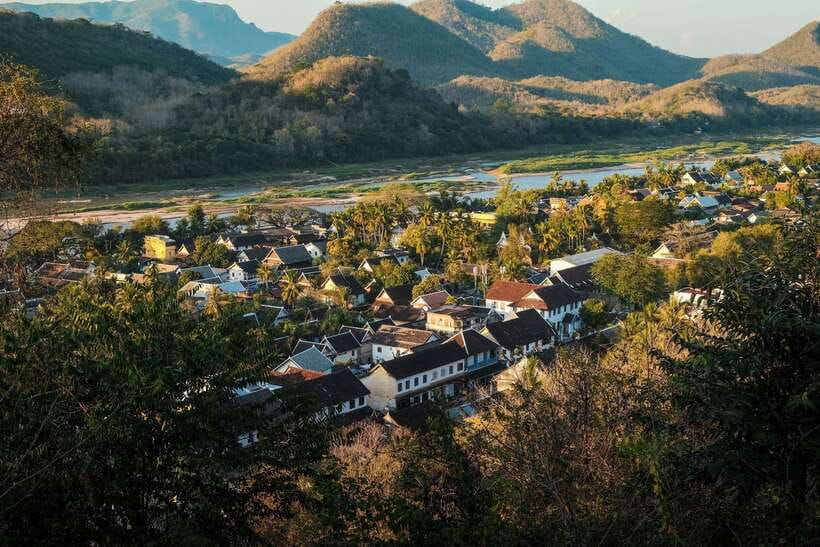
That sequencing matters. Temples and palace details land harder when you’ve already seen monks in motion in the early morning. And climbing Phousi Hill after you’ve visited the key sights helps you understand what you’re looking at: river bends, temple rooftops, and the way Luang Prabang folds around the water.
You’ll also get the small-group feel through hotel transfers and a local guide who can connect what you see to Lao customs and Buddhist practice. In multiple recent tours, guides like Bun/Boun (including those with monastic backgrounds) have been praised for explaining Buddhism in plain terms and making you feel comfortable asking questions.
You can also read our reviews of more tours and experiences in Luang Prabang.

Picking the right option: half-day, full-day, and the 6am start
You can choose among three main tour lengths:
- Half-Day City Tour
- Half-Day City Tour + Kuang Si Falls
- Full-Day City Tour
All options are built around the Luang Prabang “musts,” but the longer versions add more context and more time away from the center.
The big decision is whether to add the early start. The tour offers a 6am option that includes hotel pickup, participation in the almsgiving ceremony, and a morning market visit. After that, you return for breakfast and rest, then the main sightseeing continues later.
If you hate early mornings, go with the half-day option and skip the 6am add-on. If you want the most authentic Luang Prabang experience fast, the early start is the move. It’s also a timing advantage: the city looks and sounds different before tour groups pile in.
6am alms-giving and the morning market: why it’s worth the sleep loss
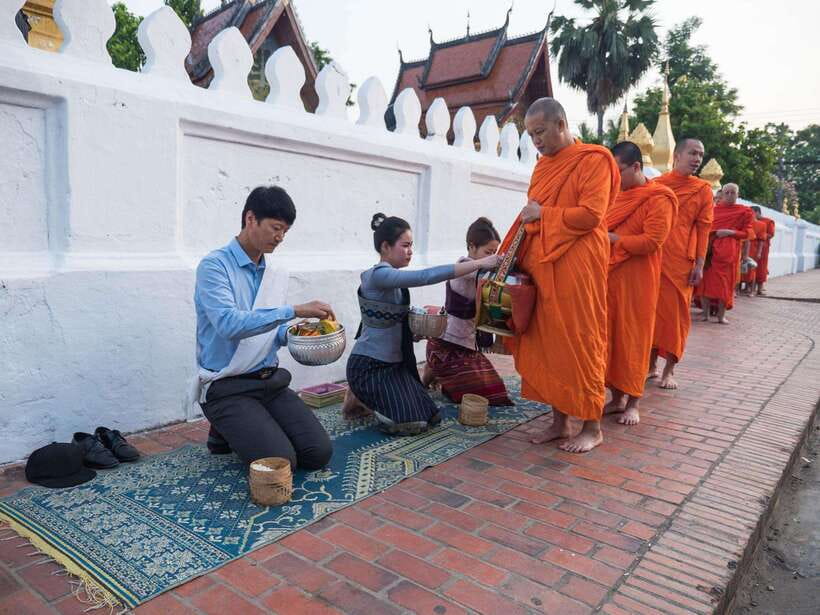
If you choose the 6am start, plan for a true dawn start. You’ll be picked up and guided to join locals as they take part in a centuries-old daily ritual where monks receive offerings. You’ll also get time at the Luang Prabang morning market while things are still fresh and less crowded.
A few practical tips that make a difference:
- Wear clothes that let you move comfortably. You’ll likely stand and wait briefly.
- Bring something warm or light layers for early air (mornings can feel cooler than you expect).
- Keep your phone ready, but don’t forget to look up and watch what’s happening around you. The “moment” is the point here.
Many guides in this program set you up for the experience in an easy, respectful way, helping with where to stand and how to participate. In past tours, guides including Boun have been praised for making this feel meaningful without turning it into a spectacle.
After the alms-giving and market, you go back for breakfast and a rest break (about 1.5 hours is built in). This pacing is smart. It keeps you from burning out by noon.
Morning temple circuit: from Wat Xieng Thong to royal-era history
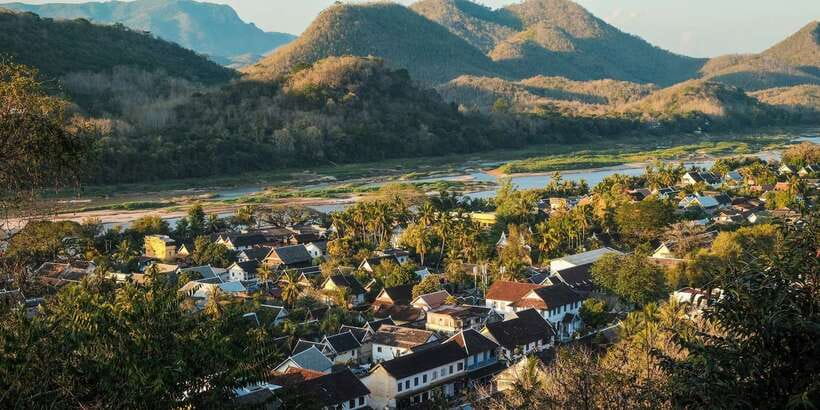
The sightseeing portion has a classic Luang Prabang backbone. It typically starts with a viewpoint and temple visits, then moves into the royal history layer.
Where the tour gets oriented
You begin near a spot on the peninsula where the Nam Khan River meets the Mekong River. Even if you don’t “memorize geography,” you’ll get your bearings fast. You can start to see how Luang Prabang’s temples sit in relation to the water.
Wat Xieng Thong: the revered centerpiece
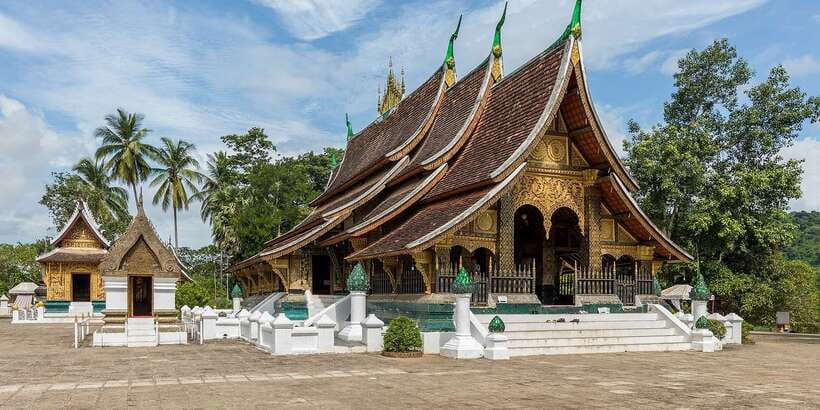
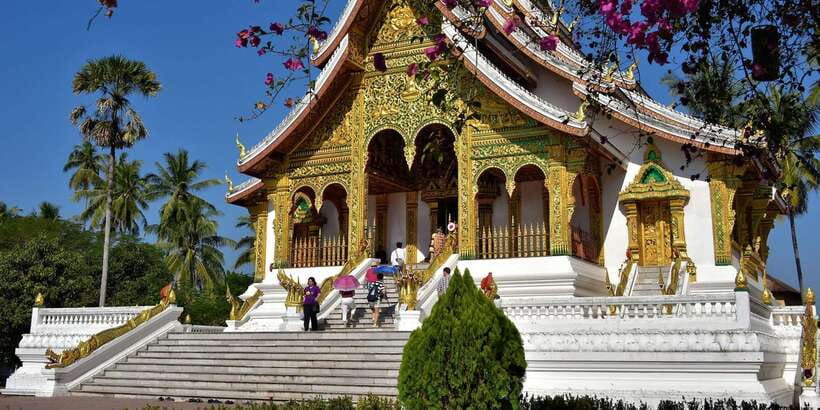
Next comes Wat Xieng Thong, often described as one of Laos’s most revered temples. You’ll learn how the low, sweeping roofs reflect local temple architecture. You’ll also get the feel of how pilgrims move through the space, which helps you understand that this is a working spiritual site, not a museum set.
More temple hopping and quick stops
You’ll continue with additional temple stops in the neighborhood and time for short guided explanations. One example included Wat Sensoukharam as a smaller stop. These shorter visits are useful if your goal is to see more places in limited time without turning every stop into a full production.
The Royal Palace museum stop
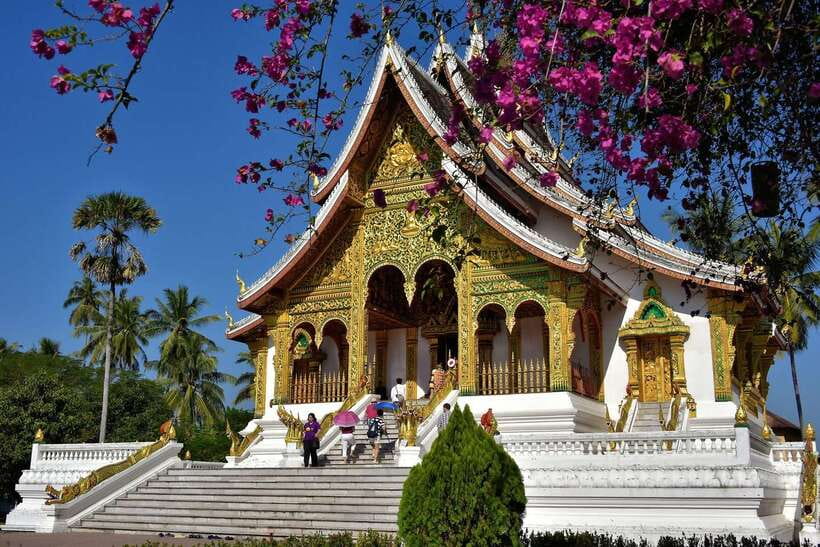
Then you reach the Royal Palace area to see a collection of historical items. This is where Lao history and royal-era stories start to click. One standout detail is that the design blends traditional Lao motifs with French Beaux-Arts architecture, so you’re seeing Luang Prabang as a place where cultures influenced each other over time.
Dress code is strict here. You’ll need conservative clothing with no exceptions. If you show up in shorts or short skirts, you’ll have to cover up before entering. Bring a light scarf or shawl so you’re not stuck improvising on the street.
Phousi Hill climb: the best view, but plan your pace
After the morning circuit, the tour finishes with a climb up Mount Phousi (often called Phousi Hill). Expect a guided climb and a chance for panoramic views over Luang Prabang and its surroundings.
This is the part of the day where your comfort matters:
- Wear breathable shoes with good grip.
- Bring water if you tend to get thirsty quickly.
- If it’s hot, slow your pace. The route can feel longer than you think.
Some guides are thoughtful about the heat. In past tours, guests were impressed by guides and drivers who kept everyone hydrated, and some tours included cool towels after the climb. That kind of small care changes the experience.
Also, remember that Mount Phousi entry fees are not included. Payment is on site, in cash. The listed total for key sites like Wat Xieng Thong, Royal Palace, and Mount Phousi is around US$6 (based on the fees provided).
Kuang Si Falls: what you actually get on the longer options
If you choose an itinerary with Kuang Si, you’ll spend a solid chunk of time at the waterfalls. The tour schedule includes about 3 hours total at Kuang Si Falls, with roughly 2.5 hours of free time built in.
This free time is the difference between seeing waterfalls and enjoying them:
- You can walk around and find your own viewpoints.
- You’ll have time for photographs without constantly moving.
- If swimming is on your plan, this is where you’ll have the window.
One useful tip from how the day is run: guides often try to time the route so you’re not stuck in the thickest crowds. Several guides were praised for navigating busy spots and adjusting for the Kuang Si flow.
On full-day options, the tour may also include a stop for Hmong village culture on the way back to Luang Prabang, giving a more human, everyday context to the region around the falls.
Full-day extensions: paper village, UXO history, and temple scale
The full-day option is where the tour shifts from “highlights” to “meaning.” You move beyond temples-as-sights and into places that explain how Luang Prabang got to today.
Ban Xang Khong paper village
You may visit the paper village of Ban Xang Khong on the Mekong. Expect cultural and craft-oriented learning, with a guided explanation of how the village fits into regional history.
UXO Lao Visitor Center: war memory you can’t ignore
Next, the UXO Lao Visitor Center covers the war legacy through guided interpretation. This stop is heavy compared with temples and markets, but it’s exactly why the longer tour feels worth it. It gives you context for why development and peace are such central themes in Laos.
This is also the kind of stop where a guide’s framing matters. In this program, guides with monastic backgrounds (and others with strong English and storytelling skills) have been praised for connecting historical facts to what visitors can observe today.
Wat Wisunarat and Wat Mai
You may also visit multiple temples, including Wat Wisunarat (described as the oldest temple in Luang Prabang in the tour description) and Wat Mai (the largest temple in Luang Prabang). These scale differences help you compare styles and importance across the city’s sacred spaces.
Guides make the difference: former monks, strong English, and real stories
Across the tours, the biggest repeat praise is about guides. Names that showed up in recent tours include Bun/Boun, Som, Vone, Henry, Ken, and Siththai, plus guides mentioned like Mr. Sack and Beau in various bookings. More than one guide was noted as having been a monk for many years, including examples like 18 years.
That background tends to show up in how the day is explained. Instead of treating Buddhism like trivia, these guides often link what you see (temple art, monk routines, ceremony posture) back to belief and daily life. And because the guide is present throughout the day, you can ask questions while your impressions are still fresh.
Do you need a “character-driven” tour to enjoy this? No. But if you like understanding why a roof style matters or what a ceremony represents, this is one of the best ways to get it without doing solo research.
Price and value: $35 works best when you budget for cash fees
The headline price is $35 per person, with hotel transfers and a local guide included. For that money, the real value is not just the transportation and entry access it’s the efficient time management: you get multiple major sights in one day (or half-day), with a guide to translate what you’re seeing.
The catch is that many major temple and hill fees are not included. You’re told to pay in cash on site, and the provided totals for key sites like Wat Xieng Thong, Royal Palace, and Mount Phousi add up to around US$6.
So the budgeting lesson is simple: add the small cash amount, then focus on your bigger decisions (half-day vs full-day, and whether to pay the extra attention for the 6am start).
Pace and crowd reality: where the tour can feel rushed
This tour is designed to cover a lot. In most cases, the pacing works well, and guides do a good job keeping you moving while still explaining stops. You’ll also likely be dealing with crowds at popular places like the former royal palace area and key temples.
Two practical fixes if you want smoother photos and less stress:
- Ask your guide at the start how much time you get at each stop, then watch the clock.
- If you feel rushed at a specific photo point, say so early. Guides in this program have been willing to adjust timing, including at Kuang Si to avoid the heaviest crush.
Some people reported being moved along quickly or experiencing minor delays (like waiting for transport). These aren’t deal-breakers, but they matter if your travel style is slow and unhurried.
Who this tour fits best (and who should consider alternatives)
This tour suits you if:
- You want the big Luang Prabang highlights without planning a day yourself
- You like early starts when the payoff is real (monks’ almsgiving)
- You want history and culture explained in plain English
- You’re okay paying small cash fees on site for certain major sites
It may be less ideal if:
- You want long stays at one temple or one viewpoint
- You dislike stairs and heat (Phousi Hill is not a gentle stroll)
- You’re sensitive to tight timing and frequent movement between stops
If you’re traveling with kids, this can still work. One recent booking described bringing an eight-year-old and finding the pacing and explanations enjoyable.
Should you book the Luang Prabang Highlights Tour?
If you’re short on time and want Luang Prabang to make sense fast, I’d book it. The early alms-giving option is the headline moment, and the combination of temples, royal history, and Phousi Hill views is exactly what most first-timers need.
I’d book with a small caution: plan for cash temple fees (around US$6 for the listed major sites) and be ready for a packed schedule. If you’d rather linger, choose the longer breaks built into the day (especially around Kuang Si) and ask your guide for a few extra minutes when it matters.
Pick the 6am start if you want the day’s emotional center. Skip it if you want sleep more than schedules. Either way, this is a strong way to see Luang Prabang beyond postcards.
FAQ
Is the tour guide in English?
Yes. The tour is described as having a live tour guide in English.
Do I get hotel pickup and drop-off?
Yes. Hotel pickup and drop-off are included, and you should wait in the hotel lobby about 10 minutes before your scheduled pickup time.
Are entry fees included?
Not for all sites. Entry fees for several places are not included and must be paid in cash on site, including Wat Xieng Thong (30,000 LAK), the Royal Palace (60,000 LAK), and Mount Phousi (30,000 LAK). The tour also lists Kuang Si Waterfalls (60,000 LAK) as included if you select that option.
What’s the 6am option?
The 6am option starts with hotel pickup and an opportunity to join the early morning alms-giving ceremony, followed by a visit to the morning market. After that, you return for breakfast and rest before the rest of the tour.
How long is the tour?
The experience is listed as 4.5 hours up to 1 day, depending on which tour option you choose (half-day vs full-day and whether Kuang Si is included).
What can I add to a half-day or full-day tour?
You can add the early morning alms-giving and morning market by choosing the 6am starting option. You can also select different added activities for full-day variations, including visits such as paper village and the UXO Lao Visitor Center, or an afternoon outing to Kuang Si Falls and a Hmong village.