REVIEW · ATHENS
9 Day Private Tour Ancient Peloponnese and Meteora
Book on Viator →Operated by Private Tours Greece · Bookable on Viator
That first view of Meteora feels earned. This 9-day private route stitches together big-name Greek classics—Corinth, Mycenae, Epidaurus, Sparta, Mystras, Olympia, Delphi—then tops it with UNESCO Meteora at sunset. You get an English-speaking driver who can also translate the culture into something you actually use on the road, and names like Spyros and Panos come up for a reason.
Two favorites: the dramatic Cog Railway through Vouraikos Gorge plus the walk-and-boat style experience of the Cave of Lakes, and the way the tour keeps you moving without you micromanaging buses. One thing to think about first: many site entrances are marked as not included, and local guides are also not included—so your final spend can rise if you want guided context at every stop.
In This Review
- Key Highlights at a Glance
- What This Tour Does Best: Private Comfort on a Big Route
- Day 1: Corinth, the Cog Railway, and the Cave of Lakes Color Show
- Day 2: Lousios Gorge Monasteries and the Road to Nafplio
- Day 3: Nafplio Coast Walk, Mycenae’s Power, and Epidaurus’ Theater
- Day 4: Mystras by Olive, Byzantines by Stone, and Monemvasia at Sea Level
- Day 5: Gytheio Free Time and the Diros Caves Underground River Ride
- Day 6: Messene, Pylos Harbor Time, Nestor’s Palace, then Olympia
- Day 7: Olympia Highlights, Market Tastings, and the Road to Delphi
- Day 8: Delphi Museum and Oracle Area, Arachova Cheese Break, and Meteora Sunset
- Day 9: Great Meteoro and Varlaam Monasteries, Lunch in Kalambaka, then Thermopylae to Athens
- Price and Value: What You Pay For, What You Still Need to Budget
- Logistics That Matter: Pace, Hotel Changes, and How to Get the Best Day
- Who This Tour Suits Best
- Should You Book This 9-Day Private Peloponnese and Meteora Route?
- FAQ
- How long is the tour?
- Where does the tour start?
- Is it private or shared with other groups?
- What’s included in the price?
- Are entrance tickets included?
- Are local guides included?
- Is there an extra charge for hotel city tax?
- What language is the tour offered in?
- What are the cancellation terms?
Key Highlights at a Glance
- Vouraikos Canyon by Cog Railway: one of the most scenic rail rides in Greece, with tunnels, cliffs, waterfalls, and forests.
- Caves and bridges, not just ruins: the Cave of Lakes adds a rare underground color-and-light experience.
- Day after day of major classical sites: Ancient Corinth, Mycenae, Epidaurus, Olympia, and Delphi all fit in one plan.
- Meteora sunset is built in: two monasteries plus a traditional lunch in Kalambaka.
- Local food tastings in Olympia: honey, olive oil, and wine tasting is part of the included program.
- A private format with hotel changes: you get comfort and flexibility, but expect a more “packed” early pace.
What This Tour Does Best: Private Comfort on a Big Route
This is a classics itinerary, but it’s not the usual “bus tour with a few quick photos.” It’s private, with an English-speaking driver doing the hard part—timing the drives, handling the turns, and getting you from one iconic site to the next without stress.
The real value shows up in two places. First, you spend time where it matters: the main sights at each region stop, plus small food moments like the Olympia tastings. Second, the driver role isn’t limited to steering; in real-world terms, it helps you eat well, understand what you’re looking at, and avoid common time-wasters.
If you like history, you’ll be in your element. If you also like comfort and not hauling your own bags across multiple transfers, this is built for you.
You can also read our reviews of more tours and experiences in Athens.
Day 1: Corinth, the Cog Railway, and the Cave of Lakes Color Show
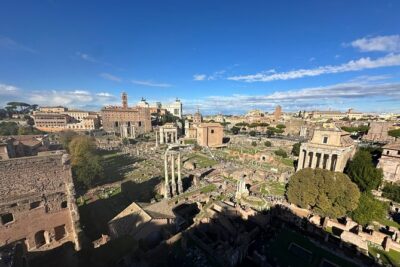
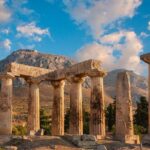
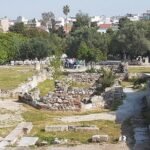
Your first day starts with Ancient Corinth, tied to early Christian history because St. Paul preached there in 52 AD. Walk the ruins and you get a direct sense of scale—this was not a small town, and the city’s layout shows why it mattered.
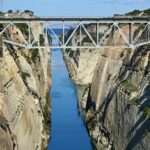
Then comes a switch from stone history to engineering and scenery. You stop at the Corinth Canal, the striking waterway linking the Aegean and Ionian Seas. It’s a quick hit, but it sets the mood: Greece isn’t just ruins; it’s also human feats of construction.
After that, you board the Cog Railway through the Vouraikos Gorge area. This is one of those “you don’t have to be a train person” moments. The ride moves through narrow canyon scenery—tunnels, waterfalls, cliffs, and stretches of pine and oleander—until it reaches the end point, Kalavryta. For many people, this becomes a highlight because the route is scenic in motion, not just from a fixed viewpoint.
The day’s finale is the Cave of Lakes, reached after the railway portion. You’ll see multiple small and large lakes underground, with different colors that come from the minerals in the rock. There’s also a “floating corridor” feeling from the way the hanging bridge and waterfalls are arranged inside the cave complex. It’s not just pretty; it’s different enough that it breaks up the archaeology pattern early.
Day 2: Lousios Gorge Monasteries and the Road to Nafplio
Day 2 goes slower on paper, but it still feels full because it’s built around walking a path and taking in views. You start with an easy drive to the Lousios River area and a walk leading to the Monastery of Agios Ioannis Prodromos. The walk is timed, and the reward is the view down toward the river far below.
Then you continue to the nearby Monastery of Philosophes. This is one of those places where the age shows up in the setting. The old monastery began in 963, with a later new monastery added in 1691, so you get layered time in a small space.
From there, the tour heads to Nafplio for an overnight. Nafplio is a smart base for your next day because it’s walkable and visually rewarding.
Day 3: Nafplio Coast Walk, Mycenae’s Power, and Epidaurus’ Theater
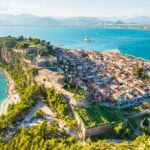
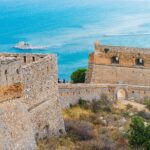
Day 3 starts in Nafplio. You walk along the coast and then visit the Castle of the Town, with views across the harbor toward Bourtzi, the small island fortress. It’s a nice palate cleanser before the heavier classical stops.
Next you visit Ancient Mycenae, including the Gate of Lions and the Atreus King Tomb. This site hits hard because it gives you the political muscle behind the myths you hear in classrooms. You won’t feel like you’re guessing what story goes with what place.
After Mycenae, you move to the Ancient Theatre of Epidaurus. This theater is famous for its scale, with capacity around 15,000. Even if you only have limited time, the shape of the space does the explaining. It’s a reminder that Greek culture built performance spaces with serious intention.
Then you drive on to Sparta for check-in. The shift feels natural: you’re moving from Peloponnese kingdoms into the world of Spartan identity.
Day 4: Mystras by Olive, Byzantines by Stone, and Monemvasia at Sea Level
Day 4 is where the tour adds a different kind of Greece: Byzantine-era grandeur. You start at the Museum of Olive and Olive Oil. It’s a practical stop that makes the surrounding landscape and economy easier to read later, especially in places where olive culture is part of daily life, not a museum topic.
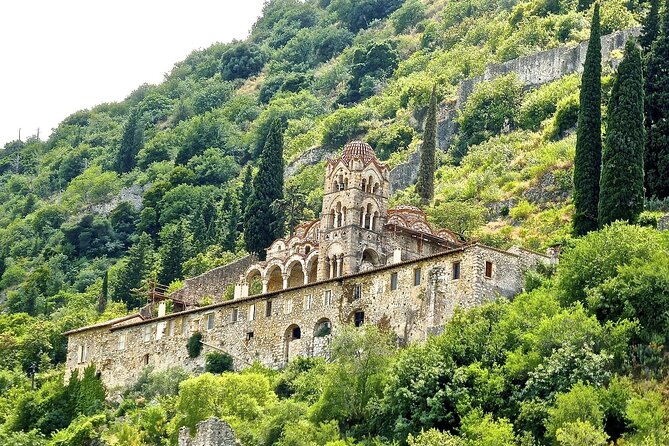
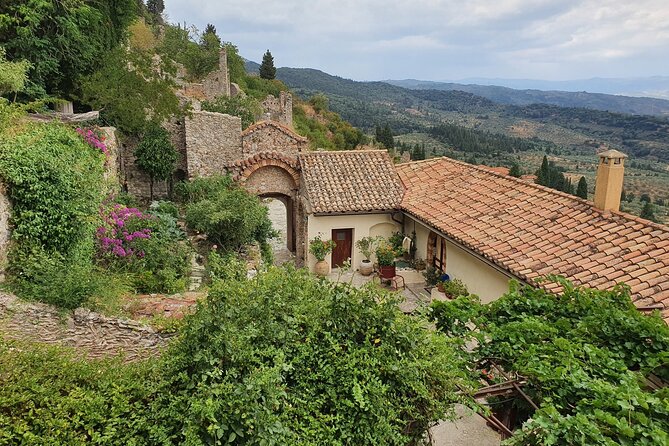
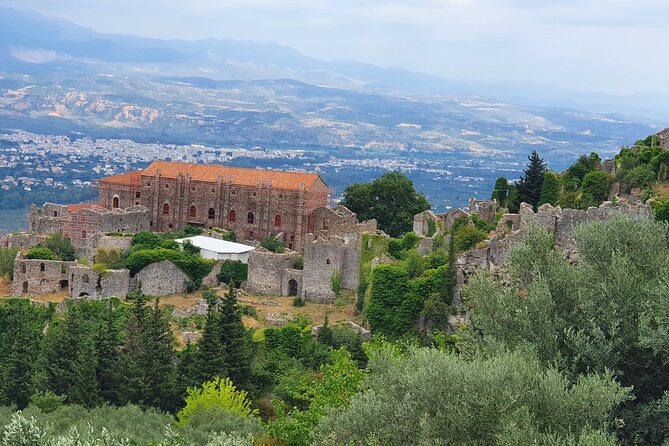
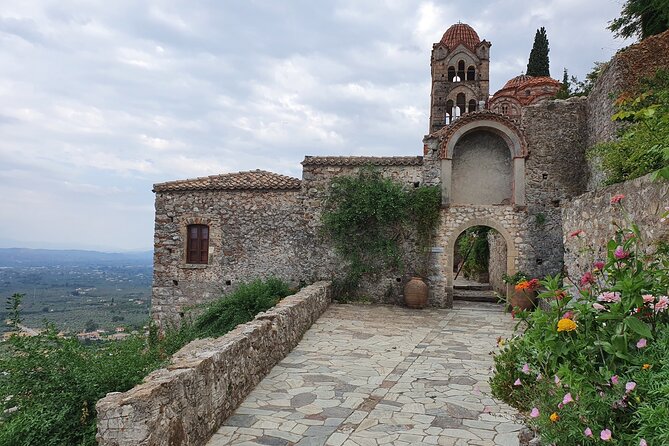
Then you go to Mystras, the nearby castle town. You’ll wander the Upper and Lower Town, with sights like the Palace of the Despots, and churches such as the Cathedral of Saint Dimitrios. You also have time to see monasteries like Our Lady Pantánassa and Our Lady Perivleptos. This is “history you can walk through,” because you’re moving through a built environment rather than viewing it behind glass.
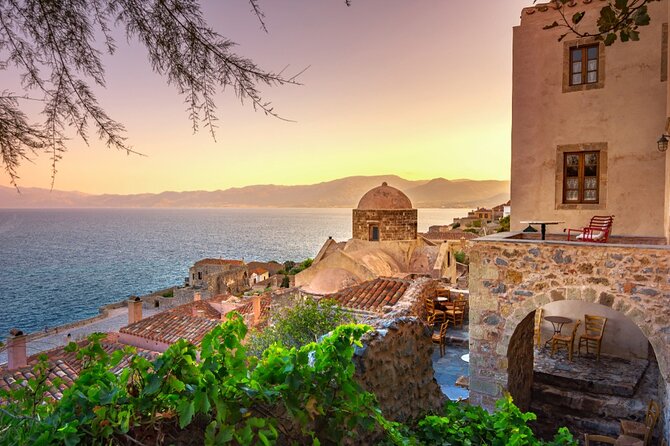
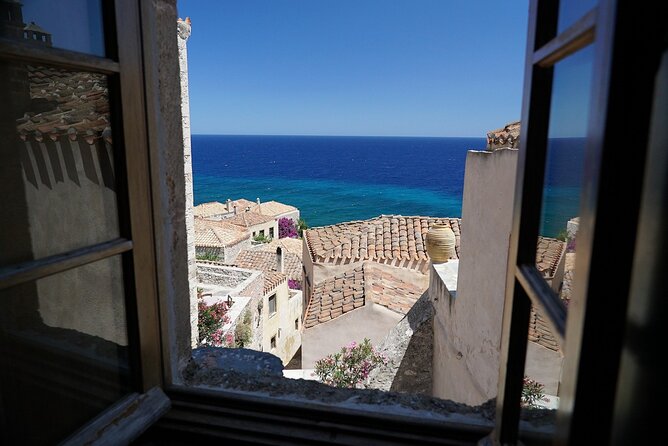
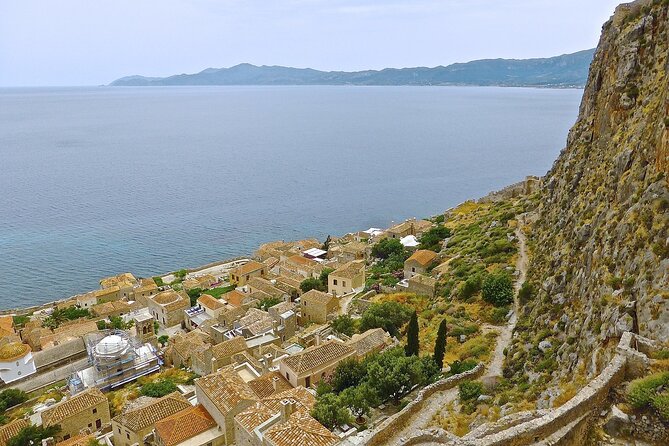
After Mystras, you travel to Monemvasia, a medieval fortress-town carved into a massive sea rock. The effect is immediate: narrow cobbled alleys, old mansions, and Byzantine chapels. It’s also a great place to slow down compared with pure archaeology days.
You overnight in Gythio, which positions you well for the next day’s cave visit.
Day 5: Gytheio Free Time and the Diros Caves Underground River Ride
Day 5 starts with free time in Gytheio, a seaside town that’s useful as a rest stop without losing the coastal feel. You can grab a relaxed meal on your schedule, and it breaks up the day’s later underground activity.
Then you head to the Diros Caves. This is an underground river system navigated by boat, with stalactites and stalagmites. It has that underworld mood even if you don’t buy the mythology. The big win here is variety: one day you’re staring at monumental ruins, and the next day you’re watching geology shaped the way water carved it over ages.
The day ends in Kalamata for overnight. Kalamata is a sensible base because it’s connected and it lets you push forward toward the Messene–Pylos–Olympia arc.
Day 6: Messene, Pylos Harbor Time, Nestor’s Palace, then Olympia
Day 6 is classical Greece in three hits. First, Ancient Messene. This site is a UNESCO monument and sits by the Messenian valley. You get a sense of a complete ancient city plan rather than only isolated structures, and it was founded in the 4th century B.C. by Epaminondas.
Next is Pylos, a coastal town with a natural harbor and naval history. You’ll have time for a relaxed walk and an optional lunch with bay views. If you’ve been in history mode all morning, this is where you get to switch to atmosphere.
Then you visit the Palace of Nestor. It’s known for being one of the best-preserved Mycenaean palaces. The tour time is shorter here, but the palace setting helps you connect myth (and the epics you’ve heard) with a real physical place.
The day ends with Olympia for check-in. This matters because your Olympia experience includes more than just stone sites.
Day 7: Olympia Highlights, Market Tastings, and the Road to Delphi
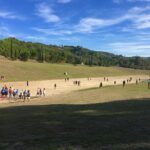
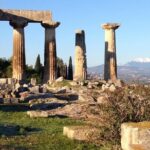
Olympia starts early, and the itinerary hits the big pieces of the sanctuary area. You’ll see the stadium, plus major temple structures such as the Temple of Zeus. This is where the first Olympic Games tradition is rooted—around 776 B.C.—so it’s not just an archaeological day; it’s an origin story day.
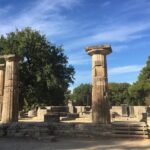
You can also see the Temple of Hera, the shrine of Pelops, and the Council house where athletes took the Olympic oath. Even with limited time, the layout gives you a “how it all worked” feeling: training, ceremony, worship, competition.
After the main site visit, there’s a market stop in Ancient Olympia. You get a chance to taste free wine and olive oil and sample Greek olives. It’s simple, but it’s the kind of break that makes the day feel human instead of nonstop.
Then there’s the honey farm stop, called Klio’s Honey Farm. Under the trees, you’ll have coffee or juice and handmade desserts made with honey produced there for generations. This is included, and I like it because it’s not staged shopping. It’s a food stop with a story behind it.
You also pass through Nafpaktos for a short seaside break, then drive to Delphi for overnight.
Day 8: Delphi Museum and Oracle Area, Arachova Cheese Break, and Meteora Sunset
Day 8 begins with Delphi. You visit the archaeological site and then the museum. Delphi includes the Ancient Oracle, the stadium, and the Ancient Theatre that could host more than 5,000 seated spectators. You’ll also see the Museum of Delphi and the Charioteer, one of the best-known bronze statues.
Delphi is one of Greece’s most mentally active places. You’ll feel the pull between myth and civic identity. It’s not a dry museum-style visit; it’s a site that wants you to look up and then look around.
From Delphi, you head toward Arachova, a mountain village at around 1,000 meters. You get free time for coffee or lunch and a chance to try Arachova’s formaela, a local cheese dish.
Then you drive onward to Kalambaka, your base for Meteora. The highlight of this day is the sunset tour around the rocks. You’ll check in and then witness Meteora’s rock formations and the monasteries perched on top. Even if you’ve seen photos, seeing it at sunset changes the scale.
Day 9: Great Meteoro and Varlaam Monasteries, Lunch in Kalambaka, then Thermopylae to Athens
Your last day starts with a 9:00 pickup from Kalambaka. You visit Byzantine monasteries at Meteora included in the UNESCO area: Great Meteoro first, the biggest and oldest in the complex. It’s called suspended in the air because of the massive rock it sits on.
Then you visit Varlaam, founded in the 16th century and located on a rock about 380 meters high. The contrast between monasteries and rock settings is part of what makes Meteora special. It’s architecture shaped around a difficult place, not the other way around.
After the monastery time, you finish in Kalambaka with a traditional Greek lunch. Then you head back to Athens with a short stop at Thermopylae.
At Thermopiles, you can see the statue of Leonidas, memorializing the battle of the 300 Spartans against the Persian Empire. It’s brief, but it’s a powerful bookend to the Spartan day earlier in the trip.
Finally, you’re dropped off in Athens.
Price and Value: What You Pay For, What You Still Need to Budget
At $4,855.75 per person, this is not a cheap “see it all” plan. You’re paying for a private car, an English-speaking driver, eight nights of accommodation, and a structured 9-day route packed with major sites across the Peloponnese and central Greece.
The included food moments matter for value too. The Olympia tastings—honey, olive oil, and wine—plus the Klio’s Honey Farm stop aren’t guaranteed on every itinerary. And the Meteora sunset tour is included, so you’re not forced to find a separate sunset add-on.
What can affect your total cost is outside the included bundle. Many site entrances are marked as not included, and local guides are also not included. If you want a guide’s narration at every stop, budget extra. If you’re okay with reading signs, using your own context, or hiring guides selectively, you’ll likely find the package more cost-effective.
One practical note: some people like to have more explanation at key sites. If that sounds like you, plan ahead and consider requesting an English-speaking local guide where you care most.
Logistics That Matter: Pace, Hotel Changes, and How to Get the Best Day
This itinerary works well when you stay flexible. The early days can feel intense because you’re changing regions and sleeping in new towns. Once you get used to the rhythm, it tends to feel easier—more like a sequence of planned stops than a blur.
Because it’s private, you can also use the driver as a tool. Drivers like Spyros and Panos are described as adding cultural context, plus restaurant recommendations and extra stops when it fits. That’s not a minor detail. Good meal advice in Greece can save you time and money and help you eat where locals actually go.
Also remember a real-world limitation: there aren’t audio guides at each site. If you rely on your phone for context, bring an offline plan. If you want deeper explanations, hire local guides at the stops you care about most.
If you like to tweak the schedule, the tour has shown willingness to adjust in at least one case—swapping a cave option for a beach plan. If flexibility matters, ask early rather than late.
Who This Tour Suits Best
This is a strong fit if you want:
- A private car and English-speaking driver across a long route
- Big classical sites plus Byzantine and Meteora scenery
- A food-forward day at Olympia (tastings and honey farm included)
- Comfort and less hassle than public transit
It might be less ideal if:
- You want every single entrance and guide service included
- You dislike frequent hotel changes and tighter daily scheduling
- You prefer very slow travel with long museum time
Should You Book This 9-Day Private Peloponnese and Meteora Route?
Book it if you want to hit the greatest-hits classics without planning the logistics yourself. The mix of Corinth, Mycenae, Epidaurus, Sparta/Mystras, Olympia, Delphi, and Meteora in one private circuit is the main draw, and the included Meteora sunset plus Olympia tastings make it feel like more than a checklist.
Hold off if your budget can’t absorb extra site entrances and optional local guides. Also consider your tolerance for pace: the first days feel packed, and you’ll switch towns and hotels more than once.
If you do book, a smart move is to lean on the driver. Ask for dining tips, confirm which entrances you’ll need to pay, and decide in advance which sites you want deeper guide explanations for.
FAQ
How long is the tour?
It lasts about 9 days.
Where does the tour start?
The tour is based in Athens, and pickup is offered.
Is it private or shared with other groups?
It is a private tour/activity. Only your group participates.
What’s included in the price?
Included are 8 nights of accommodation, a private car with an English-speaking driver, honey/olive oil/wine tasting at Olympia, a sunset tour of Meteora around the rocks, and breakfast (8).
Are entrance tickets included?
No. Many site admissions are marked as not included. Some parts are listed as free in the itinerary, but you should expect to pay for several major sites.
Are local guides included?
Local guides are not included.
Is there an extra charge for hotel city tax?
Yes. Hotel city tax is listed as €40 per person for 4-star accommodations.
What language is the tour offered in?
It is offered in English.
What are the cancellation terms?
Free cancellation is available. You can cancel up to 24 hours in advance for a full refund.