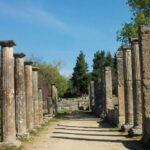
REVIEW · ARCHAEOLOGICAL SITE OF OLYMPIA
Olympia’s Ancient Site and Museum Private Walking Tour
Book on GetYourGuide →Operated by Guide me in Greece Tours · Bookable on GetYourGuide
Olympia hits you fast. This private tour connects the original Olympic grounds with the museum masterpieces that explain them.
I especially like how the pacing works: you get guided time at the archaeological museum, then you move to the site for the main action, and you circle back to the museum to make the art click. I’m also a fan of the skip-the-line ticket, because Olympia can get crowded and you don’t want to waste your short time standing around.
One consideration: it’s a 2-hour experience, so if you want to wander slowly on your own (or you’re chasing every single statue and inscription), you may feel a bit time-pressed.
In This Review
- Key Highlights You’ll Care About
- Why Olympia Feels Different From Most Ruins
- Starting at the Archaeological Museum: Your Fastest Path to Meaning
- Olympia’s Stadium and the Marathon of Firsts
- Temple of Zeus: The Seven Wonders Detail That Actually Helps
- The Second Museum Visit: When the Art Starts Making Sense
- The Private Guide Advantage: When Names Like Maria and Georgio Matter
- Skip-the-Line Tickets: Small Time Saver, Big Sanity Saver
- Price and Value: $1,151 for Up to 5 People
- Who This Tour Is Best For (and Who Should Skip It)
- Practical Details That Affect Your Day
- Should You Book This Private Olympia Tour?
- FAQ
- How long is the Olympia Ancient Site and Museum Private Walking Tour?
- Where does the tour start and end?
- Is this a private tour?
- What’s included in the price?
- What sites are visited during the tour?
- Is the tour skip-the-line?
- What language is the guide?
- Is the tour wheelchair accessible?
- Are pets allowed?
Key Highlights You’ll Care About
- Skip-the-line entry to both the archaeological site and the museum keeps your visit moving.
- World’s first stadium gives you a clear sense of where racing and spectacle started.
- Temple of Zeus and the Seven Wonders connection make the ruins feel bigger than a local stop.
- Museum focus on Olympia art, including Hermes of Praxiteles (and other major finds).
- Private group format means the guide can tailor explanations to your pace.
- English-speaking guide with a track record of strong communication, including guides like Maria and Georgio.
Why Olympia Feels Different From Most Ruins
Olympia isn’t just another set of columns. The place was built for athletes, worship, and competition, so the story feels practical, not abstract.
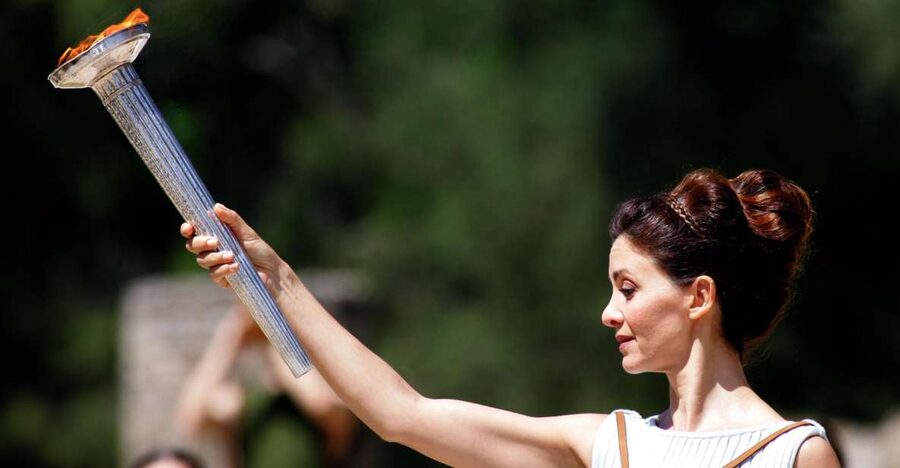
You’ll walk through the idea of what happened here: people trained, made offerings, and competed in a setting that was designed to matter. And yes, there’s also that modern thread—the Olympic flame is ignited here every four years for the Games—so the site quietly links past and present in a way that’s hard to ignore.
Even with other visitors around, Olympia can feel calm if you understand where to look and what to notice. That’s where a good guide changes the whole experience: they point you to the details that turn ruins into a clear timeline.
You can also read our reviews of more tours and experiences in Archaeological Site Of Olympia.
Starting at the Archaeological Museum: Your Fastest Path to Meaning
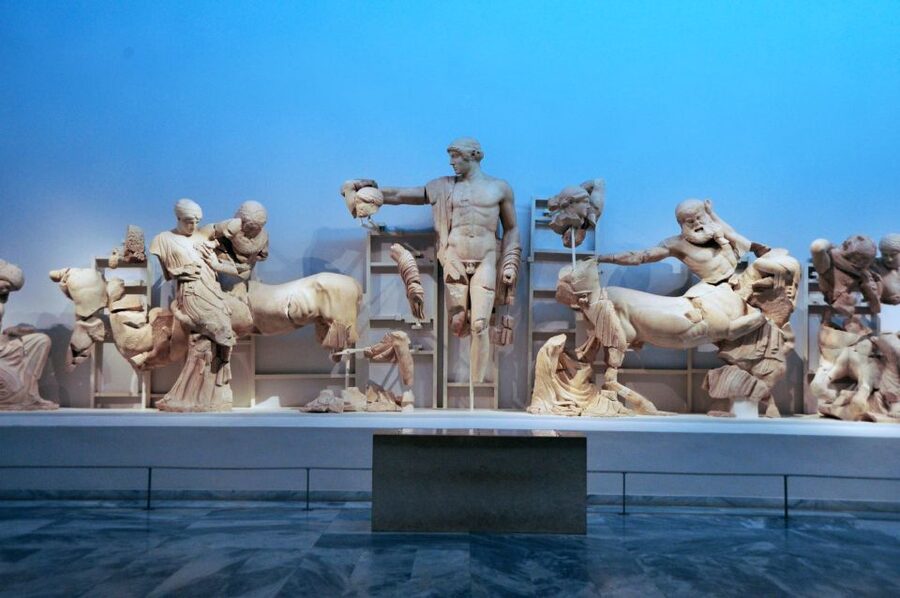
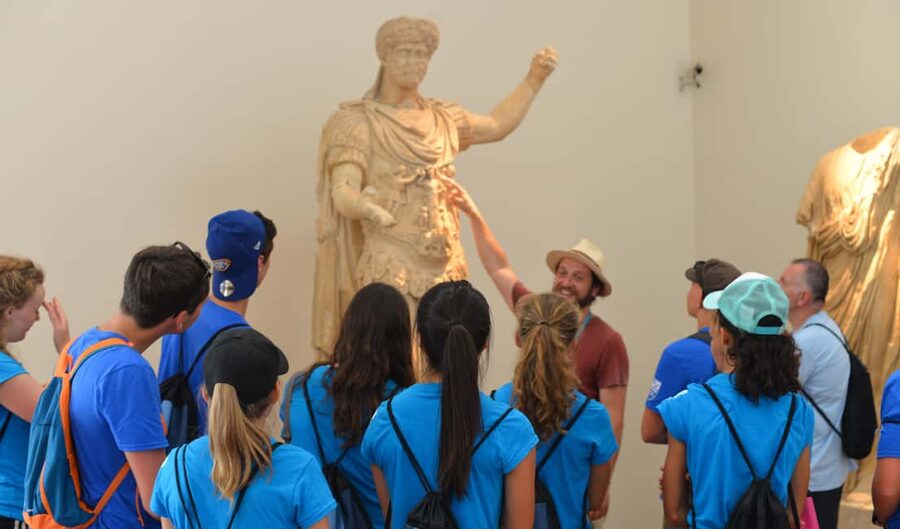
The tour starts at the main entrance of the Archaeological Museum of Olympia. This is smart, because the museum gives you the “read the book first” advantage before you walk the grounds.
Here, you get a guided museum experience focused on major artifacts from the sanctuary and athletic world. The most exciting named highlight is Hermes of Praxiteles, which the tour description calls out as a true showstopper. You’ll also encounter other famous sculptures associated with Olympia’s finds, including the statue of Nike referenced in the tour overview.
What I like about beginning here is how it prevents that common ruins problem: looking at stones and not knowing what you’re seeing. The museum frames Olympia’s people and beliefs, so when you later face the stadium and temples, you know what role each space played.
Olympia’s Stadium and the Marathon of Firsts
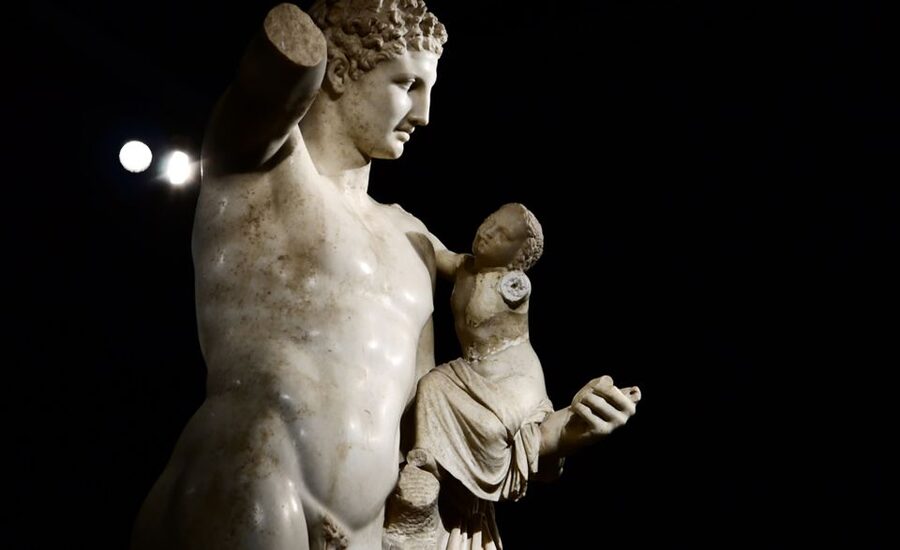
Next you move to the Archaeological Site of Olympia for a guided walkthrough. The centerpiece is the stadium—the world’s first stadium—where the earliest Olympic-style racing took shape.
You’ll get guided time to understand the stadium’s role in the competition system, not just its shape. This is where the tour’s promise about stepping into the athletes’ world becomes tangible: you’re in the place linked to training, competition, and even the rituals tied to the gods.
The tour also highlights that you can take your own pictures on the marble starting line that still exists today. That matters because photos help you “lock in” scale and placement. It’s a small moment, but it turns a flat memory into something you can revisit later.
One practical note for your expectations: ruins like these are built from time and fragments. With a guide, you’ll learn what’s missing and what likely stood there, which makes the site feel more complete than it looks at first glance.
Temple of Zeus: The Seven Wonders Detail That Actually Helps
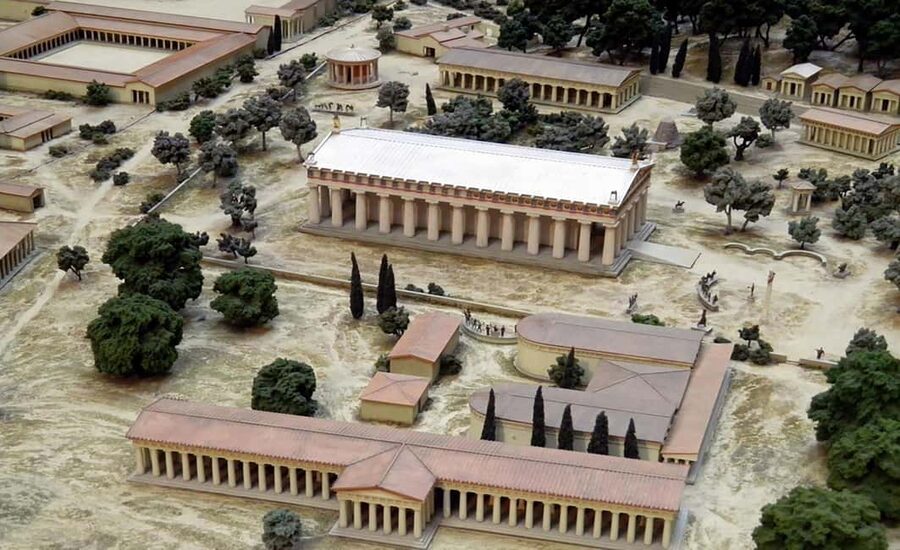
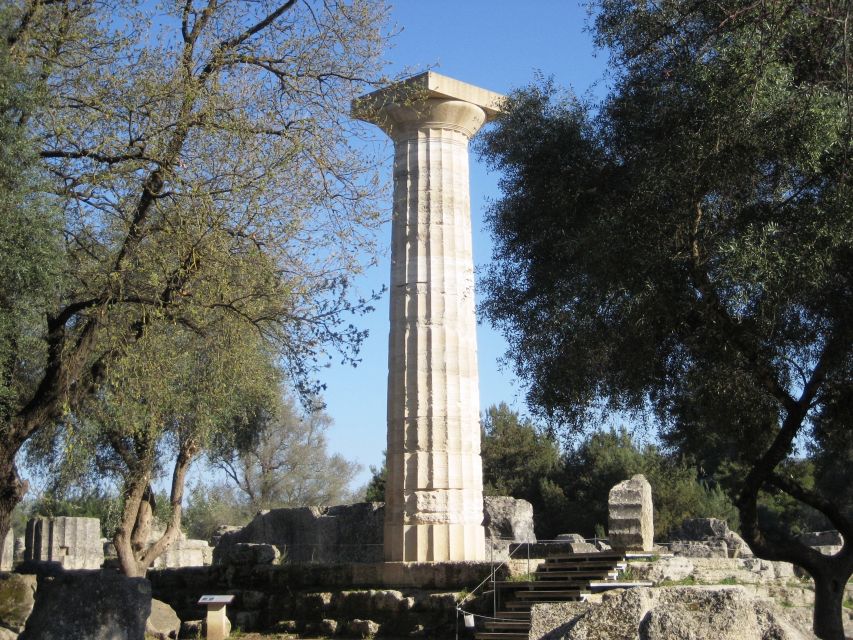
At Olympia, the Temple of Zeus is more than a famous landmark. The tour description connects it to the Seven Wonders of the Ancient World, and that context gives you a reason to focus.
This is the kind of stop where understanding changes your reaction. If you only see it as “a big temple site,” it can feel distant. But if you understand Olympia as a place where worship, status, and prestige were intertwined with athletic events, then the temple’s presence makes sense.
You’ll also hear about sacrifices and the religious atmosphere that shaped daily life here. That theme matters at Olympia because the Games weren’t just sports—they were part of a larger sacred calendar.
The Second Museum Visit: When the Art Starts Making Sense
After the site, the tour returns to the Archaeological Museum of Olympia for a second guided hour. This back-and-forth is one of the smartest parts of the format.
The first museum stop gives you the big ideas. The stadium and sanctuary give those ideas a real-world backdrop. Then the second museum visit ties specific objects to the places you just walked.
This is where Hermes of Praxiteles likely lands hardest. The tour description calls out that it will astound you, and I’d read that as a signal that this isn’t just a quick pass through a few rooms. You’re getting the kind of guidance that helps you notice what made the sculpture important, and why Olympia’s finds were more than decorative.
The Nike reference also supports the same point: Olympia’s art was meant to represent power, victory, and divine approval. Seeing it after the stadium helps you connect victory with ritual, not just athletics.
The Private Guide Advantage: When Names Like Maria and Georgio Matter
This is a private group tour, so you’re not stuck with a one-size-fits-all lecture. You’re working with a professional guide in English, and the tour has a strong reputation for clear communication.
The reviews you provided highlight two guide names in a way that tells me something real: guides like Maria are praised for making the trip easier to understand and for helping people get the most out of Greece while still focusing on Olympia. Another named guide, Georgio, is described as extremely knowledgeable, patient, and kind, with excellent English and a knack for keeping explanations interesting.
Even without relying on names, the private format is what lets the guide adjust. If you pause for photos, ask a question, or want the story repeated with simpler wording, you can. In a time-limited 2-hour experience, that flexibility is not small.
Also, the guide is guiding both the site and the museum, which saves you from the usual challenge: trying to translate what you see with no context.
Skip-the-Line Tickets: Small Time Saver, Big Sanity Saver
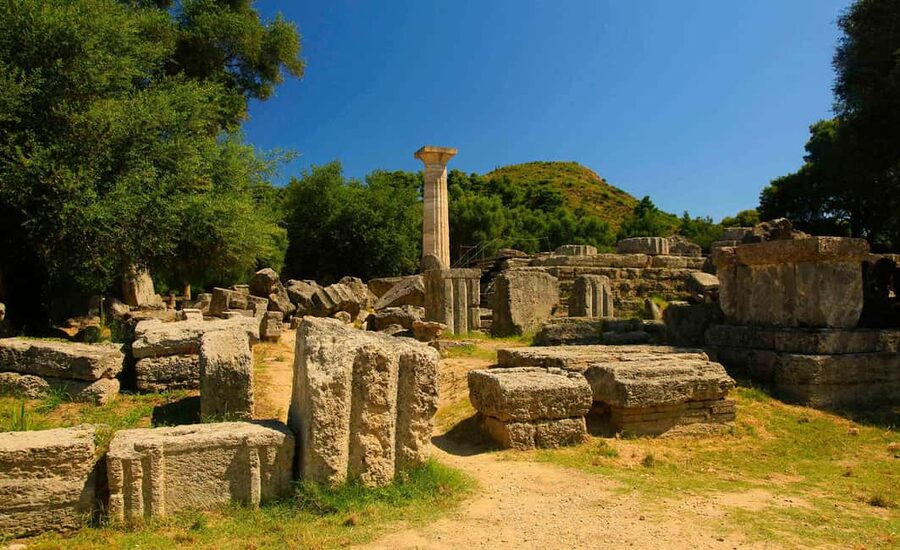
The tour includes skip-the-line entrance fees for both the archaeological site and the museum. If you’ve ever waited at a ticket desk while half your day evaporates, you already know why this matters.
Olympia’s main draws are always in demand: the stadium, the sanctuary areas, and the museum artifacts. Skip-the-line doesn’t make the crowds disappear, but it keeps you moving so your limited 2 hours aren’t eaten by logistics.
For a private tour, that’s especially valuable, because the whole point is efficient sightseeing with a guide. You’re paying for time—so it helps when the tour is designed to protect it.
Price and Value: $1,151 for Up to 5 People
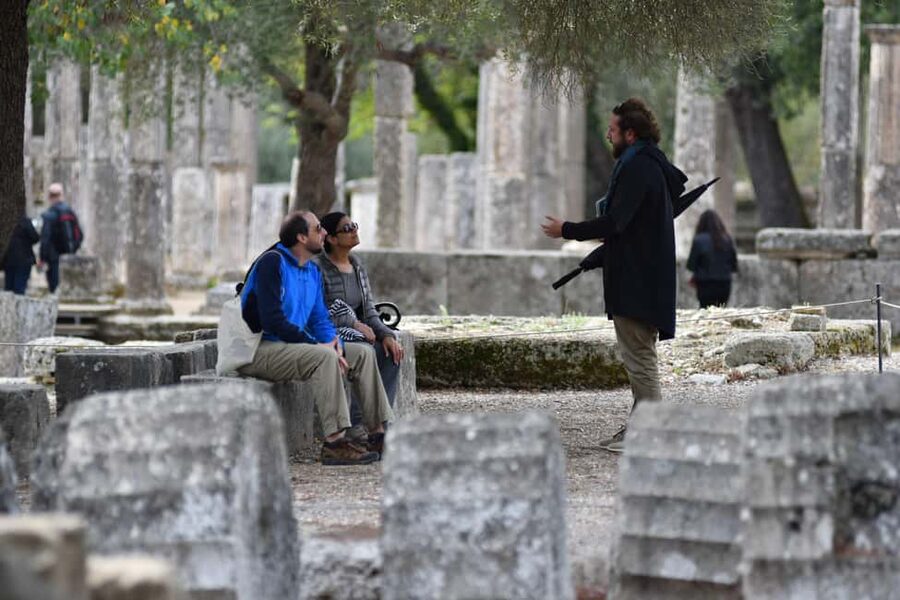
The price is listed as $1,151 per group (up to 5 people) for a total duration of about 2 hours. That can sound steep if you’re thinking per person, but the private format changes the math.
Here’s how I’d judge value: you’re paying for (1) a professional guide, (2) skip-the-line entry for both the site and the museum, and (3) a focused itinerary that covers the main Olympia story in a short window. If you’re a pair, you’ll feel the cost more than if you have a small group.
Still, the real question is what kind of traveler you are:
- If you want Olympia explained clearly and fast, this price can feel fair because the guide compresses learning into a tight schedule.
- If you’re happy reading signs, you can do Olympia without a guide and spend less.
One more value point: the tour is private, so you’re not paying for an overcrowded experience. With only your group and a guide, the time is yours.
Who This Tour Is Best For (and Who Should Skip It)
This tour is best for you if you:
- Want a guided overview that connects the site and the museum in one clean arc.
- Appreciate famous sculptures and want context for why they mattered at Olympia.
- Are traveling with 2–5 people and want to keep time efficient.
You might want to look elsewhere if you:
- Plan to stay much longer than 2 hours at Olympia, or you tend to wander slowly without structure.
- Prefer unguided museum browsing where you can spend extra time in one room without moving on.
The biggest fit is clear: people who want the Olympic origin story made understandable, without turning the day into a logistics project.
Practical Details That Affect Your Day
The meeting point is the main entrance of the Archaeological Museum of Olympia, and the tour ends back there. That loop matters because it reduces transfer friction and keeps your schedule simpler.
The tour is listed as wheelchair accessible. Pets are not allowed (assistance dogs are allowed), so plan around that if you’re traveling with a service animal team.
The tour language is English, and the format is a private group.
Should You Book This Private Olympia Tour?
I’d book it if you want the Olympia experience to feel coherent: museum first, then stadium and sanctuary, then the art again while it’s still fresh in your mind. The two museum blocks are the secret sauce here, because they help the ruins make sense.
I’d skip or reconsider if you’re planning a long, solo, slow-day at Olympia. In that case, a guided 2-hour highlights version may feel short rather than satisfying.
If your goal is simple—see the world’s first stadium, understand the Temple of Zeus and the Seven Wonders link, and meet Hermes of Praxiteles with proper context—this private tour is a strong match.
FAQ
How long is the Olympia Ancient Site and Museum Private Walking Tour?
The duration is 2 hours.
Where does the tour start and end?
The guide meets you at the main entrance of the Archaeological Museum of Olympia, and the tour ends back at the same meeting point.
Is this a private tour?
Yes. It’s a private group tour.
What’s included in the price?
The tour includes a professional tour guide and skip-the-line entrance fees to the Archaeological Site and the Museum.
What sites are visited during the tour?
You visit the Archaeological Museum of Olympia and the Archaeological Site of Olympia, including the stadium area and the Temple of Zeus area.
Is the tour skip-the-line?
Yes. Skip-the-line entrance is included for both the archaeological site and the museum.
What language is the guide?
The live tour guide is English.
Is the tour wheelchair accessible?
Yes, the tour is listed as wheelchair accessible.
Are pets allowed?
Pets are not allowed, but assistance dogs are allowed.