REVIEW · ASWAN
Private Day-trip to Abu Simbel, UNESCO World Heritage Site from Aswan
Book on Viator →Operated by Tanora Egypt Tours · Bookable on Viator
Morning starts, history hits hard. A private Abu Simbel day trip from Aswan is one of those long-drive mornings that turns into a serious awe-fest at UNESCO-listed temples, with stories that go from Ramses II’s cliff-built power to the 1960s relocation that saved these monuments from rising waters.
I really like two things here. First, the private setup feels practical: hotel or Nile cruise pickup, return transport, bottled water, and an air-conditioned vehicle to take the edge off the early start and the road time. Second, the guide time is the real star—this isn’t just a walk-through. You get personalized commentary from a certified professional guide with Egyptology-level storytelling (names like Basma, Asma, and Ms. Mahmoud come up for this kind of clear, memorable narration).
One caution: the day starts very early, with pickup aimed around a 5:00 AM window, so plan for a long stretch in the car. Also, temple entrance fees can be a small gotcha—some parts are listed with admission, but temple entrance fees are also shown as not included, so you should confirm before you go.
In This Review
- Key Highlights You’ll Care About
- Abu Simbel by Road: What the Early-Start Drive Feels Like
- First View of Abu Simbel: Cliff Temples and Lake Nasser Views
- Inside the Great Temple of Ramses II: Colossi, Halls, Battle Reliefs
- The 1960s Relocation Story That Changes How You See the Site
- Temple of Nefertari: Queenly Power at a Separate Stop
- Price and Logistics: Is $166 Per Person Good Value?
- Comfort, Safety, and How to Make the Day Easier
- Who This Private Abu Simbel Trip Suits Best
- Should You Book This Abu Simbel Day Trip?
- FAQ
- What’s the duration of the private day trip to Abu Simbel from Aswan?
- How long is the drive from Aswan to Abu Simbel?
- What time does the tour operate?
- Is hotel pickup included?
- Is the vehicle air-conditioned?
- Are bottled water and a guide included?
- Are temple entrance fees included?
- Is the tour private or shared?
- Do I get a ticket on my phone?
- Is there free cancellation if plans change?
- What if weather is bad?
Key Highlights You’ll Care About
- AC comfort on a long road run: The Aswan-to-Abu Simbel drive is about 3.5 hours each way, so air-conditioning matters.
- A half-hour desert break with sunrise photo potential: The itinerary includes a stop for photos and a possible sunrise moment.
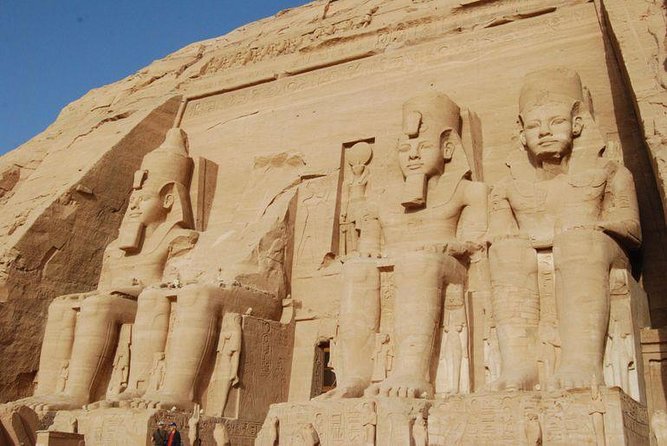
- The Great Temple of Ramses II, up close: Expect colossi, statue-lined halls, and battle reliefs.
- The relocation story isn’t a footnote: Learn how the temples were moved in the 1960s to protect them from flooding after the Aswan High Dam.
- Temple of Nefertari with gateway statues: You’ll have focused time for the queen’s temple and its massive figures.
- Mobile ticket and private timing: It’s set up for your group only, not a big shuffle with strangers.
Abu Simbel by Road: What the Early-Start Drive Feels Like
This is a day trip that starts like an alarm clock, not a leisurely morning. The operating window runs from 5:00 AM to 2:00 PM, and the plan is to pick you up from your hotel or Nile cruise early in the day so you can reach Abu Simbel while you still have energy and daylight for photos and temple viewing.
The drive from Aswan is about 3.5 hours to get you to the Nubian desert area south of Aswan. On a private tour, you’re not stuck waiting for other people or dealing with stop-and-start logistics. You get air-conditioned vehicle time, plus bottled water, which is a small detail that turns out to be worth it on a long, dry road day.
There’s also a desert rest stop scheduled for around 30 minutes, with a note that you may catch sunrise or at least get good desert-photo chances. Even if the timing doesn’t line up perfectly for sunrise for your specific day, that short pause breaks up the drive in a way that makes the temples feel less rushed afterward.
First View of Abu Simbel: Cliff Temples and Lake Nasser Views
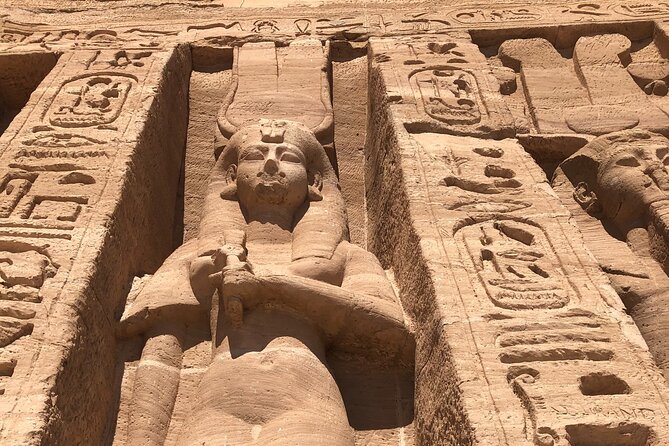
When you arrive, the Abu Simbel complex hits you with a double effect. It’s dramatic because the temples were carved into a cliff, and it’s powerful because of what the complex overlooks—Lake Nasser. Even before you step into the Great Temple, your guide should help you understand why these monuments were built where they are.
A big part of the appeal is that you’re not just seeing stone. You’re seeing a site tied to ancient Egyptian engineering, royal propaganda, and later modern rescue efforts—all in one place. That matters because the temples are so visually strong that, without context, you can miss the why.
With a private Egyptologist-style guide, you can ask follow-up questions instead of waiting for a group moment. The narration tends to focus on what each temple was meant to communicate and how the later relocation changed the way we experience the site today.
Inside the Great Temple of Ramses II: Colossi, Halls, Battle Reliefs
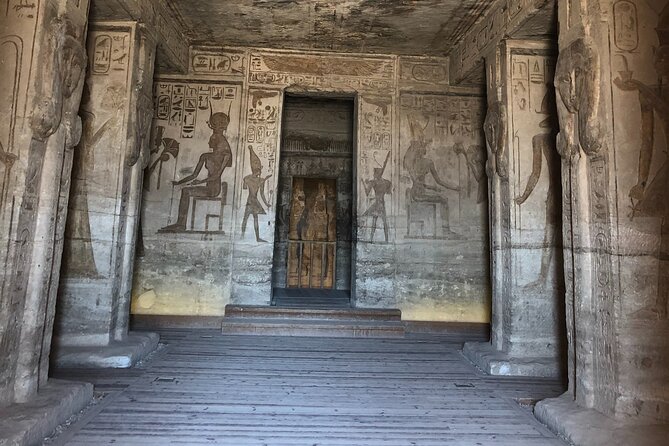
The Great Temple of Ramses II is the centerpiece. You’ll see the colossi of Ramses II and his wife Nefertari at the temple gateway area, then move into the temple’s main spaces for the kind of details that make Abu Simbel worth the early start.
What you should expect in the Great Temple:
- Statue-lined halls where the scale feels almost unfair
- Battle reliefs, which give you a sense of the royal story Ramses wanted carved in stone
- A guided walkthrough focused on meaning, not just where to stand for a photo
The time allotted for the Great Temple is listed as about 1 hour for this portion. In real terms, that’s enough time to see the key areas without feeling like you’re being rushed at the last second. If you’re the type who likes to take in carvings and spacing, you’ll want to keep your camera ready but also slow your pace for the reliefs—this is where the guide’s explanation turns the stone from cool to comprehensible.
The 1960s Relocation Story That Changes How You See the Site
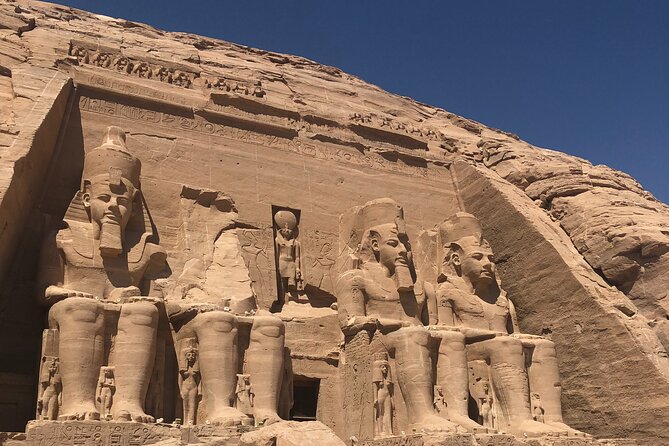
Here’s the part that makes this tour feel more than just a “monument stop.” During your visit, you’ll hear how Abu Simbel was saved during the 1960s relocation—moved to protect the temples from flooding tied to the Aswan High Dam and the rise of Lake Nasser.
This relocation story is one of those things that’s easy to summarize, but hard to appreciate without context. When your guide explains the rescue, you start noticing the temple complex as a survival project, not just an ancient artifact. It turns the whole experience into a two-time-period story: ancient Egypt building something for eternity, and modern engineers and planners preserving it for our time.
It also gives you a better answer to the question people usually have in Abu Simbel: why does this site feel both ancient and strangely designed for today’s viewing? The relocation helps explain that.
Temple of Nefertari: Queenly Power at a Separate Stop
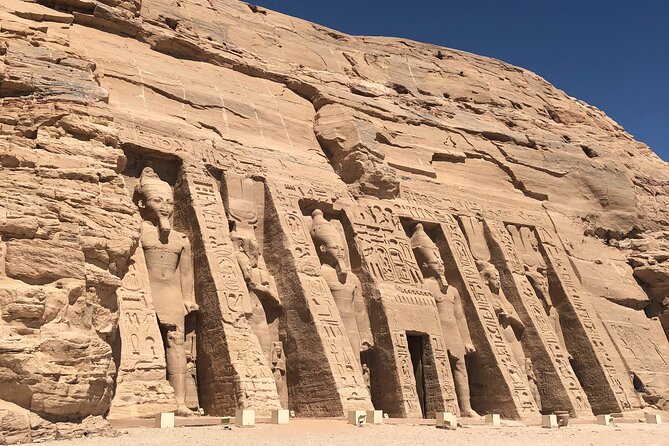
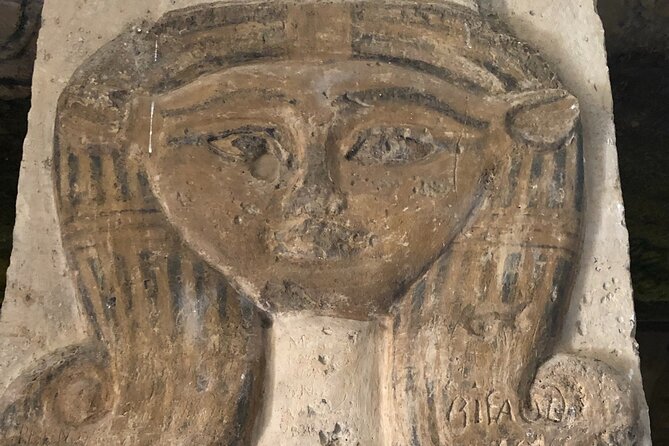
Abu Simbel isn’t only about Ramses II. The tour also covers the Temple of Nefertari, built for the queen and wife of Ramses II in the 13th century BC.
This part of the day is less about one giant moment and more about careful viewing:
- You’ll get time to admire the gigantic figures at the gateway area
- You’ll be guided through the temple context so you understand why Nefertari’s temple matters, not just that it’s there
The itinerary puts this temple portion at about 4 hours on the complex side, so it’s not a quick cut-through. If you love royal relationships, symbolism, or just want more than one big jaw-drop moment, this is where you’ll feel you’re getting real value for the time you spent getting down there.
There’s also a practical touch in the return trip: on the way back to Aswan, you’ll likely have a chance to stop or slow down for mirage-style photo moments. In desert heat, these effects can be hit-or-miss, but it’s a good use of that long drive time.
Price and Logistics: Is $166 Per Person Good Value?
At $166 per person, this is not a cheap throwaway day trip. But it can be good value if you care about three things: comfort, time, and a guide who tells the story in a way you can follow.
What you’re getting that supports the price:
- Private, air-conditioned transport from Aswan to Abu Simbel and back
- Hotel or Nile cruise pickup and return
- Bottled water
- A certified professional guide with personalized Egyptology-style commentary
- A mobile ticket mentioned as part of the experience setup
What might affect your final cost:
- Entrance fees to temples are listed as not included, even though admission ticket language appears in the day plan. This inconsistency happens sometimes in how itineraries are written, so you should confirm what you personally will pay on the day.
If you’re traveling as a small group or family, a private format can be cost-competitive with shared tours once you factor in the hassle you avoid—no waiting for strangers, fewer coordination headaches, and better pacing for your questions.
Comfort, Safety, and How to Make the Day Easier
The tour information emphasizes that you’ll be picked up and taken care of, and the setup includes an air-conditioned vehicle and bottled water, which are the basics that keep a long day from feeling miserable.
A few practical things I’d do before you go:
- Plan on wearing layers. Desert mornings can feel cool early and warmer later.
- Bring sunglasses and sun protection for the drive and outside viewing areas.
- Have your phone/camera charged before pickup. The desert photo stop and the mirage chances are easy to miss if you’re scrambling for power.
- If you hate tipping surprises, budget for gratuities. Tipping is not included.
And yes, the long road day means you’ll be sitting a lot. A private vehicle helps, but the reality is still a long drive. If you’re sensitive to early starts, make sure this day won’t collide with another big activity later the same day.
Who This Private Abu Simbel Trip Suits Best
This tour fits best if you want:
- A private experience where you can ask questions and get focused explanations
- Strong guide-led context for what you see at the Great Temple of Ramses II and the Temple of Nefertari
- A day organized around a meaningful theme, especially the temples’ relocation story after the Aswan High Dam
It’s also a great choice if you’re short on time in Aswan but still want the kind of visit that feels worth the effort. Abu Simbel is far enough from Aswan that you want transportation and guidance that reduce friction, not add it.
Should You Book This Abu Simbel Day Trip?
Book it if you value private comfort, early-morning efficiency, and story-driven guiding. The combination of Ramses II’s monumental carvings, the Nefertari temple focus, and the explanation of the 1960s relocation makes this more than a quick sightseeing checkbox.
Skip or at least think twice if you:
- Don’t do well with very early starts and long car time
- Want total certainty on temple entrance fees without checking ahead (since the details don’t fully line up in the info provided)
My call: if Abu Simbel is on your Egypt list, this is a solid way to get there with less stress and more meaning—especially if you like a guide who can explain what the monuments were meant to say, and what modern preservation made possible.
FAQ
What’s the duration of the private day trip to Abu Simbel from Aswan?
The tour duration is listed as approximately 9 hours.
How long is the drive from Aswan to Abu Simbel?
The road time is described as around 3.5 hours to Abu Simbel.
What time does the tour operate?
Opening hours are listed as 5:00 AM to 2:00 PM, Monday through Sunday.
Is hotel pickup included?
Yes. The tour includes pickup from your hotel or Nile cruise, plus return transport.
Is the vehicle air-conditioned?
Yes, the tour includes an air-conditioned vehicle.
Are bottled water and a guide included?
Yes. Bottled water is included, and the tour includes a certified professional tour guide.
Are temple entrance fees included?
Entrance fees are listed as not included, though the itinerary text mentions admission tickets. You should confirm the exact entrance-fee situation when booking.
Is the tour private or shared?
It’s a private tour/activity, meaning only your group participates.
Do I get a ticket on my phone?
The tour includes a mobile ticket.
Is there free cancellation if plans change?
Yes. Free cancellation is offered if you cancel at least 24 hours in advance for a full refund.
What if weather is bad?
The experience requires good weather. If it’s canceled due to poor weather, you’ll be offered a different date or a full refund.