REVIEW · SARAJEVO
Sarajevo: A Cultural Heritage Walk from the Ottoman Empire to Europe
Book on GetYourGuide →Operated by DEVİM TOURS · Bookable on GetYourGuide
Sarajevo’s story starts at Sebil and moves fast. This short walk gives you real context for how Ottoman and European eras shaped the streets you’re already standing in, with a small-group feel instead of a crowded shuffle.
I especially like two things: the way the guide explains Gazi Husrev Bey Mosque and the surrounding Ottoman learning sites, and the clear shift you notice on Ferhadija Street, where different religions and European-era architecture sit side by side. For the price, it’s also hard to beat—you’re paying mainly for smart guidance and focus, not for a long day of logistics.
The one trade-off is simple: it’s mostly walking, and it’s only 1 hour, so you’ll want comfortable closed shoes and patience for the pace.
In This Review
- Key highlights you’ll feel on the ground
- Enter Sarajevo’s layers from the Sebil fountain
- Baščaršija: Ottoman-era crafts, bazaars, and the feel of everyday Sarajevo
- Gazi Husrev Bey Mosque, madrasa, and the clock tower
- Ferhadija Street: where Ottoman Sarajevo meets Austro-Hungarian Europe
- Photo breaks in alleys: how the route keeps you from missing the small stuff
- Tour length and walking pace: fast, focused, and realistic
- Price and value: why $5 makes sense here
- Language options and how to make the tour work for you
- Who this tour is best for
- Small warning: what you should plan around
- Should you book this Sarajevo heritage walk?
- FAQ
- Where does the tour start?
- How long is the walking tour?
- Is the price really $5 per person?
- What is included in the tour?
- Are entrance fees included?
- Is there an optional extra visit?
- What languages are available for the guide?
- Do I need to bring anything for the walk?
Key highlights you’ll feel on the ground
- Sebil as a smart starting point: you begin in the historic Baščaršija core, not at some remote meeting spot
- Ottoman landmarks explained clearly: mosque, madrasa, and the clock tower are tied to culture, not just dates
- Ferhadija Street shows Sarajevo’s mix: Catholic, Orthodox, and synagogue presences appear along the same corridor of streets
- Photo breaks in the right alleys: the route is designed for quick stops where the details actually pop
- Licensed guide, not a lecture: the stories are structured for a walk, with time to look at what you’re seeing
- Optional add-on if you want more: places like Blagaj Tekkesi can be handled with an extra entrance fee
Enter Sarajevo’s layers from the Sebil fountain
Your tour starts at the Sebil, the small domed fountain sitting right in the middle of Baščaršija. It’s the kind of landmark that helps you orient instantly: you’re in the old heart of Sarajevo, with streets that feel built for wandering rather than speeding through.
From the start, you’ll notice how the guide frames the walk. This isn’t just a list of monuments. You’re learning what to look for as you move—street layout, building style cues, and why certain places matter culturally. That matters because Sarajevo’s history can feel complicated at first glance, and a good guide helps you read the city like a map.
You’ll have about 45 minutes in Baščaršija with a mix of guided time, photo stops, sightseeing, and a bit of free time for shopping or just catching your breath. In other words, the tour gives you structure without squeezing you.
You can also read our reviews of more tours and experiences in Sarajevo.
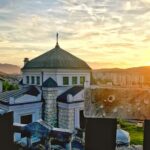

Baščaršija: Ottoman-era crafts, bazaars, and the feel of everyday Sarajevo
In Baščaršija, the tour’s strength is that it connects architecture to atmosphere. The streets around you are full of traditional craft areas, and the guide points out what those Ottoman-era influences looked like in daily life.
As you walk, you’ll get cues on where the important Ottoman traces show up, then you’ll see them again and again in different forms: religious buildings, public learning spaces, and the way the city “organizes” itself around the old center. This is the kind of context that makes the city feel coherent, even if you only have an hour.
There’s also time for practical choices. If you want a quick look at shop displays, grab a photo, or just stand still for a moment to process, the schedule gives you small windows to do it. That keeps the experience from feeling like a sprint.
Gazi Husrev Bey Mosque, madrasa, and the clock tower
One of the most praised parts of this walk is how the guide handles the Ottoman landmarks—especially the Gazi Husrev Bey Mosque, plus the madrasa and the clock tower in the same area. These aren’t treated as isolated buildings. You’ll hear what the complex meant for education and community life.
You’ll likely appreciate the mosque most if you like details you can actually spot with your own eyes. The guide slows the story down just enough for you to connect what you’re seeing to how Ottoman culture functioned in the city. And since the tour is short, that explanation has to be tight and clear—which is exactly what you’re paying for.
The clock tower adds a nice second layer. It’s a reminder that European-style timekeeping and modernization didn’t erase Ottoman Sarajevo. Instead, the city layered change—sometimes subtly, sometimes boldly—right into the urban fabric. Even if you don’t know much history before you start, you leave with a better sense of how Sarajevo evolved.
Ferhadija Street: where Ottoman Sarajevo meets Austro-Hungarian Europe
After the Ottoman highlights, the route shifts toward a different kind of architecture and city rhythm. Walking along Ferhadija Street is where you’ll feel the European influence take over—especially in the presence of elegant period buildings that read as Austro-Hungarian.
The tour’s smart move here is to keep you walking while changing what you’re paying attention to. Instead of switching into a separate section called European history, the guide helps you notice the transition by pointing out built-form differences and how they changed street life.
What really makes this part memorable is the multicultural picture you get from religious buildings. Along Ferhadija Street, you’ll see buildings associated with different communities, including a Catholic cathedral, an Orthodox church, and a synagogue. The guide’s stories tie those landmarks to the larger idea that Sarajevo wasn’t one culture replacing another in a simple line.
It’s also a good zone for photos. The street gives you both wide views and short side-alley moments where details matter—doorways, facades, and small architectural transitions that you might otherwise walk past without noticing.
Photo breaks in alleys: how the route keeps you from missing the small stuff
This is one of those tours where the pacing is built around seeing. You’ll get photo breaks in places designed for quick stops—tight alleys, view angles, and spots where architectural details show up more clearly.
If you’re the type who wants good travel photos, you’ll probably like this approach because it avoids the usual problem: spending your whole day waiting for a guide to explain while everyone else mills around. Here, the stops feel purposeful. They’re timed with what the guide is saying, so you can record the evidence while it makes sense.
It also helps that there are short scenic pauses rather than one huge sightseeing bottleneck. You’re less likely to get bored, and you’re more likely to remember what you saw because you saw it while the story was still fresh.
Tour length and walking pace: fast, focused, and realistic
This experience lasts 1 hour and is mostly walking. That’s short enough to fit almost any day, and it’s long enough to feel like you learned something real.
The best way to get value from the timing is to dress like you mean it. Wear comfortable closed shoes, and if the weather is hot or rainy, bring practical protection like sunscreen, a hat, or an umbrella. Sarajevo’s street walking can be uneven and slippery depending on conditions, so your feet will decide how much you enjoy the later parts.
Because there’s no hotel pick-up, you’ll meet the guide in front of the Sebil. That’s actually a plus for many people. You start where the old city begins, and you can connect this tour to the rest of your plans without backtracking.
Price and value: why $5 makes sense here
At $5 per person, you’re not buying a full-day museum schedule. You’re buying a licensed guide’s ability to translate Sarajevo’s layers into something you can understand in an hour.
The value comes from three things:
- You get professional guidance with a clear focus on cultural heritage.
- You cover multiple key Ottoman and Austro-Hungarian trace points instead of just one district.
- You get small-group or even private tour options, which often means you get more attention and better explanations when you ask questions.
What’s not included is also important for budgeting. Entrance fees to important historical sites aren’t included in the tour price. If you want extra stops beyond what’s already in the route, there’s also an optional possibility like Blagaj Tekkesi, which carries a 10 EURO entrance fee when requested.
So here’s the practical take: if you want a cheap “orientation plus context” walk that helps you move around Sarajevo with confidence, this is a strong deal.
Language options and how to make the tour work for you
You’ll have a live guide available in Turkish, Byelorussian, Russian, English, and Bosnian. Some content may be shown in its original language, so if you’re not fluent, it still helps to pick an English-speaking guide when possible.
Even with a language you’re less comfortable with, the tour format supports understanding. You’re not relying only on words. You can see the Ottoman and European traces as they’re described, and the photo stops make sure you have moments to connect picture to explanation.
The tour has a small-group or private option, which is useful if you like asking questions. It’s also a good fit if you prefer an intimate pace rather than trying to hear over a crowd.
Who this tour is best for
This walk fits best if you’re:
- Short on time but want Sarajevo’s big story in one hour
- Interested in how multiple empires and communities shaped the same streets
- A first-time visitor who needs help reading the city’s architecture
- Traveling with friends but still want a more personal tour feel
It’s also a good starting point for the rest of your day. Once you understand what to look for—Ottoman mosque and learning influence, European-era building changes, and the religious variety along key streets—you’ll be able to wander with a lot more confidence afterward.
Small warning: what you should plan around
Since you’re walking for most of the hour, don’t schedule this when you’re already exhausted or dressed for long museum seating only. Also, because site entrances and some extra stops can cost extra, it helps to carry a bit of cash or plan for those fees if you decide you want them.
And because the tour ends back at the Sebil, keep that in mind for your next move. It’s easy to continue exploring the old city right away, but it’s not designed to drop you at a distant location.
Should you book this Sarajevo heritage walk?
Yes—if you want a smart, short introduction to Sarajevo that focuses on what you can actually see. For $5 and 1 hour, you’re getting licensed guidance plus a route that covers both Ottoman and Austro-Hungarian traces, with the city’s multicultural religious landmarks along Ferhadija Street.
Book it especially if you like learning while walking and you want more than a photo tour. It’s also a solid choice if your schedule is tight and you want to feel oriented quickly from the Sebil in Baščaršija.
If you’re looking for long, in-depth museum-style time, this won’t replace that. But for context, orientation, and a quick hit of cultural storytelling, it’s exactly the kind of practical Sarajevo experience that pays off later when you wander on your own.
FAQ
Where does the tour start?
The meeting point is in front of the Sebil fountain in Sarajevo’s Baščaršija district.
How long is the walking tour?
The duration is 1 hour.
Is the price really $5 per person?
Yes, the tour price listed is $5 per person.
What is included in the tour?
You get professional guidance from a licensed guide, guided exploration of the points in the program, scenic stops, and photo breaks. There’s also a small group or private tour option.
Are entrance fees included?
Entrance fees to important historical sites are not included in the price.
Is there an optional extra visit?
Yes. Optional places like Blagaj Tekkesi can be arranged on request, with a 10 EURO entrance fee.
What languages are available for the guide?
The live tour guide can work in Turkish, Byelorussian, Russian, English, and Bosnian.
Do I need to bring anything for the walk?
Wear comfortable, closed shoes. Bring weather-appropriate clothing and protective gear like a hat, sunscreen, and an umbrella if needed.