REVIEW · ANTWERP
Private Historical Tour: Legends of Antwerp
Book on Viator →Operated by Legends of Bruges Free & Private Tours · Bookable on Viator
Antwerp hides giants in plain sight. On this private 2-hour walk, a guide threads local legends and big-name landmarks into one easy route, starting at the Grote Markt and ending near Antwerp’s Cathedral.
I like the mix of famous stops and story-rich corners. You’ll see the medieval must-sees, then get the kind of connections you’d miss on your own, like why Antwerp calls itself the city of giants and what that iconic hand symbol means. I also like the practical pace: it’s private, and several guides are praised for staying flexible with your group’s speed and comfort on cobblestones.
One possible consideration: guide styles can differ. A few comments point to questions being frequent and, in one case, some factual gaps about the Jewish community, so if that topic is a must for you, it’s smart to ask directly during the tour.
In This Review
- Key highlights worth planning for
- Grote Markt first: the legends feel immediate
- Het Steen: Antwerp’s oldest stone and its legend links
- Museum Vleeshuis (Butcher’s Hall): the short stop that hits hard
- Carolus Borromeus Church: Baroque drama with Rubens connections
- From the Meir shopping street to Vlaeykensgang: the city shrinks in scale
- Rubens museum area and the art-adjacent storytelling
- Cathedral of Our Lady: legends in the big finish
- Plantin-Moretus: printing’s industrial beginning in a single pause
- Price and what you actually get for $105.82
- Getting there, tickets, and walking comfort
- Should you book Legends of Antwerp?
- FAQ
- How long is the Legends of Antwerp private historical tour?
- Is this tour private or shared with other groups?
- What language is the tour offered in?
- Where do we start and where does the tour end?
- Are admissions included for the stops?
- Is hotel pickup available?
- Will I receive a mobile ticket?
- What if my plans change and I need to cancel?
Key highlights worth planning for
- Grote Markt orientation: an on-the-ground introduction that explains Antwerp’s giants, the hand symbol, and the rise-and-fall story of the 16th-century wealth era
- Het Steen stop: the oldest building focus, tied to the city’s past giant legends and the building’s shifting roles
- Museum Vleeshuis quick hit: the Butcher’s Hall setting with a long, often bloody guild-house history
- Rubens connections: passing the church linked to Rubens’s world and stopping near the Rubens museum area
- Ending at Cathedral of Our Lady: legendary storytelling in front of Antwerp’s grand centerpiece
Grote Markt first: the legends feel immediate
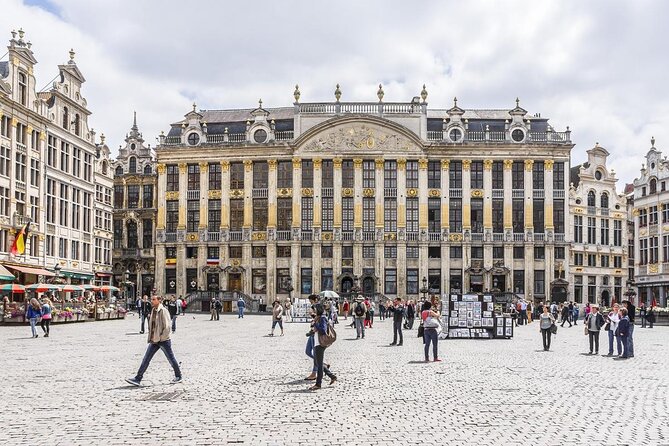
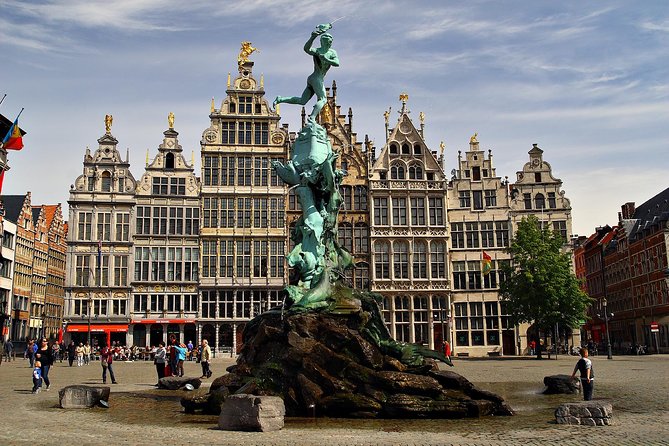
Your tour starts at the Grote Markt, the main square where Antwerp’s identity is loud and clear. This is where you get the fast orientation you want in a city like this: what to look for, what symbols mean, and how to connect the landmarks you’re about to see.
The guide’s focus here is also very human. You’re not just reading plaques; you’re hearing why Antwerp calls itself the city of giants and how that idea ties to the hand symbol you’ll spot around town. It’s the kind of explanation that makes later stops click, because the story stops being abstract.
If you like architecture and symbolism, this first stop is a good deal. Even though the time is short, it sets you up to notice things on your own afterward: decorative motifs, building relationships across the square, and the bigger timeline behind the streets.
If you want to take photos, do it early. The square is the easiest place to capture the big picture before you start moving into narrower streets and smaller sightlines.
Het Steen: Antwerp’s oldest stone and its legend links
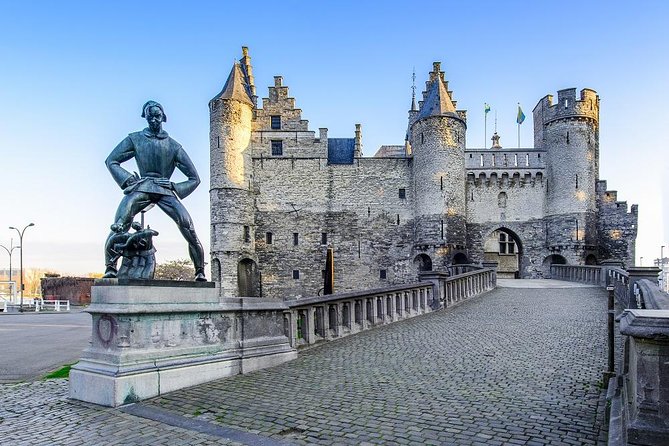
Next comes Het Steen, Antwerp’s old stone castle. The tour frames it as the city’s oldest building and uses it as a launching pad for the giant legend thread. If you’ve ever felt like Antwerp’s stories are scattered, this stop helps you gather the pieces.
What makes Het Steen useful on a short walk is that it’s both a landmark and a storytelling device. The guide talks through the building’s changing functions over time, which gives you a sense that these structures weren’t static backdrops. They were active parts of daily life, power, and trade.
Even if you’re not a museum person, you’ll probably appreciate the way this stop turns history into something physical. The walls look like history. The guide makes sure you know what kind of history you’re looking at.
A small practical note: if you’re sensitive to uneven surfaces, Het Steen is part of the old-center feel. Wear shoes that handle cobblestones and you’ll enjoy the pace much more.
Museum Vleeshuis (Butcher’s Hall): the short stop that hits hard
From Het Steen, you move to Museum Vleeshuis, often associated with the Butcher’s Hall. This is one of those stops that feels quick on paper but memorable in the moment because it goes straight to the guild-house angle.
The tour describes it as the oldest guild house of the city, and the story leans into how these places weren’t tidy and polite. The butcher guild history is described as long and often bloody, and that tone matters. It helps you understand how medieval Antwerp worked: trade organizations weren’t just economic players. They shaped law, identity, and even how people lived next to one another.
This stop is also valuable because it counters the “only famous painters and churches” version of Antwerp. You get the trade and the people behind the wealth story. It’s a smart balance, especially for a compact two-hour itinerary.
Carolus Borromeus Church: Baroque drama with Rubens connections
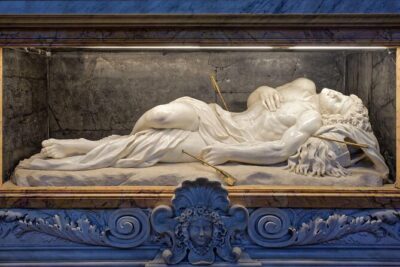
Then it’s on to Carolus Borromeus Church, described as a beautiful Baroque church that once connected to Rubens’s world. Even if you don’t plan to spend a long time inside, the guide uses the church to explain how Antwerp’s big art names were tied to places of worship and public life.
This is a great stop if you like when the guide makes you look at form, not just facts. Baroque architecture often rewards attention: contrast in shapes, theatrical feel, and details that are easier to spot when someone points out what to focus on.
There’s also a practical reason this church works well on a walking route. It gives you a change of pace from square-to-street wandering and resets your eyes before you reach the Rubens-area sights.
From the Meir shopping street to Vlaeykensgang: the city shrinks in scale
As the walk continues, you’ll pass key city textures: the area near the Farmers tower and the Meir shopping street. The guide uses these transitions to keep your mind oriented. You go from grand, open sightlines to narrower corridors and back again, which helps you build a mental map of Antwerp instead of just ticking off names.
Then comes Vlaeykensgang, described as the smallest street in Antwerp. This is where the tour turns deliberately old-school. The point isn’t just that it’s small; it’s that it feels like a time machine back to the Middle Ages.
I love this kind of stop on a short tour because it changes what you’re doing. One minute you’re looking across a big square, and the next you’re stepping into a scale that forces you to slow down. You start noticing details like doorways, angles, and how buildings relate when space is tight.
One thing to plan for: this is still a walking route on old streets. If you want the best experience, treat footwear as part of your plan, not an afterthought.
Rubens museum area and the art-adjacent storytelling
After the Vlaeykensgang pause, the tour steers toward the Rubens museum area. The guide frames it as the place where Antwerp’s most famous painter lived and worked his whole life. Even with a quick pass-by, it gives you a sense of Rubens not as a distant name, but as someone rooted in the city’s daily rhythm.
This section also ties back to earlier stops. You get a clearer sense of how Antwerp’s wealth era and its creative scene moved together. The guide’s job here is to connect threads, so by the time you’re near the museum area, you’re thinking in story lines instead of isolated monuments.
If you’re an art lover, you’ll likely appreciate the way this tour doesn’t demand museum-time. You get the context and the location cues so you can decide later whether you want to go deeper on your own.
Cathedral of Our Lady: legends in the big finish
The walk ends in the Cathedral area, with the Cathedral of Our Lady as the final major stop. The tour focuses on its history and legend stories from long ago. This works as a finale because the Cathedral is so visually commanding that it feels like a natural place to land your attention.
Even if you’ve seen grand churches elsewhere, Antwerp’s Cathedral has a different kind of gravity. On a short tour, you don’t have time for everything. Ending here helps you remember the tour’s big theme: Antwerp’s identity is built from symbols, legends, and the way people put meaning into stone.
The route description also notes that the tour ends near Handschoenmarkt, about 50 meters from the main square. That’s practical if you plan to grab a drink or continue sightseeing right after.
Plantin-Moretus: printing’s industrial beginning in a single pause
Near the later part of the walk, you’ll also pause in front of Museum Plantin-Moretus, tied to the idea that industrial printing was born there. The tour positions this as a turning point in Antwerp’s story, helping explain how the city’s influence wasn’t only artistic or architectural—it was also about communication and production.
This is a smart add-on for a two-hour tour because it broadens the usual “art and castles” focus. Printing connects to trade, ideas, and reach. Even as a quick stop, it gives you a more complete picture of why Antwerp mattered.
If you’re the type who likes to understand the city’s systems—how things got made and spread—you’ll probably like this angle a lot. It’s a different kind of wow moment than a church façade or a painter’s address.
Price and what you actually get for $105.82
At $105.82 per person for about two hours, this isn’t a budget stroll. But it is a private tour, with a guide, and the route is packed with major stops without the hassle of group logistics.
Here’s where the value comes from:
- Private group format: you get the chance to ask questions and set the pace, and that flexibility is something multiple people highlighted in their comments
- Guided story connections: symbols like the hand and giants aren’t always intuitive. A good guide turns them into something you can remember
- Time efficiency: you hit Grote Markt, Het Steen, guild-house territory, Rubens connections, and the Cathedral area in a single, organized walk
- Free admission noted for the stops: the stops listed are described as free to enter, which matters when a route includes multiple sites
If you’re traveling with one or two people, the private setup often feels like the sweet spot. If you’re a solo traveler, the price may feel steeper than a group tour, but the storytelling focus can still be worth it if you want a clear route and context without doing homework first.
For best value, go in with a small list of what you care about most—legends, art links, guild life, or the Cathedral—and your guide can steer emphasis in a way that helps your time feel well spent.
Getting there, tickets, and walking comfort
You’ll meet at the Grote Markt (2000 Antwerpen) and finish around Handschoenmarkt near the Cathedral area. It’s a central plan, close to main sightseeing zones, which makes it easier to combine with a meal afterward.
You’ll also use a mobile ticket, which keeps day-of friction low. The tour description notes it’s offered in English and includes a guide, with choice of departures. Optional hotel pickup is listed as included, which can be a big comfort upgrade if your hotel is within reach of a pickup option.
Finally, this is a walking route on old streets. One review specifically mentions being comfortable on cobblestones, so if you know your feet get cranky quickly, this is your heads-up. Pack for comfort, not style.
Should you book Legends of Antwerp?
I think it’s a strong choice if you want Antwerp’s story in a compact format. The tour’s focus on legends, symbols, and clear stop-to-stop connections is exactly what makes a private walking tour useful. You’re not wandering and guessing; you’re learning what to notice and how the city’s themes link together.
Book it if:
- you want a guided overview through major medieval and early modern anchors
- you like legend-driven sightseeing, not just museum checklists
- you prefer a private setup where the guide can adjust to your group’s pace
Skip or reconsider if:
- you need very deep coverage of specific communities like the Jewish community and want that handled explicitly (ask your guide up front)
- you dislike question-heavy guiding styles or want long independent breaks between stops
If your goal is to leave Antwerp with clear mental anchors—Grote Markt symbols, the old stone of Het Steen, the guild angle, Rubens links, and a Cathedral finale—this private walk is built for that.
FAQ
How long is the Legends of Antwerp private historical tour?
It’s approximately 2 hours.
Is this tour private or shared with other groups?
It’s a private tour/activity. Only your group participates.
What language is the tour offered in?
The tour is offered in English.
Where do we start and where does the tour end?
You start at Grote Markt, 2000 Antwerpen, Belgium. The tour ends at Handschoenmarkt, 2000 Antwerpen, Belgium, and it’s about 50 meters from the main square near the Cathedral area.
Are admissions included for the stops?
The stops listed in the route include free admission tickets.
Is hotel pickup available?
Optional hotel pickup is included for convenience.
Will I receive a mobile ticket?
Yes, the tour includes a mobile ticket.
What if my plans change and I need to cancel?
You can cancel for a full refund up to 24 hours in advance of the experience start time.