REVIEW · ST PETERSBURG FLORIDA
St. Petersburg: Jungle Prada Site History Tour
Book on GetYourGuide →Operated by Discover Florida Tours · Bookable on GetYourGuide
One small mound carries a big saga. The Jungle Prada Site History Tour gives you historian-led access to a private portion of the Tocobaga village grounds, including one of Florida’s best-preserved American Indian mounds. It’s the kind of place where you can look at the earth and still get the human story.
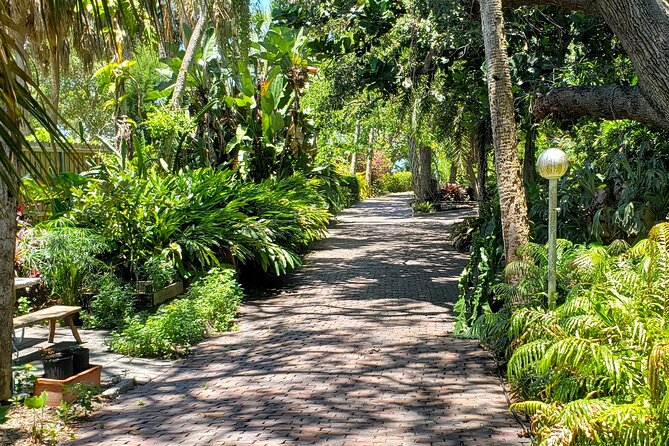
I love the pairing of living nature with the past. After the mound talk, you’ll spend time in a family-owned seaside garden, where wild peacocks make surprise cameo appearances, and the guide (David) connects what you’re seeing to local plants and animals.
One consideration: the tour ticket doesn’t include transportation, so you’ll want to plan your own drive. Good news: parking at the neighboring city park is free.
Key points I’d put on your short list
- Historian-led access to the private portion of the Jungle Prada Site (limited group size)
- Tocobaga roots for 600 years, with a mound considered among Florida’s best-preserved
- Narváez Expedition 1528 connection, commonly recognized as a landing place
- A long, human-scale story tied to Alvar Núñez Cabeza de Vaca’s eight-year trek
- Family-owned seaside garden with wild peacocks plus plants-and-animals commentary from David
- A small on-site museum with artifacts found at the site, included with admission
In This Review
- Jungle Prada Site: The setting is small, but the story moves fast
- Meet David: Why the historian guide changes the whole feel
- The Tocobaga mound for 600 years: what you’re really looking at
- The Narváez 1528 landing story and Cabeza de Vaca’s eight-year walk
- Inside the small museum: artifacts that make the mound make sense
- Seaside garden with wild peacocks: history isn’t stuck in a box
- Timing and what 75 to 90 minutes actually feels like
- Price and value: why $18 works better than it sounds
- Who should book this Jungle Prada tour?
- Should you book? My practical recommendation
- FAQ
- FAQ
- How long is the Jungle Prada Site History Tour?
- What does the tour cost?
- Do I need to register in advance?
- Where do I meet the guide?
- What’s included with the ticket?
- Is the tour wheelchair accessible, and can I bring pets?
Jungle Prada Site: The setting is small, but the story moves fast
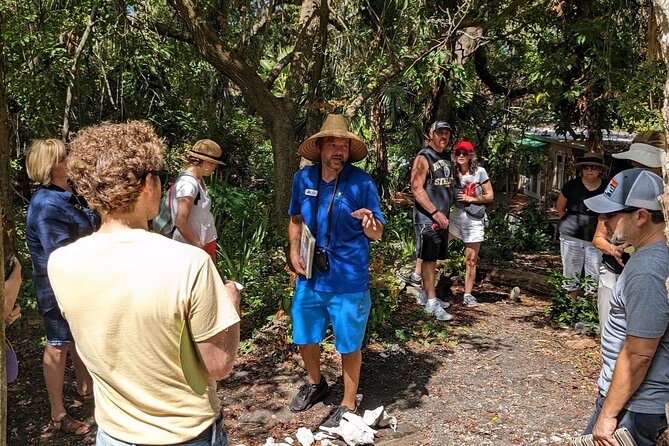
Jungle Prada in St. Petersburg is the sort of historical stop that makes you slow down. It’s not a huge museum complex where you shuffle between rooms for hours. Instead, you get a guided walk through a specific, preserved place, plus a small museum stop that gives you context without turning the tour into homework.
What makes it especially interesting is how the story layers together. You’re looking at an American Indian mound tied to a Tocobaga village that lasted for around 600 years. Then the guide connects that local setting to the 1528 Narváez expedition, a moment often recognized as the landing place associated with that journey. Even if you’ve read about explorers before, this tour gives you a Florida setting you can actually stand on.
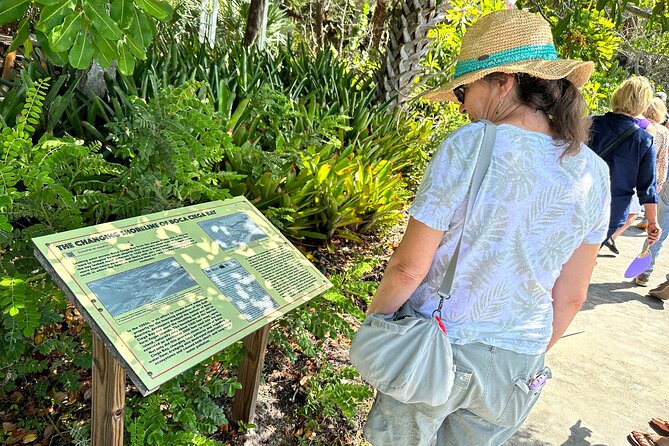
And yes, there are peacocks. Not the tame kind in a zoo exhibit. The info here says wild peacocks show up in the family-owned seaside garden, and that alone is enough to keep the group alert while the guide explains plants, animals, and how the land is used.
Meet David: Why the historian guide changes the whole feel
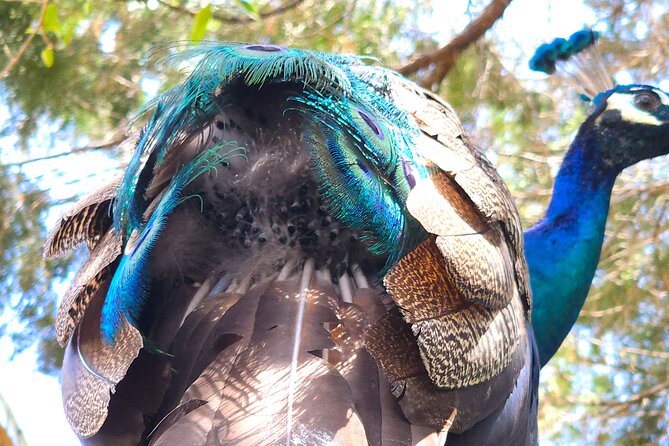
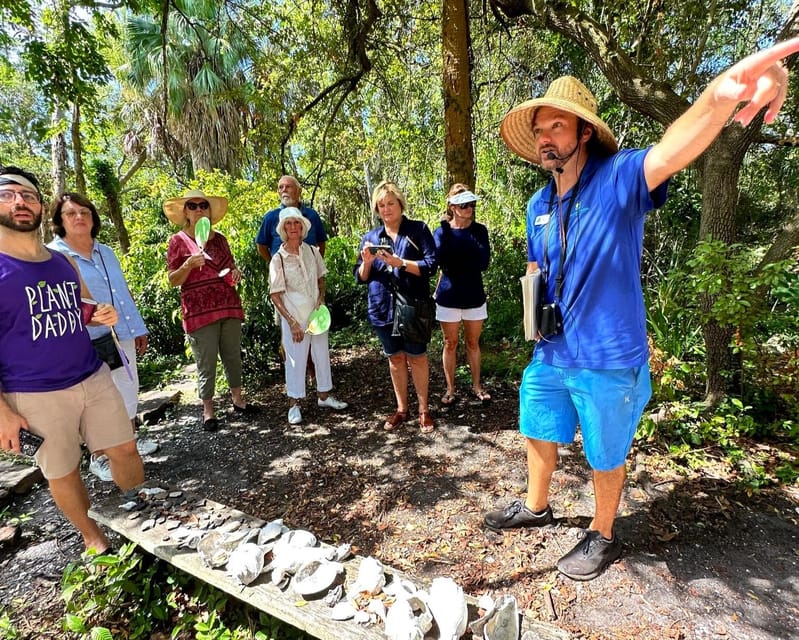
This tour is historian-led, and the guide’s role matters here. You’re not just touring a spot with plaques. You’re hearing a coherent explanation of what the mound is, what it likely meant in the community, and how later events are tied to the area.
The reviews I saw put a clear spotlight on the guide David. People praised him as passionate, very informative, and particularly good at connecting history to the natural world. One review even pointed out his ability to speak about plants and animals, not just dates.
That matters for your experience because it makes the past feel less like trivia. The story lands better when you’re also noticing what’s around you: the garden, the vegetation, and the way this site sits in a coastal region.
The Tocobaga mound for 600 years: what you’re really looking at
The heart of the tour is the private portion of the Jungle Prada Site, where you’ll explore a preserved mound linked to the Tocobaga. The site is generally recognized as having one of the best-preserved American Indian mounds in Florida, and that preservation is exactly why a guided visit is worth it.
Here’s what to pay attention to while you’re there:
- You’re seeing land that served as part of a long-lived village landscape.
- A mound isn’t just dirt. It’s physical evidence of community life—where people built, lived, gathered, and organized space over time.
- You’re in a managed, intentional portion of the site, not a random walking trail. That helps keep the explanation grounded.
If you like learning through observation, this is a good fit. You don’t need to be a specialist in archaeology to get something out of it. The guide does the translating. Your job is simply to look closely and ask questions if something feels confusing.
The Narváez 1528 landing story and Cabeza de Vaca’s eight-year walk
A big thread on this tour is the 1528 Narváez expedition connection. The tour information says Jungle Prada is often recognized as the landing place linked to that expedition, led by Pánfilo de Narváez.
That’s already a hook for history buffs. But the tour goes further by connecting those 1528 events to the survival story of the four survivors who, under Alvar Núñez Cabeza de Vaca, walked across North America over eight years—from Florida to the Pacific Ocean.
How to think about this as a visitor: you’re not getting a bare-bones timeline. You’re connecting a specific Florida place to a larger, grueling human journey. That makes the story feel more real. You start to see how “exploration history” wasn’t just movement on a map—it was survival, endurance, and long-term consequences for everyone involved.
It’s also where the tour’s historian-led format pays off. When you hear the narrative out loud, the setting stops being abstract.
Inside the small museum: artifacts that make the mound make sense
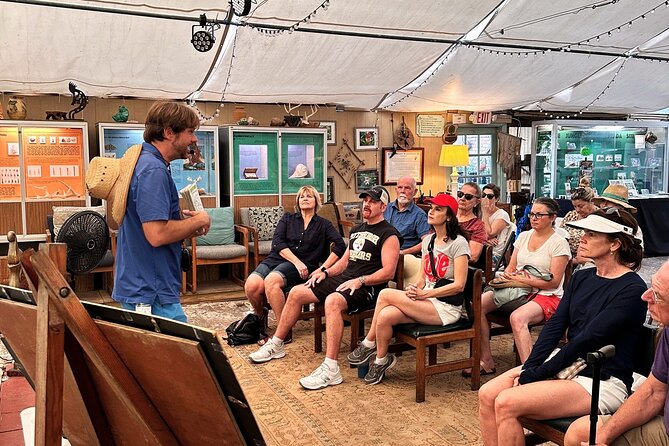
Admission includes entry to a small museum on-site, with archaeological artifacts found at the site. This part is short compared to major museum stops, but it plays a smart role: it gives you something to connect to what you just saw outside.
You’ll typically get the feeling of, Okay, I’m not just listening to a story about a mound. There’s material evidence tied to this specific place. Even if you don’t consider yourself an “artifact person,” this is where curiosity tends to click.
I like museum components like this during walking tours. You avoid the common problem of tours where everything stays verbal. Here, you get a tangible “proof of work,” and it reinforces the guide’s points about the American Indian presence before the later expedition narratives come in.
Seaside garden with wild peacocks: history isn’t stuck in a box
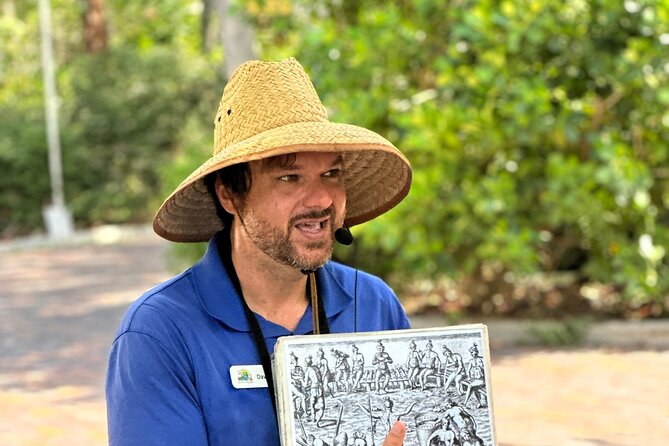
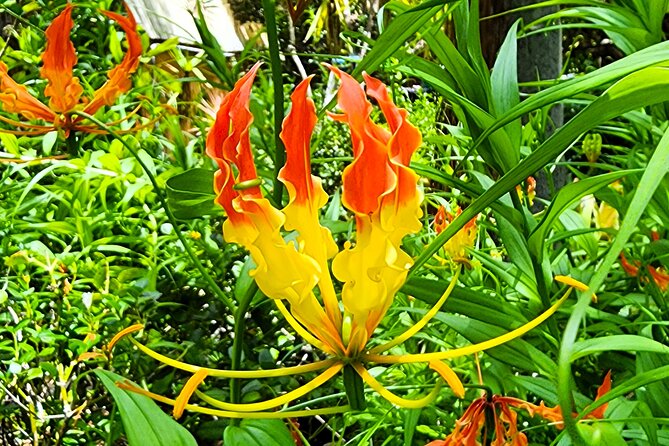
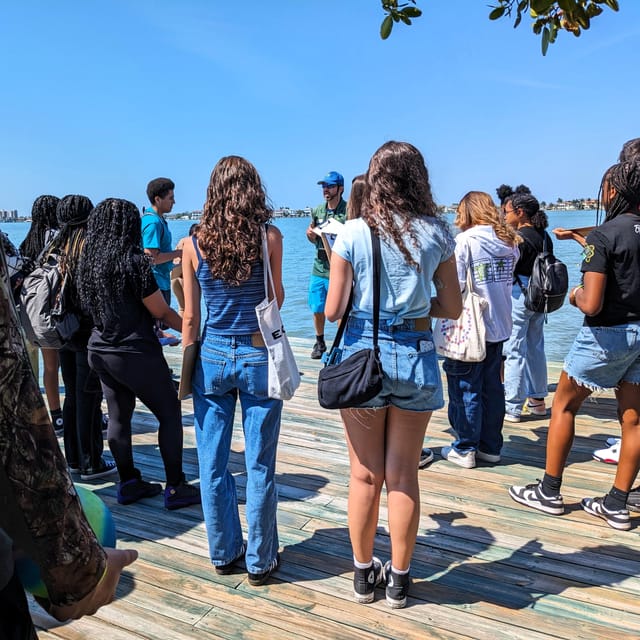
After the mound and the museum, the tour shifts to a different kind of attention: the coastal setting. The experience includes time in a family-owned seaside garden that’s also home to wild peacocks.
This section isn’t just for cute animals. Based on how the guide is described (especially the praise that David talks about plants and animals), this feels like an intentional part of the tour. You learn to notice local ecology as part of the story of place.
What I’d focus on during the garden portion:
- Watch for the peacocks, but don’t treat them like the only attraction. Use them as a prompt to look at the broader garden setting.
- Let the guide point out plants and animal life, because that’s how the “here” and “then” connect.
- If you’re the type who likes photo stops, this is where you’ll find natural moments without the awkwardness of rushing.
This is also where the tour feels most St. Petersburg. The region’s Gulf connection shows up through the way the guide frames the setting and mentions the beautiful gulf beaches as part of the local hidden history you’ll hear on tour.
Timing and what 75 to 90 minutes actually feels like
The history tour typically runs 75 to 90 minutes. That timing is a sweet spot. Long enough to explain the mound, the Narváez expedition connection, and the Cabeza de Vaca story, plus fit the museum stop. Short enough that it doesn’t drain your energy before the rest of your day.
I recommend showing up without a last-minute rush. The gate opens 30 minutes before each tour start time. The meeting area is clearly marked: look for yellow arrows pointing toward the entrance gate, and the gate has orange cones out front.
Also, bring comfortable shoes. You’re on your feet for most of the experience, and a small site still adds up when you’re walking, standing, and listening closely.
Price and value: why $18 works better than it sounds
At $18 per person, this doesn’t feel like a high-cost, big-venue tour. But it’s not just paying for access to a spot. You’re paying for three concrete things:
- Historian-led guided time in a private portion of a preserved site
- Included museum admission with artifacts found on-site
- A small convenience package that makes the experience easier, like the water bottle filling station and free parking at the neighboring city park
For value, think in terms of time with a good guide plus direct access to the site. Many paid history experiences either charge a lot for a large collection you can’t connect to context, or they keep the story too broad. Here, the duration is tight, and the content stays focused on this specific place.
If you enjoy learning while standing somewhere meaningful, the $18 price makes sense quickly.
Who should book this Jungle Prada tour?
Book it if you want:
- A historian-led experience focused on one specific site
- Tocobaga-era context in Florida, with a preserved mound you can physically see
- A Narváez 1528 connection and the Cabeza de Vaca eight-year survival story in a place-based way
- Nature-and-history storytelling, especially since David is praised for plants and animals
- A small museum stop with on-site artifacts, not just a walk and a photo
It may not be your best choice if you need transportation handled for you. The tour info is clear that transportation to or from the site isn’t included, so you’ll want to drive or arrange your own ride.
Should you book? My practical recommendation
Yes, I’d book this if you’re the kind of person who likes history you can look at—mounds, artifacts, and the coastal setting they connect to. The combination of a preserved Native site, a museum stop, and a guide like David (praised for depth and for talking about plants and animals) is a strong mix for the money.
Skip it only if your day requires hassle-free pickup and drop-off, or if you’re specifically searching for a large-scale museum experience with lots of independent exploring time. This tour is designed to be guided, focused, and on the move.
FAQ
FAQ
How long is the Jungle Prada Site History Tour?
The tour lasts about 90 minutes, and it may run between 75 and 90 minutes.
What does the tour cost?
Admission is $18 per person.
Do I need to register in advance?
Yes. Advance registration is required, and group size is limited.
Where do I meet the guide?
Look for yellow arrows pointing toward the entrance gate. The gate has orange cones in front.
What’s included with the ticket?
Your admission includes a historian-led guided tour of the American Indian mound, entrance to a small museum with archaeological artifacts found on-site, a water bottle filling station, and free parking at the neighboring city park.
Is the tour wheelchair accessible, and can I bring pets?
The tour is wheelchair accessible. Pets are not allowed.