REVIEW · RIGA
Riga Jewish History Tour
Book on Viator →Operated by Armands Latvia Guide · Bookable on Viator
Riga’s Jewish story hits fast. This private tour pairs Art Nouveau architecture with Holocaust memorial stops, and I like that you can ask Armands Latvia Guide anything as you go. The pacing gives you room to look, absorb, and ask follow-ups, not just get rushed from one plaque to the next. One thing to consider: this is a somber route, so bring a little emotional stamina along with your camera.
At a price of $96.33 per person for roughly 3 to 4 hours, you’re paying for a real guided walk-plus-drive, not just a list of sights. You’ll also get the practical perks: English, pickup offered, and a mobile ticket. Still, plan for required on-site donations (the synagogue and a museum donation), even though the main stops have free admission tickets.
The tour starts at 9:00 am, and pickup happens outside your hotel or apartment since the car can’t park inside Old Riga. If you’re wearing a hat or head covering, a kipa may not be needed, but the guide can provide one if your head isn’t covered. Dress code is flexible, and anything reasonable works.
In This Review
- Key highlights you should care about
- A 3–4 Hour Private Route Through Riga’s Jewish Story
- Art Nouveau Riga: Mikhail Eisenstein and Isaiah Berlin in One Walk
- Latgale Suburb: How the Ghetto’s Shape Still Shows
- Great Choral Synagogue Memorial: The Basement Fire Remembered
- Rumbula Forest Memorial: November–December 1941 at Full Scale
- Riga Ghetto and Latvian Holocaust Museum: Turning Sights Into Meaning
- Riga Synagogue on Peitavas Street: Art Nouveau Style With Ancient Egyptian Motifs
- Price and What You’re Really Paying For
- Tips That Make the Day Easier (and More Respectful)
- Who Should Book This Tour (and Who Might Not)
- Should You Book Riga’s Jewish History Tour?
- FAQ
- How long is the Riga Jewish History Tour?
- What’s included in the price?
- Are admission tickets required at the stops?
- Is pickup available?
- Is the tour private and in English?
- What should I wear or bring?
Key highlights you should care about
- Private, question-first guidance with Armands and a group limited to your party
- Art Nouveau with Jewish context, including Mikhail Eisenstein and a birth link to philosopher Isaiah Berlin
- Real memorial locations that explain events at Great Choral Synagogue and Rumbula Forest
- Free admission stops, with the important exception of on-site donations
- A synagogue visit that looks at design, not only tragedy
A 3–4 Hour Private Route Through Riga’s Jewish Story
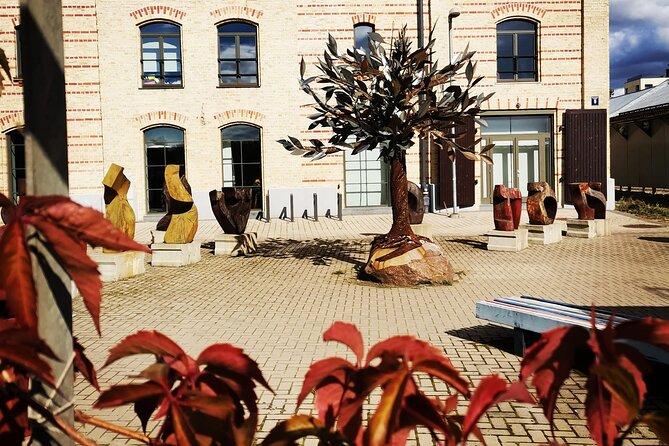
This is a classic “see it, then understand it” tour. You get a tight route that blends architecture, neighborhood geography, and Holocaust remembrance, so the city starts to make sense instead of feeling like a postcard blur.
Because it’s private, your pace stays in your hands. The guide can slow down when you want photos, stop when you have questions, and adjust timing if you want a little exploration on your own. That flexibility matters on a route like this, where some people want one extra minute of quiet.
You’re also not stuck doing everything on foot. The tour includes private transportation, which is a win in Riga when you’re balancing history with comfort and time. Just keep in mind the meeting rhythm: 9:00 am, and pickup is outside your hotel or apartment because parking in Old Riga isn’t allowed.
You can also read our reviews of more tours and experiences in Riga.
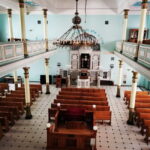
Art Nouveau Riga: Mikhail Eisenstein and Isaiah Berlin in One Walk
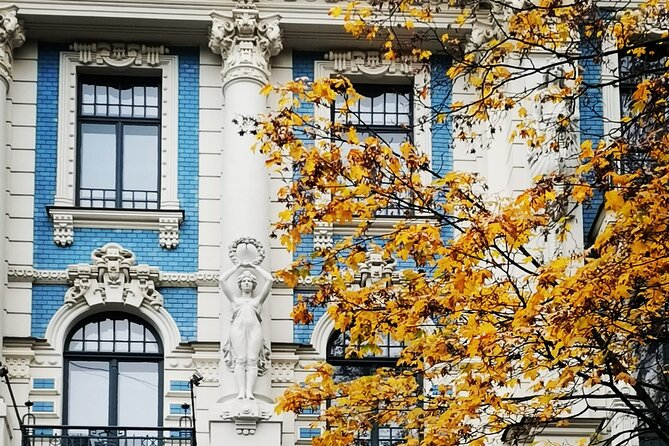
The first stop is where Riga surprises people who only expect medieval bricks. This area is famous for Art Nouveau, and here that style comes with a specific Jewish connection.
You’ll visit buildings associated with Jewish architect Mikhail Eisenstein. The guide also points out that philosopher Isaiah Berlin was born in one of the buildings in this zone. That little fact changes how you look at the façades: you stop seeing decorative flourishes and start noticing how people’s lives and identities were literally built into the city.
The main drawback? This part is lighter in tone than the memorial stops later. If you prefer a route that moves from tragedy to remembrance without a break, you may find yourself emotionally catching your breath here—then needing it again later. On the plus side, having art and ideas at the start helps you ground the story before the heavy parts begin.
Admission at this stop is free, and the time is short—about 30 minutes—so you’ll want your photo-ready settings set early.
Latgale Suburb: How the Ghetto’s Shape Still Shows
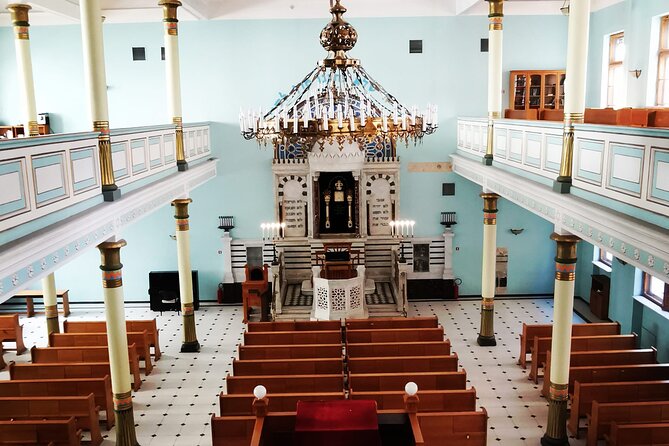
Next comes a neighborhood stop that feels different from “museum history.” The Latgale suburb area is described as former territory of the Riga Jewish ghetto, and the tour highlights how many buildings retain the look from around 80 years ago during World War II.
This is the stop that helps you understand what “ghetto” meant in everyday space. You’re not only learning events; you’re reading the built environment: where people lived, how streets framed movement, and how destruction and survival can leave fingerprints in architecture.
The main practical consideration is that this stop is about 30 minutes, so it’s not for long, slow sightseeing. If you want to linger, you’ll probably have to do it carefully during the time you have or ask the guide for a little extra when you’re nearby.
Admission is free here too, so your time is the main “ticket.”
Great Choral Synagogue Memorial: The Basement Fire Remembered
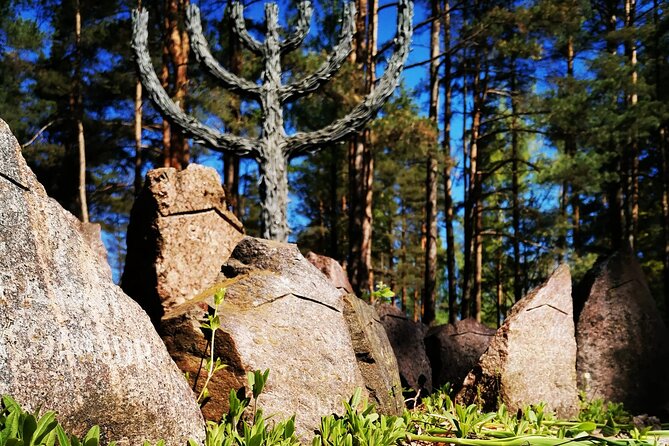
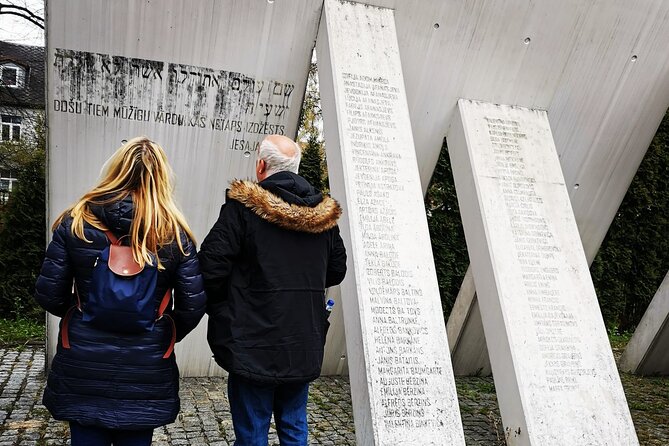
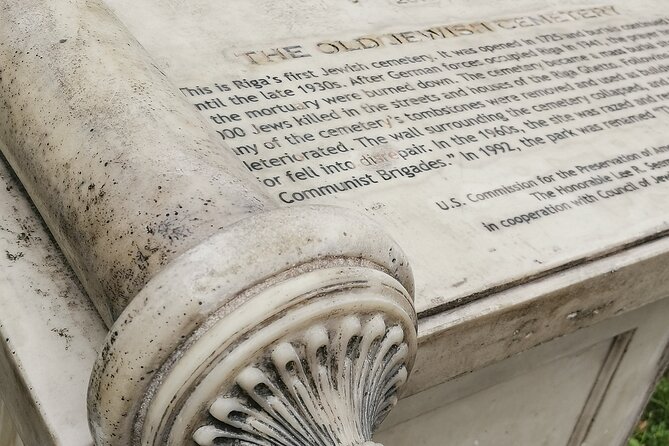
The Great Choral Synagogue Memorial is one of those places where the guide’s words need to land gently. On July 4, 1941, more than 300 Jewish refugees from Lithuania and local Latvian Jews were herded into the basement of the synagogue, and the building was intentionally burned to the ground. Today, there’s a memorial place there, and the tour gives context so you understand what happened and why the site matters.
This is a fast stop—about 15 minutes—but it’s emotionally heavy. Because the time is limited, your questions become your best tool for making sense of it. If you’ve ever wondered how something like this could happen so quickly and in such a confined place, this stop is where the tour’s explanation gives you a clearer picture.
The upside is that the guide’s approach is described as tactful and respectful. The potential drawback is also simple: if you’re not ready for intense history on day one, you may feel rushed by how much is packed into 15 minutes. In that case, ask for a slower pace right before you arrive.
Rumbula Forest Memorial: November–December 1941 at Full Scale
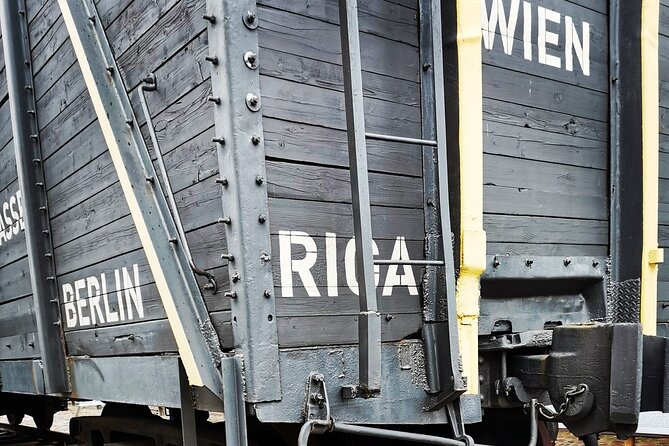
Then you move to Rumbula Forest, where the story becomes numbers you can’t easily forget. In November 1941, the Nazi plan was to completely exterminate Jewish prisoners from the Riga ghetto. During the events on November 30 and December 8, 1941, more than 25,000 people were killed in the Rumbula forest, including about 1,000 Jews deported from Germany. A memorial opened on November 29, 2002.
This stop is about 1 hour, which is a key advantage. You need that time to look, process, and connect the explanation to the ground in front of you. A lot of memorial sites can feel abstract if you only see them from the “tour-bus window.” Here, the extra time gives you space to take it in without turning the moment into a checklist.
It’s also the kind of stop where your body language matters. If you prefer silence, you’ll likely do best by letting the guide speak, taking a slow walk, and not trying to rush your own reaction. If you’re someone who processes by asking questions, bring those questions—this is where the tour format supports it.
Admission is free, which is helpful, but remember the value here isn’t about a ticket price. It’s about time and context.
Riga Ghetto and Latvian Holocaust Museum: Turning Sights Into Meaning
Next is the Riga Ghetto and Latvian Holocaust Museum stop, and it acts like the “why” behind what you just saw. The museum is presented as a window into the Riga ghetto story, the Holocaust in Latvia, and Jewish life in Latvia before the Holocaust.
This kind of museum stop is useful because memorial sites can show you where something happened, while museums help you understand the wider system around it. You’ll get a sense of the shift from community life to persecution, and that makes the earlier architecture stops feel less like random facts and more like a connected story.
The time here is about 30 minutes and admission is free. That means you won’t be able to read everything in the building, so I’d treat this as an orientation stop. Focus on what you didn’t fully grasp at the outdoor memorials.
If you like having something tangible at the end, you might consider picking up a book or materials on-site—one of the practical takeaways from the experience is that it can lead naturally to continued reading.
Riga Synagogue on Peitavas Street: Art Nouveau Style With Ancient Egyptian Motifs
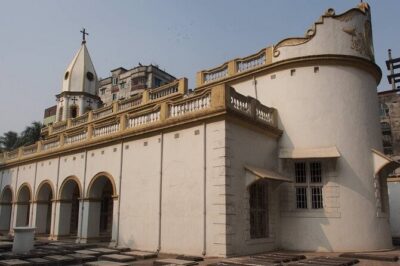
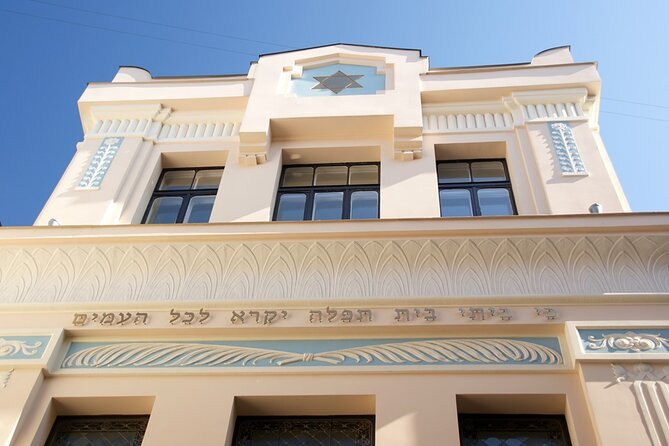
The final stop brings you back to architecture, but this time with a different emotional texture. The Riga synagogue on Peitavas Street is presented as one of Riga’s Art Nouveau jewels and a significant cultural monument.
The guide explains that the synagogue was built between 1903 and 1905 and designed in Art Nouveau style with Ancient Egyptian motifs. That design detail is worth your attention because it shows how communities expressed identity through art and style—not only through surviving tragedy.
You’ll have about 45 minutes here, which is enough time to slow down for photos and to absorb the meaning behind the design. Just note the practical part: a donation for the synagogue is required to give on site.
If you’re planning to photograph, do it thoughtfully. This is both a memorial-adjacent story and a functioning cultural space, so keep your tone respectful and your camera use appropriate.
Price and What You’re Really Paying For
At $96.33 per person, this tour sits in a reasonable range for a private, English-guided experience with transportation. The key value is that you’re not paying for individual admissions—most stops list free admission tickets—you’re paying for a guide to connect the dots: architecture, ghetto geography, and Holocaust remembrance.
What you should budget for:
- A required synagogue donation on site
- A museum donation of €5.00 per person for the Riga Ghetto and Latvian Holocaust Museum
Even though those parts aren’t priced like a standard “ticket,” they matter for your total cost and for supporting the sites.
There’s also an efficiency angle. Pickup is offered, and the car can’t park inside Old Riga, so the logistics are handled for you. That saves you time from figuring out transit while also keeping you from walking too much on a schedule that includes emotionally intense stops.
If you’re traveling as a small group, private tours tend to be the best value per person because fixed costs (vehicle, guide time) get spread out. If you’re traveling solo, it can still be a strong deal if you want the question-friendly format rather than a crowded group experience.
Tips That Make the Day Easier (and More Respectful)
This tour runs close to the edge emotionally, so small planning choices pay off.
For your comfort and respect:
- Wear whatever you feel comfortable in for walking and standing—dress code is flexible as long as you’re not inappropriately dressed.
- Bring a light layer if the weather is cool; you’ll be outside for parts of the route.
- If you need head covering, the guide can provide a kipa if your head isn’t covered by a cap, hat, scarf, or similar.
For your learning:
- Bring questions. This is structured as a private format where you can ask as many as you want.
- If the guide doesn’t know a specific answer, it helps to hear that plainly rather than have everything smoothed over. The experience is described as thoughtful in how questions are handled.
For timing:
- Because start time is 9:00 am, you’ll want to be ready to go early. That also helps you beat the busiest parts of the day.
And one practical religious note: if you book on a Saturday, some things may be closed for Shabbat. In that case, the guide can be flexible and take you to another place of interest instead of leaving you stuck.
Who Should Book This Tour (and Who Might Not)
I think this is a great fit if you want:
- A private Jewish history route that connects city design to real events
- Memorial stops with context, not just dates
- Time to ask questions and control your pace
It may be less ideal if:
- You’re looking for a light, casual sightseeing day with minimal emotional weight
- You want lots of free time to wander far beyond the route, since each stop has a set time window
That said, the tour format isn’t rigid. People describe it as not rushing, and that matters on a topic that benefits from a slower mind.
Should You Book Riga’s Jewish History Tour?
Book it if you want Riga to make sense—politically, culturally, and emotionally. The combination of Art Nouveau architecture (with names like Mikhail Eisenstein and Isaiah Berlin) plus the memorial locations gives you a story you can actually carry with you after you leave.
Don’t book it if you’re avoiding Holocaust-related sites or you know you’ll struggle with long periods of remembrance. In that case, you might consider a lighter architecture-focused Riga tour first, then add history later when you’re ready.
If you do book, do it with the right mindset: respectful attention, a couple of questions prepared, and a small budget for the required synagogue donation and the €5 museum donation. You’ll get a guided route that feels exact in its focus—and human in how it handles difficult ground.
FAQ
How long is the Riga Jewish History Tour?
It runs about 3 to 4 hours in total, with individual stops ranging from around 15 minutes to about 1 hour.
What’s included in the price?
The tour includes private transportation and guide services. Most stops have free admission tickets, but donations are not included.
Are admission tickets required at the stops?
Admission tickets are listed as free for each stop, but you should plan for required on-site donations for the synagogue and a museum donation of €5.00 per person.
Is pickup available?
Yes. Pickup is offered, but you should wait outside your hotel or apartment because the car isn’t allowed to park in Old Riga.
Is the tour private and in English?
Yes. It’s a private tour/activity, so only your group participates, and it’s offered in English.
What should I wear or bring?
There’s no strict dress code stated—any is fine as long as you’re not inappropriately dressed. A kipa will be provided if your head isn’t covered by a hat, cap, scarf, or similar.