REVIEW · TARRAGONA
Tarragona: Roman Heritage Guided Walking Tour
Book on GetYourGuide →Operated by ITINERE, Turisme & Cultura · Bookable on GetYourGuide
Roman Tarragona hits you fast. In just two hours, you’ll walk key sites and get the story behind them, from the Roman walls to the sea-side amphitheater. I especially liked the way an official city guide gives clear context as you move, instead of dumping dates on you.
My other favorite part was the mix of outdoor sights with “show, don’t just tell” moments: a 3D city model and an audiovisual exhibit that make the vanished city feel readable. The one catch is simple: it’s a lot packed into a short window, so the tour can feel quick if you stop often to look around.
In This Review
- Key Things I Think You’ll Care About
- Roman Walls That Are the Oldest Outside Italy
- Historic Center: Romans Under Today’s Streets
- Circus Vaults: Getting Chariot-Race Energy In Real Space
- Audiovisual Exhibit and the 3D Images Moment
- The Amphitheater by the Sea: Gladiators and Beast Hunting
- Guide Style, Pacing, and What to Watch For
- Price and Value: Why $17 Makes Sense for Two Hours
- Practical Tips for a Smooth Walk in Tarragona
- Should You Book This Tarragona Roman Walking Tour?
- FAQ
- How long is the Tarragona Roman Heritage Guided Walking Tour?
- Where do I meet the tour?
- What does the tour include?
- Which languages are the guided tours offered in?
- Is the tour wheelchair accessible?
- What should I bring?
- Is luggage allowed?
- Can I cancel for a refund?
- Can I reserve now and pay later?
Key Things I Think You’ll Care About
- Old Roman walls outside Italy: These are the oldest Roman walls outside the country, and they set the stage right away.
- Romans under modern streets: You’ll see how today’s houses, squares, and lanes sit on top of Roman design.
- Circus vaults stop: The entrance to the Circus helps you connect chariot-race hype to something you can actually stand inside.
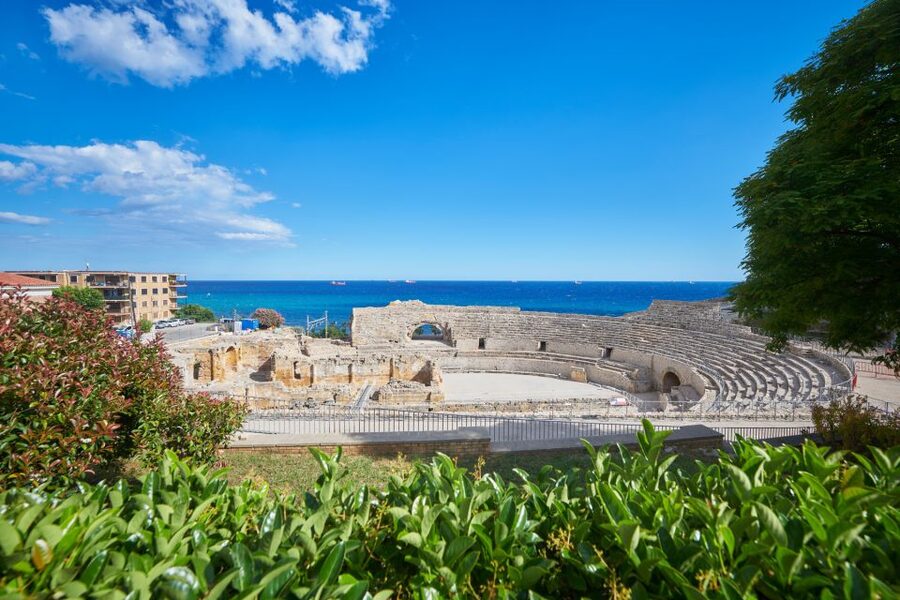
- Amphitheater by the sea: Views add atmosphere while you learn about gladiators and beast hunting.
- Guides can make or break pacing: One guide like Adrià gets major praise for clear explanations and an especially good video.
Roman Walls That Are the Oldest Outside Italy
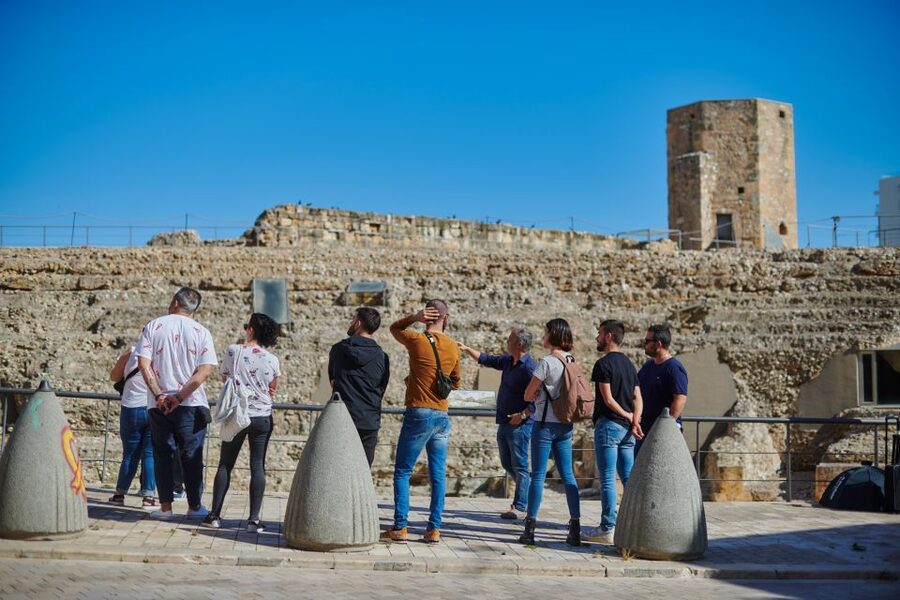
You start next to the Roman walls at the Itinere office, and that location matters. These walls aren’t just a photo spot. They’re your first clue to how the Romans thought about power, movement, and control along the Mediterranean.
The guide will explain the Roman choice of this hill by the sea as a gateway to Rome for the whole peninsula. That framing is useful because Tarragona’s Roman sites can otherwise feel like a scattered set of ruins. Here, they connect like pieces of the same plan: the walls defend the city, and the city’s position helps it function as a hub on the route that mattered.
I also like that the tour begins with the big visual element. Once you’re standing by the walls, you can look up and around and start mapping the rest in your head. Even if you’re not a hardcore Roman-history person, it’s an easy mental “hook” that keeps the walk from becoming a lecture.
Historic Center: Romans Under Today’s Streets
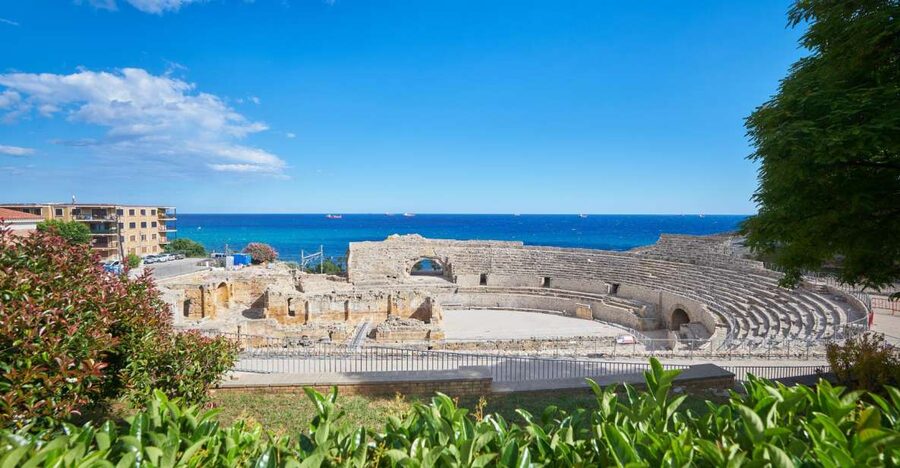
From the walls, you head into the historic center where Roman monuments are interwoven with everyday life—houses, streets, and squares. This is one of the best parts of Tarragona for anyone who likes their sightseeing grounded in the real present, not parked behind barriers.
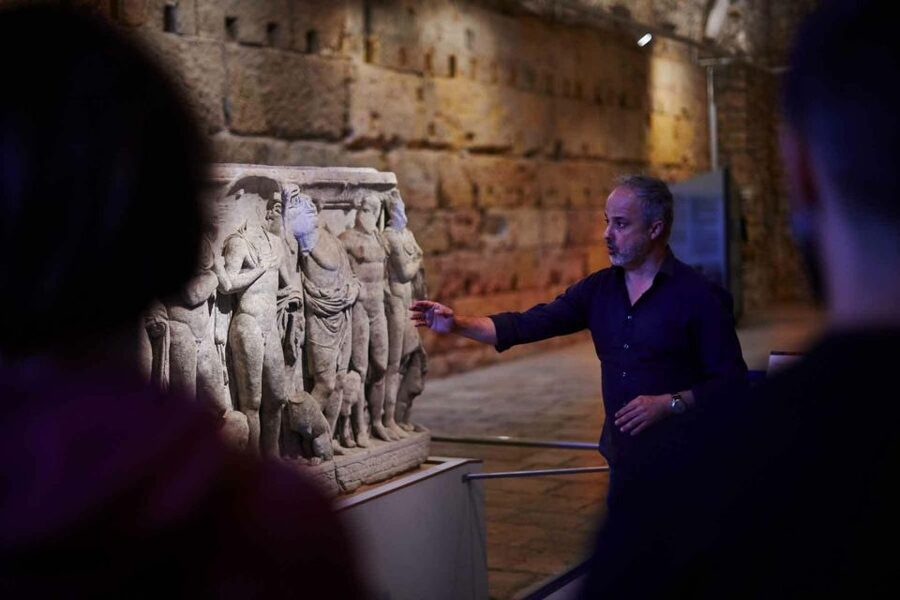
At several stops, the guide uses a large city model to explain how Tarragona used to look and what different buildings were for. I found this approach practical. When you’re dealing with stone fragments and partial remains, a model gives you a structure your eyes can follow. You start understanding not only what survived, but what the city was likely doing in its day.
You’ll also hear how the guide ties architecture to function. That’s a big deal on a short tour: it keeps you from memorizing names without context. Instead, you’re learning why a space existed—who used it, what it supported, and how it fit into Roman urban life.
One small note for your expectations: the route stays in the “important sights” category, so you’ll be moving fairly steadily. If you like to linger at every corner, you may wish you had extra time.
Circus Vaults: Getting Chariot-Race Energy In Real Space
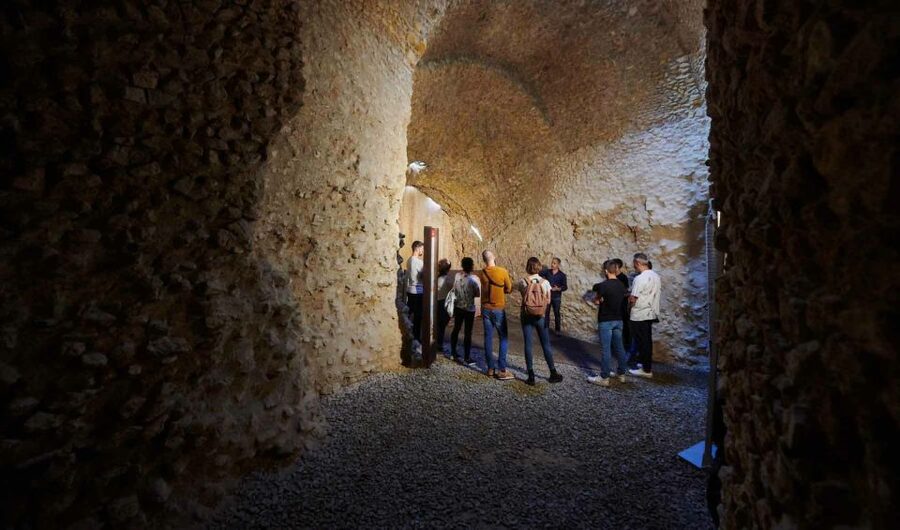
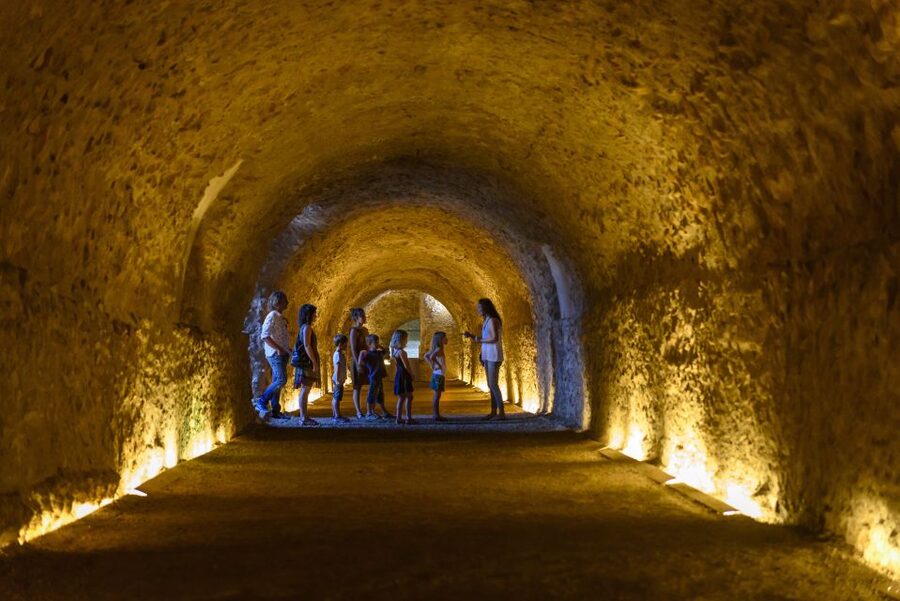
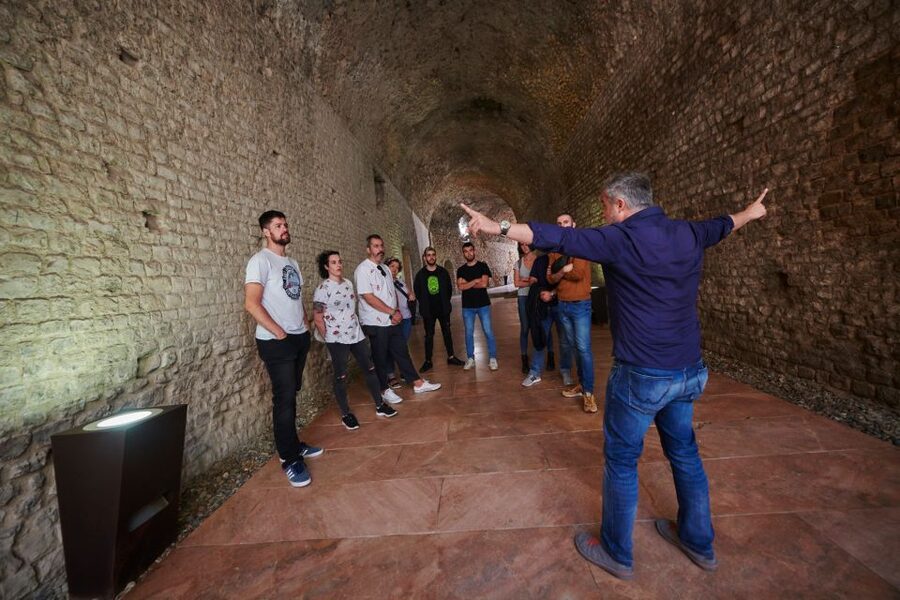
The tour includes entrance to the Circus, and the Circus vaults are where that inclusion pays off. Tarragona’s Circus is not just a concept. Visiting the vaults helps you picture the speed and spectacle implied by chariot racing.
Even if you’ve never cared about ancient sports before, the Circus stop is a smart pacing tool. It shifts from walls and city layout to performance-space. And since you’re physically inside part of the structure, the “what you’re seeing” clicks faster than it would through photos alone.
Also, this is a good stop for contrast. Later, you’ll stand at an amphitheater facing the sea, learning about gladiators and beast hunting. The Circus gets you into the idea of public entertainment in Roman cities. Then the amphitheater deepens it into a different kind of spectacle.
Audiovisual Exhibit and the 3D Images Moment
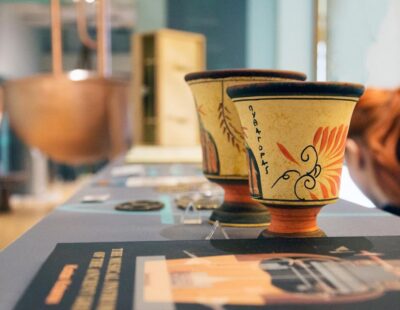
After you’ve learned the city story through the walls and the historic center, you pause for an audiovisual exhibit with 3D images. This is one of those steps that sounds optional until you’re there—and then it makes the outdoor stops easier to grasp.
The 3D component matters because Roman remains can be confusing at street level. You might be staring at shapes that feel disconnected. The exhibit helps you build a “before” picture in your mind so the ruins don’t stay generic.
A review I saw singled out the video as a standout, and I get why. If a guide explains things fast (and many do on a two-hour schedule), a strong visual moment can slow your brain down in the best way.
If you’re the type who learns best by seeing, not just hearing, this is the part to pay attention to. It’s also a nice reset if you arrived tired from walking around Tarragona before the tour.
The Amphitheater by the Sea: Gladiators and Beast Hunting
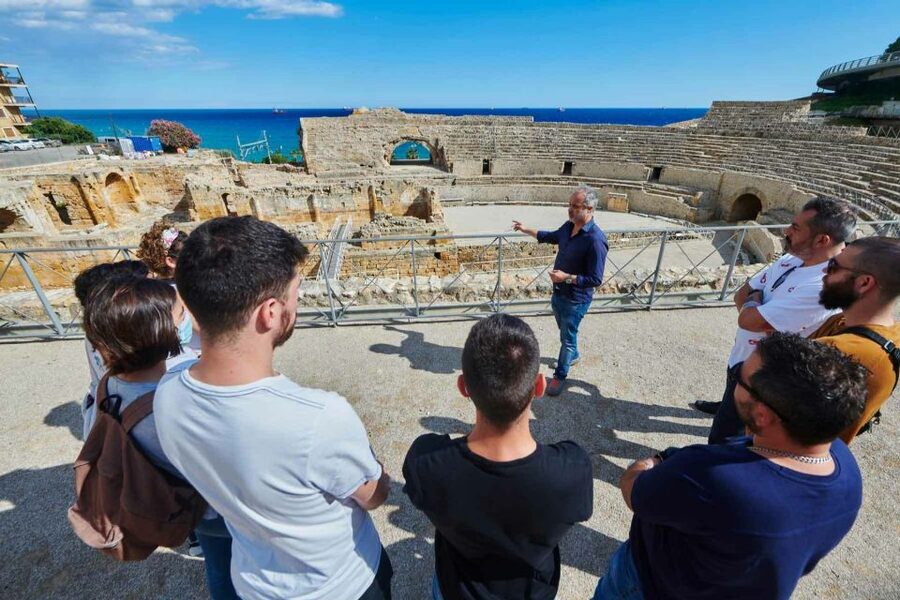
The tour’s finale is the amphitheater, located by the sea. The location gives you more than a backdrop. It changes how the place feels, because you’re seeing a performance venue in the environment where it once played its role.
The guide explains what took place here: gladiator fights and beast hunting. That’s the kind of content that can sound dark or distant until you’re standing in the physical space. Here, you can start to imagine the sound, the crowd pressure, and the drama of people gathering for entertainment.
What I like most is that you learn about the amphitheater’s stadium history to this day, not only what happened in ancient times. That helps Tarragona feel alive rather than frozen in the past. You’re not just studying Romans; you’re seeing a structure that still shapes the way the site is experienced.
And yes, the views are part of the value. If you time your photos right, the sea and amphitheater relationship makes the stop feel memorable even beyond the historical explanations.
Guide Style, Pacing, and What to Watch For
On tours like this, the guide matters. I saw praise for Adrià specifically—people mentioned that his explanations were easy to follow and that he clearly loves Tarragona. That kind of enthusiasm has a practical side: it usually means the tour flows better, and the facts land more cleanly.
Still, there are realistic considerations. One review flagged that the tour felt complete but tight on time, and another pointed out that when the group is large and noisy, it can be harder for the guide to stay perfectly on a single thread. In other words: this is a popular format and you may feel some rush.
So here’s how I’d handle it as a smart visitor:
- Go in expecting a brisk pace and accept that you’ll get highlights, not every detail.
- If you’re sensitive to noise and big-group energy, consider choosing a starting time that looks less crowded.
Also, weather happens. One review mentioned intense rain and said the experience stayed correct. You should still bring comfortable shoes and plan for the walk outdoors, because Tarragona can throw real weather at you.
Price and Value: Why $17 Makes Sense for Two Hours
At about $17 per person for a two-hour guided walk, this tour is priced in the “high value” zone. Here’s why: you’re not just getting a stroll with basic commentary. You’re also getting:
- A live city guide (languages: Catalan and Spanish)
- Entrance to the Circus
- A structured route that includes Roman walls, the historic center, and the amphitheater
- A model and audiovisual exhibit with 3D images
Value isn’t only about cost—it’s about what you walk away with. You end up understanding Tarragona’s Roman layout and entertainment spaces, and you can connect them in your head. That’s exactly the kind of learning that turns ruins into a story.
If you’re doing Tarragona for a short stop or you want the quickest way to get the Roman “why,” this price point is friendly. If you’re already very deep into Roman archaeology and want a slower, more academic dive, you might prefer a longer format—but for most people, this hits the sweet spot.
Practical Tips for a Smooth Walk in Tarragona
A few practical notes will keep this tour stress-free:
Bring:
- Comfortable shoes. You’ll be walking across the historic center and moving between outdoor points.
Don’t bring:
- Luggage or large bags. The tour is meant to stay light and moving.
Meet-up:
- Arrive about 10 minutes early at the Itinere office next to the Roman walls. Early arrival helps you find the group before you start.
Time expectations:
- Plan for two hours total. It’s long enough to cover major stops, but short enough that you’ll want to keep your questions focused.
Language:
- The live guide operates in Catalan and Spanish. If you speak either comfortably, you’ll get the best experience.
Mobility:
- The tour is wheelchair accessible, so if you need that, you’re covered.
Should You Book This Tarragona Roman Walking Tour?
Yes—book it if you want a focused introduction to Tarragona’s Roman heritage without spending all day. It’s a strong choice for first-timers because the route builds logically: walls → city center and model → Circus vaults → amphitheater by the sea. You’ll leave with a clearer sense of how the Roman city worked and where entertainment fit into daily life.
Skip or consider alternatives if you hate tight schedules or you’re the type who needs long quiet time at each viewpoint. This tour is efficient, and efficiency can feel rushed if you’re not in that mode.
If you go in expecting highlights packed into two hours, you’ll likely walk away feeling like the stones made sense—not just that you saw them.
FAQ
How long is the Tarragona Roman Heritage Guided Walking Tour?
It lasts 2 hours.
Where do I meet the tour?
Meet at the Itinere office, located next to the Roman walls. Arrive about 10 minutes early.
What does the tour include?
It includes a guided tour of Tarragona and entrance to the Circus.
Which languages are the guided tours offered in?
The live guide speaks Catalan and Spanish.
Is the tour wheelchair accessible?
Yes, the tour is wheelchair accessible.
What should I bring?
Wear comfortable shoes.
Is luggage allowed?
No. Luggage or large bags are not allowed.
Can I cancel for a refund?
Yes. You can cancel up to 24 hours in advance for a full refund.
Can I reserve now and pay later?
Yes. You can reserve your spot and pay nothing today.