REVIEW · GRANADA
Water paths. Private adventure and history tour
Book on Viator →Operated by Andalucía 360 · Bookable on Viator
Water runs through Granada, and this tour follows it. You walk the city’s historic water routes—from the Cuesta de los Chinos and the edge of the Alhambra to green, healing springs tucked near the forest.
Two things I like a lot: you’re not stuck in one viewpoint; you move along public fountains, springs, and ditches that help you understand how Granada functioned. And the guides bring serious energy and real craft—people have specifically praised Jose for history, and Mikael for smooth pacing and making sure everything runs perfectly. One consideration: the route has slopes and uneven ground, so it needs moderate fitness, and it isn’t a fit for reduced mobility or sensory impairments.
In This Review
- Key things you’ll notice on the walk
- Granada’s Water Story Starts at the Fuente del Paseo de los Tristes
- Cuesta de los Chinos and the Small Artificial River Legends
- The Alhambra Edge: Water Supply Without the Crowds
- La Silla del Moro: Views Plus Medieval Water-Space Planning
- Cerro del Sol: The Forest-and-Ditch Adventure Part
- Fuente del Avellano: Myth, Healing Water, and Fresh Shade
- How the Tour Runs: timing, pace, and guide style
- Price and Value: what $109.90 buys you in Granada
- Comfort Tips That Actually Matter
- Who Should Book This (and who should skip it)
- Book It or Skip It?
- FAQ
- How long is the water paths private adventure and history tour?
- What time does the tour start, and where do I meet?
- How much does it cost?
- Is this tour private?
- What kind of fitness level do I need?
- Is the tour refundable if weather is bad?
Key things you’ll notice on the walk
- Granada’s water story, told by the places themselves, including fountains, springs, and channels
- A border walk at the eastern edge of the Alhambra, focused on water supply and use
- Top-of-the-hill viewpoints at La Silla del Moro, plus medieval space planning (without entering ruins)
- Cerro del Sol’s forest-and-ditch maze, a bridge between countryside and city
- Fuente del Avellano and the Romayla ditch, tying myth, shade, and practical irrigation together
Granada’s Water Story Starts at the Fuente del Paseo de los Tristes
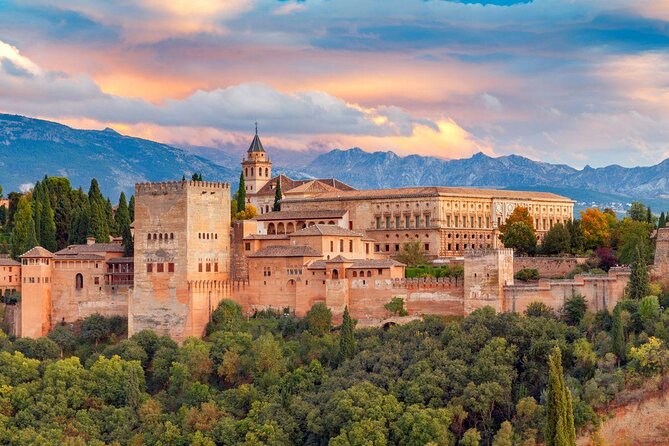
This tour is built around a simple idea: if you want to understand a city, follow what it depends on. In Granada, that’s water. You start in the Albaicín area at Fuente del Paseo de los Tristes, and the timing is practical: a 6:00 pm start gives you a cooler walk and softer evening light on stone and greenery.
It’s a private activity, which matters more than it sounds. You’re not dodging other groups. Instead, you get the kind of close, conversational guide time that helps the explanations land—especially when the story is technical (water works) but meant for everyday people. You’ll be walking for about 3 hours, and the route is designed for moderate fitness, with some sloping sections.
The best part is that you don’t just hear about water history. You walk next to it—along natural or artificial waterways, passing the kind of public points locals used for centuries.
You can also read our reviews of more tours and experiences in Granada.


Cuesta de los Chinos and the Small Artificial River Legends
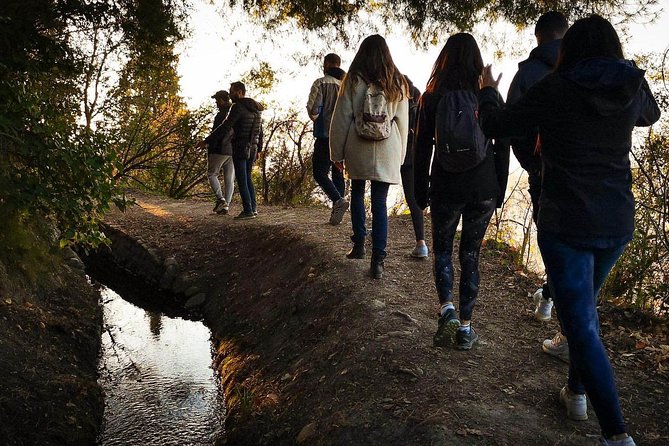
Your first stop is Cuesta de los Chinos. This opening sets the tone: you’re not starting with big monuments. You’re starting with a path where water has shaped human stories.
Here, you’ll walk alongside a small artificial river, and the guide connects the route to legends and local lore. This is smart because it makes the water system feel human. You start to realize that Granada’s water isn’t only engineering; it’s also culture—passed down through places people remember.
This stop is short—around 20 minutes—but it’s a good warm-up before the larger “how did they do it” moments later. It’s also a reminder that the route is about moving between multiple water points, not lingering in one spot.
The Alhambra Edge: Water Supply Without the Crowds
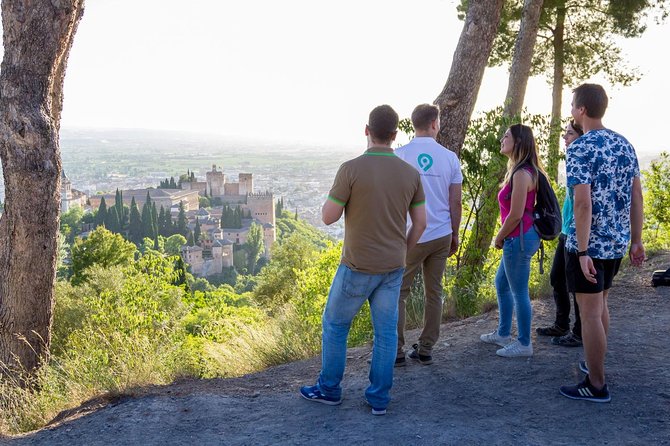
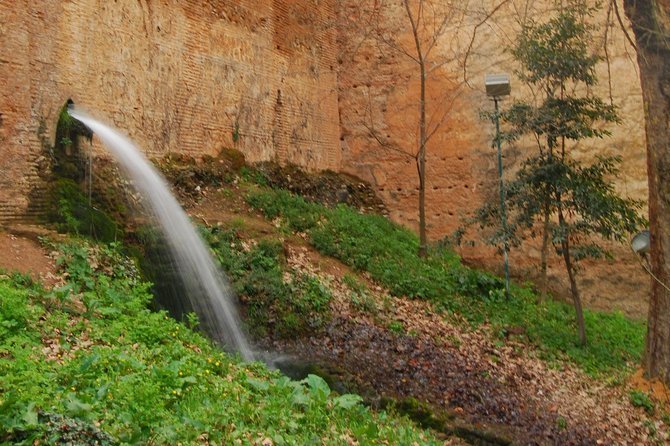
One of the highlights is how the tour approaches the Alhambra. You’ll walk along the eastern part of the Alhambra at the foot of its wall, so you’re in the orbit of the complex without trying to turn this into an entry-ticket day.
What you focus on here is the water question: how the Alhambra was supplied with water and what it was used for. That shift—from “what am I looking at” to “where did the water come from and how did it work”—changes the way you see everything nearby. Even if you already know the Alhambra’s beauty, you’ll leave with a clearer sense of its practical needs.
The stop runs about 20 minutes. If you’re the type who likes architecture explanations, this part gives you a grounded framework: water isn’t an accessory. It’s part of the whole system of space and living.
Admission at each stop is listed as free for what you visit, which helps keep the day simple. You’re paying for the guided route and the story—not a stack of entry fees.
La Silla del Moro: Views Plus Medieval Water-Space Planning
Next you reach La Silla del Moro. This is where the tour shifts into a “bigger picture” mode. You’ll go up to a top area and take in views over Granada—then connect them to the way medieval planners organized space.
A key detail: the tour notes that you won’t access the archaeological ruins of Silla del Moro. Instead, you’ll learn how the area’s organization and infrastructure worked. That’s a subtle but important approach. You get historical interpretation tied to the land, without the tour turning into a strenuous ruins visit.
This stop is brief—around 10 minutes—but it’s a great moment to recalibrate your brain. From up here, you can better understand how a city like Granada could manage water through elevation changes, channels, and distributed points.
Cerro del Sol: The Forest-and-Ditch Adventure Part
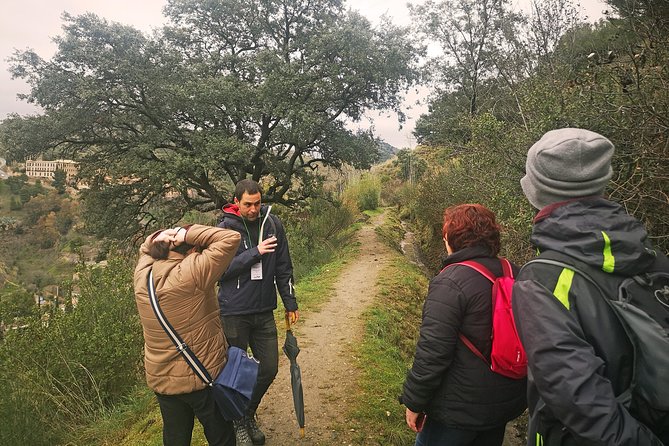
The “adventure” in the title isn’t marketing fluff. Cerro del Sol is the part where you really feel the theme—water routes in a real, moving way.
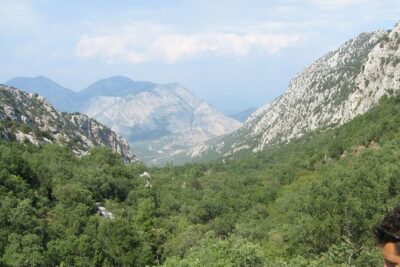
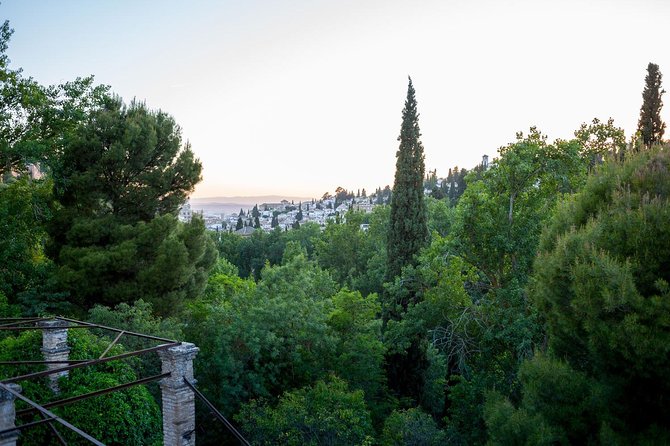
You’ll go into a labyrinth of roads and ditches. Expect a lush forest area that acts like a bridge between countryside and city. This section is timed at about 30 minutes, which gives you enough time to experience it rather than just passing through.
Why I think this is one of the best segments: it’s where the idea of water history becomes physical. You’re not only learning about fountains and springs. You’re walking the pathways that let water travel, collect, and serve different needs.
Also, it’s a “cooler lungs” zone. The combination of shade and evening air can make this walk feel easier than it looks on paper—though it still includes slopes and uneven ground.
Fuente del Avellano: Myth, Healing Water, and Fresh Shade
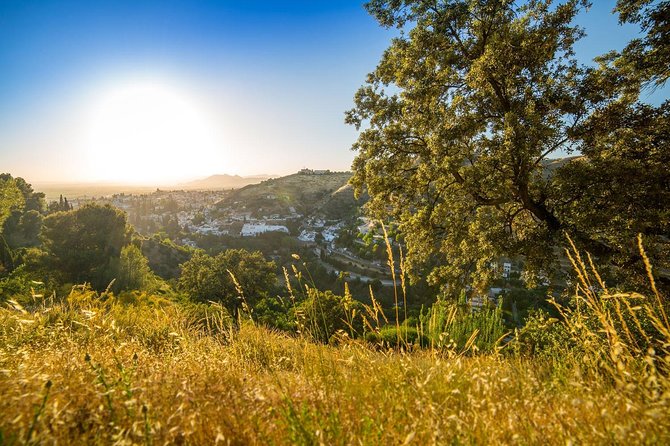
After the forest maze, you shift to a quieter, more restorative stop: Fuente del Avellano. This is described as a mythical source of pure and healing waters.
That myth angle matters less if you’re skeptical, more if you enjoy how people connect water to health, belief, and daily ritual. Either way, you’ll experience the practical side too: it’s placed in a natural, fresh, green spot where shade is available through the year.
This stop is short—about 10 minutes—but it’s an intentional pause. You get a breath of “why this mattered” before the final stretch moves along another key water feature.
Here, you’ll also accompany the ditch of Romayla. The tour’s focus on ditches is a big clue: these channels are the real backbone of water movement in many historic cities. They’re not glamorous, but they’re the difference between water being stored as a feature versus water being delivered as a system.
How the Tour Runs: timing, pace, and guide style
This experience lasts about 3 hours, and it’s meant to keep a steady walking rhythm. The route crosses sloping slopes, and the overall difficulty is best described as moderate: not a race, but also not flat stroll territory.
Because it’s a small group and a private tour, pacing is less rigid than big group tours. In practice, this usually means you can ask questions without feeling like you’re holding everyone up.
From the feedback you can take heart from, there’s a pattern: people have praised the guides for punctuality, logistics, and professionalism. There’s also a clear theme that guides like Jose and Mikael were attentive to the experience, from keeping the walk flowing to making sure you’re enjoying it rather than just watching.
One more practical note: the route isn’t suitable for reduced mobility, and it’s also not recommended for hearing or visual impairments. If you fall into any of those categories, it’s better to look for another style of tour with fewer steps and fewer uneven segments.
Price and Value: what $109.90 buys you in Granada
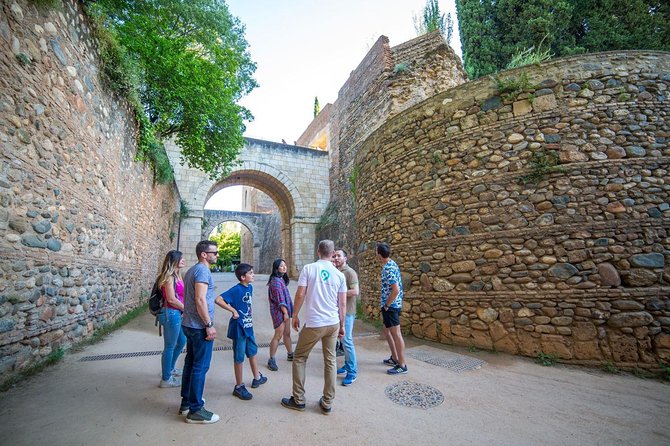
At $109.90 per person, you’re paying for a guided, curated private walk rather than a general museum ticket. On paper, it can look pricey compared to a public walking tour. In practice, the value makes sense when you care about three things the tour is built for:
1) Time with a specialist guide focused on water history and how it shaped urban life.
2) A route you can’t easily piece together on your own, because it links multiple water features in a meaningful order.
3) A smaller-group feel, so explanations stick instead of bouncing off with crowds.
If you’re traveling with someone you can share the experience with, it’s also noted that group discounts can apply. That can lower the effective cost without changing the format.
Also worth mentioning: confirmation comes at booking, and you get a mobile ticket. That’s less about fun and more about removing friction on a busy day.
And if you’re wondering how far ahead to plan: it’s typically booked about 17 days in advance. If you’re visiting during peak season or want a specific evening window, getting in early is smart.
Comfort Tips That Actually Matter
You’ll get the best experience with just a few basics. Since the route includes sloping sections and paths near water, skip fashion shoes and go with something grippy. The recommendation is comfortable shoes, and I agree. Even if it’s not a long hike, the ground can be uneven, and evening light can make footing feel trickier.
Bring water. You’re not told this explicitly, but you’re walking for about three hours. In Granada’s warmer months, that matters.
Finally, dress for evening temperature changes. You’ll be outside for the whole experience, moving between shaded forest and open viewpoints.
Who Should Book This (and who should skip it)
This tour is best for you if:
- You love history that connects to daily life, not just monuments.
- You enjoy outdoor walking on natural and artificial waterways.
- You want a guide who can explain how systems work—like water distribution—and keep it readable and engaging.
- You like quieter, purposeful stops: a fountain, a ditch, a spring, then another layer of meaning.
You should probably skip it if:
- You need accessible routes (reduced mobility isn’t supported).
- You require hearing or visual accessibility accommodations that aren’t listed as available here.
- You’re traveling with kids under 7. The tour is not recommended for younger children because it lasts around 3 hours with walking segments.
Book It or Skip It?
If you’re the kind of traveler who gets more excited by systems than selfies, I think you’ll love this. The route turns Granada’s water network into a walking lesson that feels real, not theoretical. I also like that it stays healthy and environmentally friendly in concept—more about moving through the city’s living water features than consuming big-ticket attractions.
I’d hesitate only if you’re sensitive to slopes or uneven ground, or if access needs are a priority. Otherwise, the combination of a specialized guide, a private small-group format, and a route that highlights public water points makes it good value for the story you’ll take home.
If you can handle moderate walking, this is a strong “Granada in a different way” choice—one that gives you a new lens for the next time you pass a fountain and wonder how it ever got there.
FAQ
How long is the water paths private adventure and history tour?
It lasts about 3 hours.
What time does the tour start, and where do I meet?
The tour starts at 6:00 pm. The meeting point is Fuente del Paseo de los Tristes (Albaicín), 18010 Granada, Spain. The tour ends back at the meeting point.
How much does it cost?
The price is $109.90 per person.
Is this tour private?
Yes. It’s listed as a private tour/activity, so only your group participates.
What kind of fitness level do I need?
It’s recommended for people with moderate physical fitness. The route includes sloping slopes, so comfortable shoes are important.
Is the tour refundable if weather is bad?
The experience requires good weather. If it’s canceled due to poor weather, you’ll be offered a different date or a full refund.