REVIEW · GRANADA
Albayzín y Sacromonte, Unesco Heritage Neighborhoods
Book on Viator →Operated by My Top Tour · Bookable on Viator
Granada’s hillside streets can feel like a maze. This small-group walk through Albaycín and Sacromonte gives you the story behind the alleys, churches, and cave flamenco without the stress of figuring out turns alone. I especially like the views—you get photo angles over the Alhambra and toward the Sierra Nevada—and I like that the guide keeps the pace and narration moving so the neighborhoods make sense. The only real drawback: you’ll be going up and down a lot, with stairs, so wear grippy shoes and expect some effort.
If you like walking tours that mix places with meaning, this fits well. You’ll also see how Granada’s Muslim past and later Christian layers left visible traces in the same streets. One thing to keep in mind: monument entry tickets aren’t included, so you may still want to plan for anything you choose to go inside on your own.
In This Review
- Key highlights that make this walk worth it
- Price and what you’re actually buying for $21.78
- Where the tour starts, and how the timing shapes your views
- Albaycín’s walls, mosques, and the art of getting your bearings
- Cármenes: Granada’s garden houses
- Miradors: where the Alhambra shows up
- The part that surprises most visitors: Sacromonte isn’t just caves
- The hill itself: dry reds and prickly plants
- Cave streets: why the layout feels strange in a good way
- Zambras and flamenco: understanding what you’re watching
- How steep is it? Walking comfort without overpromising
- Guides matter here: what to look for in the experience
- Photo strategy: where to slow down and where to keep moving
- Who this tour is best for (and who should pick something else)
- Should you book this Albaycín and Sacromonte walk?
- FAQ
- How long is the Albaycín and Sacromonte tour?
- What time does it start in Granada?
- Where do I meet the guide?
- How much does it cost per person?
- Is the tour available in English?
- Are monument or attraction tickets included?
- How big is the group?
- Is this tour very hard to walk?
- Can I cancel for a refund if my plans change?
Key highlights that make this walk worth it
- A guide so you don’t get lost in Albaycín’s winding lanes, where turns change every few minutes
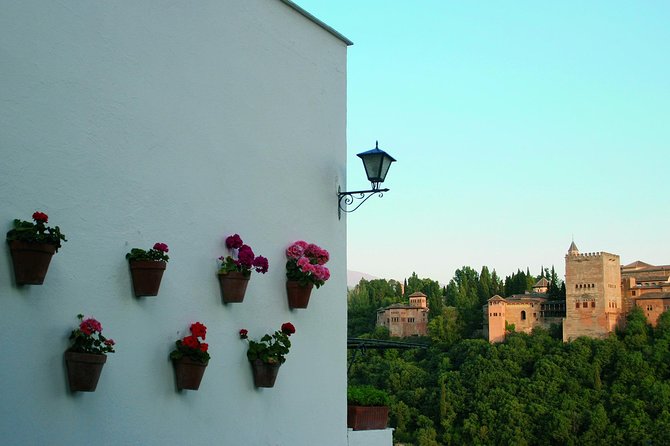
- Big viewpoint payoff for photos over the Alhambra and Granada (the 5:00 pm start often helps with that late-day light)
- Albaycín’s everyday textures, from cármenes (garden houses) to old cisterns and leftover mosque features
- Sacromonte’s caves and zambras—you’ll see why these cave spaces matter for flamenco culture
- Small group size (max 15), which makes it easier to ask questions and keep track of the plan
Price and what you’re actually buying for $21.78
At about $21.78 per person for roughly 2 to 3 hours (2 hours 30 minutes is the typical visit time), you’re paying for three things: a live guide, a focused route through two UNESCO neighborhoods, and a “don’t-think-too-hard” way to connect viewpoints to history.
That last part is underrated. The Albaycín is famous, which means it can also be confusing. The streets are narrow, twisting, and easy to misread—one wrong turn and you’re wandering with no clue how to get back on track. Here, the guide does the navigating, so your effort goes into enjoying the place instead of fighting with it.
One more practical note: there are “free admission” components called out for the main areas, so you’re not paying a separate fee just to walk the neighborhood itself. Still, monument tickets are not included, which matters if you’re the type who wants to enter lots of interiors rather than just look from outside.
You can also read our reviews of more tours and experiences in Granada.


Where the tour starts, and how the timing shapes your views
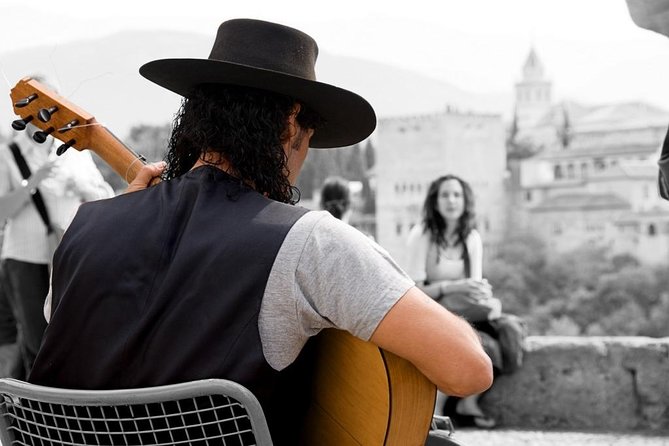
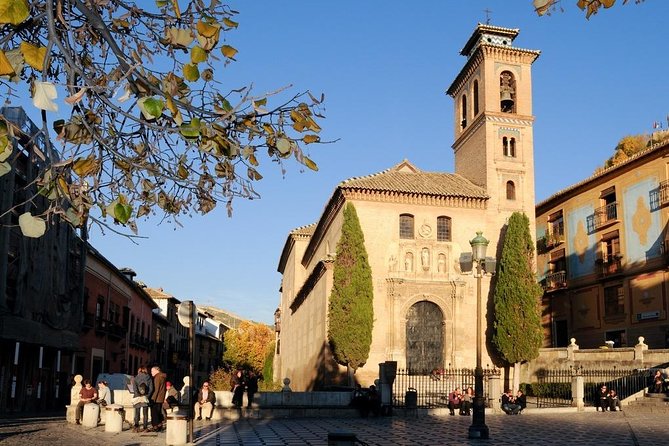
The meeting point is Plaza de Santa Ana, and the tour starts at 5:00 pm. That timing isn’t random. Late afternoon light is when the Sierra Nevada air can look crisp, the city colors turn warmer, and the Alhambra becomes extra photogenic from the hillside.
The tour ends in the Albaycín area, which is nice because you’re finishing right where many people want to linger for dinner and sunset walks. You can keep going on your own with less backtracking.
Group size is capped at 15. That’s big enough for a lively atmosphere, but small enough that the guide can actually keep eyes on the group when the route gets steep.
Albaycín’s walls, mosques, and the art of getting your bearings
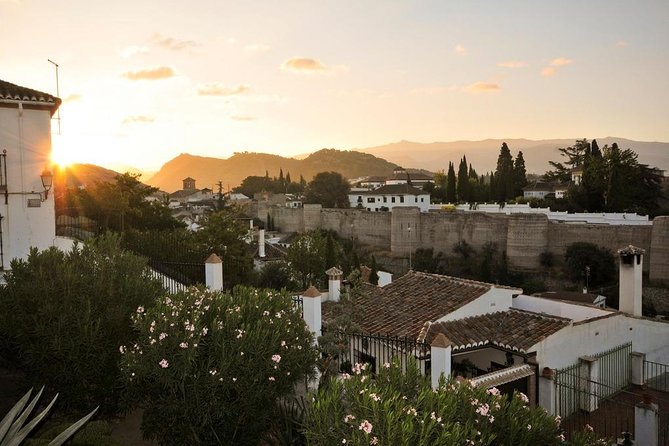
The first stop is at the Murallas del Albaycín area. You start by stepping into a part of Granada that grew around Muslim Granada’s early urban core—alongside the Alhambra and other historic districts. The neighborhood once held about 40,000 residents and included around 30 mosques. Even if you don’t count them, you’ll feel the layers.
Here’s what I like about this portion: you’re not just hearing names of places. You’re learning what to look for as you walk. The streets are described as winding, narrow, and elusive, and that matches what you’ll experience—tiny street corners, tucked squares, and sudden changes in scenery.
The guide also helps you notice traces that are easy to miss if you’re walking alone: remnants of mosques and minarets, Spanish-Muslim cisterns, and that Andalusian everyday rhythm that still makes these streets feel lived-in rather than staged.
Cármenes: Granada’s garden houses
You’ll also hear about cármenes. These are houses with gardens, often with Granada and Mudejar-style towers. In practice, what that means for you on the ground is variety: a street might look plain, then suddenly you’re near an entrance or view that hints at a private green space behind walls.
It’s the kind of detail that makes a neighborhood feel real. It’s not just architecture—it’s how people historically shaped light, privacy, and daily life on steep terrain.
Miradors: where the Alhambra shows up
Two viewpoint stops are built into the route: Mirador de San Nicolás and Mirador de San Cristóbal. If you’re chasing photos, these are the moments. You get wide views across Granada with the Alhambra in the frame, and you can usually see why people plan evenings around these spots.
Even if you don’t take many pictures, sit for a minute. It’s a fast way to understand the geography: the hills, the density, and why the Albaycín and Alhambra “face” each other.
The part that surprises most visitors: Sacromonte isn’t just caves
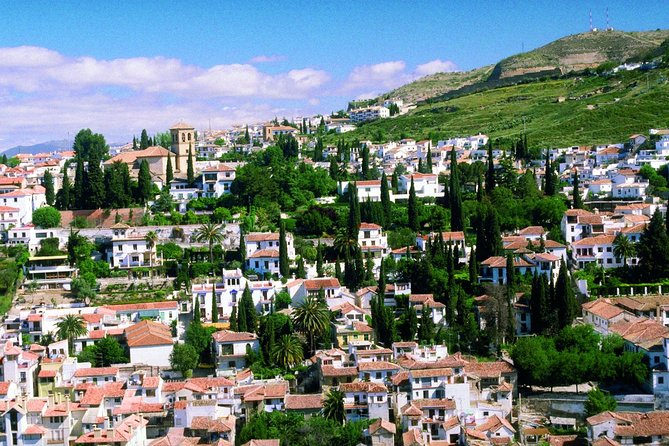
After the Albaycín, you head toward Sacromonte. Sacromonte is often described as picturesque and idyllic, but the real point is cultural. It’s the traditional suburb associated with the gypsies of Granada, and you’ll hear how their community and language—caló—connect to the region’s identity.
Historically, the community arrived in Spain in the 15th century after traveling through Europe and Africa. That’s a reminder that what you see now is the result of movement, adaptation, and time. The caves didn’t just happen. They became home.
The hill itself: dry reds and prickly plants
You’ll walk around a reddish, dry hill dotted with pitas and prickly pears. That texture matters because it explains the environment around the caves. This area feels harsh and bright rather than green and soft, and yet the views make it feel cinematic.
From here, you get panoramas toward the Alhambra towers and along the white slopes you can see beyond the Albaycín side, plus glimpses toward the Valparaíso Valley through which the Darro runs.
Cave streets: why the layout feels strange in a good way
The caves of Sacromonte are grouped around ravines, forming something like streets. Instead of conventional blocks, you’re moving through a set of cave clusters—an arrangement that can feel a bit like a labyrinth, but in a cultural way.
One detail to keep in mind: the caves have been homes for centuries. They’ve housed gypsies, bohemians, and flamenco artists. That means you’re not only looking at a performance venue. You’re walking in a living (and historically living) space.
Zambras and flamenco: understanding what you’re watching
Sacromonte’s spectacle is the zambras, linked to deep emotion and dramatic storytelling in flamenco. Even if you’re not watching a full performance during your walk, the context helps you understand why people treat this area differently than a museum stop. It’s about expression in a specific place.
Also, the tour information describes how the caves are typically arranged—kitchen at the entrance near the dining room, and one or more bedrooms depending on the possibilities of the land. You might not see full interiors the way you’d in a ticketed site, but it gives you a mental model for why these caves are arranged the way they are.
How steep is it? Walking comfort without overpromising
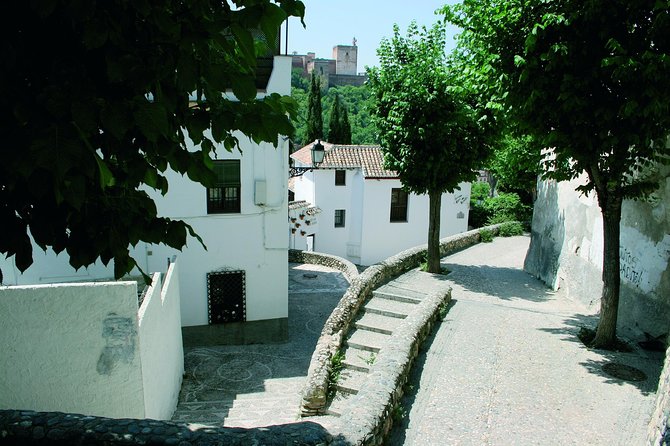
This is a walking tour through two hilly neighborhoods. Expect up-and-down streets and stairs. The pace is described as reasonable, not painfully intense, but it’s still real walking.
The upside is that the climbs keep paying you back. Every time you crest a slope, you’re rewarded with either a new street scene or a viewpoint. That’s part of the design of the Albaycín and Sacromonte experience: you move through the city like you’re walking around inside a panorama.
If you have knee issues or you tire quickly, you’ll want to take it slow, rest when you can, and wear shoes with grip. If you’re generally fine on uneven pavement, you should be okay.
Guides matter here: what to look for in the experience
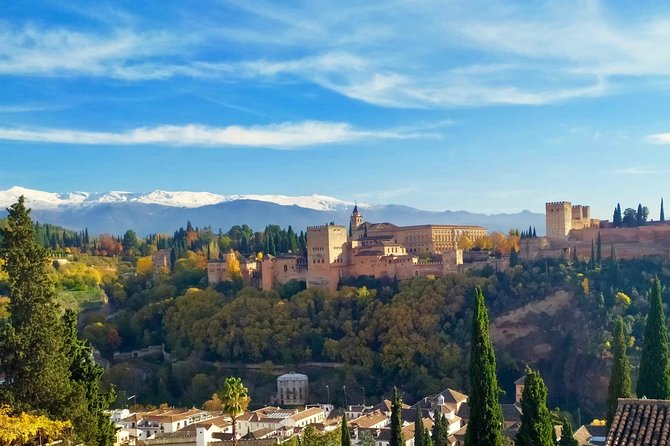
The tour includes an official tourism guide. And based on guidance styles people have described, what you really want from this kind of route is clarity: turning confusing alley movement into a story you can follow.
Names you might encounter include Ana, Jaime, Juana, and Alexandra. The common thread is what you feel on the walk: history tied to street-level details, and a rhythm that doesn’t rush people through viewpoints.
If your guide does their job well, you’ll notice two things fast:
- you learn the relationship between Muslim and Christian Granada layers without it feeling like a lecture
- you get help navigating so you’re looking at the right things, in the right order
That’s why this tour works better than a self-guided wander for many first-time visitors. You can still explore on your own afterward, but you’ll start with real bearings.
Photo strategy: where to slow down and where to keep moving
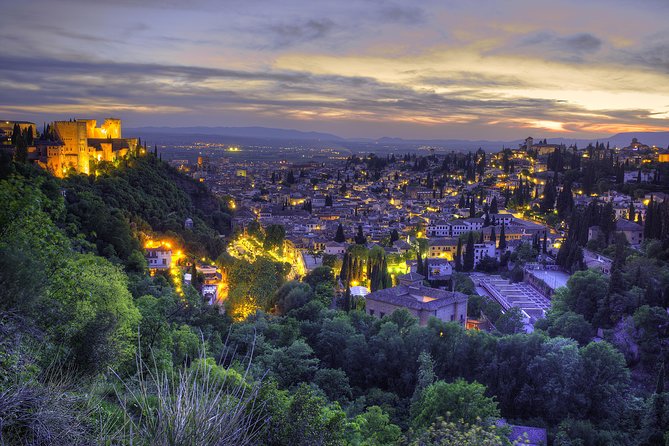
This walk has a clear photo focus: Alhambra views and viewpoints over Granada, plus sights toward the Sierra Nevada. The best strategy is simple: don’t treat every stop like a quick snapshot.
Use a quick rule:
- If you’re at a mirador, pause. Let your eyes adjust. Take your photos, then look for street patterns and buildings beyond the postcard view.
- If you’re in the middle of lanes and streets, keep moving. That’s where the neighborhood changes every 30 seconds.
You’ll also get more satisfying pictures if you remember the terrain. Albaycín’s slope creates height changes that make the Alhambra look dramatically close at certain angles. Sacromonte’s hill does the same from another direction—dry reds, cave shadows, and distant towers.
Who this tour is best for (and who should pick something else)
I think this is a strong fit for:
- first-time visitors who want the story behind Albaycín and Sacromonte without getting lost
- travelers who like walking tours with viewpoint payoffs
- people who want culture explained through streets, not through a slide deck
It may be less ideal for:
- anyone who hates stairs or rough, steep walking
- travelers who only want “major monument interiors” and expect all ticketed sights to be included
If you’re somewhere in the middle, this is still worth it because the route is designed to make sense of the neighborhoods as you go.
Should you book this Albaycín and Sacromonte walk?
Yes—if you want an efficient, small-group way to understand two UNESCO neighborhoods without turning your day into a navigation problem.
Book it if:
- you like guided context tied to what you see outside
- you want the Alhambra viewpoints without planning a mini-map day
- you’re happy with 2 to 3 hours of walking and a bit of hill effort
Skip or consider a different option if:
- you’re looking for mostly indoor ticketed monuments
- you need a low-walking, flat route
If you do book, do yourself one favor: pack grippy shoes and give yourself permission to slow down at the miradors. The best part of this experience isn’t rushing past views. It’s arriving, looking, and letting the neighborhoods make sense.
FAQ
How long is the Albaycín and Sacromonte tour?
It runs about 2 to 3 hours, with a typical visit length listed as 2 hours and 30 minutes.
What time does it start in Granada?
The tour starts at 5:00 pm.
Where do I meet the guide?
You start at Plaza de Santa Ana in Granada. The tour ends in the Albaicín area.
How much does it cost per person?
The price is $21.78 per person.
Is the tour available in English?
Yes, it’s offered in English.
Are monument or attraction tickets included?
No. Monument tickets are not included. However, the main areas listed in the route show free admission.
How big is the group?
The tour has a maximum of 15 travelers.
Is this tour very hard to walk?
Most travelers can participate, but you should expect walking with up-and-down hills and stairs.
Can I cancel for a refund if my plans change?
Yes. Free cancellation is available if you cancel at least 24 hours in advance for a full refund.