REVIEW · CASABLANCA
8 Days Private Historical Tour in Morroco
Book on Viator →Operated by Good Travelling In Morocco · Bookable on Viator
Morocco moves fast on this private route, and that’s the point. You’ll hit big-name sights like Hassan II Mosque and then get the kind of hands-on adventure you can’t squeeze into a short trip, especially the camel trek into Erg-Chebbi-style dunes. I also love how the pacing gives you real time with guides in Fez and Marrakech, where names like Rachid and Moha have come up in feedback for being friendly and stepping in to keep things clear.
The tradeoff: this itinerary is busy, with long drives almost every day. Also plan on extra spending for meals and entrance fees, since lunches, drinks, tips, and monument entry aren’t included (the total mentioned is about 10 euros per day).
In This Review
- Key reasons this private Morocco route works
- Price and logistics: what you’re really paying for
- Day 1 in Casablanca: Hassan II Mosque, then Rabat overnight
- Day 2: Volubilis Roman ruins, Meknes UNESCO medina, then Fez
- Day 3: Fez old city focus—mellahs, universities, tanneries, and views
- Day 4: Toward the Sahara—Middle Atlas, cedar forest, Barbary apes, and dunes at sunset
- Day 5: Erg-out fossil hunting, Todra Gorge walking, and Dades Valley dinner
- Day 6: Kasbah road, Ouarzazate film locations, Ait Ben Haddou, and High Atlas crossing
- Day 7: Guided Marrakech medina—Koutoubia, souks, Ben Youssef, Saadian tombs, Bahia, Majorelle
- Day 8: Casablanca airport transfer and trip wrap-up
- What makes the experience feel worth it (and for whom)
- Tips for getting the most out of it
- Should you book this 8-day Morocco tour?
- FAQ
- FAQ
- What time does the tour start?
- Is pickup and drop-off included?
- Where is the tour based, and where does it end?
- What nights are included during the trip?
- What’s included for meals?
- Are entrance fees included?
- What activities are included for the desert and valleys?
- Is there a cancellation window for a full refund?
Key reasons this private Morocco route works
- Full private logistics: pickup/drop-off at your hotel or riad, plus a dedicated guide/driver in a 4×4 or small van.
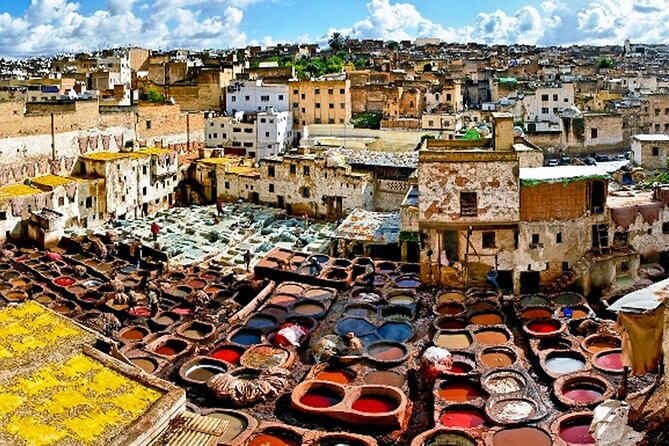
- Fez with a local guide: highlights include the Jewish quarter, Mellah, Al Qarayyin University, tanneries, and a panoramic view from a tower.
- Sahara day built for sunset: mint tea, camel dunes, and time to watch the light change on the sand.
- Film-country stops in Ouarzazate and Ait Ben Haddou: the “Hollywood of Africa” setting is part of what makes these kasbahs feel cinematic.
- A rare mix of Roman ruins + imperial cities + desert: Volubilis, Meknes/UNESCO medina, then Morocco’s desert edge—no filler days.
Price and logistics: what you’re really paying for
At $1,529.02 per person for about 8 days, this isn’t a cheap Morocco bargain. It is a solid value if you want the trip to feel private and guided, with the big driving blocks handled for you. You’re paying for transportation (4×4 car or small van), a guide/driver, transfers by pickup/drop-off, and a set of included overnights across Casablanca, Rabat, Fez, a desert camp, Dades Valley, and Marrakech.
What’s notably not in the price: lunches, drinks, tips, and entrance fees for historical monuments. The tour data suggests budgeting around 10 euros per day for those entry tickets. One practical move: bring a daily cash amount just for entries and small extras so you don’t end up doing math while you’re tired after a long drive.
Also note the small “tour rhythm” detail: the tour is private, meaning only your group rides together. That’s a real win when you want your guide to slow down for questions, and when you need flexibility for photos, timing, or restroom stops.
You can also read our reviews of more tours and experiences in Casablanca.

Day 1 in Casablanca: Hassan II Mosque, then Rabat overnight
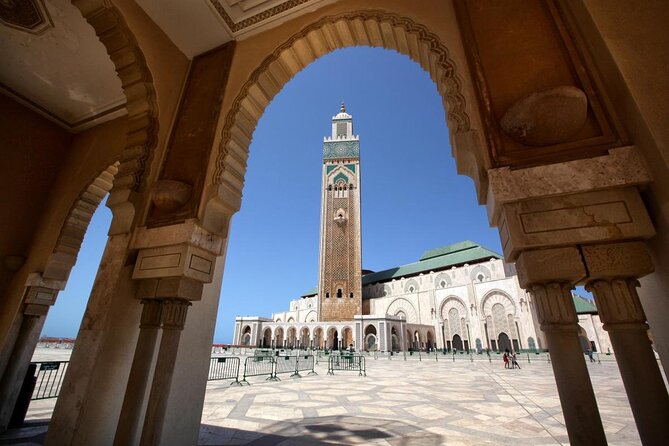
Your day starts with airport pickup, then a drive toward Casablanca and Morocco’s capital area. The headline stop is the Hassan II Mosque, described as the largest in Morocco. Even if you’ve seen photos, it helps to experience it in person because the scale feels bigger when you’re standing near it, not looking at it from far away.
After Casablanca, you drive to Rabat and check into a hotel for the night with breakfast. This first day is a “set the stage” kind of day: you get one signature moment, then you settle in rather than sprinting straight to multiple cities.
Practical note: day 1 is straightforward but includes travel time. If your flight timing is tight, confirm your pickup details early so you’re not waiting around at the airport.
Day 2: Volubilis Roman ruins, Meknes UNESCO medina, then Fez
This is the day where the history range jumps. You start with Volubilis, where you’ll explore Roman ruins and learn about the archaeological site tied to Morocco’s older layers. Seeing Roman remains in Morocco can feel surprising, and that contrast is part of the fun.
Next comes Meknes, one of Morocco’s four imperial cities, with a UNESCO-listed medina. You’ll stop for lunch and then wander the huge medina walls and visit places including Bab El Mansour and Moulay Ismail’s shrine.
Then you drive on to Fez, where you stay in a riad. Fez is the point where the trip really becomes about old-world urban life—narrow streets, dense sights, and a guide who can explain what you’re looking at (instead of letting you guess).
A consideration here: you’re stacking Volubilis + Meknes + Fez in one day. You’ll see a lot, but you’ll also feel the day’s pace. If you prefer slower city time, ask your guide about shifting the order slightly if your group is tired.
Day 3: Fez old city focus—mellahs, universities, tanneries, and views
This is one of the best-designed days because it’s built around a local guide. You begin after breakfast and spend about 6 hours exploring key Fez highlights, with enough structure that the neighborhoods don’t feel like a maze.
Stops include:
- the Royal Palace gate
- the Jewish quarter and the Mellah (with the tour noting it as the first Mellah ever built in Morocco)
- Al Qarayyin University, called the oldest university in the world on this route
- the tanneries
- Attarine museum
- Moulay Idriss mausoleum
After lunch, you visit a tiles cooperative, then go up for a panoramic view over the Medina of Fez from a tower. That tower view matters more than it sounds. It helps you understand the layout after spending hours at street level.
What I especially like about this day: it gives you multiple lenses—religious sites, education history, artisan work, and everyday industry. You’re not just collecting landmarks. You’re building a mental map of how Fez works.
One realistic drawback: Fez medina walking can be compact and crowded. Wear shoes you can walk in for hours, and plan to move slowly through busier lanes.
Day 4: Toward the Sahara—Middle Atlas, cedar forest, Barbary apes, and dunes at sunset
Day 4 is your big gear shift from cities to scenery. You’ll be picked up from your riad/hotel at 8:00 AM and start driving through the Middle Atlas Mountains.
Highlights on the way:
- Ifrane, described as the Switzerland town of Morocco
- the biggest cedar forest in Africa and the chance to see Barbarian apes (monkeys)
- the Tizi N talghamt pass
- Midelt
- views through the Ziz Gorges, carved through volcanic rock
- onward toward Merzouga
You stop for lunch, then continue along Ziz Valley into the desert region. After a glass of mint tea, you’ll cross the sand dunes by camel and make time for the magic sunset from the top of a dune.
This is a “do it right” style day. The camel portion isn’t just a transfer. It’s timed around the light, which is what makes desert photos actually look like the desert.
What to consider: desert drives take time. Expect that your body feels the road before it feels the joy. Pack water, take a few slow minutes during stops, and trust the payoff.
Day 5: Erg-out fossil hunting, Todra Gorge walking, and Dades Valley dinner
You start with breakfast, then you return from the sand area to the meeting point using ATVs for about 30 minutes. It’s a short thrill segment that breaks the monotony of travel.
Then you head toward Erfoud, described as the fossil capital. Here you’ll look for different fossils and minerals found in the region—examples mentioned include ammonites, trilobites, and star fishes. If you like natural history, this stop feels unexpectedly fun, not just “a roadside museum.”
In the afternoon you drive toward Tinghir and then focus on the Todra Valley and Todra Gorge. You’ll enjoy panoramic views and then walk inside the cliffs, with the tour noting about 300-meter-high walls.
Finally, you head to Dades Valley and stay there for the night with dinner.
The value of this day is the mix: fossils (past life), then cliffs (ancient geology), then a valley where you can finally exhale a bit after the Sahara.
A consideration: Todra Gorge involves walking in a canyon-like space. Comfortable shoes help, especially if you’re moving on uneven ground.
Day 6: Kasbah road, Ouarzazate film locations, Ait Ben Haddou, and High Atlas crossing
This day is built for dramatic Morocco. You take the “road of a thousand kasbahs” toward Kalaa M’gouna and Ouarzazate.
You stop in Kelaat Mgouna, the rose town, where an annually festival takes place each May (mentioned as the reason for the rose fame). Then you continue to Ouarzazate, called the Hollywood of Africa, with film examples listed such as Gladiator, the Mummy, and Kingdom of Heaven.
From there you visit Ait Ben Haddou, described as the largest and famous kasbah village in Morocco and a UNESCO world heritage site noted as a filming location for movies. Even if you don’t remember a specific scene, the setting gives you that “set build” feeling—mud-brick architecture on a scale that looks bigger in person than it does online.
You then cross the High Atlas Mountains. The tour mentions the highest point in Africa at 4167 m, plus a stop altitude around 2260 m, with stops along the way to see Berber villages and changing landscapes.
You end the day with an overnight in Marrakech with breakfast included for the next morning.
One thing to keep in mind: this is another long day of driving plus multiple stops. If you’re the type who needs breaks every couple hours, tell your guide up front so they can time restroom and photo stops without rushing you.
Day 7: Guided Marrakech medina—Koutoubia, souks, Ben Youssef, Saadian tombs, Bahia, Majorelle
Marrakech is where the tour turns into a guided city day. You’ll enjoy a private guided tour of the medina with a local guide, with sightseeing that includes:
- Koutoubia
- the Medina and souks
- Ben Youssef madrassa
- Saadian tombs
- Bahia Palace
- Majorelle Gardens
Then you’ll drive toward Casablanca. The tour data has you sleeping in Marrakech on day 6, then moving back to Casablanca after the day 7 sightseeing and before the airport transfer on day 8. That means Marrakech is a “one strong day” experience, not an extended stay.
What I like about this structure: you get a focused run through the places most people miss, and you still have time for the gardens and palace side of Marrakech, not just shopping streets.
Day 8: Casablanca airport transfer and trip wrap-up
After breakfast, you drive to the airport and service ends. It’s a clean ending: you don’t tack on one more sight after a week of moving.
If you have flexibility, plan your flight for a comfortable window. After a long road trip, you’ll be grateful for breathing room.
What makes the experience feel worth it (and for whom)
This tour works best for you if:
- you want a private experience rather than joining a bus full of strangers
- you care about history, but you also want the Sahara camel sunset to be a core moment, not a side stop
- you like a guide-led format in places like Fez and Marrakech, where explanation matters
It’s also a good match if you prefer someone handling logistics like pickup timing, transfers, and the big sequencing of sights.
It may not be the best fit if:
- you’re the type who hates long drives and wants lots of free time
- you dislike walking through compact old medinas
- you have a tight schedule where you can’t absorb a busy rhythm
Tips for getting the most out of it
- Bring layers for cooler mornings and possible chilly desert evenings; mornings in the Atlas can feel brisk.
- Plan for extra spending: lunches and monument entry fees are not included, and the guide will likely handle the paperwork while you handle the budget.
- Comfortable walking shoes matter most on Fez and the Todra Gorge day.
- If you care about language support, it’s worth confirming communication needs before departure. Past guests have praised guide language skills (including Portuguese support in at least one case).
Should you book this 8-day Morocco tour?
I’d book it if your priority is a guided, history-to-desert Morocco road trip with real structure and minimal stress. The combination of Fez with a local guide, a desert night in a camp with camel riding, Ait Ben Haddou film-country energy, and then Marrakech’s big sights is a strong mix for one week.
Skip it if you want a slow, relaxed Morocco vacation with lots of downtime. This route is efficient, and that efficiency means you’ll spend plenty of time in the car.
FAQ
FAQ
What time does the tour start?
The start time is listed as 8:00 am.
Is pickup and drop-off included?
Yes. Pickup and drop-off at your hotel or riad is included.
Where is the tour based, and where does it end?
It starts with airport pickup in Casablanca and ends with an airport drive in Casablanca after Marrakech.
What nights are included during the trip?
The tour includes overnight stays in Rabat (1 night), Casablanca (1 night), Fez (2 nights), a desert camp (1 night), Dades Valley (1 night), and Marrakech (1 night).
What’s included for meals?
Breakfast is included for 7 mornings. Dinner is included for 2 nights. Lunches and drinks are not included.
Are entrance fees included?
No. Entrance fees for historical monuments are not included, and the tour data mentions budgeting about 10 euros each day.
What activities are included for the desert and valleys?
Camel trekking is included, and there is also an ATV ride for about 30 minutes during the return from the desert area. Todra Gorge includes a walking visit inside the cliffs.
Is there a cancellation window for a full refund?
Yes. Free cancellation is available up to 24 hours in advance for a full refund. Within 24 hours of the start time, the amount paid is not refunded.
If you want, tell me your travel month and whether you prefer more city time or more desert time, and I’ll suggest a few practical adjustments you can ask your guide about.