REVIEW · CAIRO
12 Days Cairo – Alexandria and Nile Cruise by Flight (Ancient Egypt)
Book on Viator →Operated by Luxor and Aswan Travel · Bookable on Viator
Seeing Egypt without racing is the trick here. This 12-day private trip strings together Cairo, Alexandria, and the Nile with domestic flights and an English-speaking Egyptologist, so you spend more time looking at monuments and less time planning. I like that the package builds in private transfers and a dedicated guide throughout the key sightseeing days. I also like the mix: you get big-ticket ancient sites (Giza, Luxor, Abu Simbel) plus the Islamic and Christian Egypt of Cairo. One thing to consider: it is a packed itinerary, and some days (especially Abu Simbel) involve long drives, which can feel intense if you hate early starts.
The biggest value of this tour is how it reduces friction. You’re met at the airport, moved by air-conditioned private vehicle, flown between major hubs, and fed often—so you can focus on the sites. The tone is history-forward, but it still leaves room for real breaks: lunch stops are planned, evenings are handled, and you end with a free day in Cairo.
Based on the tour design and guide experience shared by past guests (including names like Hany, Amani, Safwat, and Shimaa Esmail), the standout is usually the people side: guides who can explain what you’re seeing, plus staff who keep the logistics from falling apart.
In This Review
- Key highlights to pay attention to
- Price and logistics: what you are really paying for
- Day 1 in Cairo: the airport meet-and-assist effect
- Day 2: Pyramids of Giza plus Saqqara Step Pyramid with an Egyptologist
- Day 3: Egyptian Museum, mummies, Citadel, and Khan el Khalili
- Day 4: Flight to Luxor, then Karnak and Luxor Temple by night
- Day 5: Valley of the Kings, Hatshepsut at Deir el Bahari, and Colossi of Memnon
- Day 6: Edfu Temple of Horus, Kom Ombo temples, and sailing toward Aswan
- Day 7: Abu Simbel day trip from Aswan by private A/C van
- Day 8: Aswan High Dam, Agilkia Island and Philae Temple, Unfinished Obelisk, then fly back to Cairo
- Day 9: Alexandria Library, Roman Amphitheater, Pompey’s Pillar, and Sultan Qaitbay Citadel from outside
- Day 10: Sultan Hassan Mosque area plus Coptic sites (Hanging Church, St Sergius, Ben Ezra Synagogue)
- Day 11: a free Cairo day you can actually use
- Day 12: checkout and transfer to Cairo International Airport
- So, should you book this Cairo, Alexandria, and Nile Cruise itinerary?
- FAQ
- How does airport pickup work on this tour?
- Is this tour private or shared?
- What’s included for meals?
- Which major cities and sites are covered?
- Are domestic flights included?
- What would I need to pay for that is not included?
- Can I request a vegetarian meal option?
Key highlights to pay attention to
- Private Egyptologist guide: explanations during temple and tomb visits, not just ticket scanning
- Giza + Saqqara same day: you cover the Old Kingdom’s visual language early, with less wasted transit
- Nile cruise time in Luxor to Aswan: temple afternoons mixed with sailing rhythms
- Abu Simbel included via private van: a long day trip that’s worth it if you like the under-the-radar classics
- Alexandria day for the Greco-Roman layer: Alexandria Library area, Roman Amphitheater, Pompey’s Pillar
- Cairo old-city sites across faiths: mosques, Coptic churches, and the Ben Ezra Synagogue route
Price and logistics: what you are really paying for
At $3,333 per person for 12 days, this isn’t a budget add-on. The value comes from what’s bundled: private guides, domestic flights (Cairo–Luxor and Aswan–Cairo), private transfers by air-conditioned vehicle, and a Nile cruise with included accommodation. When you price those separately—especially Egyptology-style guided time plus flights—the total starts to make more sense.
You also get practical touches that matter in Egypt: mineral water/soft drinks during tours, bottled water, and multiple meals built into the schedule. The tour doesn’t try to make every hour a frantic sprint, but it does keep momentum. That works well for first-timers who want “the essential Egypt” without spending nights researching transport, ticketing, and which sites go best together.
The main tradeoff is effort. You will be on the move. If you prefer slow travel—one neighborhood per day—this itinerary may feel busy. If you’re happy with a full day of sightseeing followed by dinner and sleep, you’ll likely feel satisfied instead of tired.
You can also read our reviews of more tours and experiences in Cairo.


Day 1 in Cairo: the airport meet-and-assist effect
Your first win is simple: when you land at Cairo International Airport, an English-speaking representative helps you with formalities and transfers you to your hotel for the night. That matters because Cairo can be chaotic, even when you’ve done your homework.
This tour also sets expectations early: you get a private airport-to-hotel move, not a shared shuttle where you wait for other arrivals. You’re not stuck figuring out where to stand, what to sign, or who to hand your paperwork to. If you’re arriving after a long flight, it’s a genuinely calming start.
From there, the next day is about hitting the ground running. So day 1 is where you want to rest, adjust, and get comfortable with Cairo’s pace before the monuments begin.
Day 2: Pyramids of Giza plus Saqqara Step Pyramid with an Egyptologist
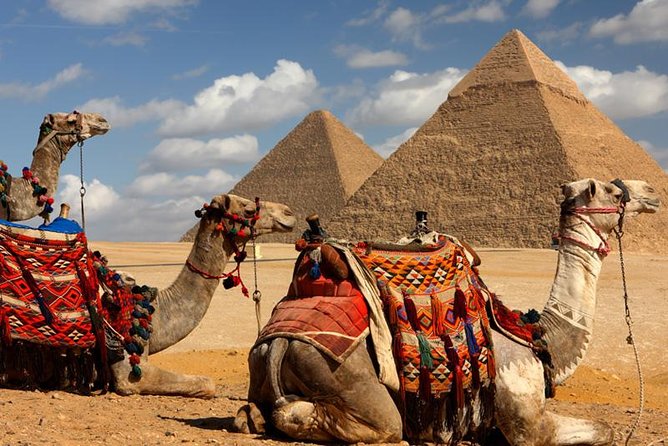
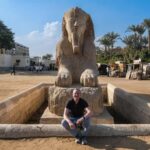
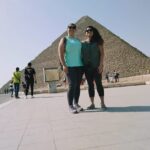
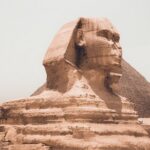
Day 2 is the classic opener: Pyramids of Giza—Khufu, Khafre, and Menkaure—with the Sphinx statue nearby, then lunch, then Saqqara for the Step Pyramid of King Djoser.
This combination is smart. Giza is the headline, but Saqqara is the origin story. You see how pyramid-building ideas evolved, moving from earlier monumental architecture into the more famous forms. The Step Pyramid also gives you a “wow” factor that isn’t only about scale—it’s about how ambitious the project was for its time, and how the architect Imhotep fits into the legend of Egyptian innovation.
A practical note: this is a long day (about 8 hours) and likely includes walking on uneven surfaces. Wear shoes you trust. Bring sunscreen and a hat, and plan to hydrate—because even with planned lunch, you can still get hit with heat.
Day 3: Egyptian Museum, mummies, Citadel, and Khan el Khalili
If you like history that explains itself, this day lands well. The morning visit is the Egyptian Museum, described as one of the most important places for Pharaonic artifacts, including collections tied to Tutankhamen. You also get access to the Mummies’ Room, which is a high-impact stop even if you’re not a museum person. Seeing mummification-related displays in a museum setting helps connect the physical artifacts to the ideas you hear later in temple and tomb tours.
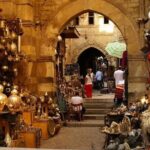
After lunch, you shift to the Old Cairo side: the Citadel of Salah El-Din, then Khan el Khalili, one of the region’s famous bazaars. This isn’t about shopping as much as it is about atmosphere. The citadel offers a panoramic sense of how Cairo is structured around its historic power centers.
One drawback to consider: museums can be tiring on a tight schedule. The trick is to slow down where it matters. Don’t try to see everything at once. Focus on a few rooms and follow the Egyptologist’s guidance so your visit turns into understanding, not just movement.
Day 4: Flight to Luxor, then Karnak and Luxor Temple by night
Day 4 changes geography quickly. You check out, transfer to Cairo airport, fly to Luxor, then transfer to your Nile cruise. You embark before midday, and the afternoon is on the East Bank.
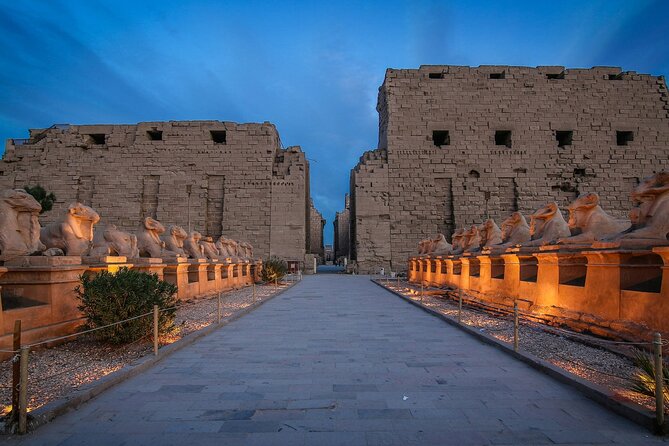
You start with Karnak Temple Complex, where the main religious center of Amun-Ra shows Egypt’s “temple as power” concept at full scale. Then you visit Luxor Temple, connected to the Thebes story and completed by Ramses II. You get a double-dose of Amun’s presence, and the spacing between Karnak and Luxor Temple helps your brain group the architecture instead of treating it as random stone.
In the evening, you have an Egyptian folkloric show on board, plus dinner and overnight on the ship. This is a nice contrast: after hours of monuments, you get something less educational but more sensory. It’s also a relief for pacing since the ship becomes your base rather than you hauling across town again.




Day 5: Valley of the Kings, Hatshepsut at Deir el Bahari, and Colossi of Memnon
This is the “sacred land” day. You start with Valley of the Kings, the royal cemetery of Theban pharaohs and rulers. If you love burial history, symbolism, and tomb architecture, this stop is a cornerstone. It also sets the tone for how you’ll interpret later temples: funerary beliefs and political power are tightly linked in Egypt.
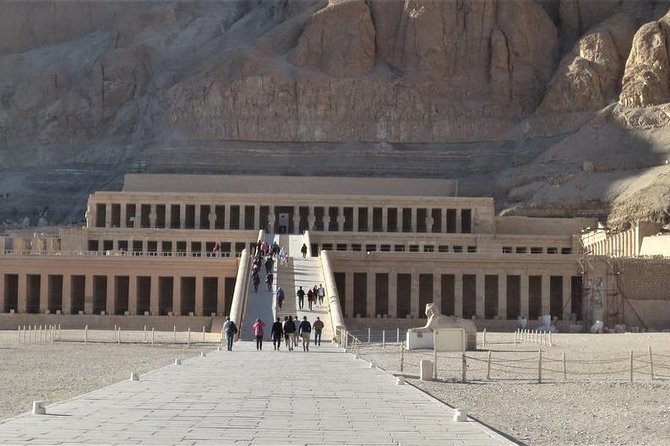
Then you go to Temple of Queen Hatshepsut at Deir el Bahari. The big reason this works is that it’s carved into the mountain, so it feels like architecture and landscape are working together. From there, you finish at the Colossi of Memnon, massive statues tied to Amenhotep III.
Back on the cruise, lunch is served and you get free time. That’s important. This kind of sightseeing can pile up fast, and you’ll likely appreciate the chance to cool down, shower, and reset before dinner.
Day 6: Edfu Temple of Horus, Kom Ombo temples, and sailing toward Aswan
This is one of the best “temples by the clock” days because it blends visits with movement. You visit Temple of Horus in Edfu, described as one of the best preserved temples in Egypt. Then you move to Kom Ombo, where two gods—Sobek and Haroeris—are worshipped, and the layout reflects that dual focus.
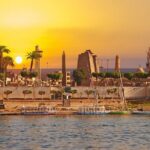
The sailing time matters. Instead of spending the entire day in vehicles, you watch Nile scenery from the sun deck and let the day settle. It’s a small luxury in a schedule that otherwise demands attention.
One practical consideration: temple visits can involve steps and sun exposure. Even when you’re on a cruise, your feet do the work. Comfortable walking shoes plus a light layer for temperature changes will help.
Day 7: Abu Simbel day trip from Aswan by private A/C van
Abu Simbel is the headline almost everyone wants. This tour includes it, and the approach is practical: you travel from Aswan by private A-C van, visit the temple complex, then drive back to Aswan (about a three-hour return drive stated in the plan).
This works because Abu Simbel isn’t close, and you want that day handled cleanly. The temples themselves are built by Ramses II and include two: the larger one dedicated to Rahorakhty and a second dedicated to Ramses II and Queen Nefertari.
If you can handle a long day, you’ll likely consider it one of your most memorable stops. If you’re sensitive to fatigue, you should plan your energy carefully. Pack water, wear sun protection, and don’t plan to do extra sightseeing on your own later that evening.
Day 8: Aswan High Dam, Agilkia Island and Philae Temple, Unfinished Obelisk, then fly back to Cairo
Aswan day feels different from Luxor. The sites include both big modern history and layered ancient religion.
You start with the High Dam, erected under President Gamal Abdel Nasser in 1960, as a protective measure against Nile floods. Even if you’re focused on ancient Egypt, this gives you context for why parts of the Nile world look the way they do now.
Then you sail to Agilkia Island to visit Temple of Philae, connected to the goddess Isis during the Greco-Roman period. After that, the tour includes the Unfinished Obelisk, made of red granite and dedicated to Amun Ra.
The wrap-up is logistics-heavy but helpful: you then go to Aswan airport for the domestic flight to Cairo. After arrival, you get a private transfer to your Cairo hotel.
Day 9: Alexandria Library, Roman Amphitheater, Pompey’s Pillar, and Sultan Qaitbay Citadel from outside
Alexandria gives you a different Egypt. After breakfast, you tour the Alexandria Library area—linked with ancient knowledge and the legacy of the old world. Then you head to the Roman Amphitheater, a solid Greco-Roman stop that contrasts with the pharaonic style.
You also visit Pompey’s Pillar, erected in 292 AD, and then view Sultan Qaitbay Citadel from outside. After that, you return to Cairo for overnight.
This day is a long “see the highlights” sweep. If you’re the kind of person who loves museum browsing for hours, you may want to plan extra time in Alexandria later. If you want the big monuments in one day, this hits the right notes.
Day 10: Sultan Hassan Mosque area plus Coptic sites (Hanging Church, St Sergius, Ben Ezra Synagogue)
This is one of the tour’s smartest choices because it avoids the all-temples trap. Cairo’s religious history is part of Egypt’s identity, and this day ties together Islamic and Christian sites, plus the Jewish story with the Ben Ezra Synagogue.
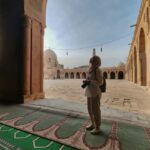
You start with the Mosque and Madrasa of Sultan Hassan, built in 1256 AD, then visit El Refa’i Mosque. The plan also includes Ahmed Ibn Tulun Mosque, described as the oldest intact, functioning Islamic monument in Cairo and an example of classical-era architecture.
After lunch, you move into the Coptic route. You visit the Hanging Church (Church of the Virgin Mary), said to date to around the 4th century, then the Church of St. Sergius (Abu Serga) tied to the Holy Family’s flight. You also stop at the Ben Ezra Synagogue (9th century).
This day can be emotionally powerful because it shows continuity and change. One thing to keep in mind: dress codes may apply in religious sites. Bring clothing that covers shoulders and knees to avoid last-minute stress.
Day 11: a free Cairo day you can actually use
Day 11 is free time in Cairo. That’s not wasted. It’s your recovery buffer after long temple days and domed-air days on the cruise.
Use it for what you prefer: shopping in a bazaar area, doing a shorter museum visit, or simply sitting with a view and watching Cairo move. If you’re the type to want one last photographic mission, this is where it fits.
Even if you don’t plan anything big, that freedom can make the rest of the trip feel less intense.
Day 12: checkout and transfer to Cairo International Airport
Your final day is straightforward. You check out, then a representative transfers you to Cairo International Airport for departure. It’s the clean finish you want after a 12-day route, so you don’t end up scrambling for the right transport while carrying last-minute shopping.
This kind of wrap-up matters because Cairo traffic can be unpredictable. A private transfer reduces the stress that can otherwise steal the last day of your trip.
So, should you book this Cairo, Alexandria, and Nile Cruise itinerary?
Yes, if you want a structured, private-feeling “greatest hits” trip without doing a ton of homework. The strongest reason to book is the combo: private Egyptology guides, domestic flights, Nile cruise accommodation, and most meals folded into the schedule.
If you’re very sensitive to long days, heat, or lots of walking, you should think hard before committing. Days like Abu Simbel and Giza plus Saqqara can push your stamina. You’ll also want to confirm guide assignments with your agent—names like Hany, Amani, and Safwat were mentioned by past guests as part of why the experience felt well handled.
For first-timers to Egypt, this is often the easiest way to get the big monuments while still getting explanations that make them coherent.
FAQ
How does airport pickup work on this tour?
You are met at Cairo International Airport by an English-speaking representative who helps with formalities and transfers you to your hotel. At the end, a Cairo representative also transfers you to the airport for your departure.
Is this tour private or shared?
It’s listed as a private tour/activity, so only your group participates.
What’s included for meals?
The plan includes breakfast (11) and dinner (4), plus lunch (8). Drinks like mineral water and soft drinks are included during tours, and bottled water is provided.
Which major cities and sites are covered?
You’ll see Cairo, Luxor, Edfu, Aswan, and Alexandria, with highlights including the Pyramids of Giza, Valley of the Kings, Abu Simbel, and major religious sites in Cairo.
Are domestic flights included?
Yes. Cairo–Luxor and Aswan–Cairo domestic flights are included.
What would I need to pay for that is not included?
A visa to Egypt is not included, and tipping kitty is not included. Any optional tours and anything not mentioned in the itinerary would also be extra.
Can I request a vegetarian meal option?
Yes. A vegetarian option is available, and you should advise during booking.