REVIEW · STURGEON BAY
A Self-Guided Drive of Southern Door County’s Natural Heritage
Book on Viator →Operated by VoiceMap Audio Tours · Bookable on Viator
This drive turns a simple road trip into a guided story of place. I like that the route is self-guided GPS with practical directions, so you can move at your pace, and I also love the offline audio approach—maps and commentary are there when signal gets spotty. In about 3 to 3.5 hours, you get a long look at shipbuilding, lighthouses, dunes, cherry farms, and small-town life without booking timed entries.
One thing to keep in mind: the audio relies on your phone setup, and a couple route areas can have weak reception, plus the beginning may feel slightly confusing until you’re oriented. Once you’re rolling, though, the experience is meant for exactly this kind of stop-and-start drive.
In This Review
- Key highlights you’ll notice right away
- Southern Door County’s story, driven not walked
- Getting started in Sturgeon Bay: coffee, then the maritime mood
- Stop 1: a cozy roastery with small-batch pride
- Stop 2: a waterfront museum for shipyard context
- The lighthouse and the canal drive: built in 1899, still doing its job
- Dunes, ancient village remnants, and what the wind is telling you
- Cave Point on the Niagara Escarpment: watch for the sea caves
- Jacksonport: Scandinavian roots and a playful naming story
- A shop and museum with Native crafts: Chief Oshkosh is part of the story
- A music school farmstead that turns into summer concerts
- Horseshoe Bay: barns, orchards, and the cherry era
- The triathlon pier stop and a simple waterfront pause
- Seaquist Orchards: how Door County cherries become products
- Egg Harbor and the brewery stop: a craft break in the drive
- Ending near Egg Harbor: Green Bay water views and the final listening spot
- Price, time, and what you’re really buying
- Who this tour suits best
- A few smart tips before you go
- Should you book this Southern Door County drive?
- FAQ
- How much does the Southern Door County self-guided drive cost?
- How long is the tour?
- Where does the tour start and end?
- What’s included in the tour?
- What do I need to bring?
- Do I need a car?
- Is there a walking portion?
- What language is it offered in?
- Is it a private experience?
- Can I cancel for a full refund?
Key highlights you’ll notice right away
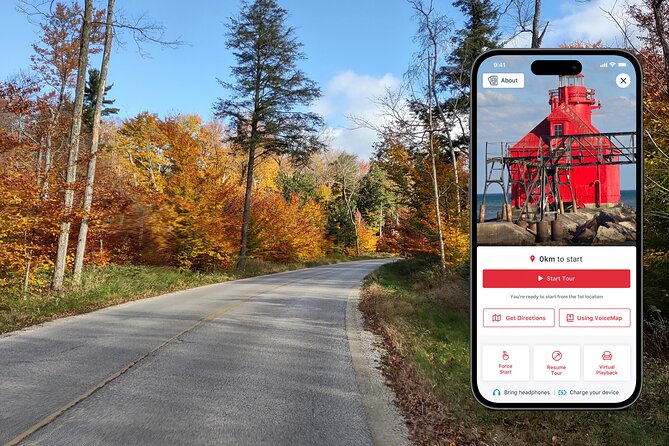
- Offline audio and maps mean you can keep going even when data is unreliable
- Maritime + farming focus gives Southern Door County more variety than you’d expect from just passing signs
- A built-in lighthouse moment with a red-and-white beacon dating to 1899
- Geology you can feel at Cave Point, where wind and waves make the limestone drama real
- Orchard-to-table context around Seaquist Orchards and Door County’s cherry-making scale
Southern Door County’s story, driven not walked
Southern Door County has a way of making you slow down. Roads twist, bays open up, and every few miles there’s another sign for something old, something scenic, or something proudly local. This is a self-guided driving tour, so your job is simple: follow the route, listen when you want, and stop when something grabs you.
What makes it work (and what I think you’ll appreciate) is the balance. You’re not stuck in one theme. The tour threads together water history (shipyards, sailors, lighthouses) with land history (dunes, Native American village remnants, farm families, orchards). You also get the kind of “small details” that make a place feel lived-in—without needing a docent at every turn.
It’s priced at $19.99 per group (up to 15 people), which is unusually reasonable if you’re traveling with family or friends. For solo travelers, it still makes sense because you’re essentially buying one “local narrator” plus route guidance for a full half-day drive.
Getting started in Sturgeon Bay: coffee, then the maritime mood
Most Southern Door County trips start with a guess. This one starts with an actual anchor: Door County Coffee & Tea Co. in Sturgeon Bay (5773 WI-42). If you arrive a little early, grab a drink or just take a minute to get your phone ready before you roll. That tiny prep step helps you glide through the first stretch.
Stop 1: a cozy roastery with small-batch pride
The route begins by passing a family-run coffee roastery known for small-batch roasting. Even if you don’t buy anything, you’ll notice how that first sensory detail sets the tone. You’re going to be watching water, buildings, and farms for the next few hours—starting with something local makes the whole drive feel more personal.
Stop 2: a waterfront museum for shipyard context
Soon after, you’ll pass a waterfront museum tied to Sturgeon Bay’s shipbuilding legacy. The focus isn’t generic Great Lakes romance. You get exhibits connected to historic vessels, shipyards, and sailors, which matters because the rest of the drive keeps circling back to how people made a living on the water.
Practical note: a museum stop on a drive tour can be quick, even if you don’t enter right away. If you’re the type who likes to stop “for five minutes” and then lose a half hour, you’ll want to keep an eye on your timing.
The lighthouse and the canal drive: built in 1899, still doing its job
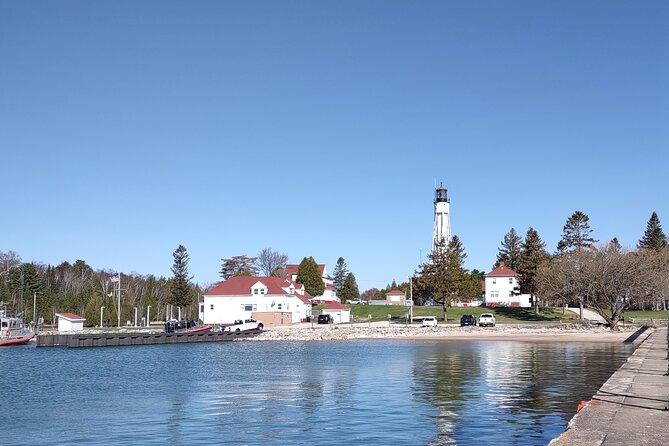
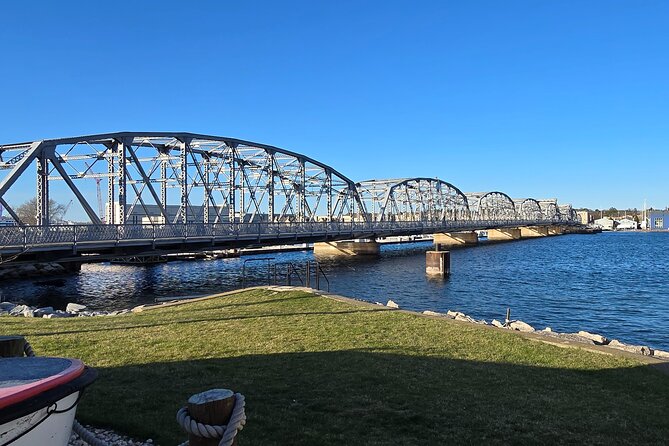
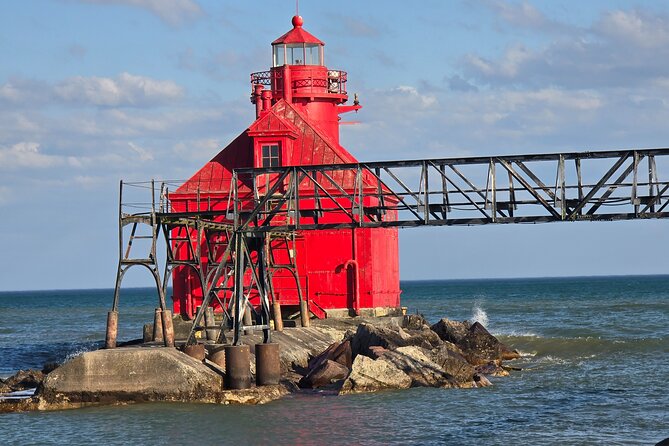
Once you’re out in the Sturgeon Bay waterway area, the tour points you toward a striking red-and-white lighthouse built in 1899. It still serves as a navigational aid, which gives the landmark more weight than a photo-op.
This is one of those places where the road angle matters. If you’re stopping for a moment, park where you can safely get out, take a few photos, then get back behind the wheel. The tour pacing is designed for driving first, stopping second.
Why I like this part of the route: it connects the earlier shipyard museum context to a very visible “working” landmark. You’re seeing how the area’s maritime identity isn’t just in old stories—it’s in the present-day way boats find their way.
Dunes, ancient village remnants, and what the wind is telling you
After the lighthouse, the tour follows along toward a lakeside park known for towering sand dunes. The dunes are described as among the highest in Wisconsin. Under those shifting sands are remnants of ancient Native American villages, with evidence that people lived here for over a thousand years.
This section is where the drive tour changes from scenery to perspective. Dunes can look like just “sand and sky” from the road. But with the right narration, you start noticing how a landscape keeps records—layer by layer—of who lived there, how they moved, and how the shoreline changed over time.
Accessibility heads-up: dunes and shorelines can mean sand, uneven ground, and limited paths. The driving part is easy, but if you want to go beyond the roadside view, you may need to choose your spots carefully.
Cave Point on the Niagara Escarpment: watch for the sea caves
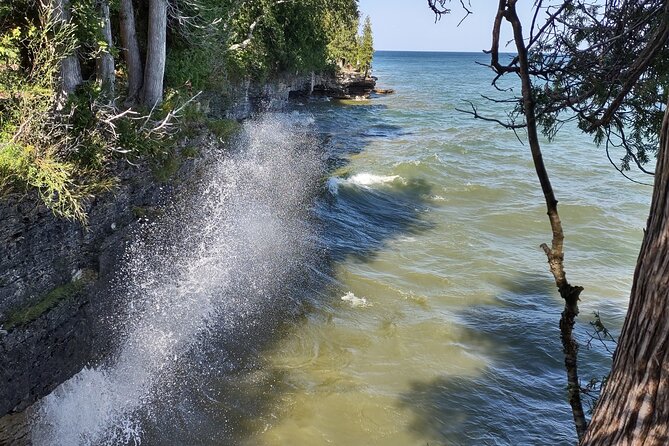
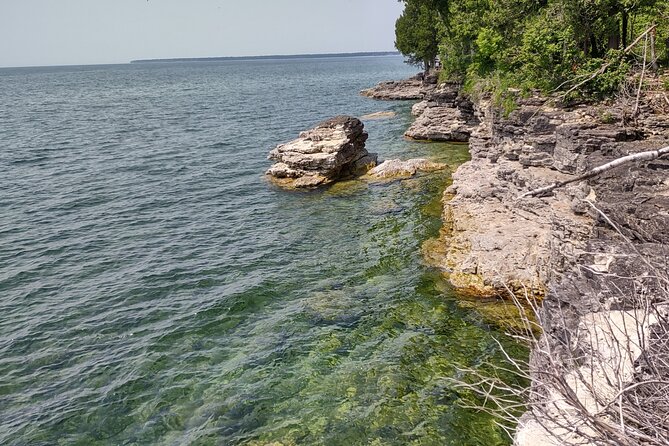
Next comes one of the region’s most dramatic natural stops: Cave Point, where Lake Michigan has carved limestone cliffs into the Niagara Escarpment. On windy days, waves can crash into hidden sea caves and send up impressive sprays of water.
If you’ve never seen limestone cliffs like this in motion, plan to spend at least a few minutes on this stop. The best results often come from timing with weather. Wind and wave action turn a viewpoint into an actual show.
Practical advice: bring a light layer or windbreaker even in warmer months. The spray can be cold, and this is the kind of place where you’ll feel the temperature change fast once the wind picks up.
Jacksonport: Scandinavian roots and a playful naming story
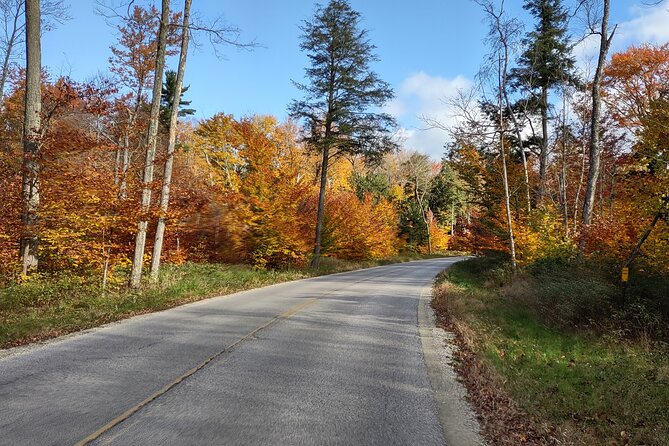
As the route rolls into Jacksonport, you’ll notice the shift from pure scenery to small-town rhythms. This community has deep Scandinavian roots, and the tour frames how fishing, farming, and lakefront living blended into everyday life.
It also offers a fun origin story for the town name: a legendary egg fight between sailors in the 1800s, a playful nod to a lively past. Even if you don’t care about local lore, this is the kind of detail that makes your photos feel more anchored—like you’re capturing something with a human heartbeat behind it.
Tip: Jacksonport is a great place to pause for a short walk if you enjoy looking at storefronts, dock lines, and everyday waterfront life. The tour itself is mostly “drive and listen,” but the town vibe is the reason you’ll want to stop more than once.
A shop and museum with Native crafts: Chief Oshkosh is part of the story
Continuing along, the tour passes a small, rustic building where you might see hand-carved wooden figures and Native American crafts displayed outside. The narration links the building to its origins, noting it was built by Chief Oshkosh and that the shop and museum preserve the artistry and traditions of Wisconsin’s indigenous communities.
This is the kind of stop that can feel thoughtful if you approach it with the right mindset. Don’t rush it like a roadside curiosity. Take a moment to look at the materials and craftsmanship, and read what you can. Even if you only glance from the roadside, the context you’re hearing makes the place feel more intentional.
A music school farmstead that turns into summer concerts
Next you’ll pass a historic farmstead that’s been turned into a music school. During summer, it hosts concerts where student musicians play alongside seasoned professionals. You likely won’t catch the music from the road, but that detail adds a “there’s life happening nearby” layer to the countryside.
I like this stop because it breaks the pattern. A lot of Door County drives focus on water or on tourism. This one reminds you the area also runs on teaching, practice, and performance—quietly, most of the year, and then suddenly during concert season.
Horseshoe Bay: barns, orchards, and the cherry era
When the route moves into Horseshoe Bay, you’ll see the look of an agricultural estate: historic barns and orchards. The tour frames it as a century-old agricultural area that was once a major player in Door County’s cherry industry, and it positions the remaining landscape as a symbol of the region’s farming roots.
This is a good point to slow down in your mind, even if you’re not slowing down your car. Door County can feel like a chain of postcard scenes, but the economic backbone is agriculture—especially cherries. The tour keeps setting you up for that later, so this part helps everything connect.
The triathlon pier stop and a simple waterfront pause
Just beyond the trees, you’ll pass a peaceful waterfront park with a sandy beach and a scenic pier. Each summer, it becomes the starting point of the Door County Triathlon.
Even if you’re not visiting during race week, the “start point” detail gives you a sense of scale and community energy. The park is also a nice place to stretch your legs if you want a quick break between more focused stops.
Accessibility note: beach and pier terrain can vary. If you have limited mobility or prefer firm ground, keep to the easiest paths near the roadside parking areas.
Seaquist Orchards: how Door County cherries become products
Then you’ll roll past miles of cherry orchards, with the tour pointing to Seaquist Orchards, a family-run operation that processes millions of pounds of cherries each year. The narration includes the output too: things like jams and pie fillings.
This part is valuable because it answers the question people often have after seeing cherry stands: where does all that fruit go? By giving you the scale of processing, you get a clearer picture of how cherry season supports year-round work, not just a few weeks of sales.
If you’re traveling in cherry season, you might notice how commercial and family life blend together quickly. If you’re not, don’t worry—the tour still helps you understand why Door County’s cherry identity is so strong.
Egg Harbor and the brewery stop: a craft break in the drive
Near the heart of Egg Harbor, the tour brings you to a laid-back brewery that’s popular with craft beer lovers. The description emphasizes small-batch brews inspired by local flavors, and it frames the stop as part of Door County’s growing craft beverage scene.
This is a smart placement late in the route. You’ve done the heavier listening blocks—history, geology, agriculture—and now you get a lighter, modern payoff. Even if you don’t stop for a drink (since food and drink aren’t included), it’s an easy “end-of-day mood” marker.
Ending near Egg Harbor: Green Bay water views and the final listening spot
The drive concludes with views of Green Bay’s waters, with the route passing through Horseshoe Bay again. The ending directions place you near the intersection of Horseshoe Bay Road and Sunny Point Road, just off Egg Harbor Road. The instructions note an abandoned driveway along the road where you can park and listen to the final stop.
This final setup is helpful because it reduces decision fatigue. You don’t have to find a scenic “somewhere” at the end; you’ve got a specific spot to finish your audio.
If you still have energy, use the ending area as a decompression zone. This is the part of Door County where you can just look at the water and feel like you got your bearings on the region.
Price, time, and what you’re really buying
At $19.99 per group for up to 15 people, you’re paying for three things: route guidance, audio storytelling, and offline access. The tour duration is listed at about 3 to 3.5 hours, but the real value comes from flexibility. If you want to pause for photos at Cave Point or linger by orchards, you control the stop length.
The main “cost” you should consider is not money—it’s attention. This is a listening tour, not a “see everything in a checklist” tour. If you’re more into constant action and less into reading and listening, you might want to shorten listening moments and treat it as a guided scenic drive.
Also factor in what’s not included: smartphone and headphones (you provide them), and transportation and food/drink. The tour is designed for people who already have a car and can drive between stops comfortably.
Who this tour suits best
This is ideal if you:
- have a car and want the freedom of a self-guided route
- like history that’s tied to real places—shipyards, dunes, orchards, and working navigation
- want an easy way to fill a half day in Southern Door County without planning every stop
- enjoy learning at a pace you control, with audio you can replay offline
It’s also a nice choice for groups because the price is per group and up to 15 people can share one experience.
If you hate the idea of listening to audio while driving, you may find the experience feels less useful. In that case, you might still enjoy the drive, but you’ll miss the context that makes the stops click.
A few smart tips before you go
- Download and test audio/maps first. Offline access is a core feature, but you want everything ready before you’re on the road.
- Treat the first minutes as setup time. Some people find the start confusing until the tour begins properly. Give yourself an extra moment at Sturgeon Bay to get oriented.
- Plan for spotty signal. Reception may dip in a couple areas; if your audio hesitates, step aside briefly or keep driving until it stabilizes.
- Pick your weather for Cave Point. Windy conditions are when the sea cave action tends to be most impressive.
- Don’t rush the orchard context. The cherry scale you hear about is the kind of detail you’ll remember later at a stand or bakery.
Should you book this Southern Door County drive?
I’d book it if you want a road trip that feels grounded in place—maritime work, dune-era timelines, and the cherry economy—without over-planning. The high rating and strong recommendation rate point to a tour that delivers what it promises: you learn a lot, you drive safely through the twisty county roads, and you can stop whenever you want.
Skip it (or at least adjust expectations) if you only want quick photo stops and don’t want to listen to guided audio for long stretches. Also, if you’re uncomfortable with phone-based navigation and audio, you’ll feel the friction more than most.
For most visitors with a car, though, this is a smart use of time: a compact route that explains Southern Door County while still letting you enjoy the scenery on your terms.
FAQ
How much does the Southern Door County self-guided drive cost?
It’s priced at $19.99 per group, with a group size of up to 15 people.
How long is the tour?
Plan on about 3 hours to 3 hours 30 minutes.
Where does the tour start and end?
It starts at Door County Coffee & Tea Co., 5773 WI-42, Sturgeon Bay, WI 54235. It ends at the intersection of Horseshoe Bay Road and Sunny Point Road, just off Egg Harbor Road, near Egg Harbor.
What’s included in the tour?
You get lifetime access to the tour in English before your booking date and after it, plus self-guided GPS flexibility, directions to the starting point, an Android/iOS app, and offline access to audio, maps, and geodata.
What do I need to bring?
The tour does not include a smartphone or headphones, so you’ll need to bring your own device and audio setup.
Do I need a car?
Yes. Public transportation in Door County is limited, and most landmarks are best reached by vehicle.
Is there a walking portion?
This is a self-guided driving tour with limited physical activity, but some locations you may want to visit (like parks or lighthouses) can have uneven terrain or limited accessibility.
What language is it offered in?
The tour is offered in English.
Is it a private experience?
Yes. Only your group participates.
Can I cancel for a full refund?
Yes, you can cancel up to 24 hours in advance for a full refund. If you cancel less than 24 hours before the start time, the amount paid won’t be refunded.