REVIEW · VANCOUVER
Ancient Trees of Vancouver Walking Tour
Book on Viator →Operated by Ancient Trees of Vancouver · Bookable on Viator
Stanley Park hides giants in plain sight. On this Ancient Trees of Vancouver walking tour, you follow expert tree guide Colin Spratt through the park while he connects towering conifers to Vancouver’s older stories.
I especially love how the tour uses old maps and 120-year postcards plus photos from archives, so the forest history feels real, not abstract.
One thing to plan for: you meet at Ferguson Point and walk for about three hours, with no pick-up or drop-off, so comfy shoes really matter.
In This Review
- Key things to know before you go
- The real reason this tour works in Stanley Park
- Your 3-hour walking plan, from Ferguson Point to back again
- Stanley Park’s ancient giants: what you’ll spot on the trail
- What makes “old growth” feel different, up close
- How Colin Spratt connects trees to Vancouver’s deeper past
- Cedar stories you’ll remember
- Old maps and 120-year postcards: history you can hold in your head
- The ecology lessons: nurse logs, resilience, and why 1,000 years isn’t random
- Small group size: why 10 people matters more than you think
- Value check: is $56.33 for 3 hours actually fair?
- Best fit: who this tour suits (and who might skip it)
- So, should you book Ancient Trees of Vancouver?
- FAQ
- FAQ
- How long is the Ancient Trees of Vancouver walking tour?
- How much does the tour cost?
- Where does the tour start and end?
- Is the tour offered in multiple languages?
- What group size should I expect?
- Is Stanley Park admission included?
- Do I need a paper ticket?
- Is there pick-up or drop-off included?
- What are the cancellation rules?
Key things to know before you go
- Max 10 participants keeps the pace calm and the group from feeling packed.
- Old-growth tree highlights include Douglas firs (around 600–800 years old) and giant western red cedars (around 1,000 years old).
- A Canada superlative: you’ll also hear about the largest known maple tree in all of Canada.
- Archive visuals are part of the tour: old maps, 120-year postcards, and photographs help you “read” the park.
- Coast Salish context is woven in through cedar stories and how cedar fibers shaped daily life.
- You loop back to the start at Ferguson Point, so your timing stays simple.
The real reason this tour works in Stanley Park
If you’ve only seen Stanley Park from the road, this tour changes your brain. The key is the way Colin Spratt guides you: you’re not just “looking at trees,” you’re learning how to notice what makes old forests different from managed parks.
What I like most is that the focus stays practical. You come away with a sharper eye for scale (how wide, how tall, how old), and for the small ecological clues that explain why these trees still matter today. And it’s delivered with a sense of humor and wonder that never feels forced—just a guide who clearly cares.
There’s also a good balance here. The walk includes forest ecology, the historical changes around the park, and the role Indigenous peoples had in shaping the region for thousands of years before the area became an urban park.
You can also read our reviews of more tours and experiences in Vancouver.


Your 3-hour walking plan, from Ferguson Point to back again
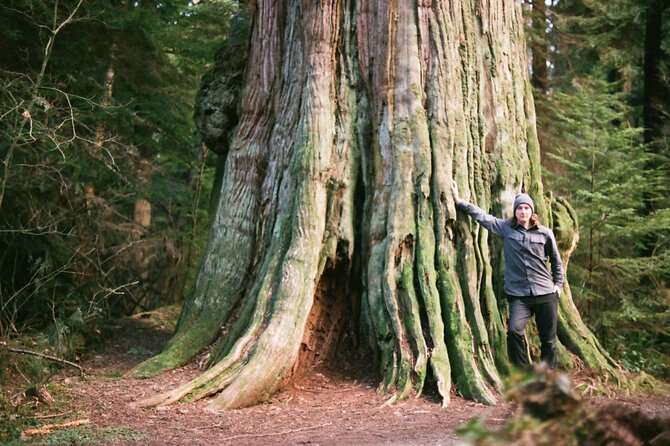
The whole experience runs about 3 hours and ends right where it starts. You’ll begin at Ferguson Point, 7501 Stanley Park Dr, Vancouver, BC V6G 3E2. The tour is offered in English, and you’ll get a mobile ticket.
No pick-up, no drop-off. That matters because you’re doing a straightforward meeting-and-walk format. Plan to arrive a few minutes early so you don’t feel rushed before you’re matched up with the group.
The walking itself is described as along park trails and you’ll spend enough time standing still to really see what the guide wants you to notice. It’s not a long-distance hike, but it is long enough that I’d avoid flip-flops and call it a “walk day” for your legs.
Stanley Park’s ancient giants: what you’ll spot on the trail
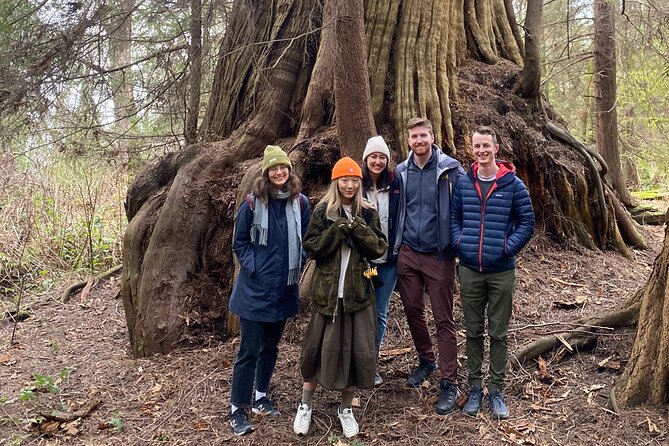
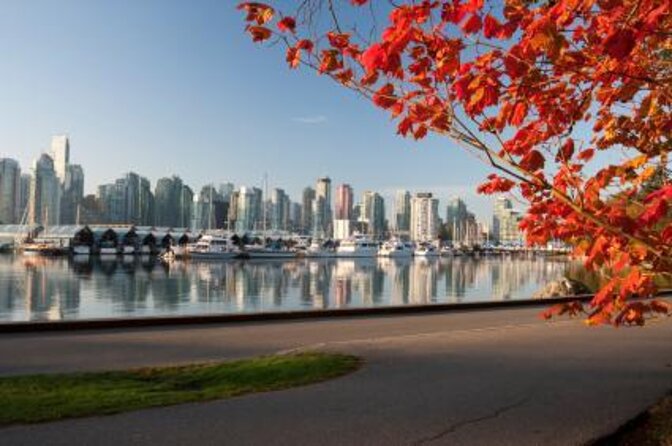
Stanley Park is famous for views, beaches, and the ocean-edge vibe—but the reason this tour is worth your time is that it shifts you into the forest layer where the park’s age shows.
Over the course of the route, you’ll be guided to see:
- Towering Douglas firs estimated around 600 to 800 years old
- Ancient western red cedars, with highlights described around 1,000 years old
- The largest known maple tree in Canada (you’ll hear what makes it notable and why it’s part of the big-tree story)
This is where small-group sizing helps. With a maximum of 10 travelers, you don’t end up waiting at every stop. The guide can slow down for questions and keep everyone oriented without the tour turning into a queue.
What makes “old growth” feel different, up close
Old-growth forests aren’t just old trees in a pretty setting. The guide explains why the forest structure matters—how old trees create habitat, and how old ecosystems store and cycle life differently than younger stands.
Even better, you’re not left with vague ideas. You’re shown physical clues, so you understand the ecology through what you can actually see. That’s the big win: you learn to read a living system.
How Colin Spratt connects trees to Vancouver’s deeper past
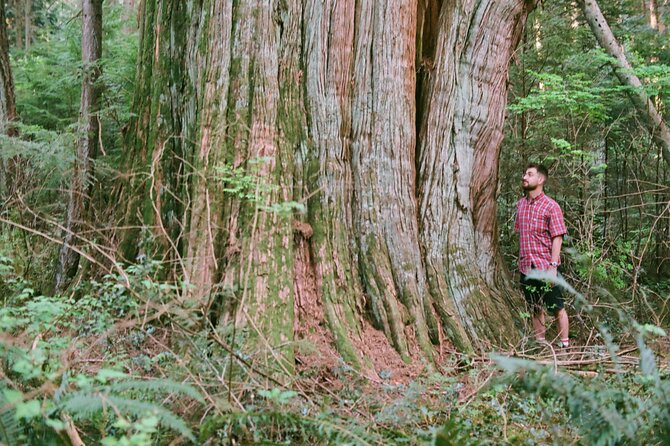
Colin Spratt is one of the reasons this tour gets such consistent high marks. He’s not just pointing at trunks—he’s building a story that links ecology to human history.
Expect a thread that starts with the Indigenous history of the area. You’ll learn about the original Coast Salish inhabitants and how the land was home for thousands of years before it became an urban park. Then the tour shifts to how the park’s forest has been shaped over time, including the pressures that threaten old growth.
Cedar stories you’ll remember
Cedar shows up in multiple layers of the tour. The guide talks about the cedar as a kind of “tree of life” and explains how cedar fibers were woven into everyday life and textiles.
You’ll also hear practical uses tied to cedar:
- wood used for longhouses and canoes
- bark used as a resource for clothing and rope
And it goes beyond human use. The tour also highlights the way old trees support life in surprising ways. One example you may hear is how hollows in older cedars can provide habitat for wildlife, with stories shared about bears using these spaces.
Old maps and 120-year postcards: history you can hold in your head
A lot of walking tours say they’ll share history. This one gives you something concrete: old maps, roughly 120-year postcards, and archive photographs.
That changes the feel of the walk. Instead of hearing dates and guessing what used to be where, you’re shown images that help you match the past to the present. It’s like turning on a layer in your mental Google Earth.
The result is that Stanley Park stops being just a scenic place you pass through. It becomes a living timeline—where the forest itself is part of the documentary.
And because you’re viewing these visuals while standing in the park, the messages stick. You’re not learning about trees in a vacuum. You’re learning how the park’s identity has been shaped, and what old-growth ecosystems are facing now.
The ecology lessons: nurse logs, resilience, and why 1,000 years isn’t random
One of the strongest themes is how the guide connects “age” to “function.” Old-growth trees don’t just sit there. They create conditions for new life.
You may hear about nurse logs—fallen trees that support seedlings as they grow. It’s a simple idea, but it has a huge payoff: you start to notice that death and decay in forests are part of ongoing renewal, not an ending.
The tour also touches on resilience. For example, the guide explains why cedars have natural resistance to fire and rot—a key reason these species can last through long cycles. And because you’re seeing mature trees up close, those explanations don’t feel like textbook facts.
Even the way older trees can look is part of the lesson. Stories about hollowness and how those structures can protect and host life help you understand that an “imperfect” tree may still be thriving in its own way.
Small group size: why 10 people matters more than you think
A group of 10 can sound like a marketing detail, but on a walk tour it changes everything.
With a smaller group:
- you get more time at each stop
- you can hear explanations clearly without shouting over the crowd
- the guide can match the pace to the group
In practice, it means you’re not constantly moving to keep up. You can stop, look, and ask questions. If you’re traveling with kids or you just want a break from fast museum-style pacing, this kind of structure is a nice fit.
Value check: is $56.33 for 3 hours actually fair?
At $56.33 per person for about 3 hours, you’re paying for a focused guide experience, not a big bus-and-schedule tour.
Here’s why I think it’s good value:
- You’re getting a guide with a serious tree focus (Colin Spratt is a big-tree committee member and “big tree seeker”).
- The content isn’t generic. Old maps, 120-year postcards, and photos are built into the route.
- You get a small-group format in a famous park where many other tours feel rushed.
What might make you rethink it? If you’re planning to spend your day in Stanley Park mostly on your own, you might feel like you could recreate some of this by browsing tree descriptions online. But if you want the narrative and the eye-training—plus the Indigenous cedar context—this tour is the easiest way to get it without turning your day into homework.
Best fit: who this tour suits (and who might skip it)
This is a strong pick if you:
- love trees, forests, and natural details
- want history that connects to place, not just plaques
- prefer walking tours with a smaller group
It’s also a good family option in many cases, since the pacing is based on easy trails and the guide can answer questions as you go.
If your idea of a park day is mostly cycling, beaches, and quick sightseeing stops, you might choose this only if you’re specifically craving the forest side of Stanley Park. The tour is built around walking and paying attention—not racing through highlights.
So, should you book Ancient Trees of Vancouver?
If you want Stanley Park to feel new—less like a postcard stop and more like a living ecosystem—book it. The combination of giant-tree viewing, Colin Spratt’s storytelling, and the use of archive visuals is exactly what turns an ordinary walk into a memorable education.
I’d book this if you enjoy both ecology and local history, and you’re happy meeting at Ferguson Point and walking for about three hours. If that sounds like your kind of day, you’ll probably leave with a different way of seeing trees everywhere in the city.
FAQ
FAQ
How long is the Ancient Trees of Vancouver walking tour?
It runs for about 3 hours (approximately).
How much does the tour cost?
The price is $56.33 per person.
Where does the tour start and end?
It starts at Ferguson Point, 7501 Stanley Park Dr, Vancouver, BC V6G 3E2, Canada, and ends back at the same meeting point.
Is the tour offered in multiple languages?
The tour is offered in English.
What group size should I expect?
The tour has a maximum of 10 travelers.
Is Stanley Park admission included?
The information provided shows admission ticket is free, and the tour includes the walking tour with the guide.
Do I need a paper ticket?
You’ll have a mobile ticket.
Is there pick-up or drop-off included?
No. Pick-up and drop-off at the meeting point are not included.
What are the cancellation rules?
You can cancel for a full refund up to 24 hours in advance. If you cancel less than 24 hours before the start time, the amount paid is not refunded.