REVIEW · AGRIGENTO
Agrigento: Private Tour of Ancient Akragas with Local Guide
Book on GetYourGuide →Operated by Italygonia Travel T.O. · Bookable on GetYourGuide
One walk starts you thinking in ancient Akragas. I like that the route hits the Valley of the Temples highlights in a tight, logical flow, and I also like the focus on specific structures like Hera Lacinia (Juno) and Concordia. One thing to consider: tickets aren’t included, so you’ll want to plan a quick stop at the ticket office meeting point area.
This is a private tour with a licensed local guide, designed for 2 hours of real “seeing with context,” not just photo stops. You’ll move from one major Doric temple to the next, with viewpoints over the valley that help the ruins make sense. If you want a longer museum-style day, this might feel short—but for getting your bearings fast, it works well.
In This Review
- Key highlights at a glance
- Start at the Juno Temple: where your guide will set the tone
- Hera Lacinia (Juno): Doric columns with a 450 BC timeline
- Temple of Concordia: second-best preserved for a reason
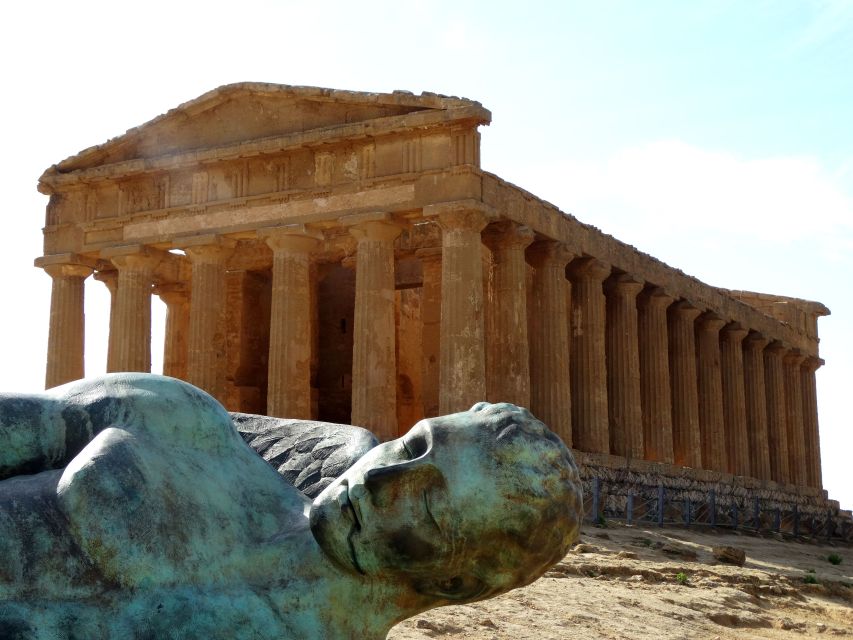
- The Icarus statue by Igor Mitoraj
- Temple of Hercules (Heracles): the Doric “strength” stop
- Prickly pear and panoramic pauses: making the valley readable
- Temple of Jupiter (Zeus): telamons and the damage story
- Reconstructed telamons: over 7 meters tall
- How long is enough for the Valley of the Temples?
- Price and value for a private group
- What this tour is best for (and who it might not fit)
- Should you book this private Ancient Akragas tour?
- FAQ
- How long is the Agrigento private tour of Ancient Akragas?
- Where do we meet for the tour?
- Are the tickets included in the tour price?
- What does the tour include?
- What languages are available for the guide?
- Is this a private group tour?
- Is there free cancellation?
Key highlights at a glance
- Juno (Hera Lacinia) first at the Rupe Atenea, with the Doric columns and the story around the temple
- Temple of Concordia as one of the best-preserved Doric temples, preserved thanks to later Christian use
- Icarus statue by Igor Mitoraj—a modern bronze that anchors the myth in a very physical way
- Temple of Hercules (Heracles)—a Doric stop tied to the bronze statue of Hercules mentioned in the tour
- Temple of Jupiter (Zeus)—you’ll see the idea of telamons (giants) and why the site changed over time
- Panoramic valley paths with prickly pear trees adding an unmistakable Sicilian feel
Start at the Juno Temple: where your guide will set the tone
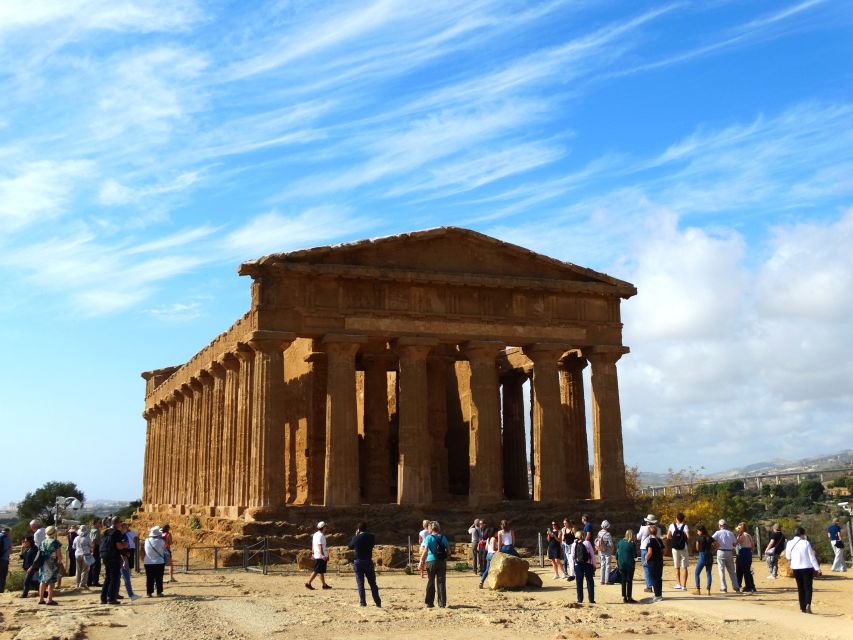
The tour meets at the Valley of the Temples outside the ticket office / car parking, at the Juno Temple (the biggest). That choice matters. It’s a clean orientation point, and it lets your guide start explaining the layout of the valley right away—before you get lost in the scale of all those ruins.
Because this is private, you’ll have the guide’s attention for the whole 2-hour window. The guide is licensed and wears a visible badge, and the tour runs in Italian, English, French, German, or Spanish, depending on the day.
One small planning detail: entry tickets are not included. Your guide will still bring you through the temple area, but you’ll need to buy tickets at the ticket office on-site.
Hera Lacinia (Juno): Doric columns with a 450 BC timeline
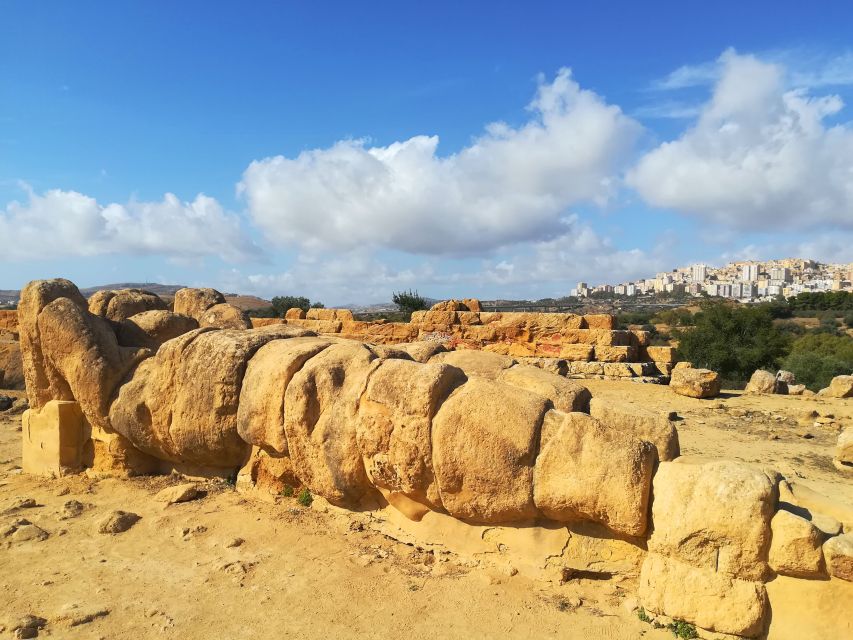
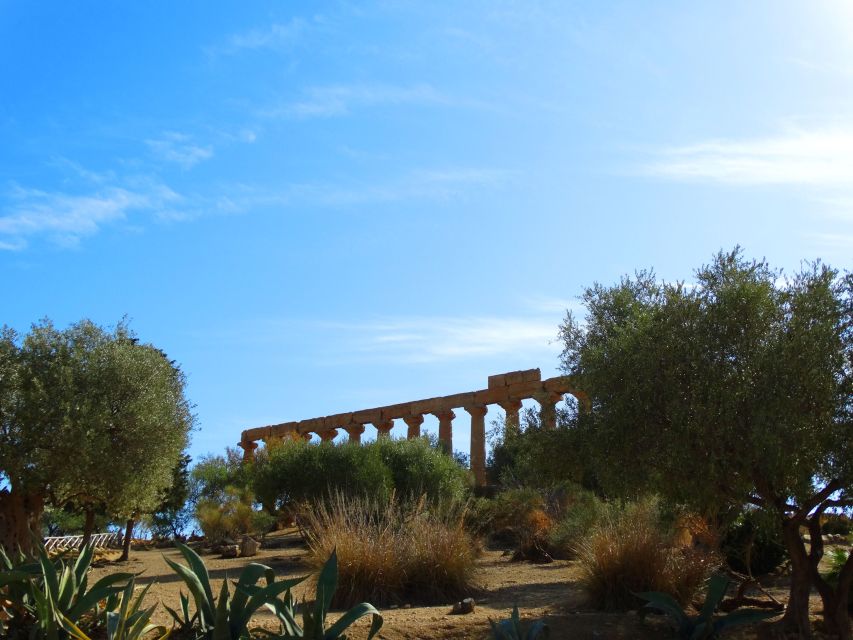
The tour starts immediately at the Temple of Hera Lacinia, also called Juno. The guide points you toward its situation on the hill of the Rupe Atenea, with its Doric columns rising to about 120 meters high—and it dates back to 450 BC.
What I like about starting here is the way it frames the rest of the valley. You’re looking at a Hellenic-period temple with the kind of Doric rhythm that makes the site feel like a planned city space, not random stone blocks.
The story around the temple is also part of the tour’s value. It’s dedicated to Juno because, according to what you’ll hear on the walk, a painting inside the temple probably depicted the goddess protector of women and fertility. Whether you view it as religious practice or symbolic civic identity, it helps you see why these temples weren’t just impressive architecture—they were community centerpieces.
Temple of Concordia: second-best preserved for a reason
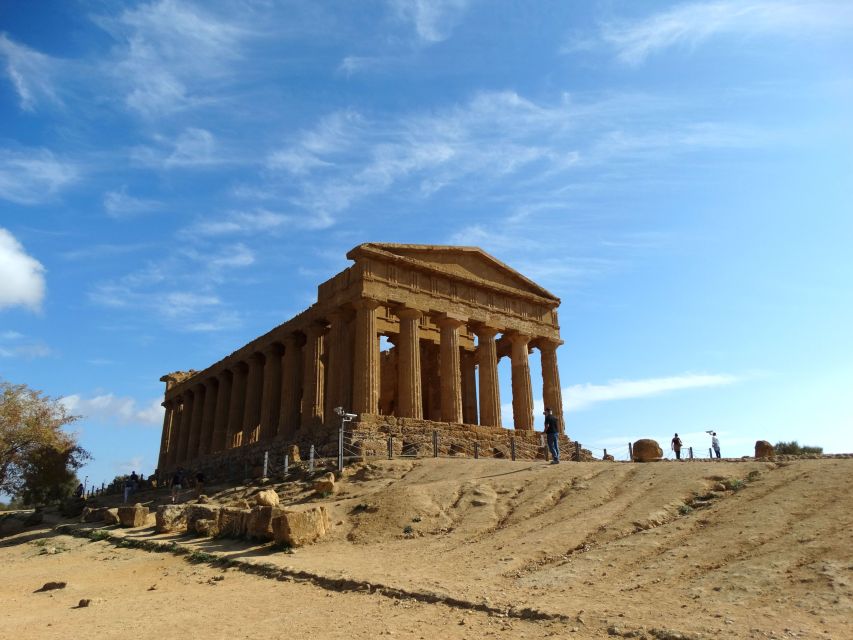
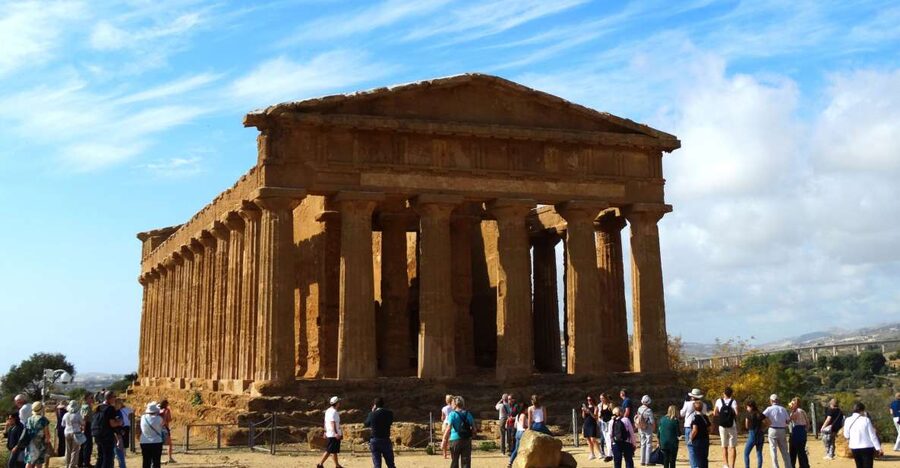
A few steps away you’ll reach the Temple of Concordia, widely treated as the second best preserved temple in the world after the Parthenon in Athens (as presented in the tour context). It dates to about 430 BC, and the big reason it survived in such strong shape is that it was transformed into a Christian church.
That later use is one of those “history layers” that can be easy to miss when you’re only looking at ancient ruins. Here, you’re meant to notice that the temple’s survival wasn’t luck—it was continuity of use, which kept the structure standing through centuries when many other sites suffered.
The Icarus statue by Igor Mitoraj
In the front part of the Concordia temple area, you’ll also see the bronze statue of Icarus, donated by the Polish sculptor Igor Mitoraj. The statue represents Icarus falling after disobeying his father and flying too close to the sun; his wax wings burn, and he falls into the Mediterranean.
What makes this detail more than a quick photo? It gives you a myth you can physically “place” inside the temple setting. You’re not just learning a Roman/Greek name list—you’re watching a modern interpretation of an old story stand right where worship and civic life once centered.
Temple of Hercules (Heracles): the Doric “strength” stop
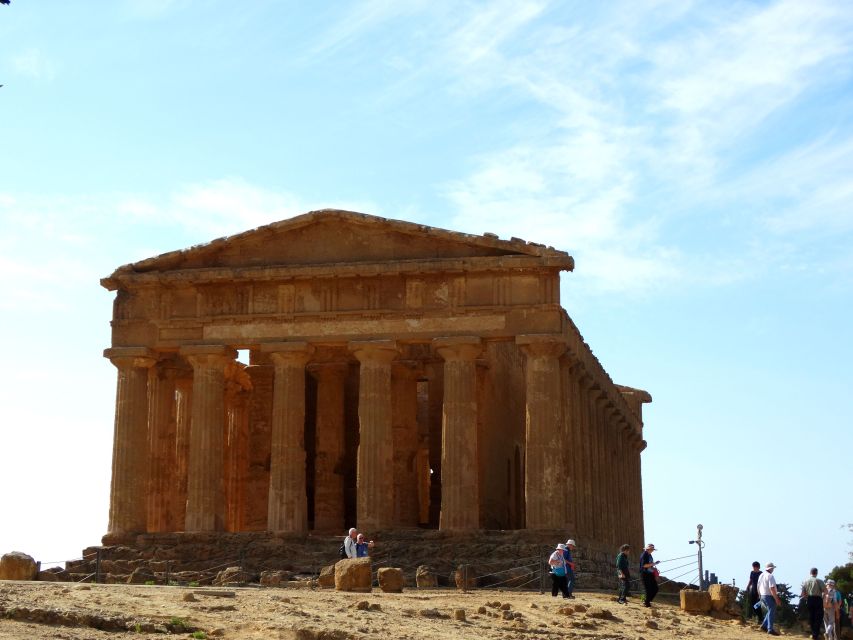
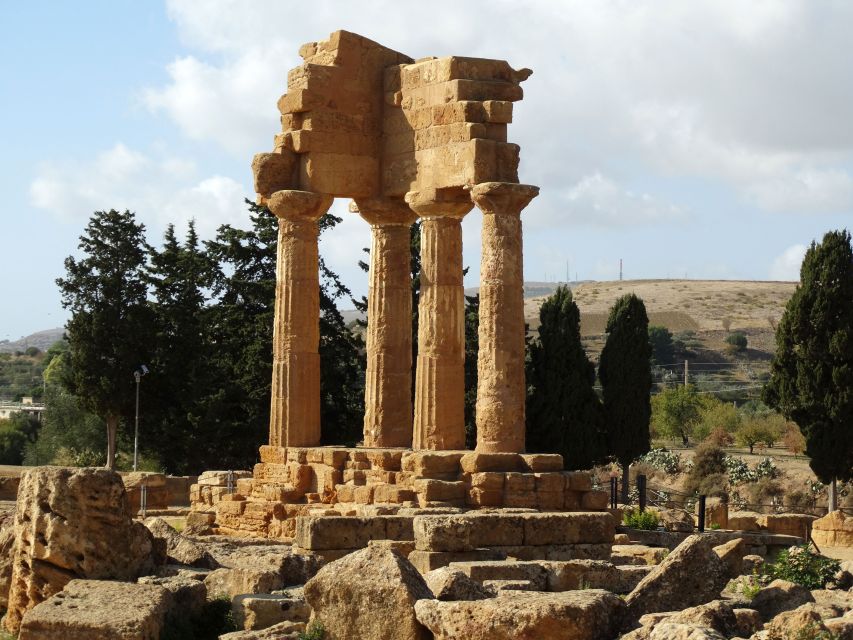
Next comes one of the oldest Doric temples of Agrigento: the Temple of Hercules, known as Heracles for the Greeks. This is another place where the tour doesn’t only show you stones. It connects the temple’s identity to the bronze statue of Hercules (as described in the tour), linking the structure’s meaning to the idea of Hercules as the strongest and most valiant of the gods.
If you’re trying to understand ancient Akragas as a place with themes—strength, fertility, harmony—this stop helps stitch those ideas together. And because the tour keeps moving at a walkable pace, you don’t lose the “temple-to-temple” context between stops.
Prickly pear and panoramic pauses: making the valley readable
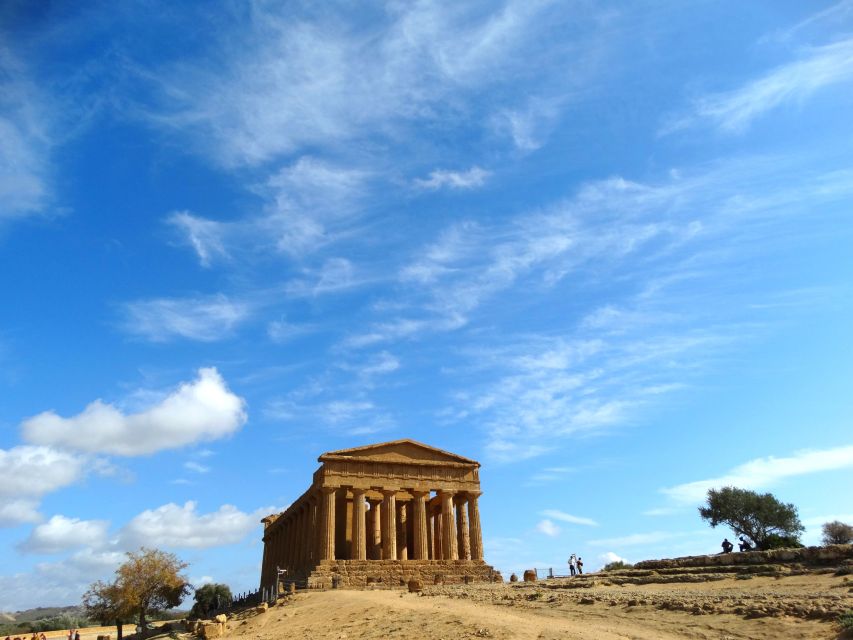
Between the temples, you’ll travel along paths that give you breathtaking panoramic views over the valley. Along the way, you may notice prickly pear trees, which add a clear Sicilian texture to what could otherwise feel like a stone-only experience.
These pauses are practical. Ruins can look random until you see them from the right angle. When the guide points out the valley view, you start understanding how ancient Akragas used elevation and spacing to make temples visible and meaningful from far around.
Even in a short 2-hour tour, these viewpoints do a lot of work. They help you stop treating the site like a checklist and start treating it like a designed landscape (even if you’re not “reading” it like a map, your eyes will).
Temple of Jupiter (Zeus): telamons and the damage story
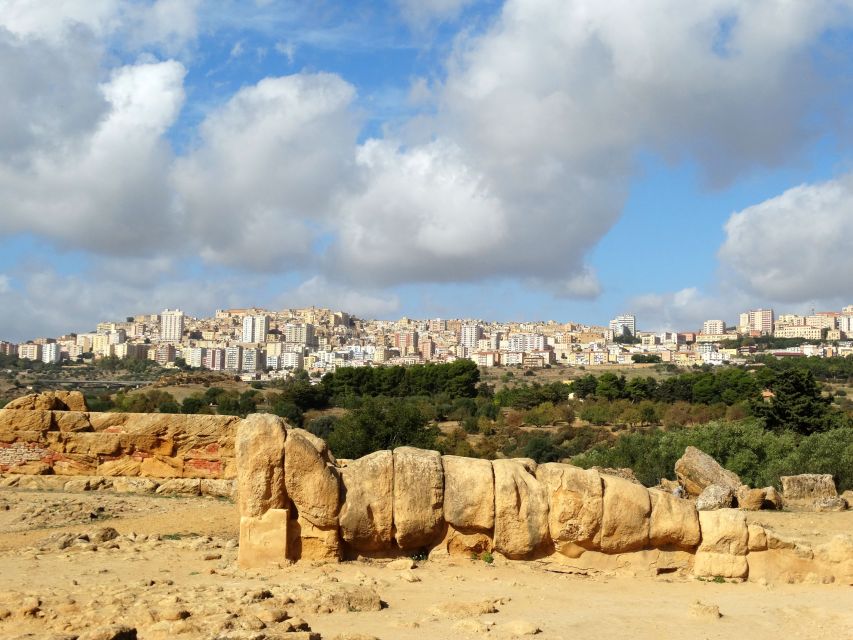
The final major stop is the Temple of Jupiter (Zeus). You’ll learn that it was originally one of the largest temples of classical antiquity, but over time it was damaged due to earthquakes. The tour also covers how it was later used as a quarry for construction of the Porto Empedocle pier.
That’s an important context point. A lot of ruins look mysterious until you hear the practical reasons they ended up that way. Here, the guide’s story explains the transformation—how a sacred structure can become raw material for new infrastructure.
Reconstructed telamons: over 7 meters tall
Among the ruins, you’ll see the reconstruction of one of the telamons—stone sculptures of giants placed outside the temple to protect the divinity. The tour specifically notes a telamon reconstruction over 7 meters high.
I like this because it turns the idea of protection into something you can physically measure with your body. A giant guardian makes sense in a setting where your attention naturally rises and stretches toward the tallest elements. You come away with a clearer sense of the temple’s original majesty, even though you’re viewing it through loss and rebuilding.
How long is enough for the Valley of the Temples?
This private tour runs 2 hours. For many people, that’s the sweet spot. You get multiple headline temples, plus the valley viewpoint time that helps everything click.
The trade-off is simple: you won’t have the slow-browse time you might want if you love museums, reading every sign, or stopping for extended sketching/photo sessions. If you want maximum time on one temple’s details, consider pairing this with extra self-guided time after the tour.
Price and value for a private group
The price listed is $326.26 per group up to 25. That structure can be a real value lever, depending on your travel style. If you’re traveling as a small group (friends, family, or a tour group you organized), splitting the cost can make this feel like a smart way to buy expert context without paying for separate guides per person.
Also, you’re not just paying for someone to lead you around. You’re paying for a licensed guide who connects each temple to dates, dedications, later historical uses (like Concordia becoming a church), and story elements such as the Icarus statue by Igor Mitoraj and the telamons at Zeus.
One thing to budget mentally: tickets aren’t included. That’s not a deal-breaker, but it does mean your final day cost won’t be exactly the advertised total unless you factor in entry at the ticket office.
What this tour is best for (and who it might not fit)
This experience fits best if you want:
- A tight route through Agrigento’s Valley of the Temples with clear explanations
- A guide who can connect the temples to myth, civic identity, and later historical changes
- A private setting where you can listen closely and ask questions without crowd friction
It might not fit as well if you:
- Want a long, museum-heavy plan
- Prefer doing everything at your own pace without a set structure
- Are expecting tickets and museum entry to be included in the price (they’re not)
Should you book this private Ancient Akragas tour?
I’d book it if you’re coming to Agrigento for the first time and you want the Valley of the Temples to make sense quickly. The order of stops—from Juno to Concordia to Hercules, and then ending with Zeus—creates a clear narrative arc: origin, survival, myth, strength, and scale.
If you’re the type who loves reading the stones with a local guide, this is a good match. And if you’re traveling with others, the per-group pricing can make the guided portion feel like strong value—especially because the tour is specifically built around the biggest, most meaningful temple highlights you’d otherwise have to piece together yourself.
Just go in with one practical mindset: plan for ticket purchase on-site, and accept that 2 hours is about getting the essentials well explained, not seeing every detail like a full-day deep study.
FAQ
How long is the Agrigento private tour of Ancient Akragas?
It lasts 2 hours, with starting times depending on availability.
Where do we meet for the tour?
You meet at the Valley of the Temples outside the ticket office / car parking, at the Juno Temple area (the biggest).
Are the tickets included in the tour price?
No. Tickets entry are not included, and you can buy them on the spot at the tickets office.
What does the tour include?
The tour includes a licensed tour guide. Entry tickets and museum access are not included.
What languages are available for the guide?
The guide is available in Italian, English, French, German, and Spanish.
Is this a private group tour?
Yes, it’s a private group experience.
Is there free cancellation?
Yes. You can cancel up to 24 hours in advance for a full refund.