REVIEW · WARSAW
Private Tour: Warsaw’s Jewish Heritage by Retro Fiat
Book on Viator →Operated by WPT1313 Warsaw Private Tours · Bookable on Viator
A vintage Fiat can carry heavy history. This private, 4-hour tour traces Warsaw’s Jewish past city by city with a guide who connects what you see to what happened—before, during, and after WWII—while hotel pickup and drop-off keeps it low-stress. I love how the route is built around real places, not just talking points, and I also love the special touch of a driver-guide format that lets you ask questions as you go.
One thing to watch: Sabbath timing can limit access to the synagogue and cemetery from Friday evening through all day Saturday.
In This Review
- Key highlights worth knowing
- A vintage Fiat route for Warsaw’s Jewish heritage
- The ride matters (even beyond the fun factor)
- Price and timing: what you’re really paying for
- The private format: how it changes your day
- Stop-by-stop: from ghetto wall fragments to Muranów streets
- 1) Fragments of the Ghetto Wall
- 2) Chłodna Street and the Judenrat connection
- 3) The Warsaw Ghetto area (Muranów / former Large Ghetto)
- 4) Monument to the Ghetto Heroes (1943 uprising)
- A few quick passes you shouldn’t skip in your head
- Nożyk Synagogue: a living survivor, not a museum stop
- The cemetery stop: paying attention to both scale and names
- POLIN Museum option: when you want the deeper history
- What makes this tour feel personal (and why guides matter)
- Practical tips that keep the tour smooth
- Bring head covering
- Wear shoes you can walk in
- Ask your guide what you want to prioritize
- Plan for what you might not be able to enter
- Who should book this tour?
- Should you book the Warsaw Jewish Heritage by Retro Fiat tour?
- FAQ
- What does the tour include?
- How long is the tour?
- Are there admission fees for the stops?
- Can I enter Nożyk Synagogue and the cemetery?
- Do I need to bring anything?
- Where is pickup, and is the tour private?
- FAQ
- Do I need to cover my head at Jewish sites?
- Is POLIN Museum entry included?
- What happens if my tour is on a Friday evening or Saturday?
- Is there flexibility to tailor the tour to my interests?
- How does hotel pickup work?
- What if I need to cancel?
Key highlights worth knowing
- Retro Fiat 125p transport with a private driver-guide, adding personality to a serious route
- Ghetto Wall and key memorial stops with short, free viewing windows and guided context
- Nożyk Synagogue is an active place of worship and the only surviving prewar Jewish prayer house in Warsaw
- Muranów (former Large Ghetto) and street-level history, including surviving fragments and modern overlays
- POLIN Museum option if you want a longer, ticketed history stop at your pace
- Head covering required for some sites, so bring a light scarf or hat
A vintage Fiat route for Warsaw’s Jewish heritage
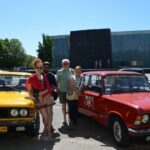
Warsaw’s Jewish history is everywhere in the city—on corners, in street layouts, in the way neighborhoods were reshaped. The smart move here is doing it with a private guide while you can still connect the dots in real time. You start with pickup (from city-center hotels) and step into a Retro Fiat 125p with a guide who explains how each stop fits into the larger story.
What makes this format work is that it treats the city like a timeline. You see fragments of the ghetto wall, then shift to memorials and community history, and later move into places where life continued or was rebuilt. It’s not a fast sightseeing sprint. It’s a paced, story-driven ride.
You can also read our reviews of more tours and experiences in Warsaw.

The ride matters (even beyond the fun factor)
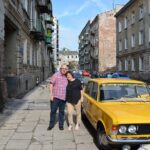
Yes, the classic car is a hook. But the transport also helps you cover ground efficiently without losing time. Warsaw’s Jewish heritage sites are spread out enough that self-guided touring can turn into lots of transit time and awkward re-routing. Here, you’re rolling from stop to stop with a driver-guide.
Also, there’s a practical note: for groups of 4+, the company uses a vintage minivan instead of the Fiat 125p. That can be helpful if you’re traveling with friends and want comfort over photo ops with the car.
Price and timing: what you’re really paying for
At $108.28 per person for about 4 hours, this isn’t the cheapest option in Warsaw. But private, transportation-included tours have a clear value: you’re buying time, context, and convenience, not just a checklist of locations.
Here’s where your money goes:
- Hotel pickup and drop-off (so you don’t have to solve meeting-point logistics)
- A professional driver-guide who can answer questions on the spot
- Private transport in the Retro Fiat 125p (or a vintage minivan for larger groups)
- A route that hits emotionally important places without forcing you into long days
Timing also affects what you can physically enter. The plan includes major sites like Nożyk Synagogue and the Jewish Cemetery, but access is tied to Sabbath hours. If your visit falls into that window, you may get the outside viewing and memorial context without entering. That changes the experience, so it’s worth checking your day-of-week before you book.
The private format: how it changes your day
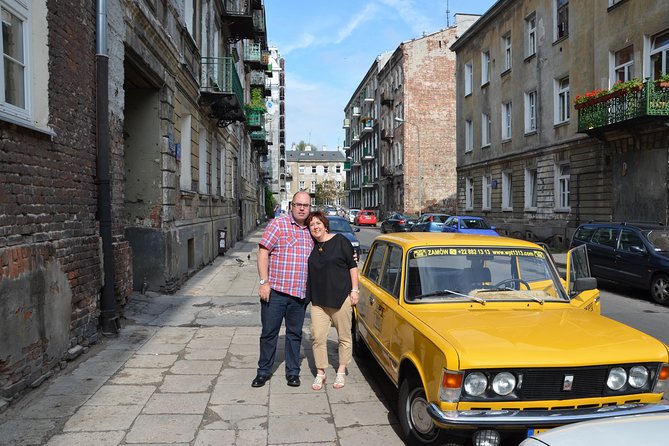
This is truly private—your group only—so your guide can adjust the pacing. You can also steer the history toward your interests. If you’re a WWII film fan, you can ask about The Pianist filming locations in Warsaw, since the guide can weave those references into what you’re seeing.
That matters because Warsaw is not one single storyline. It’s layers: centuries of Jewish life, then catastrophic interruption, then survival, rebuilding, and modern memory work. A private guide helps you keep that straight.
You’ll also get structured stop times—short viewing blocks where you’re moving through key reminders, plus longer moments for walk-through portions like the cemetery. In plain terms: you get enough time to look, but not so much time that you’re bored or lost.
Stop-by-stop: from ghetto wall fragments to Muranów streets
The tour starts in the central meeting area near the Palace of Culture and Science, then your guide picks you up at your hotel lobby if you’re in the city-center pickup zone. Once you’re seated, the story begins.


1) Fragments of the Ghetto Wall
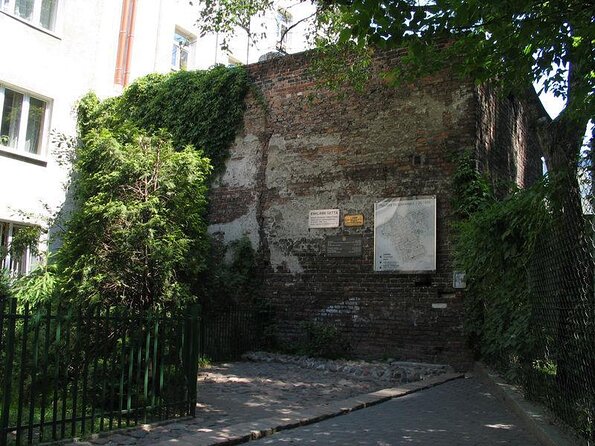
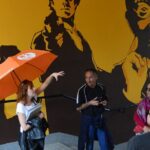
Your first stop is a fragment of the ghetto wall with commemorative plaques. This is brief—about 15 minutes—but it sets the tone. Seeing even a remnant of the wall gives you a physical scale for how imprisonment reshaped everyday life for hundreds of thousands of people.
Even if you know the history already, plaques and context help you read the site correctly. The guide’s job here is turning a piece of masonry into a map of fear, control, and confinement.
2) Chłodna Street and the Judenrat connection
Next you’ll head to Chłodna Street. Two things make this stop stand out:
- a Footbridge of Memory
- the building where Adam Czerniaków, president of the Jewish Community council (Judenrat), lived
This is one of those stops where you can feel how the ghetto system didn’t just operate with German authority. It also involved internal structures under brutal constraints. A guide can explain why that matters without losing you in details.
3) The Warsaw Ghetto area (Muranów / former Large Ghetto)
Then you move into Muranów, the former Large Ghetto district. The tour time here is longer (about 30 minutes), because the goal is to help you read the neighborhood now while understanding what it used to be.
Today, you’ll see modern buildings and street art. That’s not a contradiction—it’s part of the story. The guide shows how the city’s shape kept changing, even as memory and sites preserved certain anchors.
4) Monument to the Ghetto Heroes (1943 uprising)
After that, you’ll visit the Ghetto Heroes Monument, remembering the Warsaw Ghetto Uprising of 1943. This is about 15 minutes and functions like a turning point. You go from life under oppression to resistance and uprising—then you keep moving.
These memorial moments can hit hard, especially when you’ve been looking at street-level remnants. The guide’s pacing helps you absorb what the place is asking you to remember.
A few quick passes you shouldn’t skip in your head
Beyond the headline stops, the route also includes shorter, meaningful moments, such as:
- the referenced departure point for Treblinka (associated with the extermination camp with gas chambers)
- a memorial for group suicide during the ghetto uprising
- a street segment that survived from both sides across the former ghetto area
You might not know what to look for at first glance. That’s exactly why having a guide who can point out the significance matters.
Nożyk Synagogue: a living survivor, not a museum stop
Nożyk Synagogue is one of the most important parts of the tour. It’s described as the only surviving prewar Jewish prayer house in Warsaw. And it’s not just a historical structure—it’s an active place of worship today.
You’ll plan around about 30 minutes at the site, but there’s a key constraint: the synagogue is closed from Friday evening through all of Saturday due to Sabbath. So if you’re booking for a weekend, your entry might not be possible.
If entry is available, you’ll understand why this building is treated as proof of continuity. You’re looking at a place that survived when so much else didn’t.
Also note the practical requirement: you may be required to cover your head when visiting some Jewish sites. Bring something light. A scarf is the simplest answer.
The cemetery stop: paying attention to both scale and names
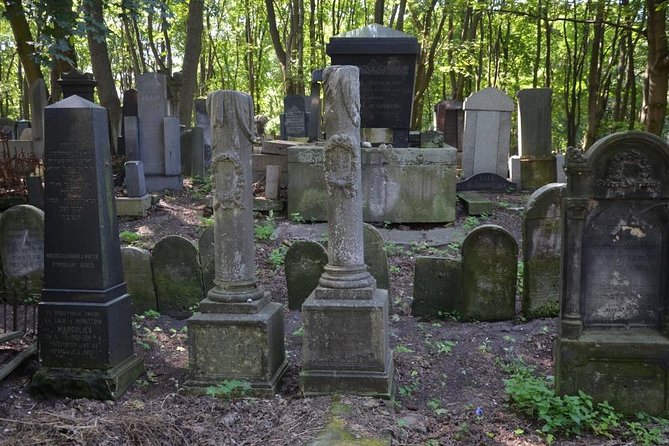
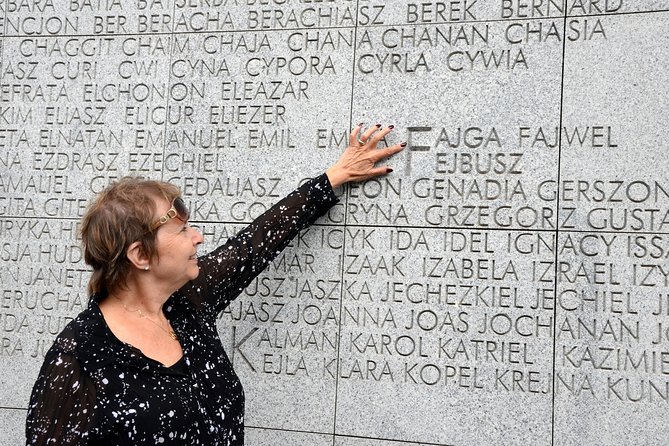
The Jewish Cemetery (Cmentarz Zydowski) is where the tour slows down emotionally. You’ll see remnants of graves of over 200,000 people, including spiritual and political leaders, creators of Jewish culture, and thousands of nameless victims.
You’ll get about 30 minutes here, including time to stroll and pay homage. The closure rule is the same as the synagogue: the cemetery is closed from Friday evening through Saturday.
This stop is often the one people remember for the rest of the trip, because it changes how you think about the ghetto story. Instead of focusing only on buildings and dates, you shift toward names, generations, and a community that existed long before WWII and endured in memory afterward.
If you want to make the most of this time, don’t rush your eyes. Look for the markers you can read, and let the guide connect the dots between what you see and what the city lost.
POLIN Museum option: when you want the deeper history
The tour includes a choice: you’ll see the POLIN Museum of the History of Polish Jews from the outside, and if you want to go in, you can do so as an extra stop with admission not included.
If you visit the museum, the guide can leave you there after the tour. That’s a smart setup if you want to keep exploring beyond the 4-hour frame without dragging your guide through every gallery.
This optional stop is a value move. The main tour gives you the emotional and geographic spine. POLIN can add a longer, structured historical layer—especially if your interests include deep timelines and broader Polish Jewish history beyond Warsaw alone.
What makes this tour feel personal (and why guides matter)
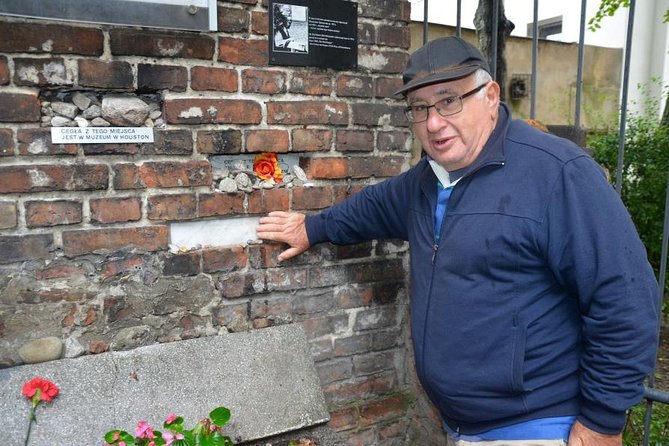
A big theme in the tour experience is guide quality. People consistently highlight guides who can explain complicated history clearly and keep a respectful tone.
Names that have come up include:
- Karol, described as a doctoral student in history and praised for careful, in-depth explanations
- Marcin, praised for making Jewish Warsaw history easy to follow and for strong English
- Martin, credited with turning a long timeline into something you can actually track
- Konrad and Conrad, praised for balancing factual detail with a human approach
Even if you don’t get one of those exact names, the consistent point is this: you’re not just getting directions. You’re getting interpretation. In a city where many sites look ordinary from the street, that interpretive skill changes everything.
Practical tips that keep the tour smooth
A few details will make your day easier:
Bring head covering
Some Jewish sites require you to cover your head. A small scarf takes no space and saves you from scrambling at the last minute.
Wear shoes you can walk in
Even though this is a driving tour, you’ll do short walks—especially at memorial areas and during the cemetery stop. Comfortable shoes matter more than trendy shoes.
Ask your guide what you want to prioritize
You can mention personal interests to shape the route. If you care most about WWII events, ask for that emphasis. If you want broader Jewish life across centuries, ask for the timeline framing. If you have a film connection, raise The Pianist references early so the guide can work them into the story.
Plan for what you might not be able to enter
If you’re traveling around Sabbath hours, accept that entry to the synagogue and cemetery may be off the table. That doesn’t make the tour pointless; it just means you’ll focus more on memorials, outside context, and historical framing rather than interior viewing.
Who should book this tour?
This is a strong choice if you:
- want a private, guide-led route that reduces the work of planning and transit
- care about Warsaw’s Jewish heritage and want context at each site
- prefer asking questions in real time, instead of reading signs at your own pace
- like the idea of pairing history with a distinctive transport experience (Retro Fiat vibes included)
It’s also a good match if you want a single day that covers the most important anchors without making you choose between too many disconnected museums.
If you’re the type who hates being emotionally affected by WWII sites, you might find this intense. But if you’re there to learn and remember, the tour gives you structure and timing to handle it.
Should you book the Warsaw Jewish Heritage by Retro Fiat tour?
I think it’s worth booking if you want a focused, private route with hotel transfers and meaningful stops you can’t easily stitch together on your own. The Retro Fiat transport is a bonus, but the real value is the guide-led connection between the street-level places and the history behind them.
Just book with your calendar in mind. If your visit lands on a Saturday or right before it, plan for limited entry at Nożyk Synagogue and the Jewish Cemetery. If you can line it up for a day when entry is possible, you’ll get the full experience.
If you only have one shot at Warsaw’s Jewish heritage and you want it done with care, this is a smart choice.
FAQ
What does the tour include?
The tour includes hotel pickup and drop-off, a professional driver-guide, and transport by a private Retro Fiat 125p (or a vintage minivan for groups of 4+). The mobile ticket is included. Optional museum entry is not included.
How long is the tour?
It runs for about 4 hours.
Are there admission fees for the stops?
Some stops are free to view, while others are optional. POLIN Museum admission is not included. Nożyk Synagogue and the Jewish Cemetery also list admission as not included.
Can I enter Nożyk Synagogue and the cemetery?
The synagogue and cemetery are closed from Friday evening through all Saturday due to Sabbath, so your ability to enter depends on the day and time of your tour.
Do I need to bring anything?
You should be prepared to cover your head for some Jewish sites, and it helps to wear comfortable walking shoes for the cemetery stop.
Where is pickup, and is the tour private?
Pickup is available from city-center hotels or a meet point in the city center area. It’s a private tour, meaning only your group participates. For groups of 4+, you may travel in a vintage minivan instead of the Fiat.
FAQ
Do I need to cover my head at Jewish sites?
The tour notes that you will be required to cover your head when visiting some Jewish sites, so bring something simple like a scarf.
Is POLIN Museum entry included?
No. You’ll see POLIN Museum from the outside, and if you want to visit, the museum ticket is not included.
What happens if my tour is on a Friday evening or Saturday?
Nożyk Synagogue and the Jewish Cemetery are closed from Friday evening through all Saturday due to Sabbath, so you may not be able to enter those sites.
Is there flexibility to tailor the tour to my interests?
Yes. Because it’s private, you can mention points of interest to your guide, including film locations tied to The Pianist.
How does hotel pickup work?
The guide can pick you up from your hotel lobby if you’re in the pickup area. If your hotel is outside the pickup area, you should contact the provider to find the best solution.
What if I need to cancel?
You can cancel for a full refund if you cancel at least 24 hours before the experience start time. Changes within 24 hours aren’t accepted.