REVIEW · AKAROA
Akaroa Nature and History Private Tour – The 7th Generation
Book on Viator →Operated by The Seventh Generation · Bookable on Viator
Akaroa clicks faster with one expert voice. In just about 3 hours, you’ll move through quiet corners and key sites, from the Akaroa Lighthouse and Robert Louis Stevenson family connections to nature-rich reserves on Banks Peninsula.
I really like two things: Marie Haley mixes history and ecology in a way that actually sticks, and she brings her own family roots into the story as a descendant of the French settlers. I also like that this is a true private tour for up to 4, so you get focused pacing and attention as you go from Takapuneke Reserve to Onuku Church and onward to Akaroa Harbour.
One possible drawback: the price is $341.32 per group, so it can feel pricey if you’re traveling solo or without another couple/family to split it. Also, the tour requires good weather since you’ll be driving and stopping outdoors.
In This Review
- Key highlights you will notice right away
- Why this private Akaroa tour fits the way you actually travel
- Meet Marie Haley: a one-woman operation with award-level credentials
- Lighthouse stories and Stevenson family connections
- Takapuneke Reserve: geology meets Polynesian navigation and the flax trade
- Onuku Church (Kaik): Treaty of Waitangi context and a beautiful church stop
- The race for the South Island and Marie’s family perspective in Akaroa
- Akaroa Heritage Park picnic and harbour orientation
- Hinewai Reserve and the drive toward the End of the Earth
- Price and value: when $341.32 per group makes sense
- Who should book this tour in Akaroa
- Quick tips to get the most from a short, stop-heavy afternoon
- Should you book it? The simple answer
- FAQ
- How long is the Akaroa Nature and History Private Tour?
- What does it cost, and how many people can join?
- Is pickup included, and where does the tour start?
- Is this a private tour?
- Do any stops require paid admission?
- What if the weather is bad, or I need to cancel?
Key highlights you will notice right away
- 7th Generation local historian and ecologist guiding the whole experience
- Family-connected storytelling that ties French, British, and Māori threads together
- Takapuneke Reserve for geological + natural history, plus Polynesian navigation and the flax trade
- Onuku Church (Kaik) with Treaty of Waitangi context and photo time
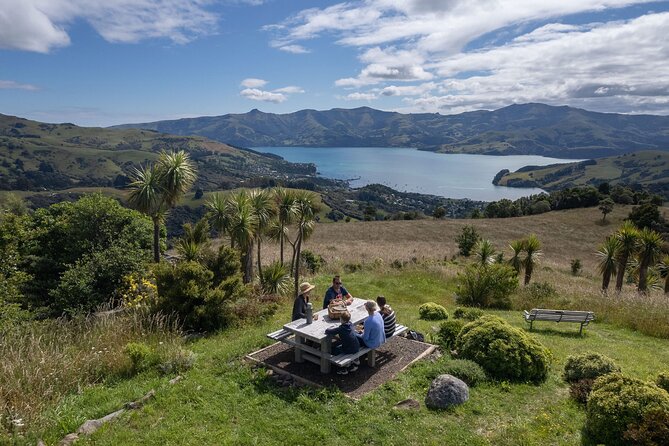
- Akaroa Harbour views from Akaroa Heritage Park, plus a picnic stop
- Hinewai Reserve for native forest regeneration work on a private reserve
Why this private Akaroa tour fits the way you actually travel
Akaroa is small, but it has layers. You can easily spend a day wandering and still miss what makes the place feel meaningful. This tour is built to fix that fast. You get a guided route with stops that explain what you’re looking at—geology, settlement history, and conservation work—without rushing you through each point like a drive-by.
The format is private and sized for conversation: up to 4 people per group. That matters more than you might think. When the guide can tailor the pace, you’ll ask better questions, and you won’t feel like you’re competing with a dozen other voices for attention.
Pickup is offered, and the experience starts and ends back at the meeting point in Akaroa (78 Rue Lavaud, Banks Peninsula, Akaroa 7520). If you’re planning your first day in town, this is a great way to get your bearings fast—you’ll see the main historical and natural points, then understand the connections between them.
Meet Marie Haley: a one-woman operation with award-level credentials
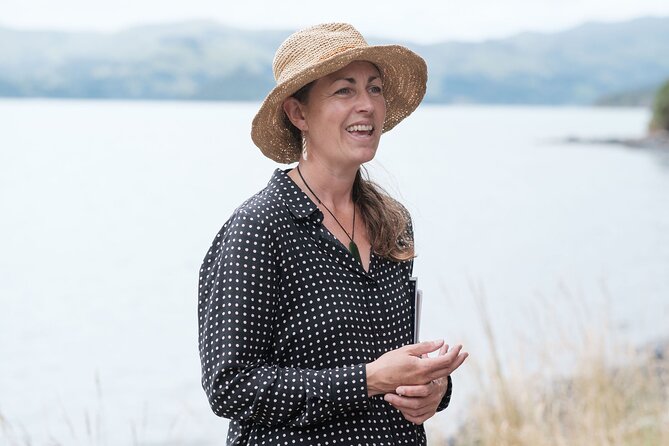
This tour is owned and operated by The Seventh Generation, run by a descendant of the French settlers in Akaroa. Your guide, Marie Haley, is an expert trained historian and ecologist and a natural storyteller. That combination is the secret sauce here.
It’s also not just local pride. Marie was a finalist at the 2024 New Zealand Tourism Awards for Tourism Business Excellence, which is a serious signal for a small, one-woman operation. In practical terms, it means you’re getting someone who’s good at communication, not just someone who knows facts.
What you should expect from Marie’s style is context with heart. You’re not only learning dates and events—you’re learning why those events mattered to real people and why the land and sea are still part of the story.
Lighthouse stories and Stevenson family connections
The tour begins with a historic stop centered on the Akaroa Lighthouse and its incredible connection to the Robert Louis Stevenson family. Even if you’ve heard of Stevenson in other contexts, this is where the connection feels local and specific.
This is a smart opener for two reasons. First, lighthouses make immediate sense in a coastal town: they signal navigation, arrival, risk, and the human need to read the sea. Second, starting here gives you a lens for the rest of the afternoon. Later stops deal with who arrived, how they moved through these waters, and how newcomers changed the landscape.
There’s also time for another of Akaroa’s historic buildings—the kind you’ve probably seen in photos—so you get the “what is that?” answered early, before you start looking around on your own.
Takapuneke Reserve: geology meets Polynesian navigation and the flax trade
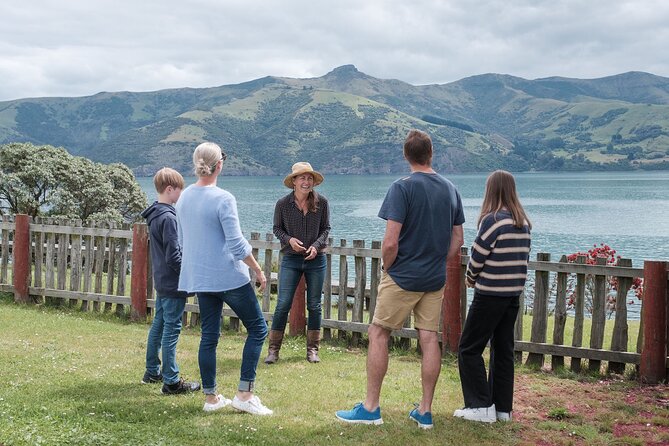
Stop 1 is Takapuneke Reserve. You get around 30 minutes, and it’s marked free admission. This is one of the places where the tour’s education style really shows.
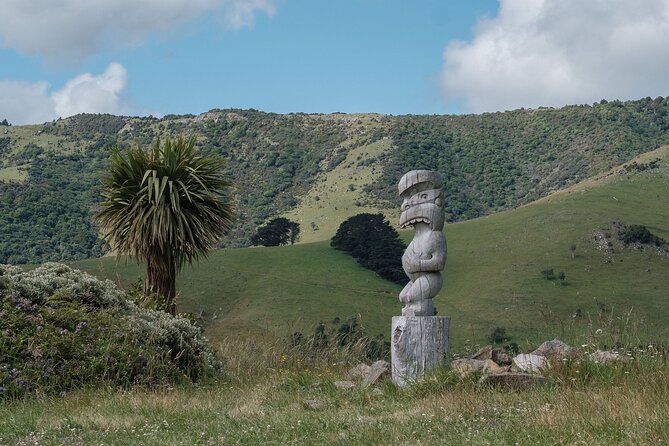
You’ll learn about New Zealand’s geological and natural history, which helps you interpret the dramatic terrain and why the area looks the way it does. Then the story widens: you’ll learn about Polynesian navigation and exploration, which adds the older movement of people into the region before European arrival.
From there, the tour shifts into a practical historical topic: European arrival and the flax trade. That part matters because flax wasn’t a background detail—it was tied to trade routes, resource use, and the way early contact shaped economic relationships.
You’ll also hear about the Brig Eli (the tour description flags this story as a key thread). Even without getting lost in maritime trivia, you’ll understand how ships, cargo, and timing could change the fate of a community.
What to watch for: this stop is where you’ll likely feel the tour is more than a drive-by. The reserve is the setting for multiple eras of movement through the same space.
Onuku Church (Kaik): Treaty of Waitangi context and a beautiful church stop
Next is Onuku Church (Kaik), with about 20 minutes there and free admission listed. This is a calmer, more reflective stop than the reserves—still educational, but with a different pace.
Here, you’ll learn about the Treaty of Waitangi and the role of the first British Resident to New Zealand. The Treaty context is important because it’s the bridge between political decisions and how life changed on the ground. It’s also one of those topics that can feel abstract when you read it later. With a guide on site, it becomes grounded.
You’ll also get time in the space of a beautiful Māori church and photo time. The practical win: you’re not just being shown a building from the outside. You’re given a reason to look, and you’ll know what you’re photographing.
The race for the South Island and Marie’s family perspective in Akaroa
After the structured stops, the tour turns toward the bigger rivalry story: the race for the South Island between the French and the British.
This part is compelling because it’s not only told from a textbook. Your guide, Marie Haley, shares her personal family history as a descendant of the first French settlers in Akaroa. That’s where the tour’s “nature and history” theme becomes more than a tagline. Land, sea, and settlement are tied together through people’s choices.
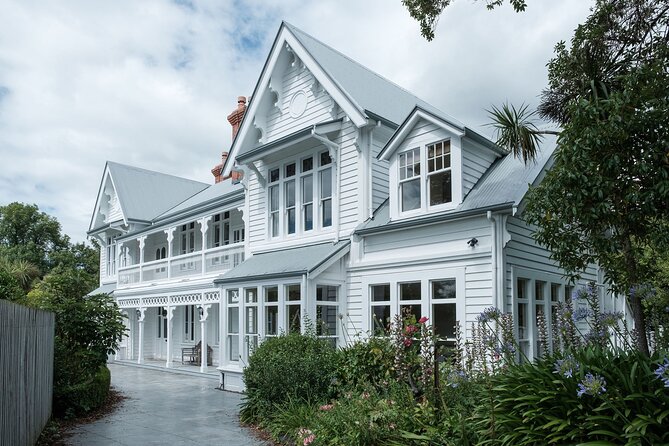
You’ll also visit the French town of Akaroa and its historic sites. A key detail is that these sites are described as personally connected to your guide’s family story. That kind of connection doesn’t mean the tour becomes one-sided. It means you get a stronger sense of how history lived in everyday places.
Real-world advice: this is a good moment to pay attention to names and locations. If you come back later and explore on your own, you’ll be able to connect the streets, buildings, and viewpoints to the story you heard.
Akaroa Heritage Park picnic and harbour orientation
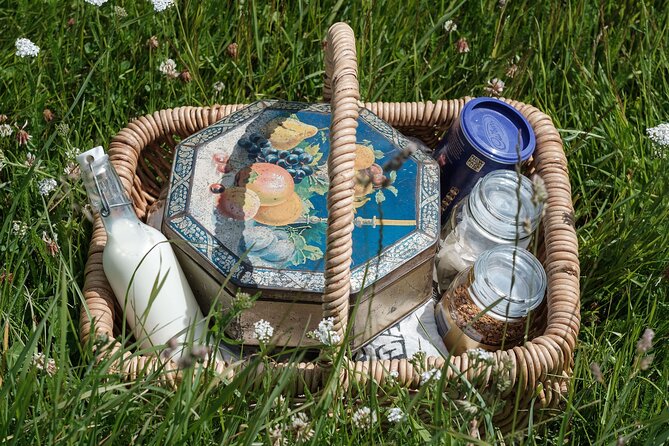
Stop 3 takes you to Akaroa Heritage Park, about 30 minutes, with a picnic-style pause and stunning sightseeing over Akaroa Harbour.
This is where the tour becomes more of a human-scale experience. History is important, but you’ll also feel the value of simply pausing in the landscape—especially here, where the harbour shapes the town.
The tour description highlights a chance to build a sense of connection to New Zealand. I think that’s accurate in a practical way: once you understand the place’s settlement logic and natural features, the views feel earned, not just pretty.
If you like photos, this is one of the best times to shoot. You get the harbour perspective that makes Akaroa feel like a real destination, not just a stop on the way to somewhere else.
Hinewai Reserve and the drive toward the End of the Earth
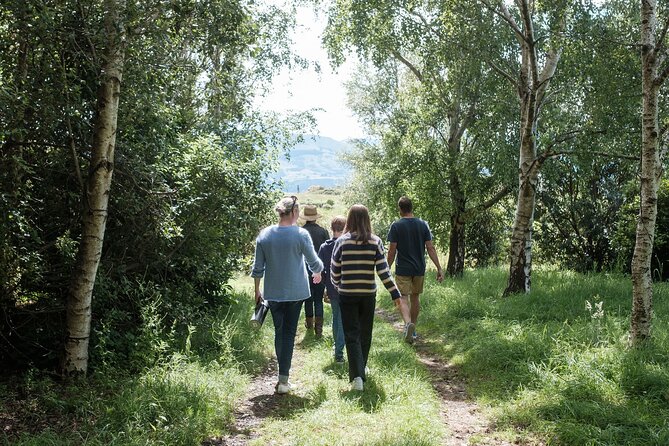
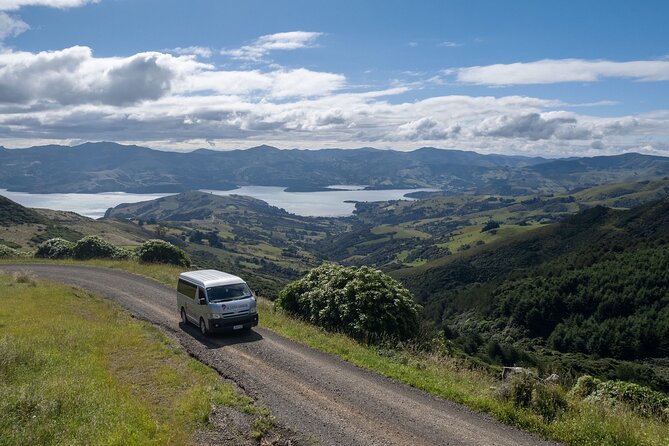
The afternoon continues with a nature and sightseeing drive. You’ll learn about Hinewai Reserve, described as the largest private reserve in New Zealand. Here’s the conservation hook: the reserve is regenerating native forest by working on invasive exotic weeds.
This part matters because it changes how you look at nature. Instead of seeing the greenery as “just there,” you’ll understand active effort behind what you’re seeing. It’s also a nice contrast to the settlement history. One theme is people arriving and changing things; the other theme is people trying to restore and protect.
After that, you’ll drive toward the End of the Earth, with the tour description indicating additional stops in that area. Even when you don’t know every detail ahead of time, the phrase fits the feeling you get on Banks Peninsula: open space, strong light, and a sense of being out on the edge of the map.
Price and value: when $341.32 per group makes sense
The price is $341.32 per group, for up to 4 people, for an approximately 3-hour experience. That math is where the value story lives.
- If you book with 4 people, it’s about $85 per person.
- With 2 people, it becomes about $171 per person.
So the tour tends to shine when you can split it with others, like a family unit, two couples, or a small group of friends. You’re paying for a private, guide-led route, plus a strong mix of history, culture, and ecology without needing to plan your own sequence of stops.
Also, several stops are marked free admission in the tour outline (like Takapuneke Reserve and Onuku Church). That doesn’t make the tour free, but it helps you avoid surprise add-on ticket costs.
One more practical detail: it’s popular. The average booking advance is 218 days, which suggests you should lock in early if your trip dates are fixed.
Who should book this tour in Akaroa
This is a great fit if you want:
- History with location-based context, not just names and dates
- A nature lens that connects landscape to ecology and human impact
- A guide who can explain why Akaroa matters, using family ties and local expertise
It may be less ideal if you want long hikes or a full-day outdoors schedule. This is about 3 hours, with stops and driving that keep you moving but not grinding.
On accessibility: the tour notes that it can be suitable for most people, but you should tell the operator about any major health or mobility issues since there’s some flexibility required entering and exiting the vehicle. If you’re bringing a service animal, the tour allows them.
Quick tips to get the most from a short, stop-heavy afternoon
Because the tour hits multiple sites in a compact time window, you’ll get more out of it if you come ready to look and listen. I suggest you:
- Bring a camera for the harbour viewpoints and the Onuku Church (Kaik) photo time
- Wear comfortable shoes for short steps at reserves and church areas
- Use the tour as your “first understanding” of Akaroa, then let your own wandering become smarter afterward
And do plan around weather. The experience requires good weather, and that’s not a small detail here since you’ll be driving and outdoors.
Should you book it? The simple answer
Book this tour if you want an Akaroa afternoon that feels meaningful, not just scenic. You’ll get Marie Haley’s storytelling, strong historical context tied to real places, and nature-focused stops like Takapuneke Reserve and Hinewai Reserve. It’s also a good bet when you can travel as a small group and split the cost.
Skip it only if you know you want a very independent itinerary, long walking routes, or minimal talking. This tour works best when you’re ready to listen, ask questions, and connect the dots between sea, land, and people.
FAQ
How long is the Akaroa Nature and History Private Tour?
It runs for approximately 3 hours.
What does it cost, and how many people can join?
The price is $341.32 per group, with up to 4 people.
Is pickup included, and where does the tour start?
Pickup is offered. The tour meets at 78 Rue Lavaud, Banks Peninsula, Akaroa 7520, and it ends back at the meeting point.
Is this a private tour?
Yes. It’s a private tour/activity, and only your group participates.
Do any stops require paid admission?
The stops listed for Takapuneke Reserve and Onuku Church show admission ticket free in the tour information provided.
What if the weather is bad, or I need to cancel?
The experience requires good weather. If it’s canceled due to poor weather, you’ll be offered a different date or a full refund. Free cancellation is available if you cancel at least 24 hours before the experience start time for a full refund. Service animals are allowed, and you should let the operator know of any major health or mobility issues so the tour can be tailored.