REVIEW · FRIULI VENEZIA GIULIA
Aquileia Unesco World Heritage
Book on Viator →Operated by Lubos Dzuro · Bookable on Viator
Aquileia keeps Rome close and human. On this UNESCO World Heritage stroll, you move through Roman civic life, the river port, burial grounds, and then the early Christian power center at a pace that feels calm. You also get the big-picture story of how an imperial seat became a patriarchal one, with standout attention to the preserved mosaic floors at the Basilica.
I love that the tour is focused and walkable, not a checklist of random stones. I also love the way the guide connects what you see in the Roman Forum and waterfront ruins to what it meant day to day. The result is clearer than just reading plaques.
One thing to consider: several major sights (especially the Basilica and museum areas) are not included tickets, so you’ll want to budget a bit more and be ready to decide on the spot if you want to go deeper.
In This Review
- Key highlights you should care about
- Starting at Piazza Capitolo: the smart way to begin Aquileia
- Foro Romano to the Roman harbor: where power met trade
- Necropolis and housing remains: the human side of the city
- Basilica di Aquileia: the mosaics that survive
- Cripta degli Scavi and the layered sacred complex
- Street-level Aquileia: mausoleums, a main street, and homes
- Optional National Archaeological Museum: when you want one more layer
- Lubos Dzuro and why this tour feels lively
- Price and value: what you’re really paying for
- Who should book this Aquileia UNESCO tour
- Quick practical tips for a smooth 2.5 hours
- Should you book Aquileia UNESCO World Heritage with Lubos Dzuro?
- FAQ
- What is the meeting point for this tour?
- How long is the Aquileia UNESCO tour?
- Is this tour private?
- What’s included in the price?
- Are tickets for the Basilica di Aquileia and the museum included?
- What does it cost?
- Is free cancellation available?
Key highlights you should care about
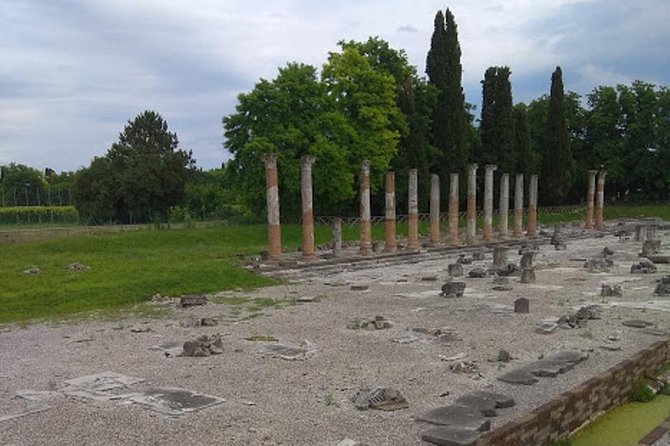
- Roman forum to river ports in one smooth route so you understand Aquileia as a trading and civic hub, not just ruins.
- A clear imperial-to-patriarchal storyline that ties the Roman layers to the Christian center.
- Duomo/Basilica floor mosaics you can still appreciate instead of rushing past them.
- Crypt and underground excavations at the Basilica for a different view of the same sacred complex.
- Lots of “texture” stops like residential remains, halls, chapels, and mausoleums that fill in daily life.
Starting at Piazza Capitolo: the smart way to begin Aquileia
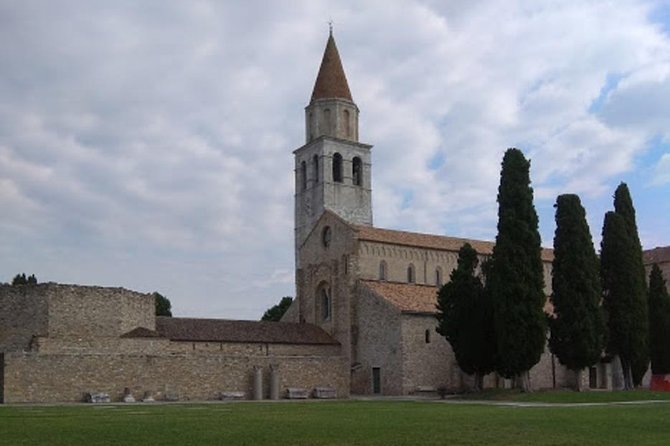
Your tour starts at Piazza Capitolo, 33051 Aquileia UD, Italy, and it loops back there at the end. The listed start time is 10:00 am, and the whole experience runs about 2 hours 30 minutes. It’s a private tour, limited to your group of up to 10, which matters here because the sites can feel dense if you’re trying to hear a guide over a crowd.
You’ll also use a mobile ticket, which is handy in a place where you may hop between entrances and open areas. And since it’s near public transportation, you can plan a stress-free arrival without building your day around a car.
If you like history but hate the “rush, snap a photo, move on” vibe, this format fits. You’re not stuck in a bus while the guide reads. You’re walking, stopping, and asking questions.
Foro Romano to the Roman harbor: where power met trade
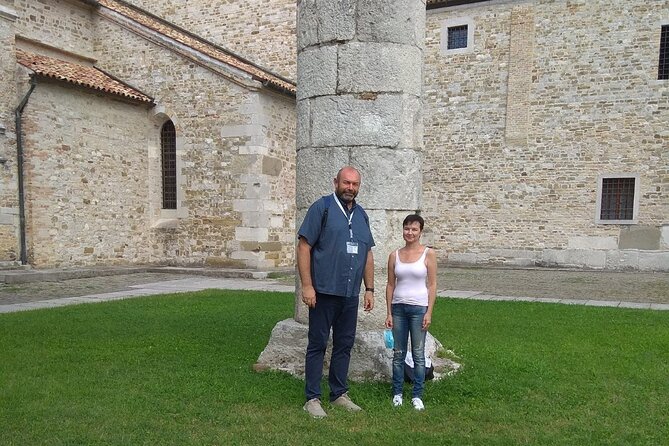
The first stop is Area Archeologica di Aquileia – Foro Romano (the Roman Forum). Even with the brief time on this point, it’s a strong beginning because it tells you what Aquileia was built to do: organize public life in the Roman way.
From there, you head to Il Porto sul Natissa, the river ports tied to the UNESCO setting. This is one of the best parts of the route because you stop thinking of Aquileia as “only an archaeological site.” You start thinking of it as a working river-linked city. The port area helps explain why an emperors-seat could grow here: movement of people and goods.
Practical tip: keep an eye on your footing as you move between shaded sections and open ground. Roman sites can be uneven, and the tour pace is relaxed, so you’ll benefit from comfortable walking shoes.
Necropolis and housing remains: the human side of the city
Next comes Il Sepolcreto, the burial ground connected to the UNESCO designation. A cemetery stop is always an emotional shift in a tour like this, but it’s worth it because it adds meaning beyond monuments. You’re not only seeing “what rulers built.” You’re seeing where communities marked death and memory.
Then the itinerary turns to Fondo Cal, the remains of apartment buildings. This is where the city starts to feel lived-in. A forum and a port are important, but residential remains help you picture daily rhythms: where people worked, slept, and built their small routines inside a big Roman framework.
If you tend to enjoy the “how ordinary people lived” side of antiquity, this pair of stops is a highlight. It keeps the tour from becoming all politics and ceremony.
One consideration: these areas are free-admission stops on the tour, but visibility can vary depending on sun and weather. If you’re visiting on a bright day, you might want to bring sunglasses and plan to take photos when the light is less harsh.
Basilica di Aquileia: the mosaics that survive
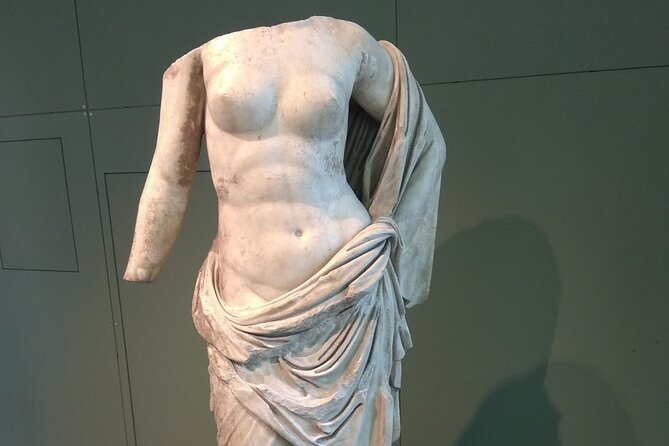
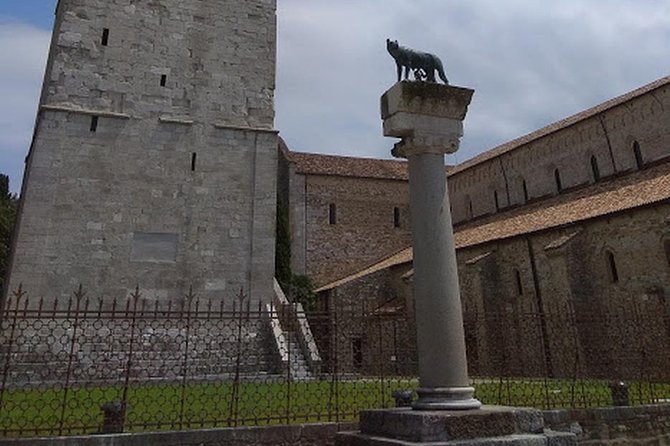
At the heart of the tour is Basilica di Aquileia, also known as the patriarchal basilica. This part takes about 30 minutes and is clearly designed around what makes this site special: its priceless, very well preserved floor mosaics. This is the moment where Aquileia’s story stops being abstract and becomes concrete.
You’ll also hear how the guide frames the transformation—from an imperial residence to a patriarchal seat. That shift is the thread holding the whole experience together. Roman Aquileia explains the civic and commercial world. The basilica layers explain how the center of influence changed over time.
Important for planning: the Basilica ticket is not included in the tour price. So you’ll be deciding at the stop whether you want to cover it. If you’re coming specifically for the mosaics and the deeper church complex, it’s usually worth it.
Cripta degli Scavi and the layered sacred complex
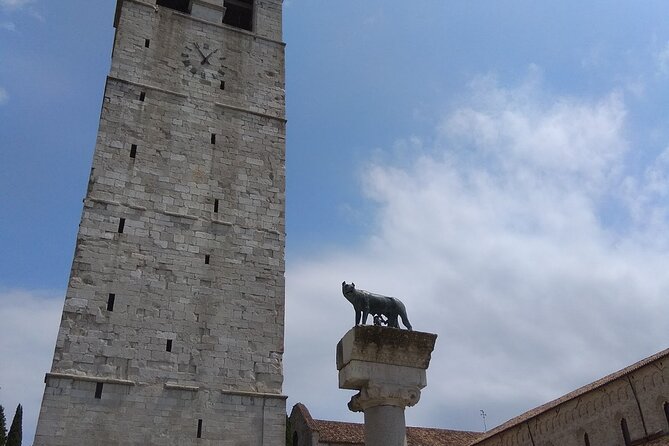
After the basilica stop, the tour continues into the Cripta degli Scavi (the crypt/excavations area). This segment is listed at about 10 minutes, again with tickets not included. If you like when a tour gives you multiple angles on one place, this is it: you see the basilica above, then the archaeological story beneath.
From there, you move through more of the basilica-complex surroundings with stops that include:
- Bell tower (ticket not included)
- Military cemetery (ticket not included)
- Meizlik Palace (ticket not included)
- Sudhalle (south hall) (ticket not included)
- Chiesa dei Pagani (ticket not included)
- Domus e Palazzo Episcopale (domus and episcopal palace) (ticket not included)
Even without spending long hours inside each one, the sequence is the point. You’re getting a sense of the whole sacred-and-administrative ecosystem: places of worship, governance, and community identity moving across centuries.
One small drawback to expect: because tickets aren’t included for many of these stops, you may spend a bit of time deciding where to spend your money. If you want a smoother, no-decisions experience, consider planning ahead for which interior areas matter most to you (especially if mosaics/crypts are your top priority).
Street-level Aquileia: mausoleums, a main street, and homes
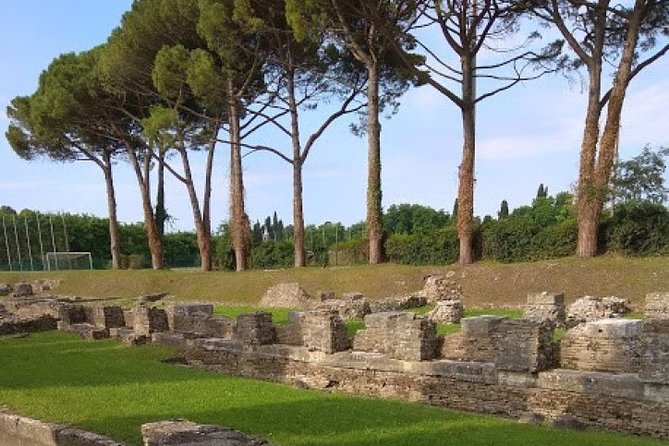
As the tour progresses, it leans into the city scale again. You’ll see Il Grande Mausoleo di Candia and Decumano di Aratria Galla—a way to understand how people moved through the city and how they marked social status and memory.
Then comes Domus di Tito Macro (listed as ex Fondi Cossar), with time around 20 minutes. The note here is that it’s on order, and tickets aren’t included, so availability may affect how much time you get. The same kind of “access depends” approach shows up with a couple of other interior-rich stops.
Finally, you reach the market area. This matters because it helps you close the loop: you started with the forum (civic life) and the port (trade). The market is the lived outcome of those systems. It’s where the city’s logistics became real daily commerce.
If you enjoy urban archaeology—ruins as a map of how people organized space—this final stretch will feel especially satisfying.
Optional National Archaeological Museum: when you want one more layer
There’s an Archaeological Museum option on order. The guide also mentions being happy to show you around the National Archaeological Museum of Aquileia after a lunch break, if you wish. That tells me the tour can work in two ways:
- You take the core walk and choose your ticketed interiors as you go.
- Or you add extra museum time if you want to keep going beyond what fits neatly into a 2.5-hour route.
The museum is not included in the tour package. So if you’re a museum-first person, you should plan for extra time and separate tickets.
My practical advice: if mosaics and underground spaces already feel like “enough,” skip the museum and enjoy the street-level atmosphere. If you want object-based context, budget for the museum so the walking stops aren’t your only source of meaning.
Lubos Dzuro and why this tour feels lively
This is guided by Lubos Dzuro, and the overall vibe is competence with real enthusiasm. The tour format supports that: it’s not just a lecture delivered while you shuffle along. You get guided stops tied to specific places—forum, port, burial ground, housing remains, and then the Basilica layers.
Because it’s private and capped at up to 10, you’re more likely to get answers to your questions. That matters in a place like Aquileia, where the same complex can show multiple eras and purposes. A good guide helps you not only see, but interpret.
I’d call this a strong pick if you learn best when a guide connects dots as you walk. If you’re the type who prefers total silence and only photos, you might find guided talk a bit much. But for most people, the pacing feels like it gives the site room to speak.
Price and value: what you’re really paying for
The price is $201.59 per group for up to 10 people. That’s not a per-person rate, so the value changes based on how many friends or family you bring.
Here’s the practical math: if you fill the group (10 people), the effective cost is about $20 per person for the guided walking experience. If you travel as a smaller group, your per-person number goes up, but you’re still paying for a private route with a professional guide.
Also, several key stops in the walking route are admission ticket free, including:
- Foro Romano
- Il Porto sul Natissa
- Il Sepolcreto
- Fondo Cal
The trade-off is that major interior areas like Basilica di Aquileia and Cripta degli Scavi, plus several other complex stops, are ticketed and not included. So the tour price buys you the guidance and the route; the ticketed sites become your optional upgrades depending on what you want to prioritize.
If you want a tight day with maximum meaning per hour, this setup is usually a win.
Who should book this Aquileia UNESCO tour
This is a great match for you if:
- You want Rome-level context without doing a Rome marathon.
- You like Roman city planning and early Christian layers in the same place.
- You’d enjoy a guide who explains why Aquileia mattered, not just what the ruins look like.
It may be less ideal if:
- You strongly prefer museums only, all day.
- You want a fully ticket-inclusive experience with no decisions at each stop.
- Your group needs a longer sit-down time than a 2.5-hour walk provides.
Because the route mixes outdoor archaeological areas with ticketed interior areas, it suits travelers who can handle walking and a bit of pace flexibility.
Quick practical tips for a smooth 2.5 hours
To get the most from the walk, show up ready for uneven ground and shifting light. Wear shoes that don’t slip on old stone, and bring a small bottle of water if weather is warm.
Also, decide early what you care about most:
- If you care most about the floor mosaics, plan to include the Basilica ticket.
- If you want the “layer beneath,” prioritize Cripta degli Scavi.
- If you’re mostly here for city layout, you can enjoy many stops even if you skip some ticketed interiors.
Since it’s a mobile ticket tour, have your phone accessible and charged enough for the day.
Should you book Aquileia UNESCO World Heritage with Lubos Dzuro?
If your ideal day is a guided walk that explains how the pieces fit—Roman forum, river port, burial grounds, then the Basilica power shift—this tour is easy to recommend. The combination of a clear storyline, a walkable route, and a guide named Lubos Dzuro with real enthusiasm makes it feel worth your time.
Book it if you want a high-value first look at Aquileia’s UNESCO Roman and early Christian sites and you’re open to adding a ticketed interior or two. If you’re already planning a full museum day, you might choose a museum-centered plan instead. For most people, though, this private 2.5-hour route is a smart, satisfying start.
FAQ
What is the meeting point for this tour?
The tour meets at Piazza Capitolo, 33051 Aquileia UD, Italy, and ends back at the meeting point.
How long is the Aquileia UNESCO tour?
The duration is about 2 hours 30 minutes.
Is this tour private?
Yes. It’s a private tour/activity, and only your group participates.
What’s included in the price?
An experienced guide is included.
Are tickets for the Basilica di Aquileia and the museum included?
No. Tickets for the Basilica di Aquileia and the Archaeological Museum are not included.
What does it cost?
The price is $201.59 per group for up to 10 people.
Is free cancellation available?
Yes. You can cancel for a full refund up to 24 hours before the experience’s start time.