REVIEW · HONOLULU
Semi Private Honolulu Historical Tour
Book on Viator →Operated by Spiritual Tours Hawaii · Bookable on Viator
Want Hawaii beyond the beach photos? This Honolulu historical tour ties together volcano views, royal power, and museum-grade context without feeling like a rushed checklist.
I love the small-group, private-for-your-party feel and the fact that the guide drives the day with real explanation, not just directions. I also like the smart mix of iconic sights—Iolani Palace and Bishop Museum—plus the lesser-known places that make the story feel human.
One catch to plan for: admission tickets aren’t included for Mission Houses, Iolani Palace, and Bishop Museum, so your final spend will be higher than the base fare.
In This Review
- Key Things I’d Prioritize on This Honolulu History Tour
- The Real Value: A Guided Story, Not a Sightseeing Bus Ride
- Pickup, Comfort, and the “Start Feeling Easy” Factor
- Diamond Head State Monument: The Volcano Stop That Sets the Tone
- Military Cemetery + WWII Viewpoint: When Honolulu Turns Serious
- Hawaiian Mission Houses: 1820s Honolulu You Can Actually Walk In
- Iolani Palace: The Only Royal Palace in the United States
- Kamehameha Statue and the Supreme Court Area: Power, Law, and Place
- Bishop Museum: Where Natural History Meets Cultural Stewardship
- How Long Is the Day, and What’s the Pace Like?
- Price Check: What $144 Gets You (and What It Doesn’t)
- Who This Tour Fits Best
- When This Might Not Be Your Best Choice
- Should You Book This Honolulu Historical Tour?
- FAQ
- What time does the Semi Private Honolulu Historical Tour start?
- How long is the tour?
- Is hotel pickup included?
- How big is the group?
- Is it private or shared?
- What language is the tour offered in?
- Are admission tickets included for all stops?
- What transportation is used?
- What’s included besides the guide?
- Does the tour run in bad weather?
- Is free cancellation available?
Key Things I’d Prioritize on This Honolulu History Tour
- Hotel/airport/harbor pickup that gets you into the city fast
- Diamond Head views with a scenic stop overlooking multiple islands on clear days
- Mission Houses Historic Site for a walk back to early 1820s missionary settlement
- Iolani Palace and Queen Liliuokalani as a clear, memorable highlight
- Bishop Museum for natural history collections and Native Hawaiian-focused stewardship
- A/C minivan plus snacks and bottled water, useful in Honolulu heat
The Real Value: A Guided Story, Not a Sightseeing Bus Ride
This is the kind of tour you take when you’re tired of “photo, next stop” travel. The format is built around a guide-led route through key historical sites across Oahu’s capital area—so the day feels like one continuous lesson rather than a string of separate attractions.
The pickup helps a lot. You’re not wrestling with buses or trying to find parking in busy Honolulu neighborhoods. You also get an A/C minivan, which matters when the sun is strong and your day’s walking is mostly done indoors or on short scenic stops.
And the tour is sized for attention. The experience is described as private for your party with a maximum of 14 travelers, which usually means you can ask questions, get explanations matched to your pace, and spend more time at the places that matter to you.
You can also read our reviews of more tours and experiences in Honolulu.


Pickup, Comfort, and the “Start Feeling Easy” Factor

The day starts at 9:00 am, and pickup is offered from your hotel, the airport, or the harbor area in Honolulu. If you’re staying in Waikiki or near downtown, that’s a big win: you spend less time transferring and more time learning.
You also get snacks and bottled water, which sounds minor until you’re halfway through a warm day and realize you’re glad someone thought ahead. One guide note that really stood out is how the van stay is kept comfortable, which makes the driving segments far more bearable.
One more practical detail: the tour runs in all weather conditions. That doesn’t mean everything stops—just dress like Honolulu weather can change quickly. Casual clothes work, but bring layers if you’re sensitive to cool indoor air from museums.
Diamond Head State Monument: The Volcano Stop That Sets the Tone
The tour begins with the Diamond Head State Monument area. You’ll drive around the volcano via Diamond Head Road and see the lighthouse up close. Then you’ll have time at the scenic point for big-picture views.
On a clear day, you can look out toward neighboring islands like Molokai, Lanai, and Maui—and that view is often what makes the history feel real. A volcano isn’t just a backdrop; it shapes how people lived, built, sailed, and traveled around Oahu.
You also stop to see the Amelia Earhart monument. That adds a human dimension to the site: aviation history set against Hawaiian geography. If you care about how different eras meet in one place, this is one of the tour’s early wins.
How long this part lasts: about 15 minutes of stop time, with admission noted as free for that stop. It’s short, so it’s best if you treat it like a quick orientation plus one good view, not a long hike.
Military Cemetery + WWII Viewpoint: When Honolulu Turns Serious
After Diamond Head, you’ll drive through a national military cemetery tied to World War II and learn the basics from your guide. This is one of those sections that changes the mood of the day from scenic to reflective.
You’ll also get one of the best “high above the city” moments: views over Honolulu, Waikiki, and Diamond Head. It’s an efficient way to understand how the city sits on varied terrain—and how the area’s history is connected to global events.
There’s also a standout detail here: this is the only volcano you can drive into on the tour. So even if you’ve seen Diamond Head from afar before, this route gives you a more direct connection to the terrain.
Hawaiian Mission Houses: 1820s Honolulu You Can Actually Walk In

This stop is where the tour slows down in a good way. At Hawaiian Mission Houses Historic Site and Archives, you go back to the first missionary settlement on the islands of Hawaii.
You’ll get to see the first brick building built there and the first church on Oahu tied to the mission era. Even if you think you already know the big story, this kind of physical, on-site setting helps your brain stop treating history as dates only.
The guide also focuses on the mission families and how Christianity came to Hawaii through their presence. That framing matters, because it helps you connect early settlement patterns to the changes that followed.
Time on site: about 1 hour 15 minutes. Admission is not included, so this is one of the spots where you’ll want to budget a little extra if you want the full experience.
A practical tip: wear comfortable shoes. There’s walking as part of this stop, and museum/heritage sites often involve uneven outdoor areas even when the walk is not long.
Iolani Palace: The Only Royal Palace in the United States
If one stop is the “you’ll remember this later” moment, it’s Iolani Palace. You’ll learn about the only royal palace in the United States and get context on Hawaii’s monarchy through the guide’s explanations.
You’ll also see the statue of Queen Liliuokalani, which gives a strong anchor point for understanding how the royal era is remembered today. For many people, the palace is the first time the story feels both political and personal—because the buildings make the power feel physical.
Time on site: about 1 hour 15 minutes. Admission is not included, so factor that into the total cost.
One smart way to handle this: go in with a flexible mindset. You don’t need every detail. What you’re really buying here is the ability to ask questions about how governance changed, and why that matters in a modern context.
Kamehameha Statue and the Supreme Court Area: Power, Law, and Place
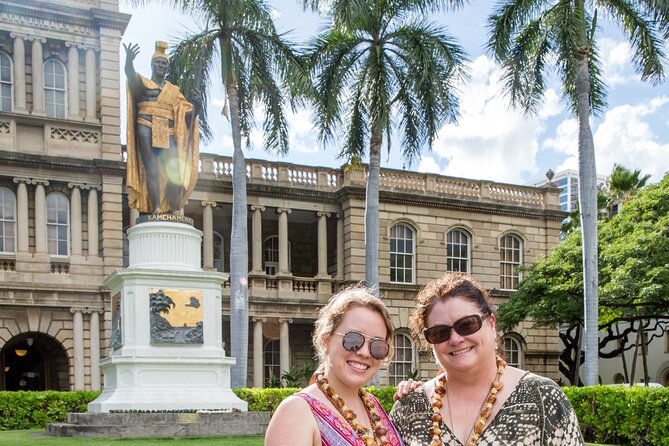
Next is the King Kamehameha Statue area, where you learn about Kamehameha the Great and his legacy. This is a shorter stop—around 10 minutes—but it adds a lot, especially if you want a timeline that connects royalty to modern institutions.
You’ll also see the Supreme Court Building and hear how Hawaiian constitutional history is told through different eras. That kind of explanation helps you connect buildings to the legal evolution you hear about later in museum exhibits or casual conversations.
Admission: free for this stop, so it’s a low-cost way to add meaning to a quick photo stop.
Bishop Museum: Where Natural History Meets Cultural Stewardship
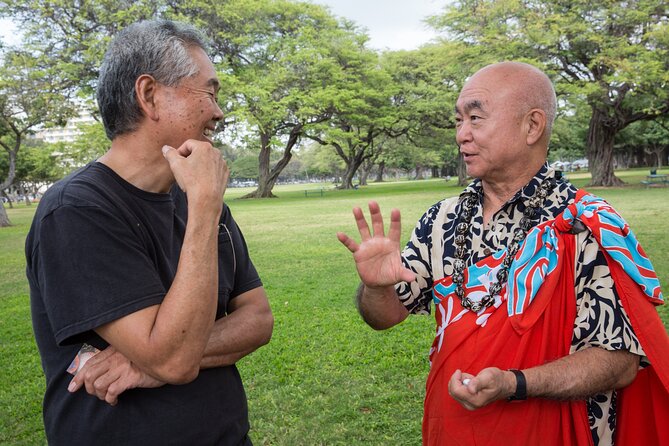
The final major stop is Bishop Museum, the largest museum in Hawaii. It’s also described as the premier natural and cultural history institution in the Pacific, with major natural history specimen collections.
What makes this museum especially relevant on a history tour is the focus on Native Hawaiian interests as a primary purpose. That means you’re not only looking at objects; you’re seeing how collections and interpretation connect to people and identity.
Time on site: about 1 hour 15 minutes. Admission is not included.
If you like museums with structure—galleries that guide you rather than wander—you’ll likely enjoy this. And if you want something that feels different from beach-world Hawaii, Bishop Museum is one of the best bets for a day that starts to feel like understanding, not just visiting.
How Long Is the Day, and What’s the Pace Like?
The total duration is listed as 5 to 6 hours. That’s a sweet spot. It’s long enough for multiple major stops without feeling like you’re living in a van for half the day.
Because parts of the tour include walking and museum time, plan for a pace that’s active but not exhausting. You’ll likely spend more time indoors than outdoors, which is a win if the heat or sun intensity is high.
One thing I appreciate: the tour is built for all weather conditions. That means you’re not stuck canceling your day plan the moment Honolulu gets moody. Just dress for comfort and bring a light layer for indoor museum air conditioning.
Price Check: What $144 Gets You (and What It Doesn’t)
At $144 per person for about 5 to 6 hours, you’re paying for the guided route plus transportation plus the convenience factor.
Here’s the value logic I’d use:
- You get hotel pickup and drop-off, which can easily cost time (and sometimes money) on your own.
- You get an A/C minivan, plus snacks and bottled water.
- You get a guide who connects the dots across multiple sites, which is where the real cost difference versus “go buy tickets yourself” usually comes from.
What’s not included: admission tickets for Mission Houses, Iolani Palace, and Bishop Museum. Diamond Head and the Kamehameha area are free stops, which helps offset the paid admissions, but you should still expect extra costs for those major attractions.
Is it worth it? If you want a guided, historically focused day with less friction, yes—this price is in line with what you’d pay for a guided experience that includes transportation and helps you hit the big cultural anchors without guesswork.
Who This Tour Fits Best
This experience is a great match if you:
- Want a Honolulu day that isn’t just beaches and shopping
- Like learning through multiple contexts (views, buildings, museums)
- Prefer a guide-led pace with time for questions
- Are traveling with teens and want something that holds attention
It also works well if you’re returning to Hawaii and already did the common highlights. The mix of royal governance, missionary-era buildings, and museum interpretation gives you a different angle on Oahu.
When This Might Not Be Your Best Choice
If you want zero extra ticket costs and you plan to skip museums, you’ll feel the “admission not included” part more strongly. Also, because it’s a history-focused day with multiple stops, it’s not ideal if you’re looking for long beach time or low-effort lounging.
Should You Book This Honolulu Historical Tour?
I’d book it if you want a single guided day that helps you understand Honolulu beyond the postcard view. The stop combination makes sense: Diamond Head for geography, Mission Houses for early settlement, Iolani Palace for monarchy, and Bishop Museum for the wider natural and cultural context. Add pickup, A/C transport, and provided snacks, and you’ve got a day that’s easy to manage.
I’d think twice if you’re strictly budget-driven and really don’t want to pay for museum/palace admissions on top of the tour price. In that case, you might build your own day and spend only on the one or two places you care most about.
FAQ
What time does the Semi Private Honolulu Historical Tour start?
The tour starts at 9:00 am.
How long is the tour?
It runs for about 5 to 6 hours.
Is hotel pickup included?
Yes. Hotel pickup and drop-off are included, and pickup is also offered from the airport or harbor in the Honolulu area.
How big is the group?
The maximum group size is 14 travelers.
Is it private or shared?
It’s described as a private tour exclusively for your party, while the overall experience has a maximum of 14 travelers.
What language is the tour offered in?
The tour is offered in English.
Are admission tickets included for all stops?
Admission tickets are free for Diamond Head State Monument and the King Kamehameha Statue stop. Admission tickets are not included for Hawaiian Mission Houses Historic Site and Archives, Iolani Palace, and Bishop Museum.
What transportation is used?
You’ll travel by an air-conditioned minivan.
What’s included besides the guide?
Snacks and bottled water are included, along with transport and pickup/drop-off.
Does the tour run in bad weather?
Yes, it operates in all weather conditions. You should dress appropriately in casual clothing.
Is free cancellation available?
Yes. You can cancel for a full refund up to 24 hours in advance of the experience start time.