REVIEW · MUSEUM OF ANCIENT GREEK TECHNOLOGY
Athens: Kotsanas Museum of Ancient Greek Technology Ticket
Book on GetYourGuide →Operated by Kotsanas Museum · Bookable on GetYourGuide
Greek inventions that actually run sound unreal. At the Kotsanas Museum of Ancient Greek Technology, you can spend time with roughly 100 operating models of famous devices, including the oldest analog computer style display tied to the Antikythera mechanism. I especially like the contrast between what these mechanisms do and how modern they feel when you watch the engineering in motion.
What makes it work in real life is that it’s not just look-and-read. Many stations are interactive, with videos, animations, and documentaries where the exhibit staff explain how the mechanisms function and how you can try them yourself.
One thing to consider: this is an entry ticket experience with no guided tour included, so you’ll rely on the museum’s English support and Greek/English audio-visual materials to connect the dots.
In This Review
- Key Things You’ll Remember About the Kotsanas Museum
- Getting Oriented: How to Find the Museum Near Syntagma
- Inside the Art Nouveau Building: 700 Square Meters of Tech Stories
- Why the Tech Feels Modern: Working Models, Not Museum Mysteries
- What You’ll See: Major Inventions and What They Teach
- The Antikythera Calculating Mechanism Moment
- Ktesibios and the Hydraulic Clock
- Philon’s Cinema and Time as a System
- Heron’s Automations and the Puppet-Show Angle
- The Robot-Servant Theme
- Hands-On Displays: Try the Mechanisms, Not Just the Explanations
- Audio-Visual Support in Greek and English: How to Use It
- Price and Value: Is $7.90 Worth It?
- Who This Museum Fits Best
- Practical Tips for a Smooth Visit
- Should You Book the Kotsanas Museum Ticket?
- FAQ
- Where is the Kotsanas Museum of Ancient Greek Technology located?
- How much does the ticket cost?
- How long is the ticket valid?
- Is a guided tour included?
- What language support is available?
- Is the museum wheelchair accessible?
- Are food and drinks allowed inside?
- Where does the activity end?
Key Things You’ll Remember About the Kotsanas Museum
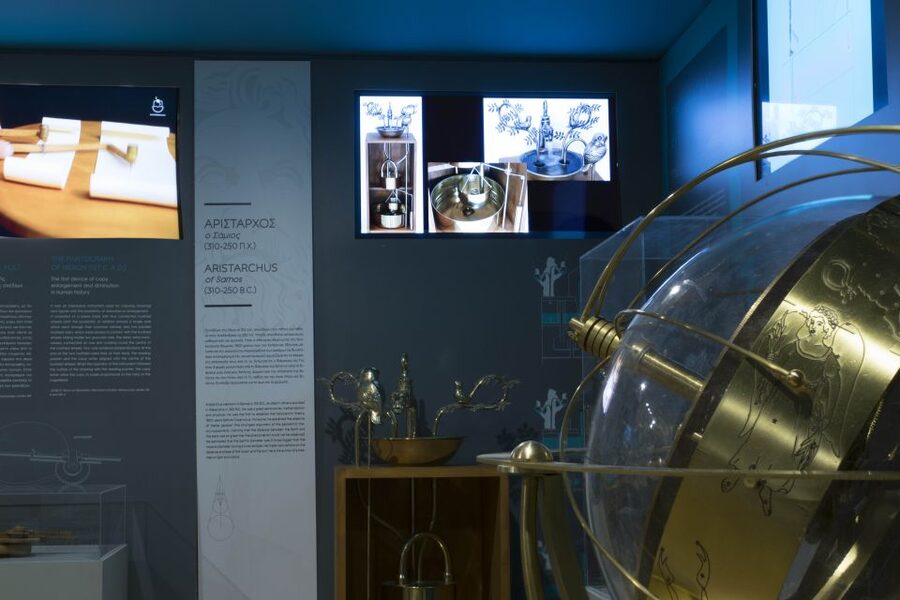
- About 100 operating models showing Greek inventions in action, not just static replicas
- Analog-computer engineering vibes, including displays associated with the Antikythera mechanism
- Hands-on interactive stations where you can put mechanisms to use yourself
- A mix of famous names and devices, from Philon to Heron to Ktesibios
- Rich media support with diagrams, labels, posters, and Greek/English explanations
- A historic Art Nouveau setting spread across about 700 square meters
Getting Oriented: How to Find the Museum Near Syntagma
The museum is easy to build into an Athens day because it’s close to the center. You’re looking at a 5-minute walk from Syntagma Metro Station.
Plan to enter at Pindarou 6, Athina 106 71, Greece. The experience is set up as a self-paced museum visit, so once you’re inside, you can decide what to focus on rather than follow a strict route.
Inside the Art Nouveau Building: 700 Square Meters of Tech Stories
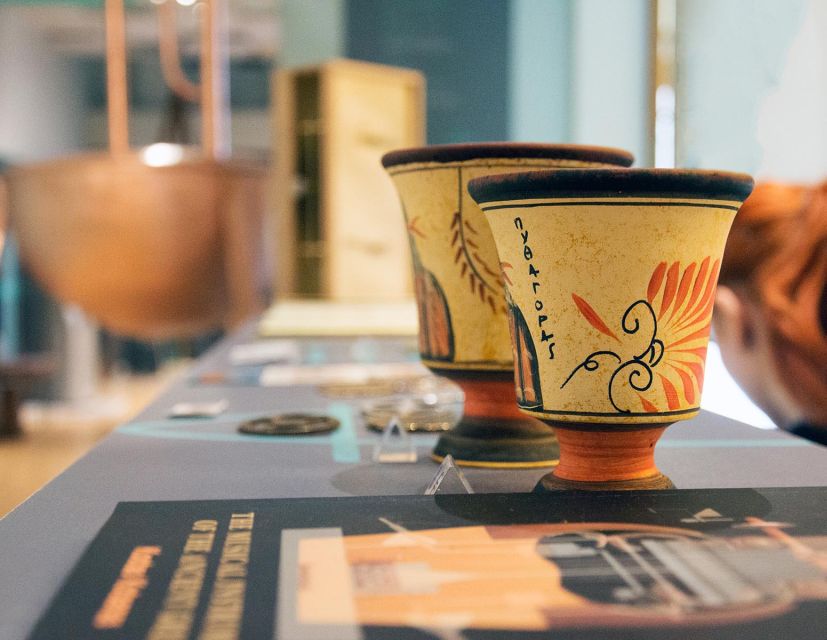
The Kotsanas Museum sits in a historic Art Nouveau building with a total area of about 700 square meters. That matters more than it sounds, because it gives the exhibits space to breathe. You’re not rushed through a corridor of cases; you can move from one mechanism theme to the next at your own pace.
The exhibition theme is called The Hi-Tech Inventions of Ancient Greeks. It’s designed to cover a range of devices and then connect the dots so you see patterns in the design thinking—gears, hydraulics, timing, control, and automation.
Why the Tech Feels Modern: Working Models, Not Museum Mysteries
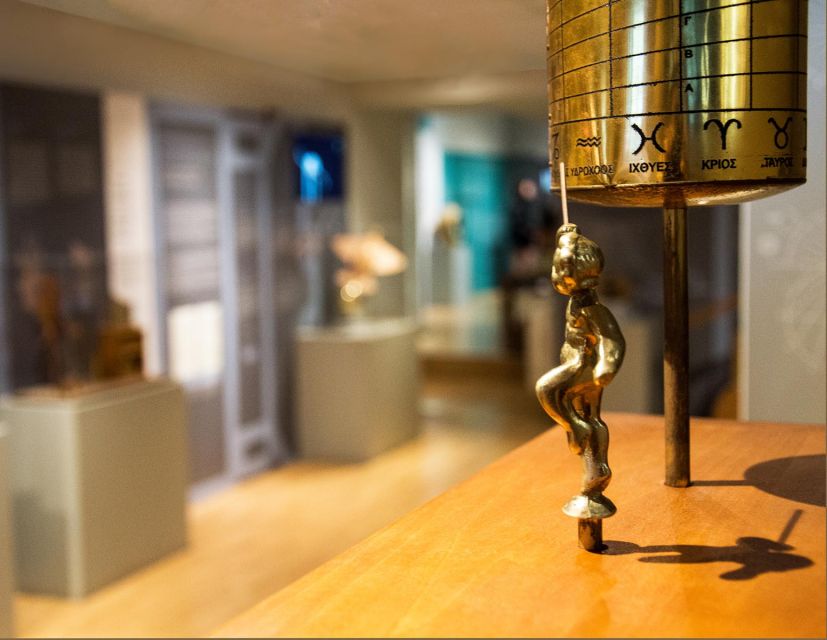
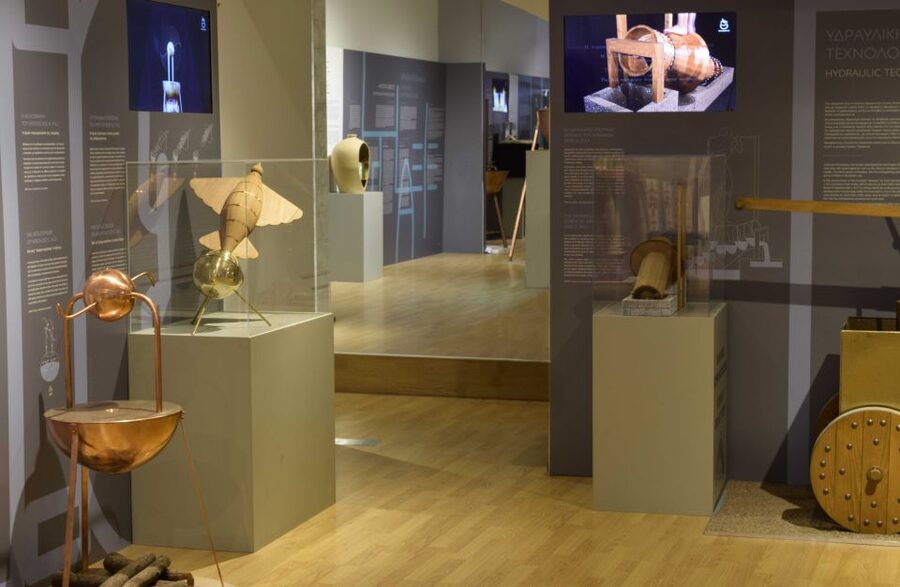
A big reason this museum hits is the working-model approach. Instead of reading about ancient engineering like it’s an ancient rumor, you’re seeing mechanisms operate.
You’ll notice how many of these inventions rely on principles we still use: analog calculation, mechanical timing, feedback-like motion, and systems that convert motion into function. Watching a device move can make explanations stick fast because you can correlate cause and effect right in front of you.
In particular, the museum highlights famous inventions such as the Antikythera calculating mechanism, which gives you a clear reference point for the idea of an ancient analog computer. Even if you only catch parts of the explanation, the idea lands: these people weren’t just making tools; they were building information and control into devices.
What You’ll See: Major Inventions and What They Teach
This museum’s exhibition includes about 100 selected exhibits, and the device names give you a useful map for understanding Greek technological ambition. Here are some of the key types of inventions you can expect to run into:
The Antikythera Calculating Mechanism Moment
The museum features an exhibit connected to the Antikythera calculating mechanism. Even without deep technical context, the display supports the main takeaway: mechanical systems can represent complex relationships in a physical way.
If you’re the type who likes to see how things work, this is the stop that probably gives you the biggest wow factor.
Ktesibios and the Hydraulic Clock
You’ll also encounter technology tied to Ktesibios, including a hydraulic clock concept. Hydraulics can feel abstract from a textbook. Here, you can watch how water pressure and controlled flow translate into timed behavior—basically turning fluid motion into measured time.
Philon’s Cinema and Time as a System
The museum includes the cinema of Philon. The interesting point isn’t just that it exists; it’s that it uses mechanism logic to generate a sequence, showing how timing and motion can be designed intentionally.
Think of it as an early reminder that entertainment and engineering share DNA. If you like both history and how devices create effects, this category should grab your attention.
Heron’s Automations and the Puppet-Show Angle
You’ll see displays connected to Heron, including an automotive-puppet show. It’s one of the more approachable ways to understand complex machinery—because automation becomes visible and understandable when a mechanism produces motion that looks like a performance.
It also helps you see how Greek engineers likely learned to build reliable systems: test, tune, and reuse the same mechanical building blocks in different contexts.
The Robot-Servant Theme
The exhibition also references the robot-servant idea. Whether you’re thinking in terms of robotics or simply mechanical automation, the value here is the museum’s focus on function. You’re not just looking at a concept image; you’re seeing a mechanism built to do something.
Hands-On Displays: Try the Mechanisms, Not Just the Explanations
One of the strongest parts of this experience is that many exhibits are interactive. The museum doesn’t treat you like a passive observer. Instead, it encourages you to put mechanisms into motion with your own hands.
Look for stations where there are buttons, levers, or guided mechanisms you can operate safely (the museum’s design clearly expects you to engage). When you operate a device yourself, you pick up the logic much faster than reading a label alone.
If you like museums that feel like a lab, this is where you’ll smile. And if you’re traveling with kids or teens, interactive stations tend to be the difference between a quick pass-through and a real memory-maker.
Audio-Visual Support in Greek and English: How to Use It
The exhibits are supported with audio-visual materials in Greek and English. You’ll also find explanatory labels, giant posters full of information, detailed diagrams, photos, and bibliographical references.
Here’s how I’d use that setup for your best experience:
- Start with a label or diagram so you know what you’re looking for.
- Watch the mechanism operate.
- Then use any video/animation station to confirm how the parts work together.
The museum also has projecting stations with video and animation, plus documentaries where the exhibitor explains the function and use of the mechanisms. That kind of repeated explanation is helpful because ancient tech can be hard to interpret if you only see it once.
Price and Value: Is $7.90 Worth It?
At $7.90 per person, the ticket price is easy to justify for what you’re getting. This isn’t an art museum where value depends on taste. The value here comes from concrete features: about 100 exhibits, many in operating form, plus interactive elements and multiple layers of explanation.
You’re also paying for convenience. It’s in central Athens, near Syntagma, and it’s wheelchair accessible. When a museum combines a location that’s simple to reach with hands-on, high-focus content, the ticket feels like money well spent.
There’s also a 4.9 rating from 26 reviews, which is a good signal that the format works for most visitors. (Still, the best match depends on whether you like mechanical things and explanations.)
Who This Museum Fits Best
This experience fits especially well if you’re:
- Curious about how early technology mirrors modern systems
- The type who enjoys machines, diagrams, gears, hydraulics, and timing
- Traveling with anyone who likes interactive displays over quiet galleries
- Interested in ancient Greek culture beyond the usual columns and statues
If you mainly want a classic archaeology fix with famous temples and no mechanisms, this may feel more technical than what you expected. But if you enjoy seeing how human creativity in one era can look familiar to ours, this place is unusually satisfying.
Practical Tips for a Smooth Visit
A few small details can make your visit easier:
- Plan to spend time reading and then returning to the mechanisms. The explanations make more sense after you watch the device operate.
- Food and drinks are not allowed, so don’t plan to snack inside.
- The museum has a host/greeter in English, which can help you get oriented when you’re figuring out what to prioritize.
Since the ticket is valid for one day, you can adapt if your Athens schedule shifts.
Should You Book the Kotsanas Museum Ticket?
Yes—if you like hands-on learning and you want to see ancient engineering in motion, this ticket is a very strong choice. The combination of operating models, interactive stations, and English support makes it more understandable than many specialty museums.
I’d skip it only if you’re mainly looking for a guided, commentary-heavy experience. Because there’s no guided tour included, you’ll get the most out of it if you’re comfortable reading labels, using Greek/English audio-visual media, and letting the mechanisms teach you.
If your day includes Syntagma anyway, booking ahead is a smart move to make room for one of the more unusual Athens experiences—ancient tech that behaves like it belongs on a modern bench.
FAQ
Where is the Kotsanas Museum of Ancient Greek Technology located?
The museum is located at Pindarou 6, Athina 106 71, Greece. It’s about a 5-minute walk from Syntagma Metro Station.
How much does the ticket cost?
The ticket price is listed as $7.90 per person.
How long is the ticket valid?
The ticket is valid for 1 day. Starting times depend on availability.
Is a guided tour included?
No. The ticket includes entry only, and a guided tour is not included.
What language support is available?
English support is available via the host/greeter, and the audio-visual materials are provided in Greek and English.
Is the museum wheelchair accessible?
Yes, the experience is listed as wheelchair accessible.
Are food and drinks allowed inside?
No. Food and drinks are not allowed.
Where does the activity end?
The activity ends back at the meeting point (the museum area near the given address).