REVIEW · CEBU
BEST OF CEBU: Cebu City Heritage with Uphill Tour | Joiners
Book on Viator →Operated by Explore Cebu Tours & Travel · Bookable on Viator
Cebu gets better when you go uphill. This tour strings together Cebu City landmarks and scenic viewpoints in one smooth 4 to 5 hour loop, with a focus on the big story points plus the hill-side scenes people usually miss. You’ll start with classic heritage stops, then move to the Taosit Temple area and the gardens before finishing with the Roman-style Temple of Leah.
What I like most is how the tour balances famous sites with places that feel more lived-in, like the Yap-Sandiego Ancestral House and the Taoist complex. I also like the pacing: it’s short visits at each stop, so you keep moving without feeling rushed in every single place.
One thing to plan around is traffic. Cebu traffic can stretch timing, and you’ll feel it if you’re heading to the hillside stretches.
In This Review
- Key highlights you should know
- Best-Of Cebu in one sitting: City classics plus uphill viewpoints
- Pickup and the small-group feel (max 10) for a calmer day
- The heritage loop: what each classic stop gives you
- Heritage of Cebu Monument: a history snapshot you can read at a glance
- Yap-Sandiego Ancestral House: Spanish and Chinese influences in one structure
- Fort San Pedro: the oldest and smallest fort vibe in the Philippines
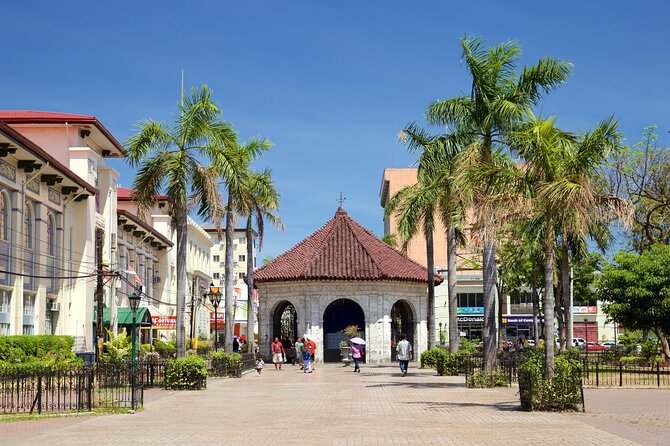
- Magellan’s Cross: a Christian arrival marker you’ll see people photograph for a reason
- Basilica Minore del Sto. Nino: expect a visit with limits
- Fuente Osmeña: the public-space break in the middle of the route
- The uphill section: Taoist Temple, Cebu Capitol area, and Sirao views
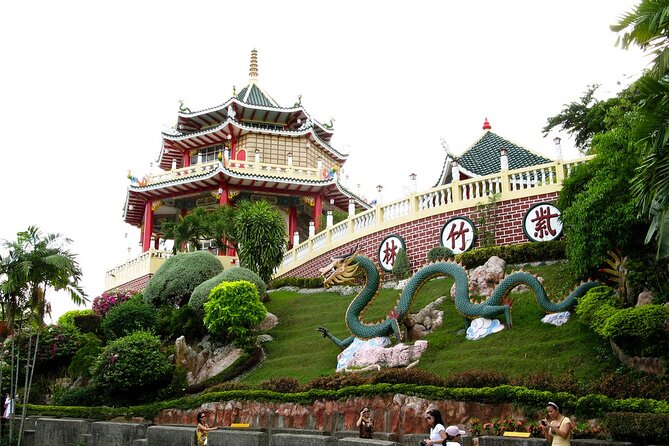
- Taoist Temple: hillside color and a Great Wall replica feel
- Cebu Capitol Building: a neoclassical photo pause
- Sirao Pictorial Garden: Little Amsterdam and flower-field scenery
- Temple of Leah: why this Roman-style stop lands for many people
- Timing, traffic, and the calm strategy that works best
- Value check: is $63.50 worth it for your time?
- Should you book this Cebu City heritage with Uphill Tour?
- FAQ
- How long is the Cebu City Heritage with Uphill Tour?
- Is pickup included?
- What’s the group size for this tour?
- Which major stops are included in the tour?
- Is there a dress code, and can I go inside Sto. Niño Church?
- What’s included in the price?
- Is cancellation free, and how far in advance do I need to cancel?
Key highlights you should know
- A compact 4 to 5 hour plan that fits first-time schedules without turning into an all-day slog
- Small group cap of 10 for easier photo stops and less bottlenecking
- Mixed “old Cebu” and “uphill Cebu” so you see both the city core and the viewpoints
- Taoist Temple on the hillside with gardens and a Great Wall replica feel
- Sirao Flower Garden (Little Amsterdam) where the scenery changes from city streets to flowering fields
- Temple of Leah with a Roman-style look and lots of photo angles
Best-Of Cebu in one sitting: City classics plus uphill viewpoints
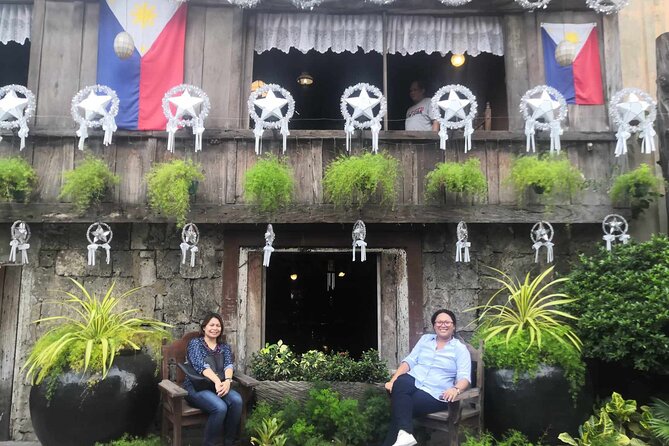
This is a highlights-and-views kind of day. You’re not just bouncing between random locations; you’re walking a clear line through Cebu’s identity: Spanish-era and early Christian markers at street level, then a step up into the hillside temples and the flower garden scenery.
You’ll get an air-conditioned vehicle, bottled water, and a professional guide working the route. That matters more than it sounds, because Cebu can be hot and the driving takes time. The vehicle gives you a breather between stops, and the guide helps you connect what you’re seeing to the bigger Cebu story.
Pickup and the small-group feel (max 10) for a calmer day
Pickup is offered, and that’s a real advantage if you’re staying in Cebu City and you don’t want to burn time figuring out transport for every leg. With a maximum group size of 10, you’re more likely to get better timing at stops and easier access for photos.
I’ve seen guide styles vary on Cebu tours, but this one tends to run as a team experience. People have shared that the father and son driver-guide setup works well, with calm, careful driving and a guide who keeps the energy friendly. One guide named Rix has been praised for being funny and flexible, while Tyler has been noted for being both witty and informative. Another guide, Olivier, also came up in positive comments for an engaging, upbeat approach.
The heritage loop: what each classic stop gives you

This portion is your “how Cebu formed” section. Think monuments, preserved houses, and old defensive walls—short stops, but each one anchors a different chapter.
Heritage of Cebu Monument: a history snapshot you can read at a glance
Your day starts at the Cebu Heritage Monument, where sculptures map key people and events tied to Cebu’s past. Admission is free here, which is nice because it keeps the money focused on the parts of the day where tickets actually matter.
The value is not only the artwork—it’s the way it gives you context fast. If you’re the type who likes to understand what you’re looking at before you move on, this sets the tone.
Yap-Sandiego Ancestral House: Spanish and Chinese influences in one structure
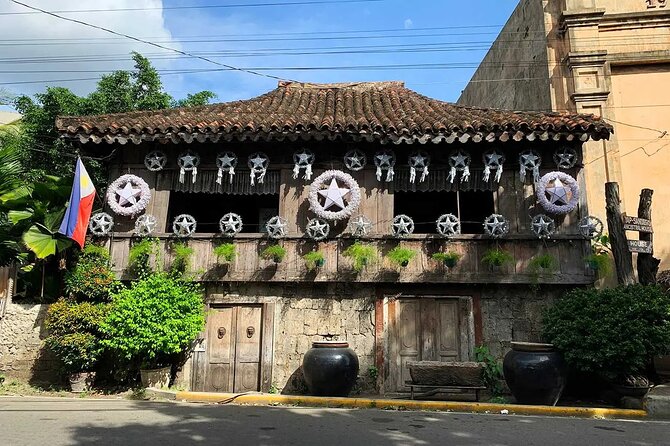
Next you’ll visit the Yap-Sandiego Ancestral House. Built in the 17th century, it’s one of the older preserved houses in the area, with Spanish and Chinese design influences.
This is the stop that often feels like the “real deal” because you’re seeing how families lived and how architecture carried identity across centuries. Admission is included, and the visit is typically around 30 minutes—enough time to slow down and actually look without feeling stuck.
A practical tip: bring your camera ready, but also take a minute to read the layout with your guide. Houses like this reward attention to details, like the way rooms connect and how styles mix.
Fort San Pedro: the oldest and smallest fort vibe in the Philippines
Then comes Fort San Pedro, built in 1738. It’s described as the oldest and smallest fort in the Philippines, and it’s the kind of place where you can feel the defensive geometry in your bones: thick stone walls, a compact layout, and that triangular bastion feel.
Admission is included, and the stop is about 30 minutes. Even if you’re not a military history person, you’ll understand it quickly. The guide helps turn it from stone into story.
Magellan’s Cross: a Christian arrival marker you’ll see people photograph for a reason
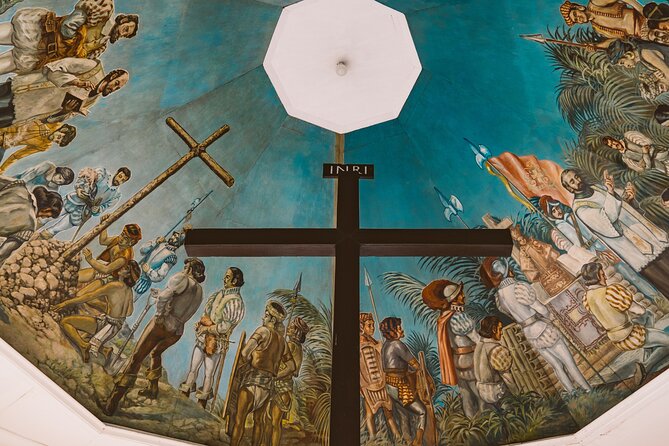
Magellan’s Cross is next, with a protected chapel setting. This is where Ferdinand Magellan’s 1521 arrival is tied to the introduction of Christianity in the Philippines.
Admission is free, and you’ll typically have about 20 minutes. The drawback is simple: it’s popular, so expect more people moving in the same small space. The guide helps you time your photo and move on without getting stuck.
Basilica Minore del Sto. Nino: expect a visit with limits
The tour includes the Basilica Minore del Santo Niño de Cebu, which dates to 1565 and houses the revered Santo Niño de Cebu statue. Admission is listed as free.
But there’s a key practical constraint: you may not be allowed to go inside Sto. Niño Church due to rules on the visit (including a proper dress code requirement). So treat this stop as a respectful viewing visit first, with limited interior access depending on on-site rules.
Fuente Osmeña: the public-space break in the middle of the route
You’ll also stop at Fuente Osmeña, a well-known landmark and park centered around a historic fountain. This is less about tickets and more about giving you a breather and a sense of Cebu’s everyday public life. Expect short time here rather than a long stay.
The uphill section: Taoist Temple, Cebu Capitol area, and Sirao views
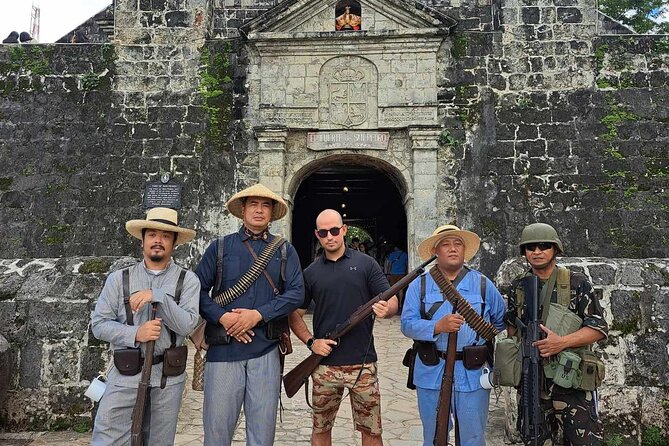
This is where the tour changes mood. You leave the denser city core and start climbing toward the hillside sights that give Cebu that “overlook” feeling.
Taoist Temple: hillside color and a Great Wall replica feel
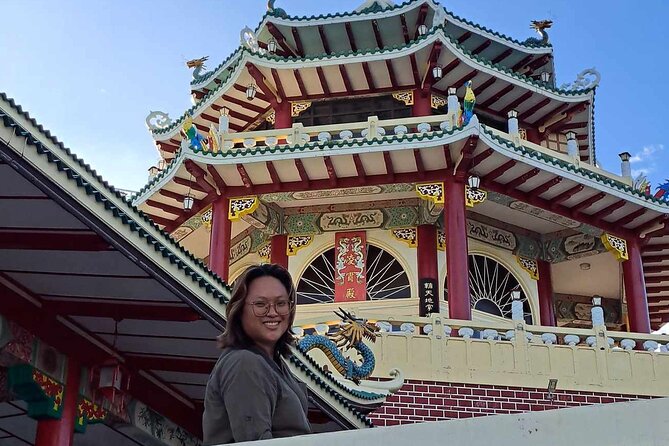
Next is the Taoist Temple, located on a hillside above the city. It’s built in 1972 and is known for colorful architecture, garden spaces, and a replica of the Great Wall.
Time here is usually about 45 minutes, and admission is free. Even if you’ve seen Taoist temples elsewhere, the hillside setting and the garden layout make it feel different.
There is one real consideration: one guide’s review mentioned that the Taoist temple was closed to visitors at the time of their visit. Since that can happen with day-to-day access rules, I’d suggest keeping your expectations flexible. The good news is that your tour still keeps moving and you’ll have other stops to balance the day.
Cebu Capitol Building: a neoclassical photo pause
You’ll also have time near the Cebu Capitol Building, inaugurated in 1938. It’s described as neoclassical, with grand columns and a dome.
This is a more “view and photos” kind of stop than a long explore. It’s still worth it because it helps connect Cebu’s story beyond colonial markers—into the look and feel of the modern provincial era.
Sirao Pictorial Garden: Little Amsterdam and flower-field scenery
Then you’ll head to Sirao Flower Garden, also called the Little Amsterdam in Cebu City. It’s in the mountainous Sirao area and is famous for flowering fields, including celosia and other blossoms.
Admission is included, and the time here is about 30 minutes. This stop is popular for a reason: you’ll get a real change of scenery from city streets to hillside garden atmosphere.
A balanced note from feedback: some people find the Little Amsterdam look a bit overly touristy and feel the photo spots can look worn in places. If you’re extremely detail-fussy about garden aesthetics, you might be happier treating it as a scenic breather and a photo stop rather than a long nature walk.
Temple of Leah: why this Roman-style stop lands for many people
The last major paid highlight is Temple of Leah, built in 2012. It’s inspired by ancient Roman architecture and includes sculptures, art, and mementos tied to love and devotion.
Time here is about 30 minutes, and admission is included. This is the part of the day that gives you something dramatic and visual. It’s also the stop that divides opinions—one person felt you could skip it—while others love it for the photos and the overall spectacle.
My practical take: go in expecting a themed landmark, not a quiet museum. If your style is more about views and atmosphere than perfect historical alignment, you’ll likely enjoy it more.
Timing, traffic, and the calm strategy that works best
The tour runs about 4 to 5 hours, but Cebu traffic can add friction. Reviews mention delays, and that fits what you should plan for whenever you’re mixing city driving with uphill stops.
Here’s how to use the day smarter:
- Bring a little patience for the roads. The hillside stops are spaced so you get views without rushing, but traffic can still slow everything down.
- Use the van time to reset. You’re in air-conditioning with bottled water, so it’s not a miserable wait.
- Keep your camera ready before the uphill portion. The climb is often where the best “I can see the city from up here” moments happen.
Also, Cebu has had construction and repairs in the wider recovery from typhoons, and that can affect how quickly you move between points. That’s not something you control, but it’s one more reason your timing might be slightly fluid.
Value check: is $63.50 worth it for your time?
At $63.50 per person, this sits in the “not cheap, but fair” category for Cebu City tours. Why it can feel like good value:
- You’re paying for a guided route that covers multiple major landmarks in a single morning or afternoon block.
- You get air-conditioned transport, bottled water, and a guide’s help with the sites.
- The price includes all fees and taxes, plus tickets where applicable (for example, Yap-Sandiego and Fort San Pedro have admission included; Magellan’s Cross is free; Sirao and Temple of Leah have admission included).
Where it might not feel as worth it:
- If you’re only after one or two specific attractions (like just Fort San Pedro or just the garden), then you’re paying for a full route whether you love every stop or not.
- Temple of Leah is a polarizer, so if you know you’d rather skip themed landmarks, think carefully about how much you’ll enjoy that final stop.
Should you book this Cebu City heritage with Uphill Tour?
I’d recommend it if you want a smart first-timer plan: you’ll get the big Cebu markers (Magellan’s Cross, the Sto. Niño basilica area), key heritage stops (Ancestral House, Fort San Pedro), and the uphill scenery that makes the day feel like more than just sightseeing.
You might choose another option if:
- you hate traffic uncertainty and want a very tightly scheduled experience with minimal driving,
- you strongly dislike themed landmarks and think you’d rather spend time elsewhere than at Temple of Leah,
- you know you may not be able to meet the dress code requirements, since Sto. Niño Church interior access may be limited.
If you’re flexible, like learning as you go, and want a guided mix of city and hilltop sights, this is a solid way to cover a lot of Cebu without turning the day into a transport headache.
FAQ
How long is the Cebu City Heritage with Uphill Tour?
The tour lasts about 4 to 5 hours.
Is pickup included?
Pickup is offered.
What’s the group size for this tour?
It has a maximum of 10 travelers.
Which major stops are included in the tour?
You’ll visit Heritage of Cebu Monument, Yap-Sandiego Ancestral House, Fort San Pedro, Magellan’s Cross, Basilica Minore del Sto. Nino de Cebu, Taoist Temple, Sirao Pictorial Garden, and Temple of Leah, plus a stop at Fuente Osmeña and time at the Cebu Capitol Building.
Is there a dress code, and can I go inside Sto. Niño Church?
You should follow a proper dress code. There’s also a note that you are not allowed to go inside Sto. Niño Church, so plan for limited access.
What’s included in the price?
Included items are an air-conditioned vehicle, all fees and taxes, bottled water, assistance of a professional tour guide, and a Cebu souvenir.
Is cancellation free, and how far in advance do I need to cancel?
Free cancellation is allowed up to 24 hours before the experience for a full refund. If you cancel within 24 hours, the amount paid is not refunded.