REVIEW · HONG KONG SAR
Coach Tour: Hong Kong Heritage Discovery
Book on Viator →Operated by Century Holiday · Bookable on Viator
Heritage without the headache. This 5-hour Hong Kong coach tour walks you through the New Territories’ quieter side, with a guide who explains what you’re seeing and a smooth plan to get you from place to place without figuring out buses first. I especially liked the door-to-door pickup from select hotels and the small group pace, which makes questions easy instead of rushed.
I also loved the food stop that feels local, not gimmicky: a Tai Po Market snack tasting where you can sample traditional treats while you browse the stalls. You’re not just “standing in a market.” You’re learning what people buy and why it matters here.
One thing to consider: the pickup is only from certain Kowloon and Hong Kong Island hotels. If you’re staying outside the pickup list (including the New Territories and Lantau), you’ll need to make your own way to the meeting point.
In This Review
- Key highlights worth your time
- A small-group Heritage Trail morning with real hotel pickup
- Price and logistics: what $144.32 gets you
- Yuen Long Ping Shan route: from pagoda symbolism to walled village life
- Tsui Sing Lau Pagoda: Hong Kong’s oldest pagoda
- Tang Clan Ancestral Hall (1273): three halls, two courtyards, status clues
- Kungting Study Hall (1870s): granite craftsmanship you can actually see
- Sheung Cheung Wai: a 200-year-old walled village you can walk along
- Tai Fu Tai Mansion and Tai Po Market: the morning’s payoff
- Tai Fu Tai Mansion (Sha Tin): scholar-gentry architecture and philanthropy
- Tai Po Market: traditional snacks and a real browsing stop
- Who this tour fits best (and who should skip it)
- Small details that make the experience feel smooth
- Should you book Hong Kong Heritage Discovery?
- FAQ
- How long is the Hong Kong Heritage Discovery tour?
- Do you get hotel pickup, and what areas are covered?
- What is included in the price?
- Is lunch or dinner included?
- How big is the group?
- What ticket do I need?
- Is the tour affected by weather?
Key highlights worth your time
- Hotel pickup from select Kowloon and Hong Kong Island hotels with an English-speaking guide
- Yuen Long Ping Shan Heritage Trail stops like the Tsui Sing Lau Pagoda and ancestral halls
- Tsui Sing Lau Pagoda details like the Champion Star deity and exam-success symbolism
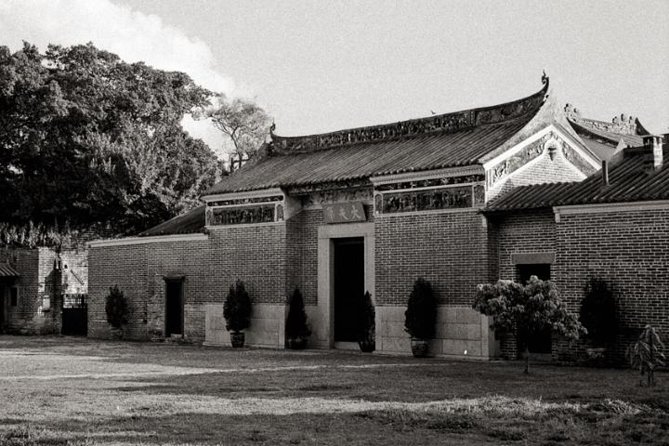
- Traditional walled village atmosphere at Sheung Cheung Wai, with gatehouse and shrines still standing
- Tai Po Market snack tasting plus free time option if you want to extend your day
- Very small group size (max 6) for a calmer, more personal tour flow
A small-group Heritage Trail morning with real hotel pickup
This is the kind of tour that works because it removes friction. Your day starts with pickup between 7:50am and 8:35am from select hotels on Hong Kong Island and in Kowloon. Your exact time comes from the local operator after booking, and the guide meets you by eye contact from the pickup list.
Why I like this setup: if you’ve ever traveled in Hong Kong, you know the transit can be fast but mentally exhausting. Here, the coach handles the movement between the New Territories sites, and you just focus on the stops.
The tour runs about 5 hours. That’s short enough to feel manageable in the morning, but long enough to see multiple heritage buildings and a market stop. The group limit is 6 travelers, so even if the morning crowd seems organized, you’re not packed into a giant bus where everyone fades into the background.
If you’re someone who likes history but also wants it explained in human terms, the escort (English speaking) is a big part of the value. I found the stop-by-stop storytelling helps you connect details like dates, architecture, and family lineage instead of just taking photos and moving on.
Price and logistics: what $144.32 gets you
At $144.32 per person for roughly 5 hours, you’re paying for three things: transportation, interpretation, and a planned route through several sites that aren’t right next to each other.
Here’s the tradeoff that helps you judge value:
- You get transfers between attractions plus pickup from select hotels.
- You get traditional snack tasting at Tai Po Market.
- You don’t get meals beyond snacks, so lunch and dinner are not included.
The tour also uses a mobile ticket option and includes an English-speaking guide during transfers and sightseeing. That combination matters, because the heritage stops involve specific names and building features. Without guidance, it’s easy to miss the “why” behind what you’re seeing.
The other practical point: pickup isn’t available from the airport, railway station, cruise terminal, or any hotels in the New Territories (including Lantau Island). If your lodging is outside the pickup zone, the tour won’t simply come fetch you. You’ll be directed to a departure point instead. Plan around that before you book.
Yuen Long Ping Shan route: from pagoda symbolism to walled village life
The core of this tour follows the Yuen Long Ping Shan Heritage Trail. What makes it interesting is the mix: you’re not only seeing one temple or one museum. You’re stepping through different layers of community life—religious practice, scholarly tradition, and family wealth—then finishing with everyday street food at the market.
The rhythm is classic heritage-trail pacing: short coach rides, guided stop explanations, and time to look closely at architectural details. The best part is that each location has a clear identity, so you can track the story.
Tsui Sing Lau Pagoda: Hong Kong’s oldest pagoda
One of the tour’s anchors is the Tsui Sing Lau Pagoda, described as Hong Kong’s oldest pagoda. It’s believed to have been built in 1486, and it rises about 42 feet (13m).
What to pay attention to while you’re there:
- It’s a three-storied, green-bricked pagoda with a hexagonal shape.
- The top floor houses Fui Shing, known as the Champion Star, a deity tied to exam success and failure.
- There are auspicious Chinese sayings inscribed on each floor.
This is a fun stop because it links architecture to people’s real goals. When you stand in front of the pagoda, you’re not just admiring age—you’re seeing how belief traveled with education and exams. It’s the kind of symbolism that makes the tour feel more “alive” than a list of old buildings.
A practical tip: if you’re taking photos, look for angles that show the hexagonal form and the brick color. The guide’s explanation helps you know what to zoom in on.
Tang Clan Ancestral Hall (1273): three halls, two courtyards, status clues
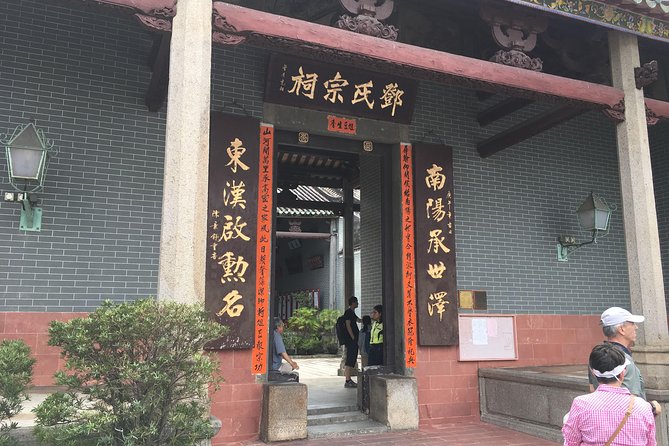
Next is the Tang Clan Ancestral Hall, built in 1273. This isn’t a small shrine tucked away. It’s a magnificent three-hall structure with two internal courtyards, and it’s framed as one of the finest examples of this kind of building in Hong Kong.
A detail worth watching for: the high elevation of the pathway in the courtyard. In the tour context, that elevation signals that one of the Tang clansmen held a high-ranking position in the imperial government.
That’s the key idea with ancestral halls here: they aren’t only religious spaces. They’re also a physical record of family status, duty, and how power was understood in everyday design. The guide’s explanation turns what could be an “old building” into something more meaningful.
Kungting Study Hall (1870s): granite craftsmanship you can actually see
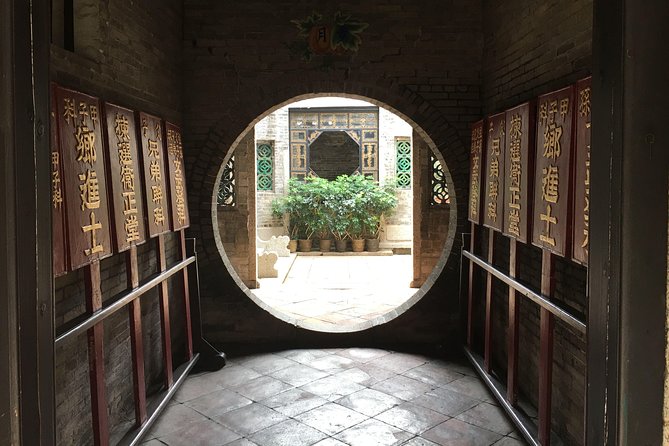
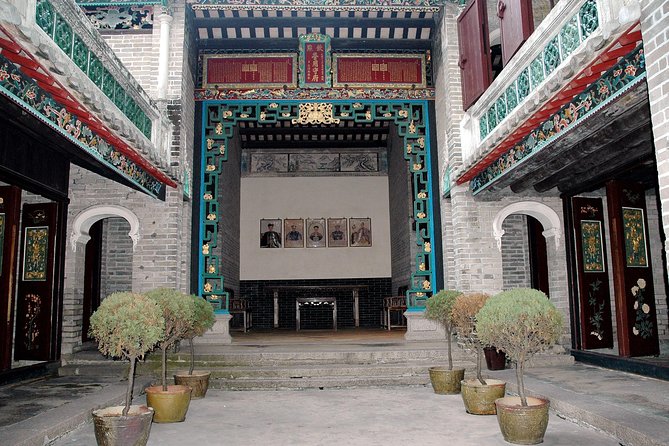
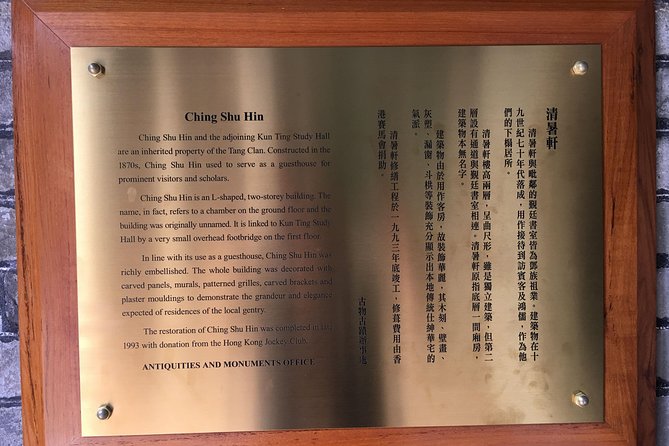
The Kungting Study Hall is from the 1870s and served as both an ancestral hall and a study space. It’s a two-hall building with an enclosed courtyard.
What makes it special is the craftsmanship:
- Granite columns and granite blockwork line the facade.
- The interior design reflects the craftsmen’s skills from that era.
This is where I’d slow down if you enjoy details. If your usual travel style is fast photos and quick exits, this stop rewards patience. Even a short pause to look at the stonework makes the building feel less generic.
Sheung Cheung Wai: a 200-year-old walled village you can walk along
Then you’ll reach Sheung Cheung Wai, a 200-year-old walled village. The layout is described as symmetrical rows of houses enclosed by a green brick wall. Some elements are still there: the gatehouse, shrines, and enough old houses to picture how daily life might have looked.
Important reality check: part of the wall may be missing. But what remains is still enough to give you the feel for a traditional walled village and why walls mattered—protection, boundaries, and identity.
This stop shifts the mood. Instead of ceremonial or scholarly spaces, you’re seeing how people lived within a defined community system. If you like human-scale heritage, this is one of the most “immediately understandable” parts of the route.
Tai Fu Tai Mansion and Tai Po Market: the morning’s payoff
The tour doesn’t end with the village. It finishes with heritage plus food, which is a smart combo for a half-day itinerary.
Tai Fu Tai Mansion (Sha Tin): scholar-gentry architecture and philanthropy
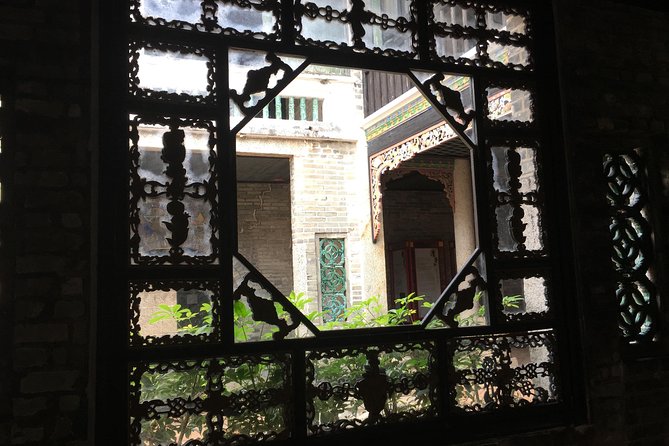
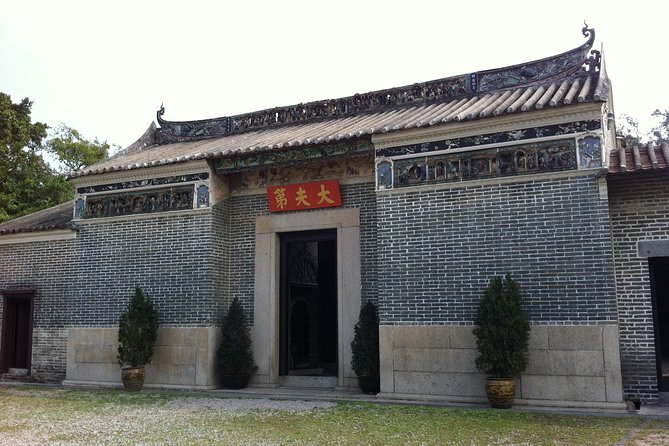
Tai Fu Tai Mansion is in Sha Tin, east of Mai Po. It was probably built in the 1870s by Man Chung-Luen, described as a successful merchant and renowned philanthropist.
The mansion is presented as:
- A fine example of a scholar-gentry class traditional Chinese dwelling
- One of the most elegant buildings throughout the territory
- Gazetted as a historic building in 1987
- Renovated, with work completed in 1988
Why this stop works: it adds a different angle on heritage. Up to this point, you’ve been looking at religious and community buildings. Here, you get a sense of wealth, education, and social contribution—plus a building that has been preserved and restored rather than left to vanish.
If you enjoy architecture, bring extra attention to how the building reads as a home for a certain class—not a palace, not a temple, but a place designed to project standing and values.
Tai Po Market: traditional snacks and a real browsing stop
The final major stop is Tai Po Market, which used to be a trading ground for foods and goods around the New Territories and now functions as a thriving street market.
You’ll find vendors with:
- Fresh vegetables
- Cured meats
- Dried seafood
- Locally made candies
You’ll also have traditional local snack tasting as part of the tour. The key value here is that the market isn’t treated as a random break. It’s tied to the local economy and everyday food culture.
If you like flexibility, there’s also an option: if you choose to leave the group at Tai Po Market, you can enjoy free time for the rest of the day there and then return to your hotel by MTR on your own—but you must get approval from your guide first and ask for the guide’s cellphone for urgent contact.
Who this tour fits best (and who should skip it)
This tour is ideal if you:
- Want heritage in the New Territories without organizing multiple transport hops
- Like guided explanations of architecture and symbolism (not just standing in front of buildings)
- Prefer a small group size over large buses
- Enjoy market time, especially when it includes snack tasting rather than only photo stops
It might be less ideal if you:
- Need a flexible start time later in the morning (pickup begins before 9am)
- Are staying outside the select hotel pickup area and don’t want to deal with a meeting point
- Are expecting a full meal included in the schedule (lunch and dinner aren’t included)
Small details that make the experience feel smooth
A few things make this tour feel more comfortable than typical “coach + hurry” heritage days:
- Your guide is English-speaking for both transfers and sightseeing.
- The bus and driver are described as professional and safe, which matters for a route in and out of the New Territories.
- The group size can be tiny (including cases with just a handful of people), which helps you ask questions and get pointed attention at each site.
- Guides like Jo-elle and Andy have been noted for strong English and humor, which makes the information stick without turning it into a lecture.
Also, the route includes both famous named sites (like Tsui Sing Lau Pagoda) and place-based experiences (like the walled village layout). That variety keeps the day from turning into one long “look at another old building” loop.
Should you book Hong Kong Heritage Discovery?
If you want a short, structured morning that shows a side of Hong Kong many people skip, I’d book it—especially because the combination is rare: heritage buildings plus a market food experience, with actual hotel pickup from select locations.
I’d say you should book if:
- You’re staying in Kowloon or Hong Kong Island and your hotel is on the pickup list
- You like being guided through specific places, including the exam-success symbolism at Tsui Sing Lau and the status clues at the Tang ancestral hall
- You want a calm, small-group pace (max 6)
I’d hold off if:
- You’re staying outside the pickup zone and you don’t want to go to a meeting point
- You need a full meal included in your tour price
- You’re traveling with big weather concerns, since the tour requires good weather (you’ll be offered a different date or a full refund if it’s canceled)
FAQ
How long is the Hong Kong Heritage Discovery tour?
It runs for about 5 hours.
Do you get hotel pickup, and what areas are covered?
Pickup is offered from major centrally located hotels in Kowloon and Hong Kong Island. Pickup is not available from the airport, railway station, cruise terminal, or hotels in the New Territories (including Lantau Island).
What is included in the price?
Pickup (or meeting at a departure point), an English-speaking tour guide, transfers between attractions, and traditional local snack tasting at Tai Po Market are included.
Is lunch or dinner included?
No. Lunch and dinner are not included.
How big is the group?
This tour/activity has a maximum of 6 travelers.
What ticket do I need?
You’ll use a mobile ticket.
Is the tour affected by weather?
Yes. The tour requires good weather. If it’s canceled due to poor weather, you’ll be offered a different date or a full refund.