REVIEW · CATANIA
From Catania: Syracuse and Noto Culture and History Tour
Book on GetYourGuide →Operated by Lemontour Catania · Bookable on GetYourGuide
One day, two UNESCO-worthy cities, big walking shoes needed. I love how the day mixes Neapolis archaeology with an easy wander on Ortigia, and I also like that Noto lets you shift from ruins to sculpture-like Baroque façades. One possible drawback: the day runs on a van schedule and the entry ticket at Neapolis is extra, so your best experience depends on how easily you manage tickets and timing.
The best part is the contrast. Syracuse (especially Ortigia) rewards slow looking—cathedral façades, quiet lanes, and views over the water—then Noto changes the mood to sunlit pale stone and dramatic angles. Expect a guided flow with breaks for your own photos and exploring, not a sprint where you barely breathe.
Key highlights you should care about
- Neapolis Archaeological Park gives you Syracusan layers in one organized visit, even if parts can be under maintenance on some dates
- Ortigia Island is where the day feels human: alleys on foot, plus the cathedral as a standout stop
- Noto’s Sicilian Baroque is the main event, often described as a stone garden because the city looks like carved architecture
- Hotel pickup and drop-off from Catania and nearby areas saves time and hassle
- Multilingual live guiding (English, French, Italian, Spanish) helps you get more from what you see
- Your Neapolis visit may be shaped by what is open, visible, or ticketed that day
In This Review
- Getting from Catania to Syracuse: how the day starts
- Neapolis Archaeological Park: what you’ll see and why it’s worth planning for tickets
- Ortigia Island in Syracuse: cathedrals, lanes, and that 2,000-year feel
- Noto’s Sicilian Baroque: why the city feels like a stone show
- The pacing: free time, car noise, and how to avoid time sinks
- What you’re really paying for: value at $80.89
- Who this tour suits best (and who should consider going solo)
- Should you book the Catania to Syracuse and Noto tour?
- FAQ
- FAQ
- How long is the Syracuse and Noto tour from Catania?
- What’s included in the price?
- Do I need to pay for Neapolis Archaeological Park entry?
- Are food and drinks included?
- What languages are the guides?
- Where does pickup happen?
- Is there free cancellation?
Getting from Catania to Syracuse: how the day starts
This is a guided day trip built around logistics that actually make sense for Sicily. You start in Catania with pickup directly at your accommodation area (as long as it’s reachable by the vans). Pickup usually happens within about 15 minutes of the departure time, and if you’re in a pedestrian-only zone, you’ll agree on a close meeting point.
Then you head toward the Syracuse area by van. That transfer time matters because it buys you energy. When you’re later walking Ortigia’s lanes and doing Noto’s viewpoints, you’ll be glad the first chunk of the day isn’t all stairs and sun.
Also, the guide is live and multilingual. That sounds simple, but in practice it’s what keeps the day from turning into a series of stop-and-go photo breaks. Different languages can affect pace—especially around ticket time—so it helps to be ready to listen, then ask questions when you can.
Neapolis Archaeological Park: what you’ll see and why it’s worth planning for tickets
Neapolis is the big “archaeology first” stop. You’ll go into the Archaeological Park of Neapolis, a site with finds spanning multiple periods of Syracusan life. The guide gives you a map-style sense of where things sit, and that context is key because without it, parks like this can feel like a lot of stones and scattered viewpoints.
Two things to aim for here:
- Comfortable walking: the park is outdoors and built for moving around at a steady pace.
- Your ticket strategy: entrance tickets are not included in the tour price, so you should expect to pay separately for admission.
One thing that can affect the experience: parts of the site may be under work or not fully visible on certain dates. On some departures, specific areas like a theater view may be limited, and there can be closures of particular features (for example, a Tomb of Archimedes-related area has been reported as closed during a season). That doesn’t make the stop pointless—it just means you should keep your expectations flexible.
Practical tip: if you’re the type who likes to see everything, arrive mentally ready to prioritize. If the park layout feels confusing on the ground, don’t hesitate to stop and get oriented before you start drifting. A small navigation miss can mean you skip a section and only notice later.
You can also read our reviews of more tours and experiences in Catania.

Ortigia Island in Syracuse: cathedrals, lanes, and that 2,000-year feel

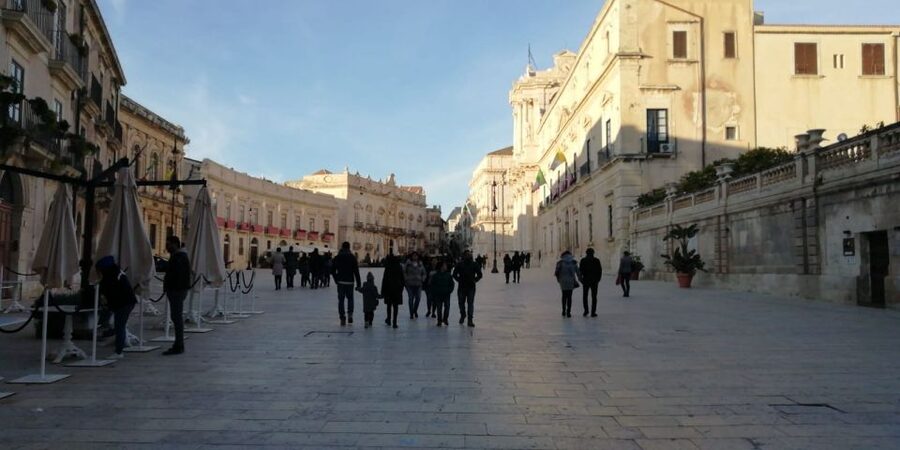
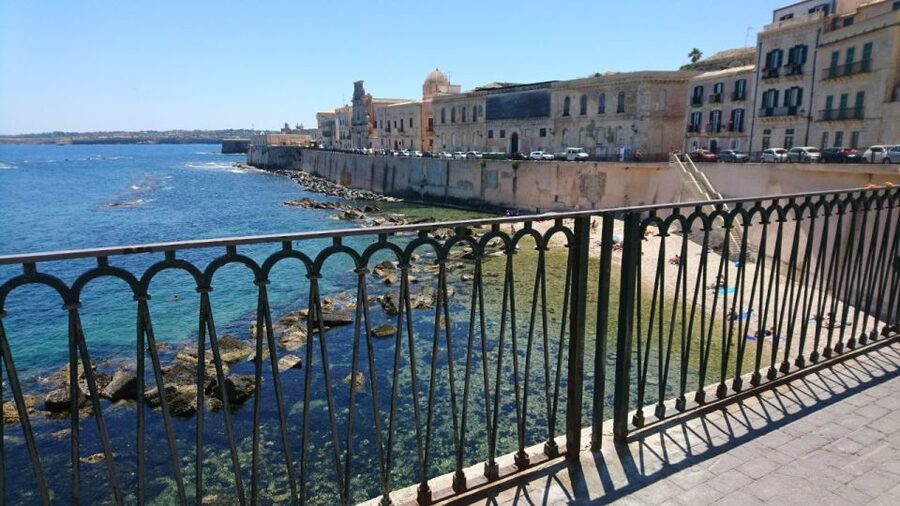
After Neapolis, you shift to Ortigia Island, the historic core of Syracuse. This is where the day turns from “site visit” to “walk and notice.” You’ll get time to roam the alleys—lanes that feel old in the best way, with the tour guiding you toward the areas that matter.
The cathedral is a highlight. It’s the kind of stop that’s worth slowing down for, because Ortigia rewards looking up as much as looking ahead. The façades and street levels create a layered feel—churches, squares, and streets that keep changing as you turn corners.
Why this stop works well in a group:
- Your guide can connect what you see to why it exists there.
- You’ll have enough time to take photos without feeling rushed every five minutes.
Just know the tradeoff: Ortigia can get busy depending on the day and local events. When it’s crowded, the day can feel more about navigating foot traffic than soaking in every side street. You can still enjoy it—you just may need to accept a slower pace.
Practical tip: if you want to buy something, plan it during your free time. Ortigia has a food-market feel, and having a simple souvenir bite can be more satisfying than trying to shop on the fly while the group is moving.
Noto’s Sicilian Baroque: why the city feels like a stone show
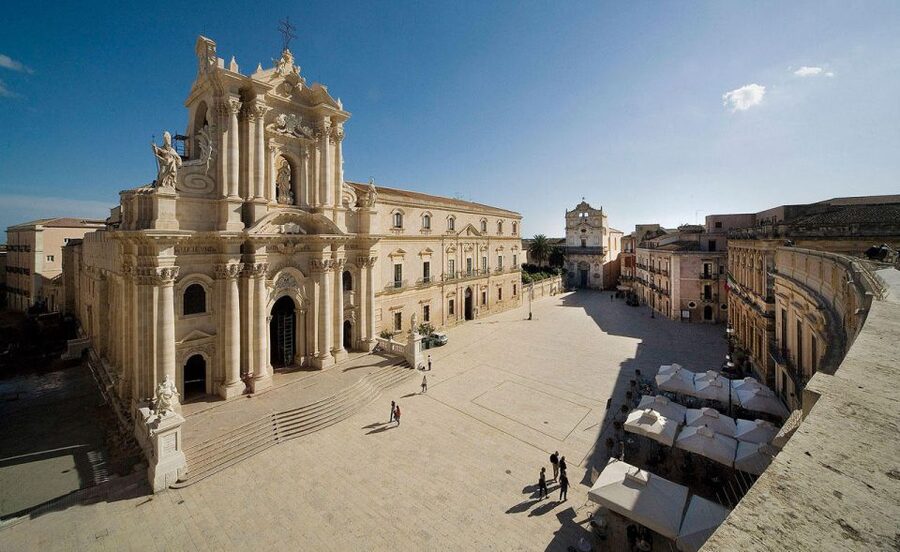
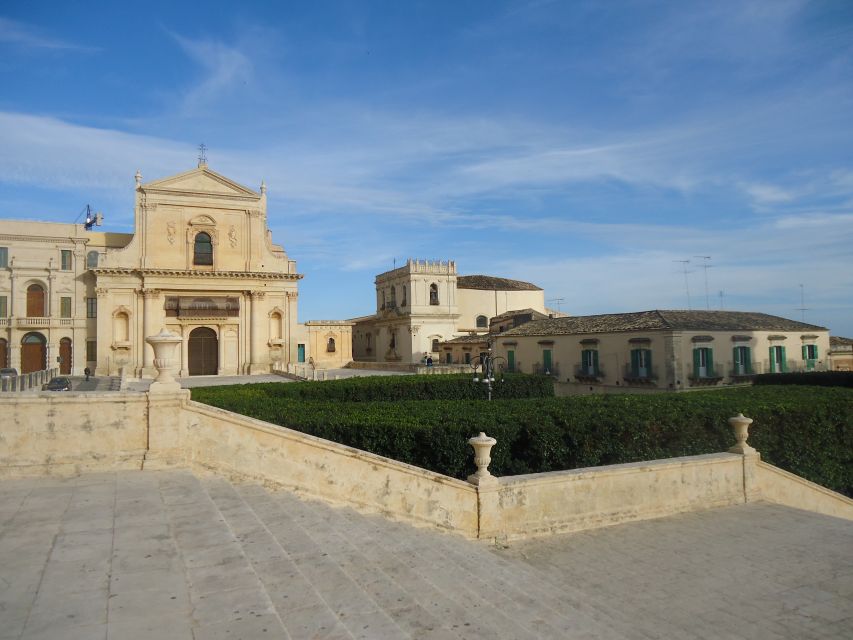
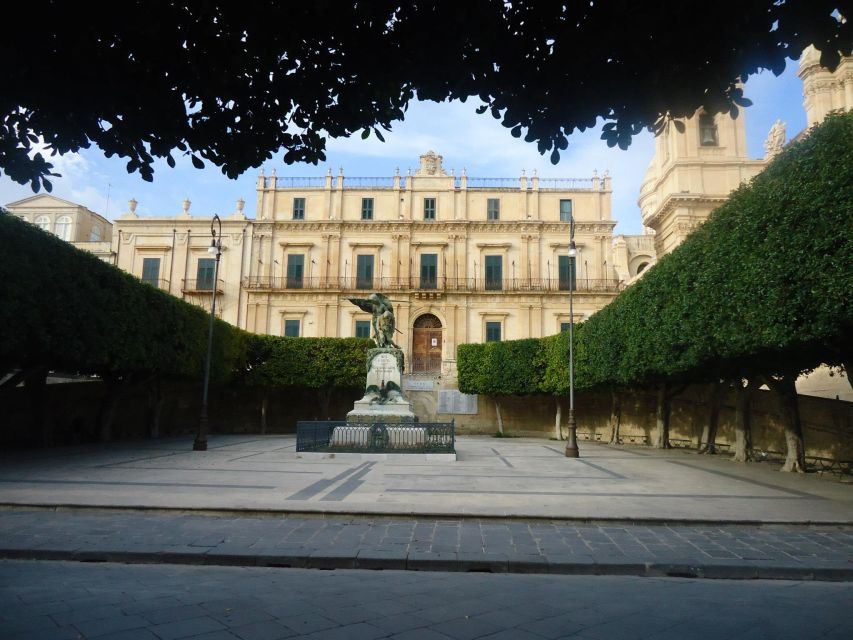
Then comes Noto, known for Sicilian Baroque architecture. If you’ve seen Baroque before, Noto gives it a very specific look: lots of pale stone, sculpted details, and angles that make buildings seem to shift in the light.
The tour gives you a guided start, then you get free time to explore. That mix is important. Noto is best when you can pause. A façade is something you understand by standing in front of it, walking around it, then looking again. If you’re always moving, you miss the point.
Noto is often described as a stone garden, and that matches what you experience as you wander. It’s not just pretty buildings. It’s the way the architecture creates a rhythm in the streets—open views, then tight corners, then a sudden church-front view that makes you stop without thinking.
Photo strategy: don’t just aim for wide city views. Take detail shots—balustrades, window frames, and the carved edges around doorways. That’s where the Baroque personality lives.
The pacing: free time, car noise, and how to avoid time sinks

This trip is built to cover a lot in about 8 hours. That usually means you’ll have:
- guided segments at both Syracuse-area and Noto stops
- separate stretches of free time where you choose how long to stay in one spot
In theory, it’s a smart balance. In real life, the “feel” of the day depends on small things: van comfort, the ability to hear the guide in traffic, and how clear ticket instructions are at Neapolis and elsewhere.
A few practical considerations based on what’s come up for guests:
- Some departures may use older vans with limited comfort, and hearing the guide in traffic noise can be tricky.
- If ticket purchasing is confusing, it can help to have the guide stay close so you don’t lose time. When help is available, you move faster.
- If a lunch stop gets added as a group option, it can eat into your free time. Since food and drinks aren’t included, your best move is to stay alert to whether you’re being guided to a paid meal versus having true free roaming time.
My advice to keep the day feeling good:
- Decide before you go if you want a sit-down lunch or a slower walk-and-snack approach.
- Use your free time in Ortigia for your food plan, not for last-minute planning.
- If you care about seeing every corner of a site, ask the guide how much time you have in each area before you start walking.
What you’re really paying for: value at $80.89
At $80.89 per person, the tour price is less about “admission value” and more about “time value.” You’re paying for:
- Hotel pickup and drop-off
- transfer by van
- a multilingual live guide
Entrance tickets at Neapolis are not included, and food and drinks are also not included. So the true cost depends on what you do once you arrive—especially the Neapolis admission.
Is it still good value? Often yes, because it saves you from stitching together multiple transport pieces across Catania, Syracuse, and Noto in one day. That’s not a small deal. With a guide, you also get context that turns the places from sightseeing into understanding.
Where value can slip: if the day gets slowed by logistics like ticket confusion, car comfort issues, or a paid lunch stop that costs more time than you wanted. You can still have a great day—just go in with the mindset that you’re buying structure, not total control.
Who this tour suits best (and who should consider going solo)

This day trip fits best if you:
- want a guided route between Catania, Syracuse, and Noto without dealing with transfers
- like architecture and history, but don’t want to spend the day figuring out what goes where
- enjoy walking and can handle outdoor stops
You might consider doing it independently if you:
- prefer complete freedom and don’t want van time or scheduled stops
- already know how to navigate Neapolis and Ortigia on your own
- care about maximal time in one city, instead of the two-city balance
One more factor: the guide quality matters a lot. In this route, guides have been praised for making stories clear and fun, even when translation needs are heavy across multiple languages. On days when communication is strong, the tour feels like it’s doing real work for you.
Should you book the Catania to Syracuse and Noto tour?
I’d book it if you want one day that hits the big Sicily-hitters: Neapolis ruins, Ortigia walking, and Noto Baroque in the same trip. It’s a smart use of time, especially if you don’t want to plan transport between cities and you like learning while you walk.
I’d pass or adjust expectations if you dislike scheduled pacing or you hate paying extra for major admissions. Also, if you’re sensitive to van comfort or you rely on hearing every word in noisy traffic, choose this trip only if you’re comfortable with partial audio and quick visual learning.
FAQ

FAQ
How long is the Syracuse and Noto tour from Catania?
The tour duration is 8 hours.
What’s included in the price?
The price includes hotel pickup and drop-off, transfer service, and a multilingual live guide.
Do I need to pay for Neapolis Archaeological Park entry?
Yes. Entrance ticket to the Archaeological Park of Neapolis is not included.
Are food and drinks included?
No. Food and drinks are not included.
What languages are the guides?
The live tour guide is available in English, French, Italian, and Spanish.
Where does pickup happen?
Pickup and drop-off are offered from Catania and surrounding areas. Pickup usually happens at your accommodation if the area is reachable by the van, and for pedestrian areas you’ll agree on a pickup point closest to your accommodation.
Is there free cancellation?
Yes. You can cancel up to 24 hours in advance for a full refund.