REVIEW · CORDOBA
Córdoba: Skip-the-Line Great Mosque-Cathedral History Tour
Book on GetYourGuide →Operated by Konexion Tours · Bookable on GetYourGuide
Córdoba’s Mezquita surprises at every turn, and this skip-the-line tour helps you read it like a story instead of a maze. With audio receivers and a live guide, you can focus on the interior’s double arcades, horseshoe arches, and that jaw-dropping forest of columns.
I like the way the tour frames the place as shared history: Islamic worship space first, then a Catholic cathedral carved into it after the conquest. Guides like Helena, Angel, Franny, and Juan Carlos come up again and again in praise for making the timeline make sense, plus adding the small context that turns stonework into something you can actually picture.
One possible drawback: the start is strict. You have to meet at the only olive tree in Patio de los Naranjos near the Santa María Fountain, and arriving late can leave you out of the group.
In This Review
- Quick key points before you go
- Why this Mezquita tour beats wandering on your own
- Finding the meeting point: Santa María Fountain and the only olive tree
- Entering the Mosque-Cathedral: skip-the-line plus audio receivers
- The 1-hour walkthrough: columns, double arcades, and horseshoe arches
- The big story moment: how the cathedral was built inside the mosque
- Baroque altarpiece and mahogany choir stalls: what to look for
- Timing and comfort: what to expect after the tour ends
- Price and value: is $38 worth it?
- Who should book this tour, and who might want a different pace
- Should you book the Córdoba Mezquita skip-the-line history tour?
- FAQ
- How long is the Mosque-Cathedral of Córdoba tour?
- Where do I meet the guide?
- Is the entrance fee included?
- Do I get skip-the-line entry?
- What should I bring, and what is not allowed?
- Can I cancel or reserve without paying right away?
Quick key points before you go
- Find the meeting point fast: Patio de los Naranjos, by the Santa María Fountain, at the only olive tree (all others are orange trees).
- Skip-the-line entry, with your time protected: you get guided access plus the entrance fee handled.
- Audio receivers inside the Mezquita-Cathedral: you’ll hear the guide clearly as you move through a noisy, busy space.
- A tight, high-impact route: columns, double arcades, and horseshoe arches in about one hour.
- A clear explanation of the “mosque-turned-cathedral” moment: including the Baroque altarpiece and the mahogany choir stalls.
- A helpful finish: your guide can point you toward a good local spot for Andalusian tapas afterward.
Why this Mezquita tour beats wandering on your own
The Great Mosque-Cathedral of Córdoba (the Mezquita) is one of those places where your eyes get excited faster than your brain can label what you’re seeing. You walk in and think: beautiful. Then you realize you’re seeing layers—art, religion, politics—stacked over centuries.
This tour is valuable because it gives you a map for the confusion. In 1 hour, you’re guided through the most meaningful areas: the column “labyrinth,” the repeating arcades, and the specific architectural logic behind the horseshoe arches. Without context, you might admire the design and miss the reasons it looks the way it does.
I also like that it treats the site as a real historical argument between eras, not a museum diorama. The guide explains how the cathedral was built inside the mosque after the Christian conquest, so you understand why the space feels both continuous and disruptive at the same time. That’s the key emotional takeaway here: it’s not just a mash-up. It’s a record of change.
You can also read our reviews of more tours and experiences in Cordoba.
Finding the meeting point: Santa María Fountain and the only olive tree
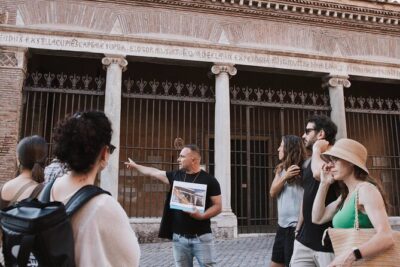
Your success starts before you even enter. The meeting point is in the Patio de los Naranjos, at the Santa María Fountain area, and you’re told to look for the only olive tree—the rest are orange trees.
Here’s the practical advice: arrive early enough that you can find the tree without rushing. One common problem with popular attractions is not the ticket line—it’s the first 5 minutes of “where is everyone?” Get your bearings fast so the tour staff can scan you in and you can start on time.
Also double-check your dress and carry setup. The tour notes say no luggage or large bags, and sleeveless shirts aren’t allowed. That matters because if you show up unprepared, you lose time trying to fix it at the doorway.
Entering the Mosque-Cathedral: skip-the-line plus audio receivers
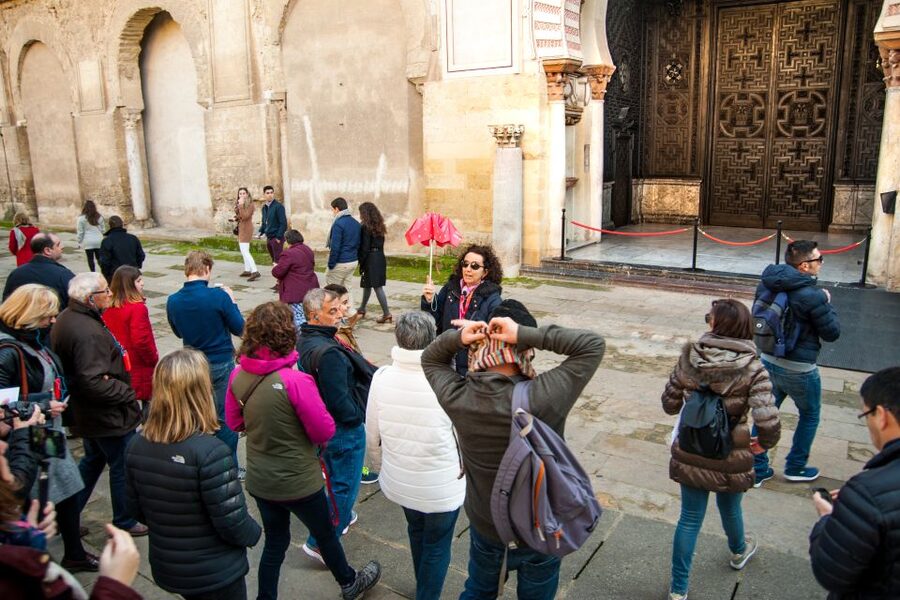
This is a guided, skip-the-line style experience with entrance included. You’ll meet the guide, then move in with the group while the ticket process is handled for you. The benefit is not just convenience; it’s focus. When you’re not stuck waiting, you can start listening right away and your first impressions land better.
Inside, you use audio receivers. That’s not fancy gadgetry for its own sake. The Mezquita is a crowded, echo-y environment, and the guide’s explanations stay clearer when you’re not trying to hear through distance and movement.
One extra detail that shows up in real-life reviews: people often praise specific guides for explaining the different religions and historical moments in a way that feels respectful and grounded. Names that stand out include Helena, Elena, Christina, Isabella, Cristina, Marta, Paki, Pacqui/Pachui, and David—each noted for keeping the story understandable across group types and languages.
The 1-hour walkthrough: columns, double arcades, and horseshoe arches
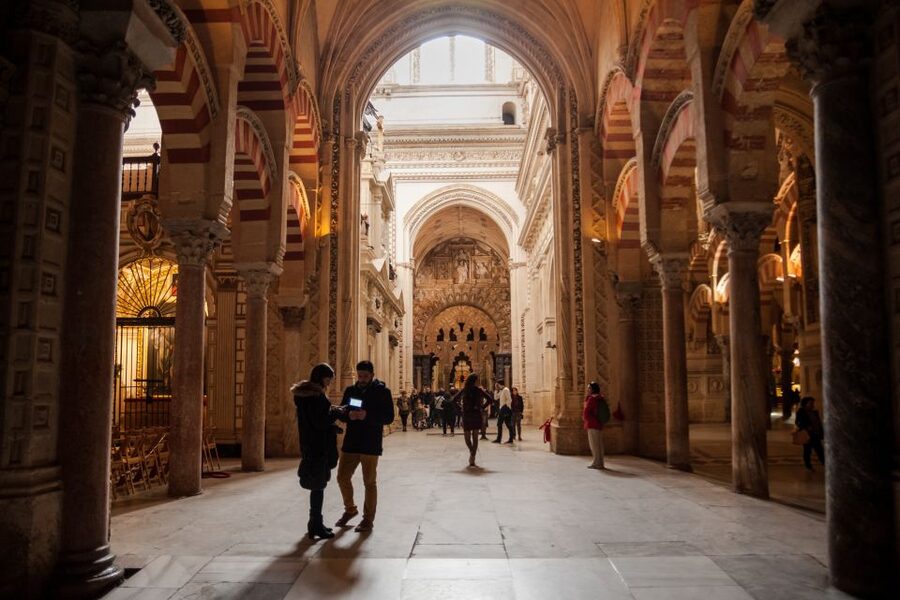
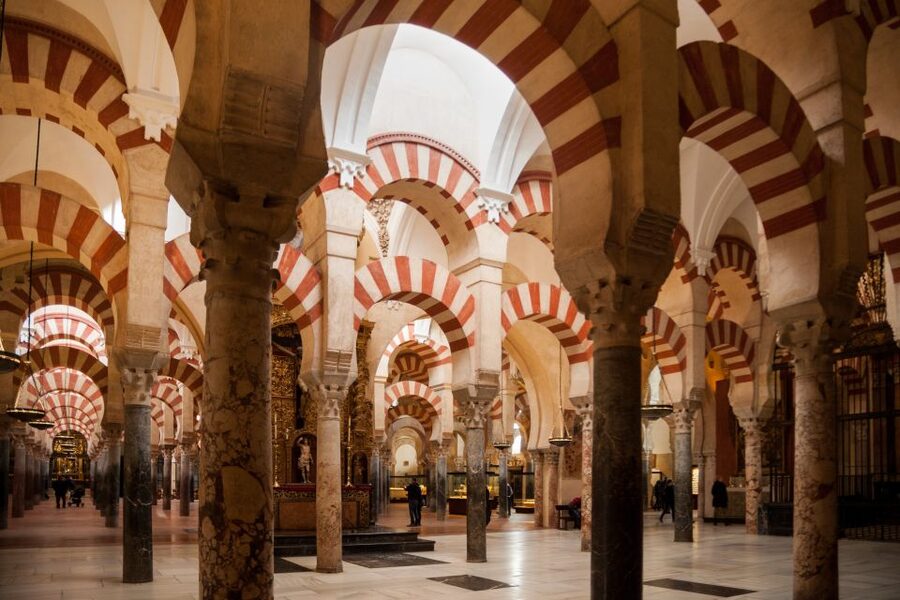
The heart of the tour is the interior. Think of it as walking through a designed rhythm—repeating shapes that make the space feel endless without feeling random.
You’ll spend time with:
- A labyrinth of columns: these aren’t just decorative. They create the visual field that makes the building feel like it expands the deeper you look.
- Double arcades: stacked arches add depth and structure. The tour helps you notice how your eye follows the layers.
- Horseshoe arches: this is where the building’s identity shows up fast. You’ll learn what to look for so it’s not just “pretty arches,” but a recognizable design language.
This is also where the audio receivers pay off. As you move, the guide can point out the architectural logic and the changes that occurred over centuries. When you can hear the explanation clearly, the details stop being trivia and start being a way to understand the building.
It’s only 1 hour, so the route is focused. If you love slow looking and photography, you’ll want to plan a bit of extra time after the tour ends (more on that below).
The big story moment: how the cathedral was built inside the mosque
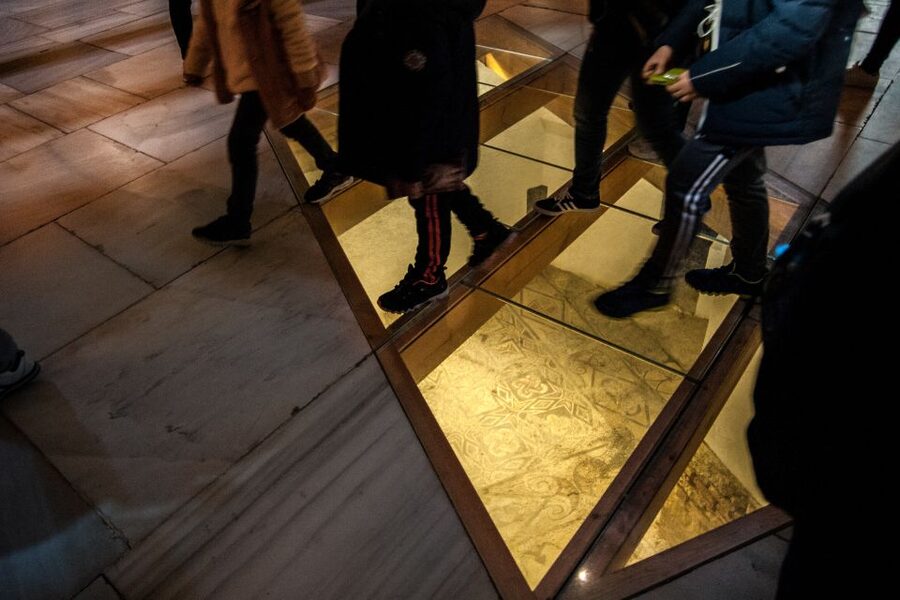
One of the most interesting parts of this tour is the explanation of the Christian conquest-era changes. You’re not just seeing a building that survived; you’re seeing a building that was re-used—and re-claimed.
After the conquest, a Catholic cathedral was built inside the mosque. The guide helps you understand what that means in real terms. You’ll notice how the space shifts from Islamic architectural intent toward a Christian focal point, and how that mix creates the Mezquita’s unique tension.
Two highlights the tour specifically calls out:
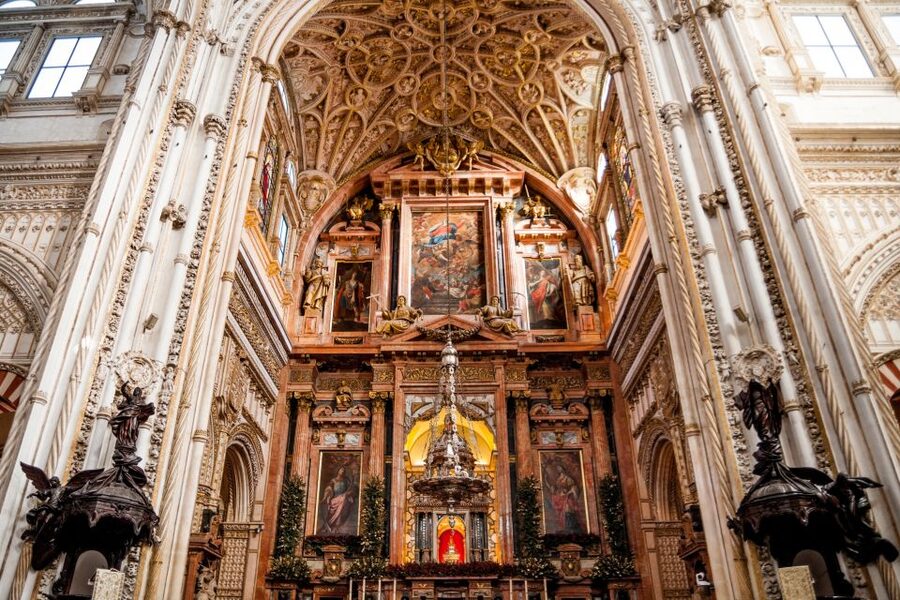
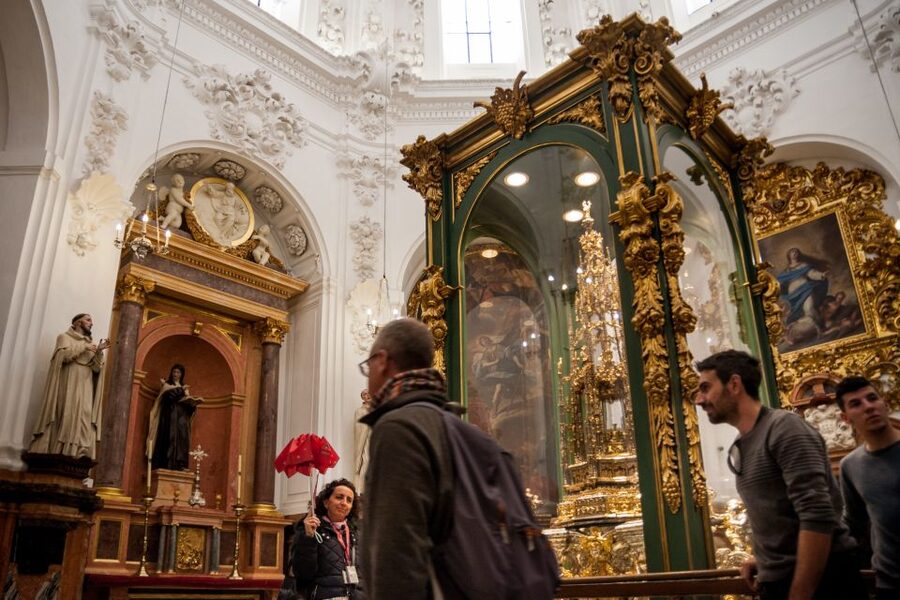
- the Baroque altarpiece
- the mahogany choir stalls
Even if you’re not a “cathedral person,” these details help you connect the architectural layers to what people needed for worship after the change of power. It’s a shift in sacred function, not just a style change.
And if you’re the kind of traveler who likes religion and politics as part of art history, this is where the tour really earns its keep. The explanations tend to respect both perspectives—Islamic origin and Catholic additions—so the building feels understandable instead of confusing.
Baroque altarpiece and mahogany choir stalls: what to look for
When you reach the cathedral insertions, slow down. These are the spots where viewers often stand and stare, but the tour gives you a reason to stare.
The Baroque altarpiece is visually dramatic, and that’s the point. Baroque design aims for emotion and focus. The guide’s job is to connect it to the moment when the mosque became a cathedral space, so it doesn’t feel like you’re watching a “random big object” appear in the middle of something else.
The mahogany choir stalls add another angle: you’re seeing furniture and function, not just architecture. The guide’s explanation helps you connect the stalls to how the space was used during services and what that meant for the flow of worship inside the older structure.
This section can also be mentally taxing in the best way, because you’re constantly comparing two eras in your head. If you get tired easily, take small breaks with your water. The tour is short, but the building is intense.
Timing and comfort: what to expect after the tour ends
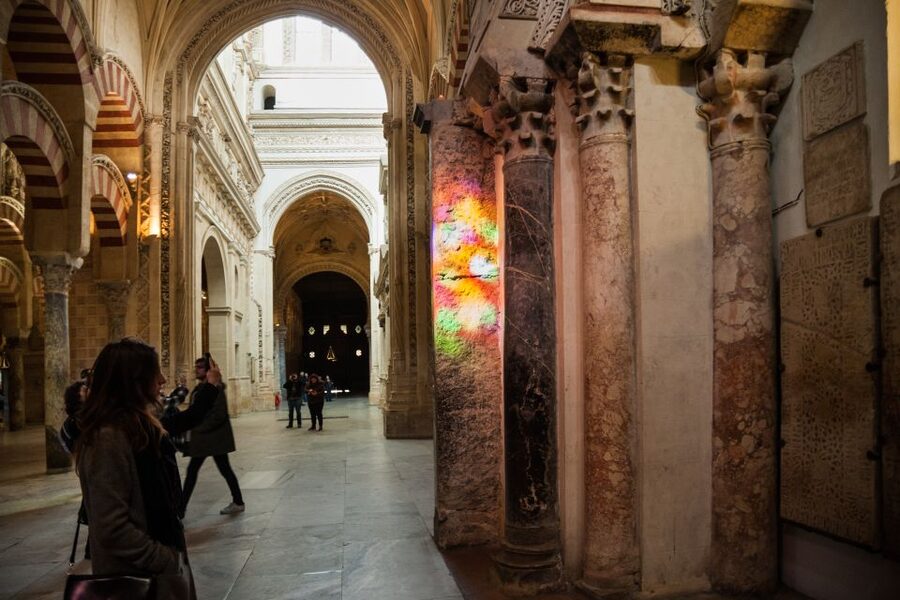
Plan for the reality of this site: it’s popular, and it can feel warm indoors. One review notes that it can get stuffy, and a simple workaround like bringing water spray or a small fan can make the experience more comfortable.
Also keep opening timing in mind. One helpful note from experience: the Mezquita can close around 2 pm and reopen later. So if you’re building a Córdoba day, don’t assume you can always just show up anytime.
After the tour, you’ll have time to keep looking on your own. I’d use that window for:
- photos from angles you didn’t get during the guided stops
- re-reading what you just learned, with your eyes now trained
- lingering near areas that felt most confusing during the talk
If you’d like food afterward, the guide can point you toward a good local restaurant or tavern for authentic Andalusian tapas. That’s a practical little bonus: it saves you from guessing where the locals actually eat.
Price and value: is $38 worth it?
At about $38 per person for a 1-hour guided tour, the value depends on what you want from the Mezquita.
This price makes sense if you care about:
- Skip-the-line entry so your time doesn’t evaporate at the door
- a local qualified guide who can explain why the building changed and what to notice
- audio receivers so the story stays audible inside a crowded interior
- the entrance fee bundled into the tour
What’s not included is food and drink, so you’ll still want to budget for tapas afterward.
If you’re the type who loves reading every sign and researching architecture details on your own, you might not need a guide. But if you want the building to make emotional and historical sense quickly, this is one of the more efficient ways to do it in Córdoba—especially because the story is complicated and easy to misread when you’re standing in the middle of it.
Who should book this tour, and who might want a different pace
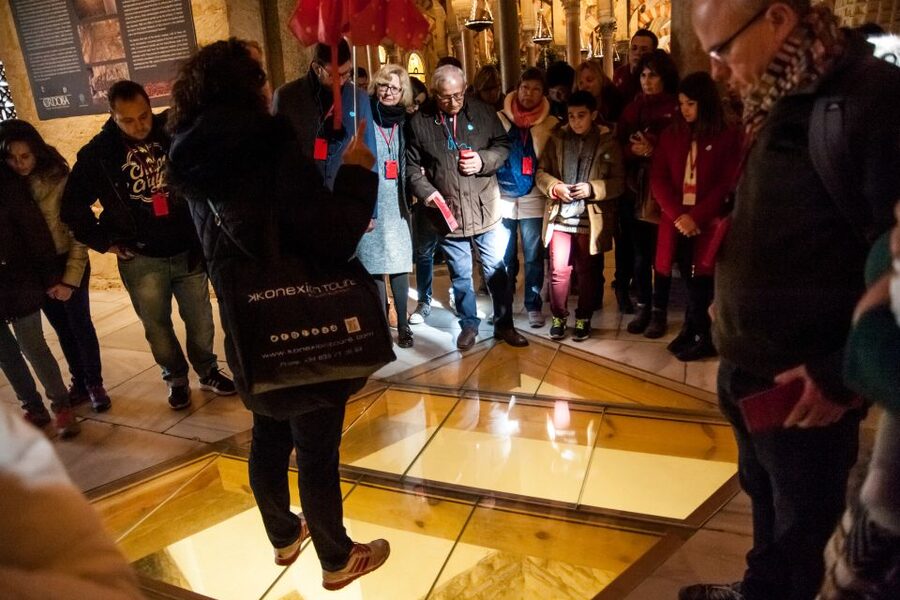
I’d book this if:
- you want a structured overview of the Mezquita’s Islamic-to-Catholic transformation
- you prefer a guided route that hits the must-see interior highlights
- you appreciate hearing history explained from more than one angle
- you like efficient plans when you’re only in Córdoba for a short time
I’d consider a longer or self-paced option instead if:
- you’re a slow photographer who needs lots of quiet time
- you want more time for chapel-by-chapel wandering and deeper reading
- you’re traveling with someone who hates group timing and fixed itineraries
Language-wise, the tour runs with Spanish, French, and English guides. There’s also a hint from real experiences that some guides can adapt for additional languages (one group reported Portuguese during their tour), but don’t count on it unless you confirm.
Wheelchair access is listed as available, which is helpful for planning a smoother visit through this busy historic complex.
Should you book the Córdoba Mezquita skip-the-line history tour?
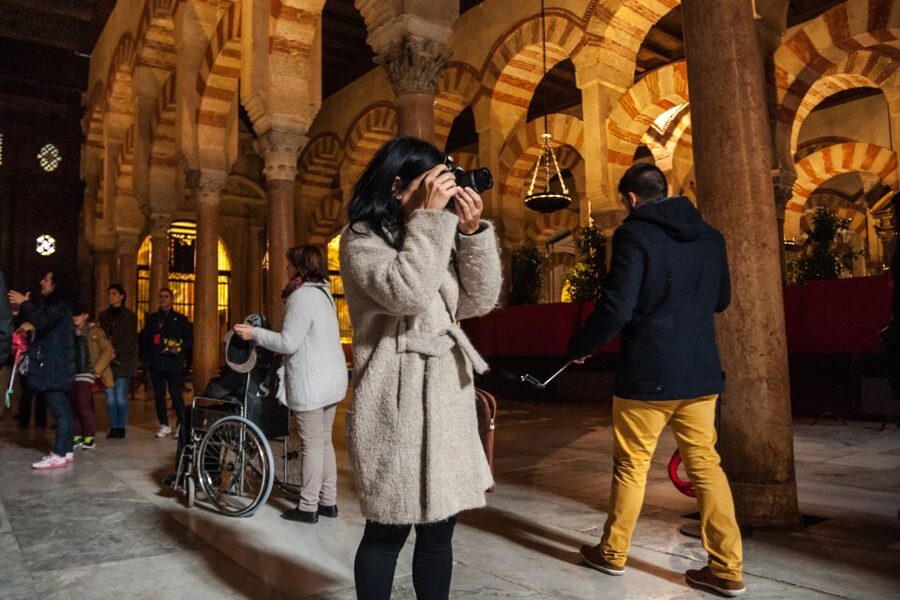
Yes, you should book it if you want your first Mezquita visit to feel coherent. The combination of skip-the-line entry, a timed route, a local guide, and audio receivers is built for visitors who want meaning—not just photos.
If you’re sensitive to missing scheduled starts, show up early to the Patio de los Naranjos and find the only olive tree. And if you tend to get overheated or overwhelmed in indoor spaces, bring water and a small comfort item, since the interior can feel stuffy.
When you get it right, you leave with more than admiration. You leave with a clearer sense of how the building’s layers tell a human story of power, art, and worship changing over time.
FAQ
How long is the Mosque-Cathedral of Córdoba tour?
The guided visit lasts 1 hour.
Where do I meet the guide?
Meet at the only olive tree near the Santa María Fountain in Patio de los Naranjos, inside the Mezquita de Córdoba.
Is the entrance fee included?
Yes. The tour includes the Mosque Cathedral entrance fee.
Do I get skip-the-line entry?
Yes. This activity is listed as skip-the-ticket line.
What should I bring, and what is not allowed?
Bring your passport or ID card, comfortable shoes, water, and comfortable clothes. Luggage or large bags aren’t allowed, and sleeveless shirts are not allowed.
Can I cancel or reserve without paying right away?
You can cancel up to 24 hours in advance for a full refund, and you can reserve now and pay later.