REVIEW · BUSAN
Old Korea Thousand History Tour of Gyeongju from Busan
Book on Viator →Operated by Lecirt · Bookable on Viator
One day, a thousand years of Korea. This full-day Gyeongju tour from Busan mixes live commentary with major Silla-era landmarks, including UNESCO stops like Bulguksa Temple. Two things I love: the included admission at every paid sight and the way the guide strings the story together so the places make sense fast. One thing to keep in mind: it’s a long, hot day with plenty of walking, and timing can feel tight if you prefer slow hangs.
You’ll ride round-trip from central Busan pickup points, then spend the day moving from temple to hanok village to tomb mounds, ending with evening atmosphere around Wolji Pond and Woljeonggyo Bridge. Based on what I’ve seen firsthand in how these days run, I’d plan for heat, sun protection, and comfy shoes. If you’re the type who likes to move, learn, and take photos after dark, this is a great fit.
In This Review
- Key Highlights at a Glance
- Getting From Busan to Gyeongju Without Stress
- Bulguksa Temple: Silla Beauty You Can See Immediately
- Gyochon Traditional Village: Hanok Streets and Real-Life Flavor
- Daereungwon Tomb Complex: Mounds, Meaning, and a Different Kind of “Wow”
- Hwangridan-gil: A Preserved 1960s Street Mood
- Donggung Palace and Wolji Pond: The Spot That Makes the Day Feel Worth It
- Woljeonggyo Bridge at Night: Photos and Pure Atmosphere
- Timing, Walking, and What to Pack for a 12-Hour Day
- Price and Value: Is $64 Actually a Good Deal?
- Guides Matter: Why the Tour Feels Easy
- Should You Book This Gyeongju Day Tour from Busan?
- FAQ
- How long is the Old Korea Thousand History Tour of Gyeongju?
- What does the tour price include?
- Are meals included?
- Do I get a ticket on my phone?
- Where are the pickup points in Busan?
- Is there a limit on how many people go?
- What if the weather is bad?
Key Highlights at a Glance
- Round-trip transit from Busan: Convenient pickup flow (Busan Station, plus Seomyeon and Haeundae), so you’re not figuring out trains all day.
- Admission included at the stops that charge: You avoid surprise ticket costs during the busiest part of your day.
- UNESCO-heavy Silla sightseeing: Bulguksa Temple plus other heritage sites keep the theme strong.
- Evening photogenic finish: Wolji Pond and Woljeonggyo Bridge turn the last hour into real atmosphere.
- Guides bring the stories (and often the photos): People share that guides like Bada, Hyony, Kayla, Erica, Katrina, and Eva helped make the day fun and clear.
Getting From Busan to Gyeongju Without Stress
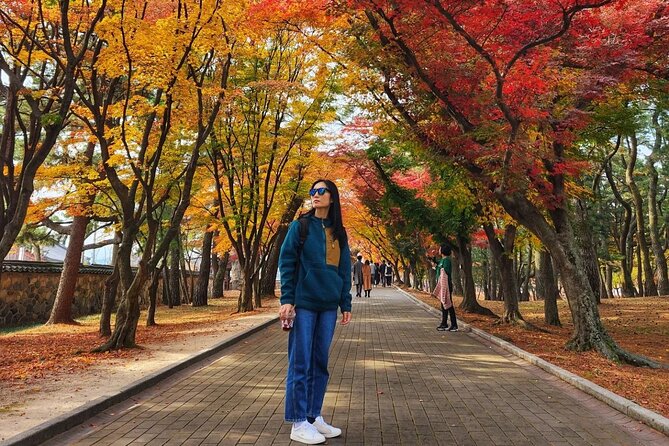
This tour is built for people who want Gyeongju but don’t want the logistics hassle. You start in Busan, then you’ll be picked up at major areas like Busan Station, Seomyeon Station, and Haeundae Station. In summer season (April to September), the pickup timing is listed with 10:00 from Busan Station and around 10:20 from Seomyeon, with the Haeundae stop later.
That matters because Gyeongju day trips often die by a thousand tiny delays—waiting for the right bus, misreading the meeting point, or arriving too late to match the group. Here, the structure is set up so you just show up, scan your mobile ticket, and go.
The ride itself is also part of the value. You get a full-day loop, and between stops you get back onto a bus to cool down. If it’s humid out (and summer in Korea can be dramatic), that break helps you keep your energy for the next site.
You can also read our reviews of more tours and experiences in Busan.

Bulguksa Temple: Silla Beauty You Can See Immediately
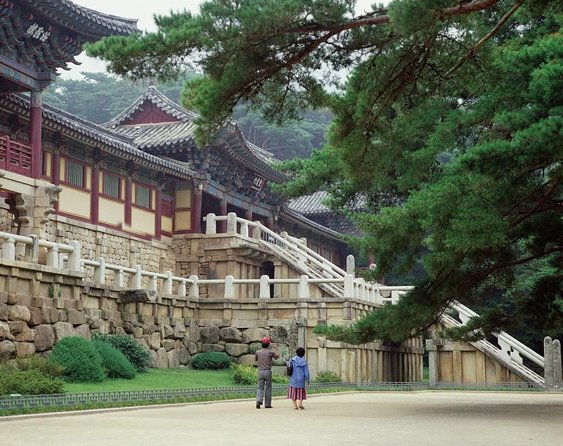
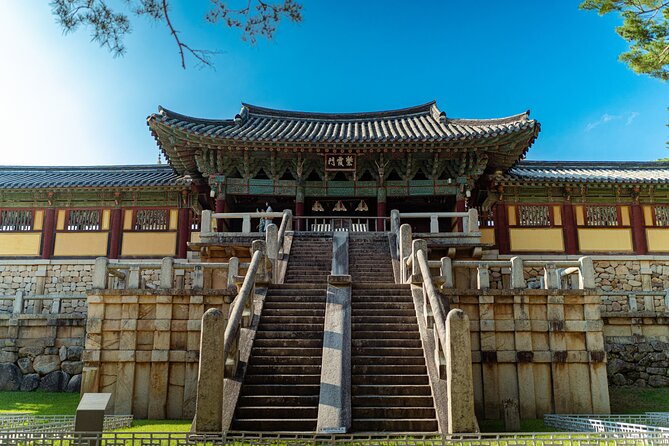
Bulguksa Temple is the anchor stop, and it’s a smart place to start. It’s a UNESCO World Heritage Site, and it’s strongly tied to Korea’s Silla period. The big win here is that you don’t just see buildings—you see how the temple setting works with the natural surroundings. The area has that classic Korean temple feel: stone paths, quiet views, and architecture that looks like it belongs in the scene.
You get one hour here with admission included. That’s enough time to walk the main areas without feeling you’re speed-running. If you’re into details, look for how the structures sit in relation to the grounds and light. If you’re not, you can still leave with the feeling of having visited a real centerpiece rather than a quick photo pull.
Practical tip: temples can have uneven ground and steps. Wear shoes you trust. And if the day is blazing hot, you’ll be grateful you brought water and shade.
Gyochon Traditional Village: Hanok Streets and Real-Life Flavor
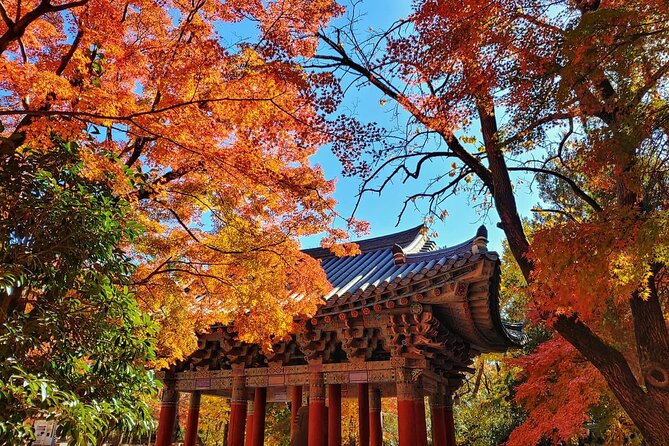
After the temple, you shift into a more everyday kind of heritage: Gyeongju Gyochon Traditional Village. This is where you get the hanok rhythm—traditional houses, a stone-wall atmosphere, and a sense of how people lived and hosted visitors in older times.
You’ll have about one hour, and admission is included. The best part of this stop is that it’s not only visual. The village setting is also where you tend to notice the small details: the slope of the roofs, the layout of the lanes, and the way the village is arranged for strolling. Many people also enjoy the restaurant vibe here, so even though meals aren’t included on the tour, this is the kind of place where you can grab something while you’re already in the right mood.
A note for expectation-setting: this is a photo-friendly stop, but it’s also easy to feel slightly rushed if your group pace is quick. If you’re the type who wants to sit, slow down, and do a deeper look at each hanok, arrive in comfortable mode and keep your questions simple and fast so you can still explore on your own.
Daereungwon Tomb Complex: Mounds, Meaning, and a Different Kind of “Wow”
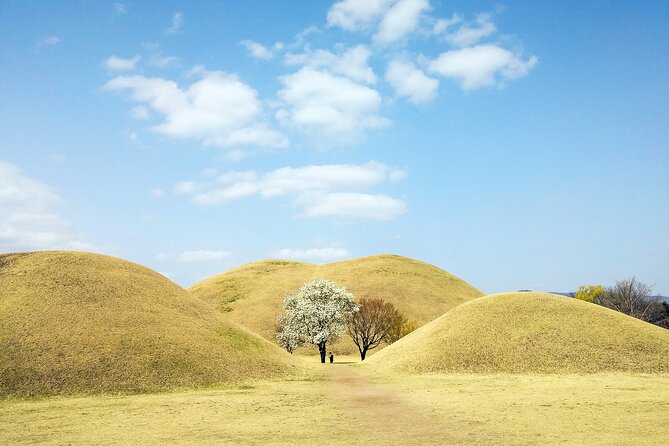
Next up is Daereungwon Tomb Complex, a key Silla-era heritage area known for the large tombs of kings, queens, and aristocrats. It’s culturally important, but it looks different than what many people expect. Instead of dramatic tomb buildings, you see tomb mounds—grass, shape, and the historical weight of the site.
You get one hour and admission is included. Here’s how to make the most of it: don’t judge it like a museum exhibit. Think of it like a landscape with meaning. If your guide points out the significance—who is remembered here, and what the Silla era valued—suddenly the shapes start to read like a story.
Possible drawback: if you want lots of visible “inside access” or detailed structures to look at closely, this stop might feel light. Plan to lean on the guide’s explanation and bring patience. It’s less about galleries and more about understanding context.
Hwangridan-gil: A Preserved 1960s Street Mood
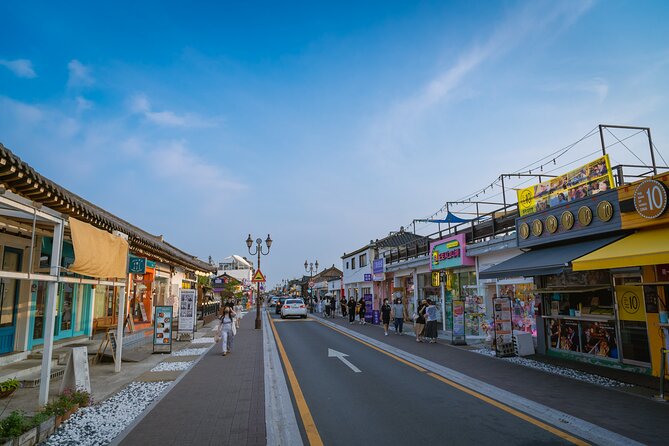
Then the tour turns from ancient stone to a more recent, human scale: Hwangridan-gil. This street is known for preserved buildings from the 1960s, so it carries a different kind of atmosphere. It’s not UNESCO in the same way—this stop feels more like a time capsule street walk.
You get about two hours here and no admission fee. That time is valuable because it gives you room to wander, browse, and reset your brain after the heavier heritage stops.
What to expect: a street setting with shops and normal street energy. This is one of those places where you can stop for a snack, buy a small souvenir, or just enjoy the change of pace. If it’s crowded, don’t fight it—step to the side, grab your photos, then circle back when it calms.
Donggung Palace and Wolji Pond: The Spot That Makes the Day Feel Worth It
As the day moves forward, you’ll hit a scene that many people remember most: Donggung Palace and Wolji Pond, also known as Anapji Pond. This is tied to the Unified Silla period, and it’s one of those places where the setting does half the work.
You’ll have about one hour, and admission is included. Even if you’ve seen lots of palaces on trips, the pond setting changes everything. Water reflection turns the structures into something more cinematic. The “palace” part may not read like a fully intact building you can tour room by room, but you’re still seeing the key historical area and its visual relationship with the pond.
This is also the moment to slow down just a bit. Don’t rush your photos right at the start. Watch how the light shifts, then grab your angles.
Woljeonggyo Bridge at Night: Photos and Pure Atmosphere
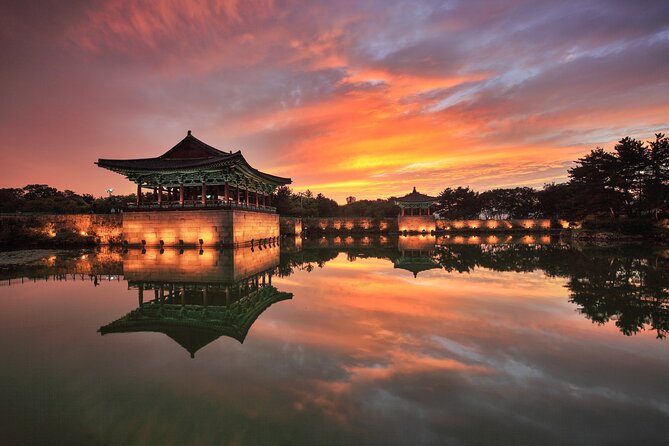
The tour ends with a classic Gyeongju evening payoff: Woljeonggyo Bridge. You’ll get around 30 minutes, and admission here is free. What makes this stop special is the night view—the lights reflecting on the water create a “postcard” scene without needing a ticket to an observation deck.
This is ideal for quick photo walks. If you’re a solo traveler, this is also a good stop to ask your guide for help with photos. Several people mention that their guide helped with picture-taking, and honestly, it’s one of the easiest ways to get good results when your time is limited.
Don’t treat this like a five-minute stretch between major stops. Even though you only get half an hour, it’s one of the places where you can let the day sink in.
Timing, Walking, and What to Pack for a 12-Hour Day
This is listed as about 12 hours, and it’s a real full-day commitment. A lot of people get surprised by that when they sign up, especially if they’re planning another activity the same evening. If you’re traveling with kids, or you’re sensitive to long days, keep your expectations realistic.
Walking is a big factor. One hour at a temple can turn into more steps than you think, and tomb complexes add uneven terrain and sun exposure. You’ll be on your feet from stop to stop, so you’ll want:
- Good walking shoes (not fashion sneakers with thin soles)
- Water and a hat/umbrella for shade
- Sunscreen if you go in summer
- A light layer if the bus AC feels strong
Heat is a theme people mention often. Gyeongju is inland compared with Busan, so you may feel it more. The bus helps—people talk about cooling off in the AC between stops—so use those breaks intentionally: drink water, cool down, then go again.
If you’re the type who gets overwhelmed by group pace, this tour can still work because the guide keeps you moving with context. Just know that the schedule is built to cover multiple heritage sites, not to give you a slow museum drift.
Price and Value: Is $64 Actually a Good Deal?
At $64 per person, the value here comes from the mix of things you don’t pay separately.
You get:
- Round-trip transfers from Busan
- A professional tour guide
- Admission included for the attractions that charge
- A full set of heritage stops and a guided story tying them together
Meals are not included, and personal expenses aren’t included. So you should plan to buy food on your own during the day. The good news is that the day includes time in a village and a street area, so you’re not forced into one overpriced meal option.
Where this price shines: if you try to DIY Gyeongju on your own, transportation plus tickets adds up quickly—and you’d spend time figuring out timing and routes. This tour trades some freedom for convenience and clarity, which is exactly what many people want on a limited schedule.
One more value note: the tour is capped at a maximum of 400 travelers. That doesn’t mean you’ll have a massive crowd on your bus (it just caps the overall activity), but it does suggest you should assume it can be busy at popular sites. If you hate crowds, go early in the day’s rhythm when possible.
Guides Matter: Why the Tour Feels Easy
This is the part that tends to separate an okay day from a great one. People repeatedly mention guides by name, including Bada, Hyony, Kayla, Erica, Katrina, and Eva. The common thread is clear storytelling and good management of group energy—especially on hot days.
You’ll hear live commentary throughout, and that’s not a small perk. For sites like Daereungwon Tomb Complex or palace-pond heritage areas, the visuals alone don’t always tell the whole story. A good guide helps you see what you’re looking at, why it matters, and how it connects to the Silla world.
Also, several guides are praised for being helpful with photos, which is a real plus if you’re traveling solo. You can ask without awkwardness, and you get a quick, practical fix for getting shots in the right spot.
A balanced caution: one negative comment mentions that on some days a guide rushed timing and didn’t give much independent space. If you like a lot of unscheduled wandering, be ready to do your exploration in the freer street stop hours and the photo-friendly times.
Should You Book This Gyeongju Day Tour from Busan?
Book it if you want the biggest set of Gyeongju highlights in one shot—especially UNESCO-linked stops plus an evening finish at Wolji Pond and Woljeonggyo Bridge. The included admissions and round-trip transport make the price feel fair, and the live guide commentary helps the day move smoothly.
Skip or rethink if you hate long days, walking, and tight scheduling. Also consider whether tomb-and-landscape sites fit your style; they’re meaningful, but they aren’t always visually dramatic.
If your goal is simple—see Gyeongju’s Silla-era landmarks without the stress—this is one of the best ways to do it from Busan.
FAQ
How long is the Old Korea Thousand History Tour of Gyeongju?
It’s listed at about 12 hours.
What does the tour price include?
It includes round-trip transfers, admission to the visited attractions, and a professional tour guide.
Are meals included?
No. Meals are not included, and you’ll need to cover food on your own.
Do I get a ticket on my phone?
Yes, the tour offers a mobile ticket.
Where are the pickup points in Busan?
Pickup starts at Busan Station, with additional pickup completed at Seomyeon Station and Haeundae Station.
Is there a limit on how many people go?
Yes. The experience has a maximum of 400 travelers.
What if the weather is bad?
The experience requires good weather. If it’s canceled due to poor weather, you’ll be offered a different date or a full refund.