REVIEW · CUSCO
Cusco: Full-Day Sacred Valley History Tour
Book on GetYourGuide →Operated by PVTravel · Bookable on GetYourGuide
Morning views and Inca engineering—this trip delivers. You’ll roll out early from central Cusco, then spend the day connecting the dots between Písac market life, Ollantaytambo ruins, and Chinchero’s living textile traditions. I especially like how the guide weaves explanations into the travel time, so the drive itself feels like part of the story, not just a transfer. One thing to keep in mind: pickup can involve some waiting while the van collects people from multiple hotels, so build in a little patience before you head out.
What you get for the price is the real deal: transport, a bilingual guide, and a buffet lunch in Urubamba, plus multiple stops that show how Incas shaped this high-altitude region. The tour’s strength is the mix of hands-on culture (textiles) and standout archaeology (terraces and stonework). The possible drawback is timing at lunch and the group language mix—English narration is bilingual, but not everyone may be speaking English in the van at the same time.
In This Review
- Sacred Valley highlights you’ll feel in a single day
- Why this Sacred Valley history tour works from Cusco
- The morning drive: Cusco to El Mirador and Inca terracing logic
- Písac market and ruins: where daily life meets Inca agriculture
- Urubamba lunch break: good rest, but timing matters
- Urubamba River drive: the Sacred Valley link in between stops
- Ollantaytambo ruins: Inca stonework and the Wiracocha connection
- Chinchero textiles: natural dyes and old-school knitting
- Price and what you’re actually buying at $45
- Logistics that can affect your day (and how to plan for them)
- Who should book this Sacred Valley day tour?
- Should you book it? My straight answer
- FAQ
- What time does the tour start and end?
- What’s included in the price?
- Is lunch included, and what should I expect?
- Do I need a separate touristic ticket?
- How big is the group?
- Is the tour wheelchair accessible?
Sacred Valley highlights you’ll feel in a single day
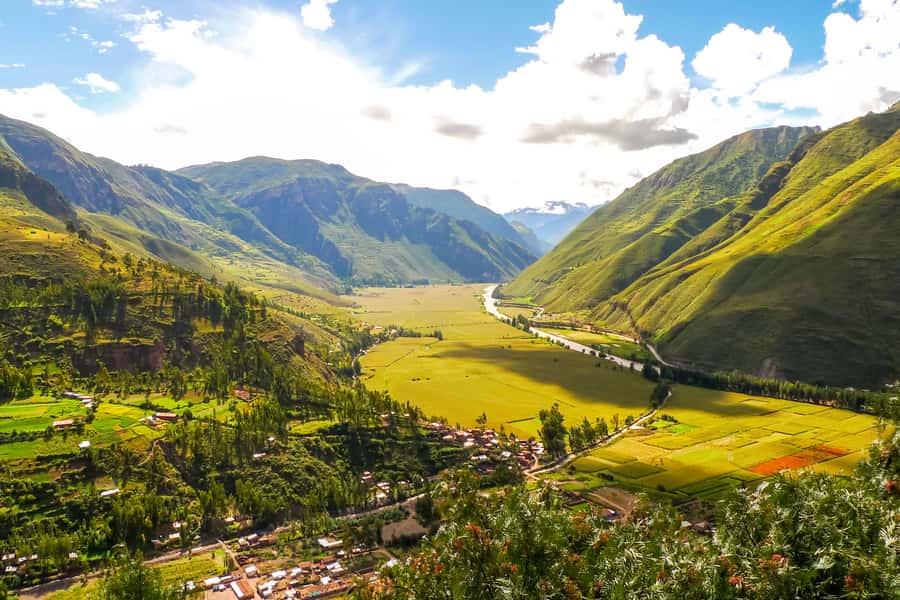
- El Mirador lookout gives you the big-picture view of the Sacred Valley and why the Incas settled here
- Písac market + ruins connect everyday trade with agricultural terraces and stone artistry
- River drive to Urubamba keeps the day moving while you get context for each region
- Ollantaytambo ruins show Inca construction scale and rock formations linked to Wiracocha
- Chinchero dyeing and knitting puts natural textiles front and center in a living community
- Small group (up to 15) makes the day easier to manage than a cattle-car bus
Why this Sacred Valley history tour works from Cusco
If you only have one full day in Cusco, this tour gives you a smart hit of the Sacred Valley without feeling rushed at every stop. You’re looking at an 11-hour day with hotel pickup in the historic center, a guided route through major sites, and a lunch break that anchors the middle of the day.
I like that it’s not just ruins. You’ll also spend time in places tied to current life in the Andes—especially Chinchero, where dyeing and knitting traditions are still practiced. And because the guide works in English/Spanish, you can get explanations without relying on a phone app or guessing what you’re looking at.
One more value point: the tour includes transportation and a professional guide, which matters in this region. Distances are real, mountain roads can take longer than you think, and getting the sequence right helps you avoid zigzagging on your own.
The morning drive: Cusco to El Mirador and Inca terracing logic
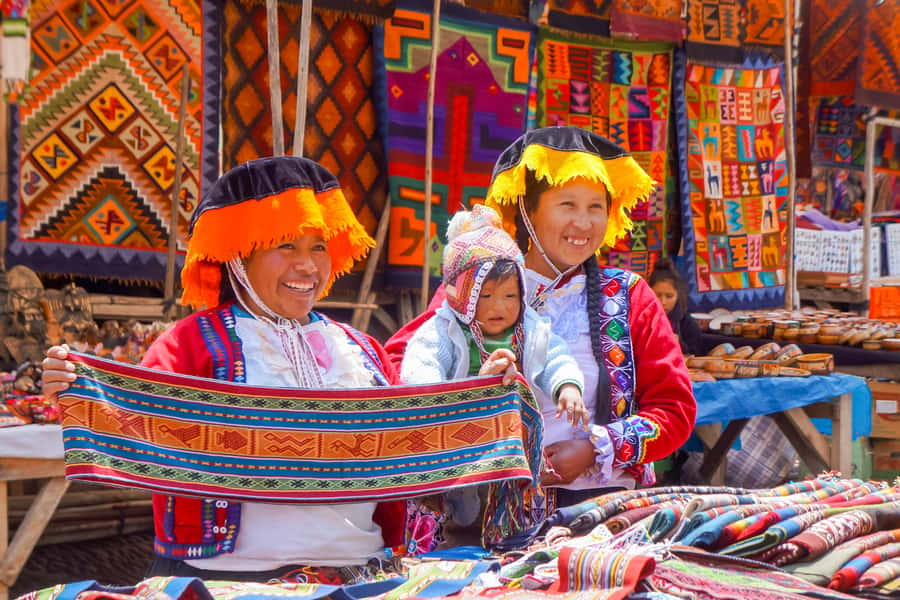
You’ll get picked up around 7:30 AM from hotels in Cusco’s historic center. Then the road winds north, climbing into the high Andean countryside where the Sacred Valley begins to make sense as more than a postcard.
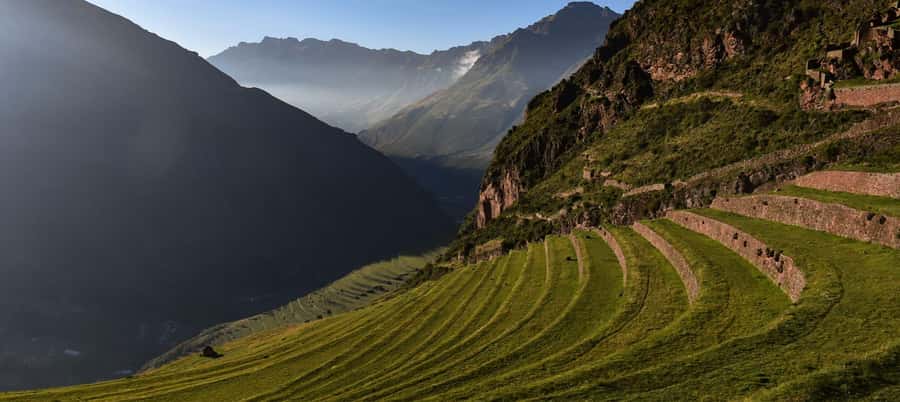
The first big stop is El Mirador (Lookout Point). This is your “orientation moment.” From here, you can see how the valley sits between steep mountain walls and why the Incas were drawn to this area: there’s a surprising amount of fertile ground at altitude compared to many other high valleys in the Andes. More importantly, the guide ties that view to what you’ll see later—contour terracing and irrigation channels built to manage water and grow crops on slopes.
Practical note: mornings in Cusco feel crisp and busy. Comfortable shoes help, even if the lookout area isn’t a long hike. Also, keep water handy. Even on a tour, this altitude can remind you quickly that “11 hours” feels longer when you’re breathing a bit harder.
Písac market and ruins: where daily life meets Inca agriculture
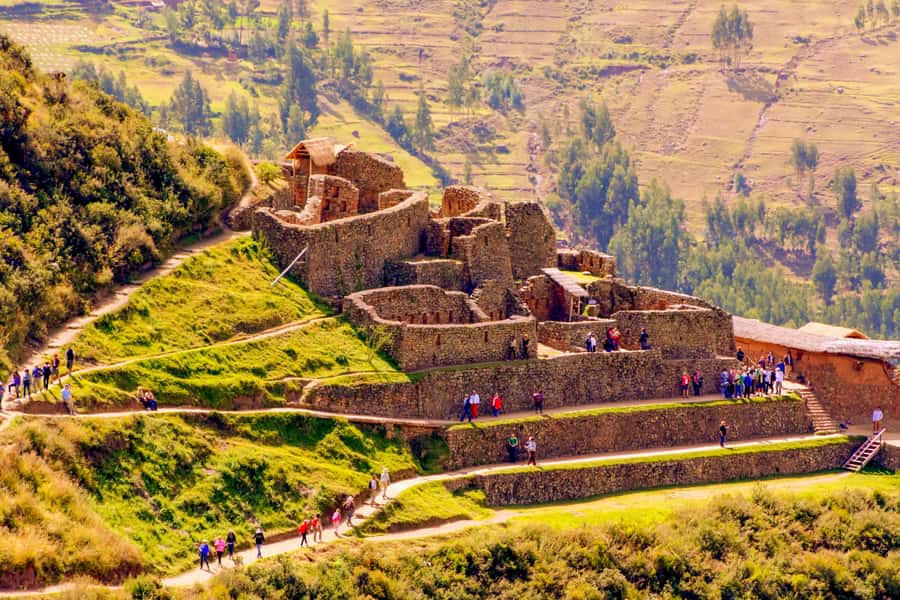
Next up is the Písac area, which is often what people imagine when they picture the Sacred Valley: color, trade, stone, and terraces.
The tour’s highlight here is two-part: the Písac market and the ruins/terraces. The market side is where you can browse local goods and see how the region’s economy still connects to Andean culture. The ruins side is what makes the valley feel truly engineered. You’ll learn how the Incas used agriculture like infrastructure, building terraced farming areas and shaping the terrain for survival and stability.
A good reason this stop is worth your time: it helps you stop thinking of “Inca site” as just a set of ruins. You start seeing systems. You’re looking at stonework that supported food production, not only ceremonial power.
If you want to shop, don’t rush. Give yourself time to compare prices and ask questions. And if you’re sensitive to cold or sun, remember that markets can switch from shaded to bright quickly. Bring layers you can manage.
Urubamba lunch break: good rest, but timing matters
After the Písac stops, you head toward Urubamba and settle in for a buffet lunch. This is the calmer stretch of the day where you can catch your breath, refuel, and reset before the archaeological hits after lunch.
I like having lunch included because it removes a big decision point. But here’s the practical reality: lunch can run longer than you expect, and it may start in the early-to-mid afternoon window depending on the day’s pace. In one case, lunch time stretched, and it made people feel hungry waiting for it to begin.
My advice: if you’re the type who gets impatient with delays, consider keeping a small snack in your day bag just in case. It’s not listed as included, and you don’t want hunger to turn the rest of the tour into a grumpy slog.
Still, the meal itself is part of the value. You’re getting a sit-down break in a convenient location, and the tour moves you on without you needing to coordinate transport.
Urubamba River drive: the Sacred Valley link in between stops
Between lunch and the major ruins, you’ll ride along the Urubamba River. It’s one of those segments that’s easy to overlook when you’re only chasing monuments—but it helps you understand the valley as a real corridor.
You’ll feel the long shape of the Sacred Valley here: not a random cluster of sites, but a line of communities and agriculture hugging the river system. The guide uses the drive time to connect what you saw earlier (terracing and water management) with what you’ll see next (Inca construction and power centers).
Also, the road timing is a hidden benefit. Instead of spending hours trapped in an all-day museum vibe, you get movement, scenery, and narration. It keeps the day from going stale.
Ollantaytambo ruins: Inca stonework and the Wiracocha connection
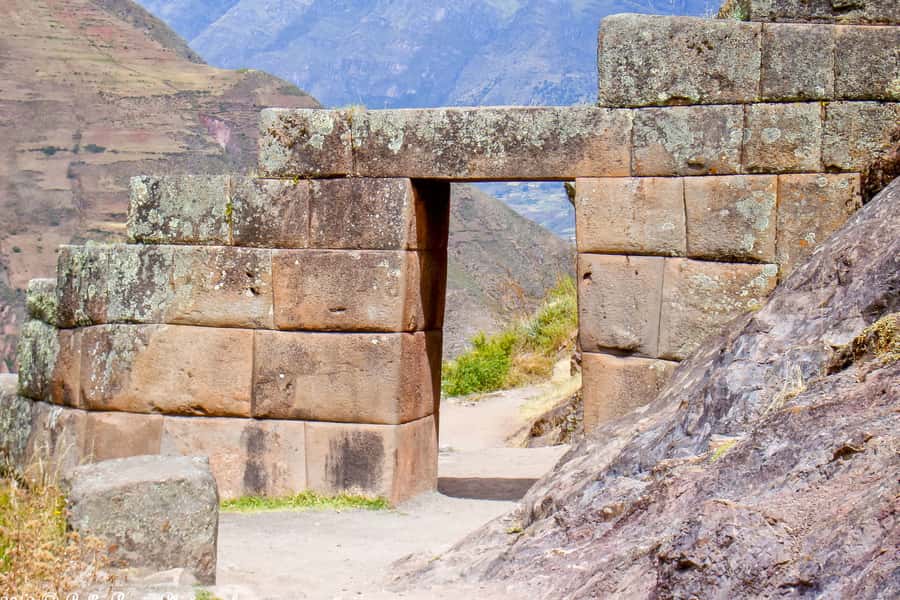
Next is Ollantaytambo, one of the Sacred Valley’s most important Inca sites. The ruins here are built during the Incas’ heyday, and they have a sense of strong design—stone that looks placed with purpose, not just leftover remnants.
This is where the tour adds a layer beyond “cool rocks.” You’ll hear about Wiracocha, including rock formations tied to Inca belief and storytelling. Even if you don’t remember every name, you’ll likely remember the feeling of scale—this is not a small footprint site.
Why I think it’s a great mid-to-late day stop: Ollantaytambo has enough structure that you can focus. It’s not only walking; it’s interpreting. The guide’s job matters here, because understanding what you’re seeing turns it from a photo stop into a place with meaning.
Wear shoes you trust. Ruins often mean uneven ground, stone edges, and occasional steps. If your legs are already tired from altitude and a long morning, take it slow and plan a few short breaks.
Chinchero textiles: natural dyes and old-school knitting
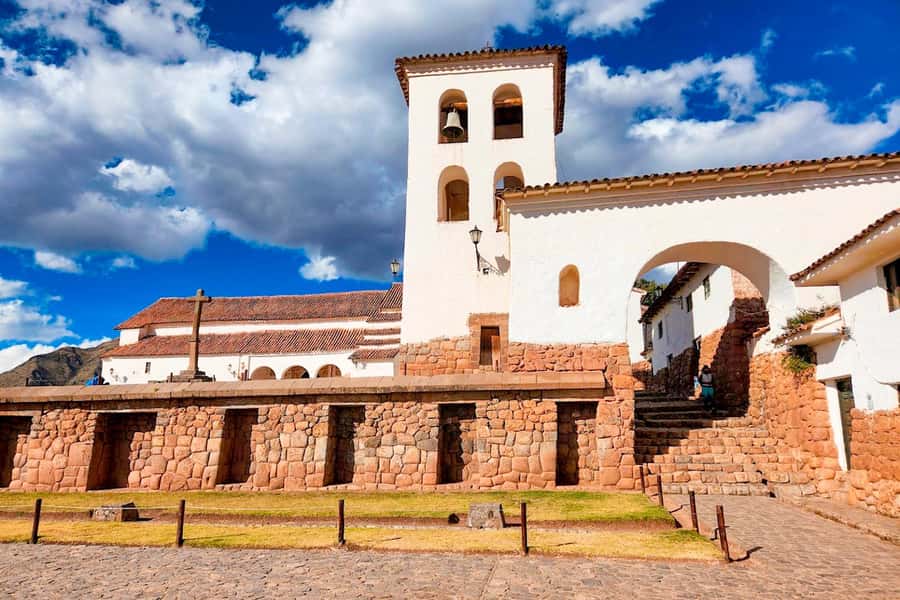
The final major cultural stop is Chinchero, famous for textiles and for its continuing traditions. This is where the tour shifts from archaeology to living culture.
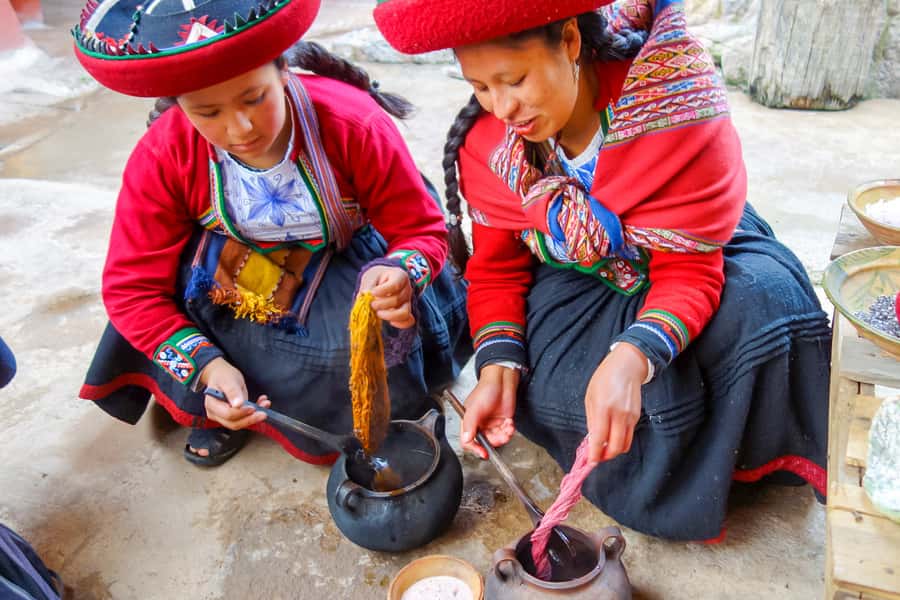
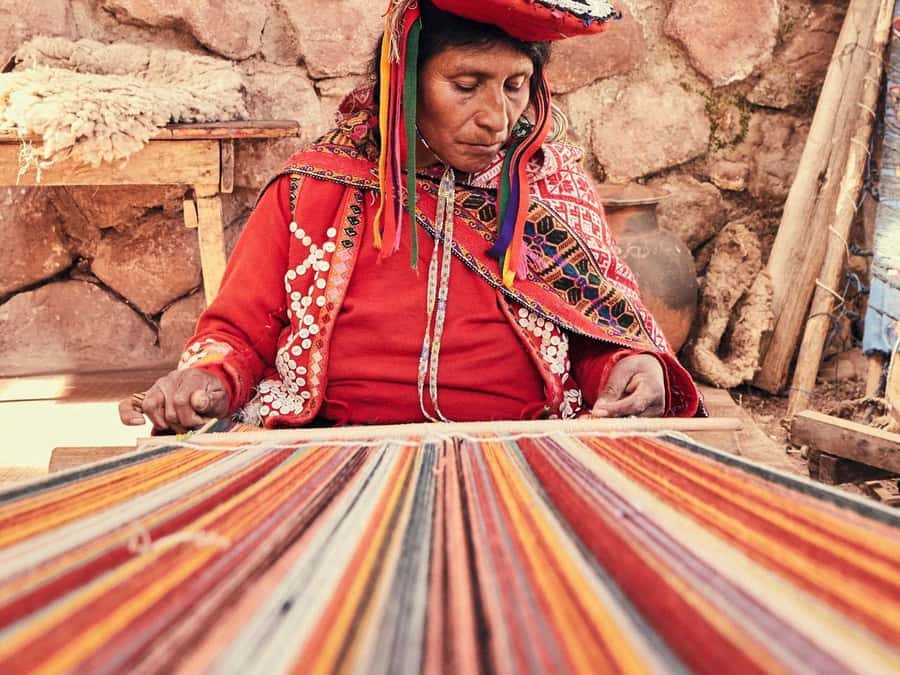
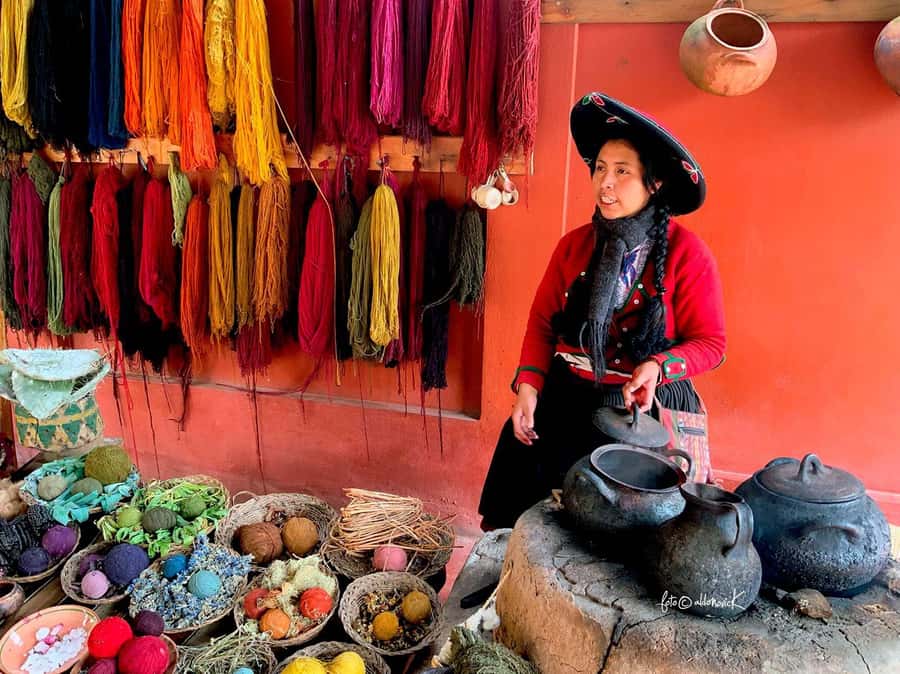
You’ll see how natural dyes are made for artisanal textiles. You’ll also learn about dyeing and knitting Inca techniques—the kinds of methods that tie craftsmanship to daily life. The guide frames Chinchero as a community where people still live in ways that are close to their ancestors’ routines, and you’ll notice the visible markers: multicolored clothing and strong use of Quechua in everyday life.
This stop is especially valuable if you’ve been to other Inca sites but still want something human. Archaeology is about what’s left. Chinchero is about what continues.
Practical shopping tip: if you plan to buy textiles or small items, having cash can help. Handcrafted goods can take time, and you’ll want to be ready without interrupting the flow of the visit.
Price and what you’re actually buying at $45
At $45 per person, this tour is aiming for good value on a full-day basis. Here’s what’s covered:
- Pickup and drop-off (historic center pickup, drop-off at Plaza Regocijo)
- Transportation for the whole route
- A bilingual guide (English/Spanish)
- Buffet lunch in Urubamba
- Ruin entrances depending on your selected option
There’s also a key cost note: a touristic ticket listed at S/70.00 per person is not included. And the wording around entrances says it can depend on what option you selected. So don’t assume you’re fully paid up. Before you go, double-check whether your booking covers entrances or if you’ll need to budget that S/70 at some point.
On balance, you’re paying for convenience and interpretation more than you’re paying for a single site. The guide reduces the guesswork, the transport prevents wasted time, and the lunch makes the long day workable. If you’re trying to DIY this route, the cost can rise quickly once you price transport, entrance tickets, and a guide.
Logistics that can affect your day (and how to plan for them)
This kind of day trip lives or dies on timing. A small group (up to 15 participants) helps, but there’s still a chain of logistics: multiple hotel pickups, a van route, and several stops with walking.
One consideration: pickup can land in a wider window than you’d expect. If your pickup is described around 7:30 AM, be ready for the van to roll in closer to the later end of that range, especially if hotels are spread out. A little waiting early on is possible because vans often collect people first, then depart as a group.
Language is another practical factor. Even with bilingual guiding, the group can be mostly Spanish at times. If you specifically want a consistent English-speaking group, ask ahead or be prepared that you might hear more Spanish during conversation on the ride.
Finally, plan for a full day: from morning pickup to return around 7:00 PM, you’ll want a comfortable outfit and comfortable shoes. This isn’t a stroll-only itinerary.
Who should book this Sacred Valley day tour?
This is a strong fit if you:
- Want a one-day Sacred Valley overview with Písac, Ollantaytambo, and Chinchero
- Appreciate explanations about Inca life systems, not only monument selfies
- Like small-group pacing (up to 15 people)
- Want lunch included so the day stays simple
You might choose a different option if you:
- Need wheelchair access, since the tour is not suitable for wheelchair users
- Want a super flexible, stop-anywhere itinerary (this is scheduled and structured)
- Hate waiting around during pickup or between major stops
Should you book it? My straight answer
If you’re on the clock and you want the Sacred Valley to feel connected—from market life to Inca engineering to living textiles—this tour is a solid choice. The best part is the combination: you see the big archaeological names and also end with a craft tradition that’s still alive.
Just go in with realistic expectations about early timing and lunch pacing. Bring comfortable shoes, a flexible attitude for pickup, and a bit of cash if you plan to buy textiles. Do that, and you’ll leave with more than photos—you’ll have a clear mental map of how the Sacred Valley worked.
FAQ
What time does the tour start and end?
Pickup is from your Cusco hotel at around 7:30 AM, and you’re returned to Cusco at about 7:00 PM. Exact pickup and start times can vary, so check availability for the specific departure time.
What’s included in the price?
The tour includes hotel pickup from Cusco’s historic center, transportation, a bilingual guide (English/Spanish), a buffet lunch in Urubamba, and entrance fees if that option is selected. The touristic ticket is not included.
Is lunch included, and what should I expect?
Yes, there’s a buffet lunch in Urubamba. The itinerary places lunch in the middle of the day, and the length/timing can affect how hungry you feel afterward, so it helps to be prepared for a longer lunch window.
Do I need a separate touristic ticket?
A touristic ticket is listed as S/70.00 per person and is not included. Also, entrances to ruins may be included depending on your selected option, so confirm what your booking covers.
How big is the group?
The group is limited to 15 participants, which keeps the day easier to manage than large bus tours.
Is the tour wheelchair accessible?
No. It’s not suitable for wheelchair users.