REVIEW · DA NANG
Da Nang Epic History Tour by Cham Museum & Tasty Cuisine/Cafe
Book on Viator →Operated by Hung Le Travel-The Local Signature · Bookable on Viator
Three hours, and Da Nang changes layers. You’ll start at the Da Nang Museum of Cham Sculpture, where stone Hindu-era gods explain why the Cham Pa kingdom mattered to this part of Vietnam. I like that the pace feels city-real, not museum-only.
I also like the food and drink built into the history. You get pho at a local Hanoi-style spot and finish with coconut coffee or salt coffee, each paired with the past that shaped today’s flavors.
One drawback to plan for: there’s no pickup/drop-off, so you’ll handle getting to the meeting point near the museum, then keep up on a mostly walking route.
In This Review
- Key Highlights Worth Making Time For
- Getting Oriented Fast in Central Da Nang
- Cham Museum: Hundreds of Hindu Stone Sculptures (and Why They Matter)
- What to watch for
- The one practical drawback
- Long An Pagoda: Mahayana Buddhism and Everyday Life
- APEC Park to Dragon Bridge: From City Planning to Iconic Views
- A quick reality check
- Han River and War-Era Da Nang: Seeing the Base Through Today’s Streets
- Chicken Church, Pho Break, and Han Market: Neighborhood History You Can Taste
- Da Nang Cathedral, nicknamed Chicken Church
- Hanoi Quarter-style pho and herbal green tea
- Han Market and the French-era market story
- Coconut Coffee or Salt Coffee: The Finish That Sticks
- If you have a sweet tooth (or not)
- Price and Pace: What You’re Really Paying For
- Who This Tour Suits Best
- Should You Book This Tour?
- FAQ
- What does the tour cost?
- How long is the tour?
- Where does the tour start and end?
- Is pick-up or drop-off included?
- What language is the guide?
- What food and drinks are included?
- What can I expect to see at Cham Museum?
- Does the tour include Dragon Bridge and the Han River?
- What church stop is included?
- Is the tour fully confirmed at booking?
- Is there free cancellation?
Key Highlights Worth Making Time For
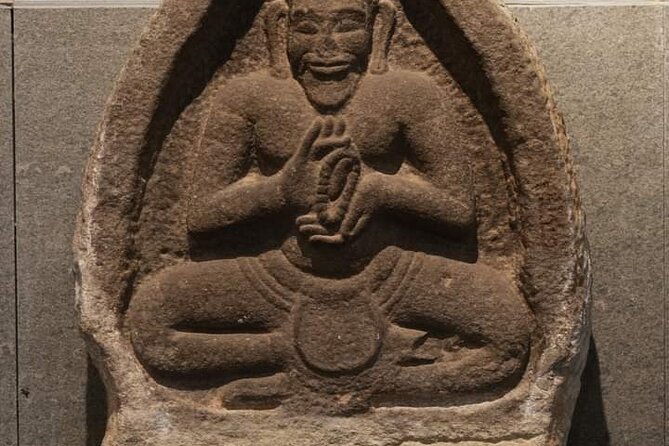
- Cham Museum scale: Hundreds of Hindu sculpture pieces from the 7th–14th centuries of the Cham Pa kingdom.
- An Long Pagoda stop: Mahayana Buddhism and local beliefs tied to everyday life, with story-driven context.
- Dragon Bridge photos on Han River: Including the detail that it’s 666 meters long and a major Da Nang landmark.
- Da Nang Cathedral nicknamed Chicken Church: A local label that makes the stop more than a quick photo.
- Old Hanoi Quarter-style pho and herbal tea: A food break that also acts like a cultural waypoint.
- Final coffee tasting: Coconut coffee or salt coffee, wrapped in stories about Vietnam’s hard modern history.
Getting Oriented Fast in Central Da Nang
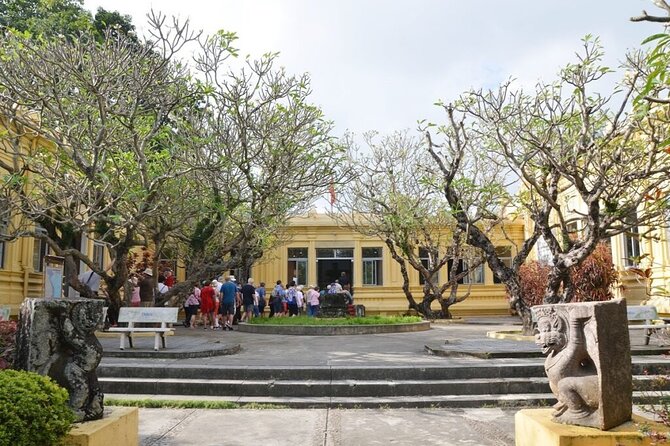
This tour is built for people who want a strong hit of Da Nang in a short window. It runs about 3 hours, and it’s a private tour for just your group, so you’re not stuck waiting for other parties. The meeting point is at the Da Nang Museum of Cham Sculpture, 02 Đ. 2 Tháng 9 in Bình Hiên, Hải Châu—easy to find once you anchor to that address.
What I like about this setup is that it reduces decision fatigue. You don’t have to map out how to connect Cham culture, Buddhism, French-era architecture, war-era history, and food all in one loop. A historian-background, English-speaking guide keeps the thread running from stop to stop.
Price-wise, $29 sounds simple, but it adds up because the tour includes things you’d otherwise pay for: museum tickets, a meal of chicken or beef pho, and coffee tasting at the end. You’re also paying for the guide’s translation of what you’re seeing into context you can actually use later.
You can also read our reviews of more tours and experiences in Da Nang.
Cham Museum: Hundreds of Hindu Stone Sculptures (and Why They Matter)
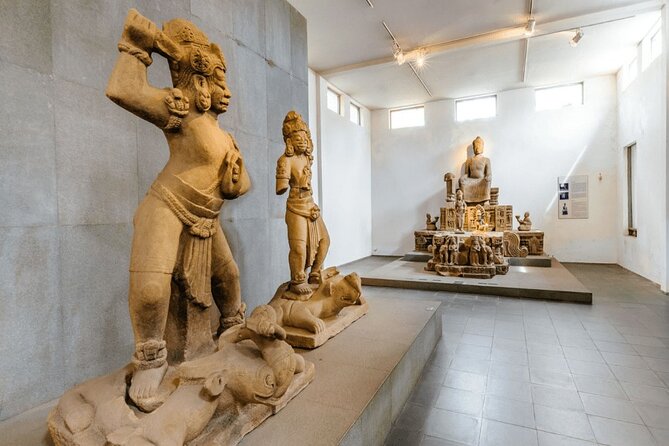
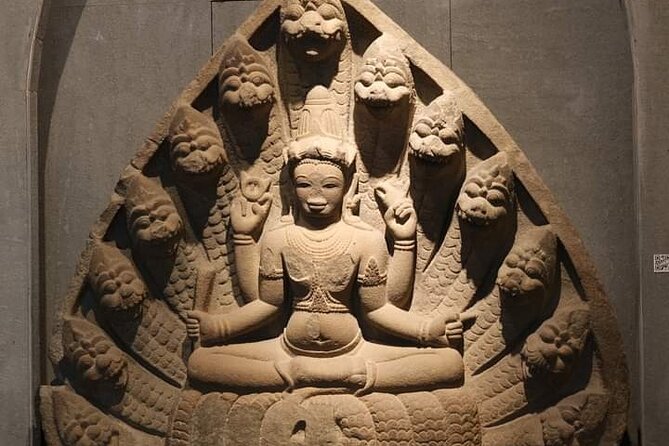
The heart of the day is the Da Nang Museum of Cham Sculpture, often described as the world’s largest collection of Hinduism sculptures. When you walk in, the scale hits you first: you’re looking at antique stone statues connected to the Cham Pa kingdom, dated from the 7th to 14th centuries.
This is not just a room full of pretty carvings. The value here is how the guide ties the sculptures to larger history—how Cham Pa religion and art shaped culture in central Vietnam, and how those themes connect to My Son relics. Even if you don’t know much about the Cham Pa before you arrive, you leave with a clearer idea of what you’re looking for: symbolism, style, and what the figures represented in religious life.
What to watch for
- Look for recurring Hindu themes in the figures, then ask yourself what emotion or power they’re meant to communicate.
- Pay attention to details the guide points out about form and craftsmanship. That’s where the meaning lives, not just in the fact that they’re old.
The one practical drawback
Museums mean time indoors, and it can get busy in bursts. If you’re sensitive to crowds or want lots of slow staring, treat this as a structured overview rather than a flexible browse-and-spend-hour kind of visit.
Long An Pagoda: Mahayana Buddhism and Everyday Life
After the museum, you shift from stone art to lived belief at Long An Temple, also referred to as An Long Pagoda on some schedules. The focus here is Mahayana Buddhism and local practice—how belief shows up in daily rhythms, not just in temple architecture.
This stop works because it’s story-led. You’re not only looking at a religious site; you’re learning the “why” behind local behavior and how it affects community life. The guide’s background matters here, because you’ll understand the ideas without needing to be a religion scholar.
If you like travel that connects the spiritual to the practical, this is one of the most satisfying moments. In Da Nang, modern life sits next to older traditions, and a pagoda stop helps you see how that coexistence actually works.

APEC Park to Dragon Bridge: From City Planning to Iconic Views
Between the faith stop and the big landmark day, there’s a quick stop at APEC Park. While it’s not the kind of place you’ll remember for a thousand details, it gives you a breather in the route and a chance to read the city layout as you move toward the river.
Then comes Dragon Bridge, one of Da Nang’s most iconic sights. The tour highlights a specific detail you’ll want to remember: the bridge is 666 meters long. It’s also tied into the city’s identity in a way that’s hard to fake—this bridge isn’t just a structure, it’s a symbol that shows up in how locals talk about Da Nang’s modern image.
A quick reality check
Dragon Bridge photos can be crowded, depending on timing and conditions. If you want cleaner shots, hang around just long enough for your angle, then let the group move so you don’t waste the rest of your time waiting.
Han River and War-Era Da Nang: Seeing the Base Through Today’s Streets
The walk along the Han River is more than sightseeing. It’s where the tour links the city to Vietnam’s war history, and does it using what you can actually see.
Da Nang was a major military base, and the guide points out how American construction supported the war before 1975. The key here is the framing: you’re not being asked to memorize dates. You’re being shown how the physical city connects to a conflict that shaped people’s parents and grandparents.
This is the stop that often changes how visitors feel about a place. If you’ve only seen war history as distant text, the tour helps you recognize that it happened in real neighborhoods, real work, and real decisions. You’ll also understand why some locals carry the story a certain way—because it still affects the present.
Chicken Church, Pho Break, and Han Market: Neighborhood History You Can Taste
After Dragon Bridge and the river walk, the tour turns toward the everyday Da Nang that travelers often miss: churches, markets, and food.
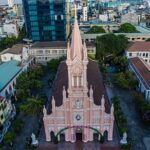
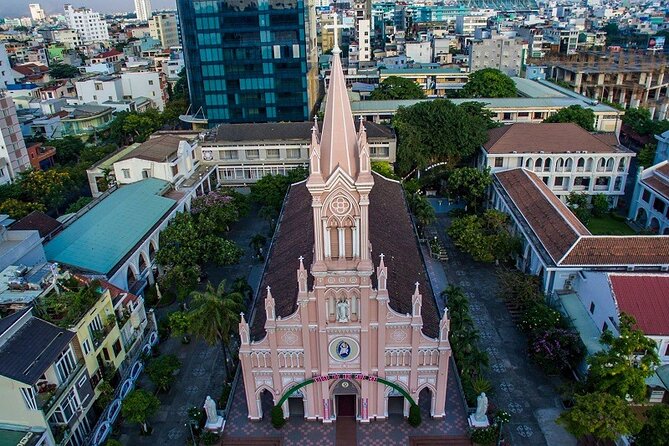
Da Nang Cathedral, nicknamed Chicken Church
You’ll stop at the cathedral locals call Chicken Church. The local nickname matters because it makes the site feel less like a formal monument and more like part of neighborhood memory. Even if you know nothing about its style, the guide’s explanation gives you a reason to look carefully instead of snapping a quick picture and moving on.
Hanoi Quarter-style pho and herbal green tea
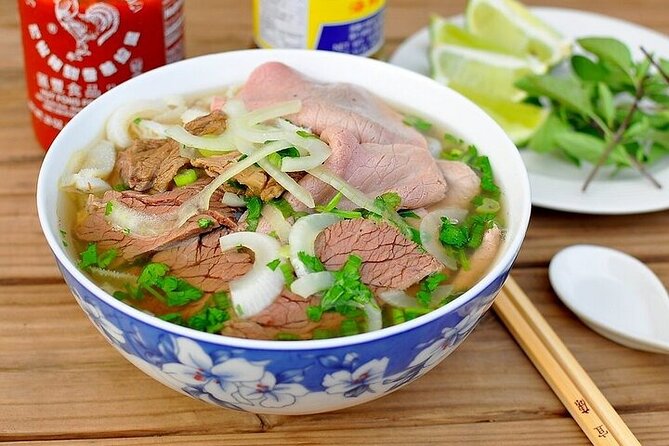
You then get to taste pho at a local corner that’s described as an old Hanoi Quarter style in Da Nang. In practical terms, this is a smart pause: pho gives you comfort, warmth, and energy, right in the middle of a walking route.
The tour also includes Ha Noi herbal green tea at the Ha Noi corner. The combo is thoughtful because it keeps the food break from being just a snack. It becomes a little cultural reset: you sit, you taste, and you learn what the area represents.
Pho here is included as chicken or beef, so you can choose based on what you prefer. If you’re sensitive to spice or sauces, ask for your preferred level in the moment—this is the safest way to get a meal that feels right for your palate.
Han Market and the French-era market story
Next is Han Market, described as the biggest market in central Vietnam, built by the French during colonial periods. The guide adds one more layer: the story of the Chinese community living in Vietnam and how that history shows up in the market culture.
What I like about the market segment is that it doesn’t pretend you’re doing deep shopping for souvenirs. Instead, you’re learning how trade, community, and colonial-era planning shaped what markets become. You’re also getting to see how Da Nang’s “old systems” still influence where people go for daily needs.
Coconut Coffee or Salt Coffee: The Finish That Sticks
The tour ends with a coffee tasting: coconut coffee or salt coffee, described as among the best in Vietnam. This is one of those moments where food and storytelling actually connect.
The tour ties the coffee to Vietnam’s past, including the idea that the country’s wars affected families for generations, and you’ll hear stories about how that weight shows up even in something as social as drinking coffee. You don’t need to agree with every interpretation to feel the effect: it gives the ending a human center.
If you have a sweet tooth (or not)
Coconut coffee tends to appeal if you like creamy flavors. Salt coffee is for people who enjoy a more savory edge and a contrast that feels less typical than standard dessert coffee. Either way, it’s a satisfying closer because it’s a shared moment, not another checkpoint.
Price and Pace: What You’re Really Paying For

At $29 per person for about 3 hours, this tour looks like a bargain on paper because several costs are bundled. You get:
- A guide with an English background and historian context
- Cham Museum entrance tickets
- Pho (chicken or beef)
- Coffee tasting (coconut or salt coffee)
- Herbal green tea at the Hanoi corner
If you pick options that include a rice wine distillery and tasting, that’s also listed as included for that selection. If you’re trying to decide between options, think about what you want most: coffee stories and walking, or adding a local spirits stop.
Also note what you’re not paying for: pick up/drop off. That’s the one part that can make the price feel less “cheap” if you’re coming from far away. Still, starting and ending back at the meeting point keeps the route simple.
Group discounts are mentioned too, which can make this even smarter if you’re traveling with friends and want one shared guide rather than splitting up.
Who This Tour Suits Best
This one fits best if you:
- want big historical variety in a short time
- like your sightseeing tied to stories, not just facts
- enjoy a balanced mix of culture stops and a real food break
- prefer walking routes you can manage without needing a private driver
You might feel less thrilled if you:
- want long museum time on your own
- dislike walking segments and prefer nonstop rides
- need very flexible scheduling (this is structured and timed to the 3-hour window)
Should You Book This Tour?
If you’re in Da Nang for a short stop and you want the city’s layers—Cham Pa art, Buddhism, a famous bridge, war-era context, and local food—this tour is a strong yes. The value comes from bundling museum entry and meals into a single guided loop, plus the guide’s historian-style explanations that help you connect what you see to what it meant.
Book it if you like practical storytelling and want your time to feel efficient. Skip it only if you’re uncomfortable with walking and you don’t want to handle your own way to the museum start point.
FAQ
What does the tour cost?
It’s listed at $29.00 per person.
How long is the tour?
The duration is about 3 hours.
Where does the tour start and end?
It starts at the Da Nang Museum of Cham Sculpture and ends back at the meeting point.
Is pick-up or drop-off included?
No. Pick-up/drop-off is not included.
What language is the guide?
The guide is an English-speaking guide with a background as a historian.
What food and drinks are included?
You get Chicken or Beef Pho, coconut coffee or salt coffee, and Ha Noi herbal green tea at the Ha Noi corner. If you select the rice wine option, rice wine distillery tasting is included.
What can I expect to see at Cham Museum?
You’ll visit the Da Nang Museum of Cham Sculpture and see hundreds of antique art stone sculptures tied to Hinduism and the Cham Pa kingdom, including connections to My Son.
Does the tour include Dragon Bridge and the Han River?
Yes. You’ll admire Dragon Bridge (666m) and walk along the Han River.
What church stop is included?
You’ll see Da Nang Cathedral Church, which locals name Chicken Church.
Is the tour fully confirmed at booking?
Confirmation is received at the time of booking.
Is there free cancellation?
Yes. You can cancel up to 24 hours in advance for a full refund, and cancellation depends on local time cut-offs.