REVIEW · VALLETTA
Heritage Pass in Malta
Book on Viator →Operated by iSeeMalta_Official · Bookable on Viator
Malta in three days? Yes, but you’ll need a plan. This Heritage Pass in Valletta is built for exactly that: one ticket-style pass that gets you into a wide set of Malta’s big-name heritage sites plus hop-on hop-off bus and cruises.
I love the sheer convenience of lining up less. With this pass, you’re not stuck at each ticket window every time you change sites. I also like that the included cruises come with free Wi-Fi, so you can keep mapping your next stop even while you’re on the water.
One drawback to keep in mind: you still have to manage opening times. Some places can be closed, and you’ll want to use the QR code on your pass to confirm hours before you head over.
In This Review
- Key takeaways before you go
- Price and value: when the Malta Heritage Pass makes sense
- The big logistics: using the hop-on bus without getting stuck
- Valletta by seawalls: Fort St. Elmo and the Order of St John core
- Birgu and the Grand Harbour: Fort St. Angelo plus Maritime Museum
- Mdina day: Natural History Museum and Roman Domvs Romana
- Underground Malta: St. Paul’s Catacombs and Ghar Dalam
- Megaliths in the south: Ħaġar Qim, Mnajdra, and Tarxien
- Older temples across the island: Ta’ Ħaġrat, Skorba, and Borġ in-Nadur
- Cruising time: Valletta harbor, Three Cities, and the Comino–Gozo route with Wi-Fi
- So should you book the Heritage Pass in Malta?
- FAQ
- What is the price of the Malta Heritage Pass?
- How long is the pass valid for?
- What does the pass include besides heritage site entry?
- Do I need to buy separate tickets for each stop?
- What are the general opening hours?
- Are any of the included sites subject to short-notice closure?
Key takeaways before you go
- Scan the QR code for opening times so you do not waste a trip on a closed site
- Unlimited hop-on hop-off bus use makes it easier to string Valletta, Birgu, and the wider island together
- Two cruise options (harbor + Comino/Gozo route) both include free onboard Wi-Fi
- You can hit ancient sites and underground spaces in one short visit, not just museums
- Value depends on your pace: you need to visit enough included sites to justify the pass
Price and value: when the Malta Heritage Pass makes sense
The price listed here is $92.69 per person, and the pass is designed to cover admission to over 20 attractions along with bus and cruise access. That’s the whole deal: you’re buying time and simplicity, not just entry tickets.
So when does it pay off? If you’re the type who can realistically visit a cluster of sites each day—especially the heavy hitters like Fort St. Elmo, St. Paul’s Catacombs, and multiple megalith temple sites—you’re likely to feel you’re getting your money’s worth.
If you’re more of a slow traveler who wants one long day with maybe two stops, consider doing pay-as-you-go instead. Malta’s entry fees are not outrageous site-by-site, and if you only use a small portion of what’s included, the pass can feel like you’re hauling around an unused ticket.
Also, one important detail: while the duration is listed as about 3 days, an operator clarification included in the provided info says the pass can be available over a six-day period (not 3). Your best move is to check the validity window printed or shown with your ticket.
You can also read our reviews of more tours and experiences in Valletta.

The big logistics: using the hop-on bus without getting stuck
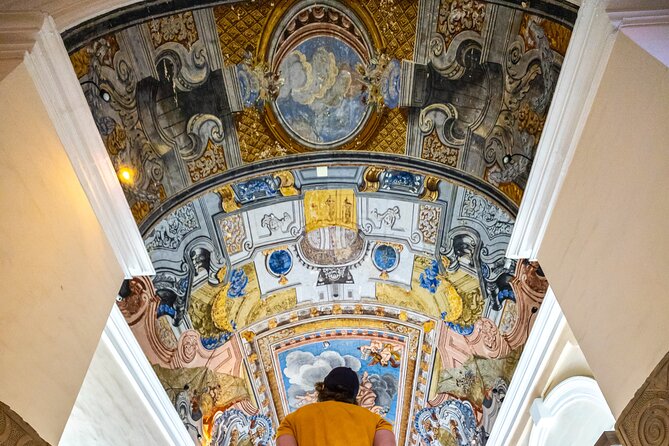
This pass includes unlimited use of the hop-on hop-off bus plus cruises. That sounds wonderfully simple, and it can be—if you handle one reality: buses are only as useful as the stops you use.
A few practical tips that will save frustration:
- When you board and hop off, note the exact stop location. Some people get tripped up when they try to board somewhere different than where they exited.
- If you’re using the Valletta waterfront area as your hub, plan extra time the first day just to orient yourself.
- Build buffer time. Even when the service is good, waiting for the next bus can eat into a tight sightseeing schedule.
Your pass is also near public transportation, and most people can participate. Still, you’ll be walking. Valletta and the surrounding areas are full of stairs, uneven stone, and steep bits—so wear shoes you trust.
Valletta by seawalls: Fort St. Elmo and the Order of St John core
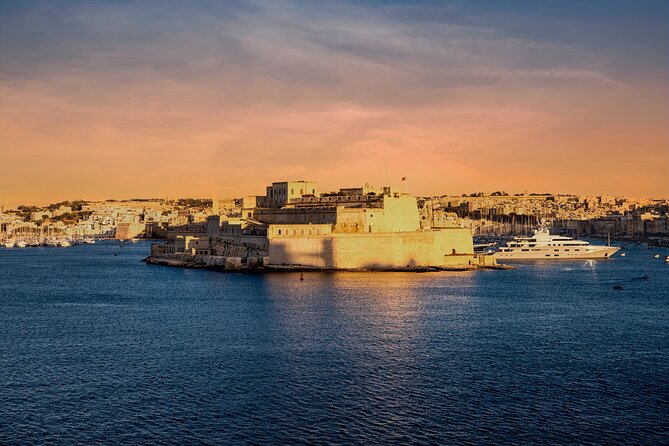
Start with Fort St. Elmo, the star fort guarding the entrances to Marsamxett Harbour and Grand Harbour. The setting alone is worth it: you’re right on the seaward edge of the Sciberras Peninsula, looking out across the water. The fort’s claim to fame is its role in the Great Siege of Malta (1565), and as you walk, the whole place reads like a military map you can explore at your own pace.
Next, head to MUŻA at Auberge d’Italie, Malta’s Malta National Community Art Museum. Expect Maltese and foreign artwork tied to major European styles. One thing to know: the museum history in the provided description references earlier locations and a move of the national fine arts collection around 2016–2018. So don’t assume the display you imagine from years ago is the one you’ll see now. Use your pass QR code for current opening details.
Then pivot to the political heart of Valletta with two classic spots:
- State Rooms (Presidential Palace): This is the showpiece of the palace at the center of Malta’s World Heritage city of Valletta. The building traces back to shortly after the 1565 siege, then evolved through later Grand Masters and later British-era use. One caution: this site can close at short notice by order of the President, so if it matters to you, don’t schedule it as your only option.
- Palace Armoury: If you like artifacts with presence, this one delivers. You’ll see armor associated with Grand Masters like Alof de Wignacourt and Jean de Valette, plus Ottoman armor and weapons and even artillery pieces. It’s a vivid way to understand the island’s strategic past beyond textbooks.
Why this cluster works: you’re walking through Valletta’s story from defense to power. It’s also a great way to reduce transit time on your first day, when you’re still learning your way around.
Birgu and the Grand Harbour: Fort St. Angelo plus Maritime Museum
Across the water from Valletta’s main drama, Birgu brings a different mood: more maritime, more working-harbor energy. Begin with Fort St. Angelo, originally the medieval Castrum Maris, then rebuilt by the Order of St John as a bastioned fort. The big story is again the Great Siege of Malta, when the Order used the fort as headquarters. Even if you’re not a military-history nut, the fort’s location makes it feel practical rather than abstract.
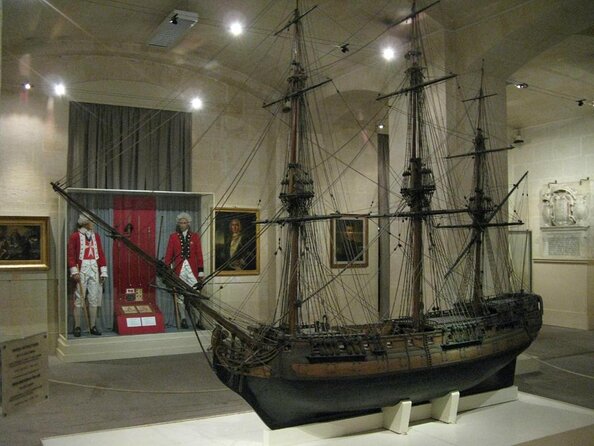
Right next door (in spirit, if not in minutes), shift to the Malta Maritime Museum in the former Royal Naval Bakery. You’re looking at a collection of over 20,000 artifacts, and the museum is set up to trace maritime history from prehistory to the present, with Malta placed in a Mediterranean and global context.
Possible drawback: Maritime museum time can expand if you love artifacts and stories. If your day feels tight, give yourself a firm cap—like 60 minutes—and then move on before you lose your whole afternoon.
Mdina day: Natural History Museum and Roman Domvs Romana
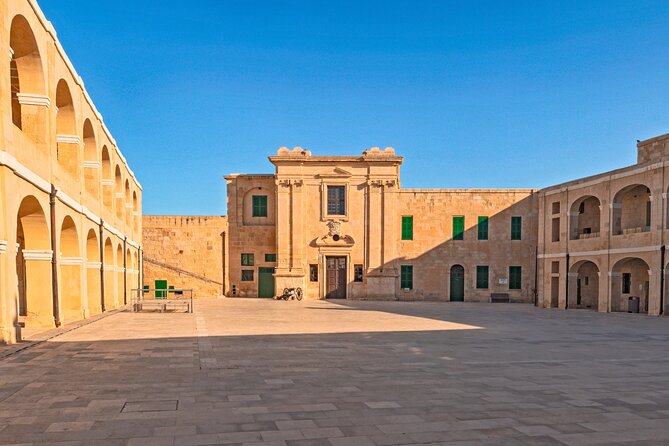
To balance all that fortification and temple time, fit in Mdina. First stop: the National Museum of Natural History at Palazzo Vilhena. It’s run by Heritage Malta and focused on Maltese ecosystems on land and underwater. Expect details on endemic plants and birds, like the Maltese Centaury and the Blue Rock Thrush, plus minerals, fossils, insects, reptiles, birds, mammals, fish, and geology and paleontology sections.
Then add Domvs Romana, a Roman aristocrat’s private life in mosaic form. While the house itself wasn’t fully recovered, the surviving mosaics and artefacts tell you how rich the daily experience could look under Roman rule.
This combo gives you a nice reset. You go from human history (forts, palaces, temples) to the island’s natural history and then to daily life under Rome. It keeps your brain from overheating.
Underground Malta: St. Paul’s Catacombs and Ghar Dalam
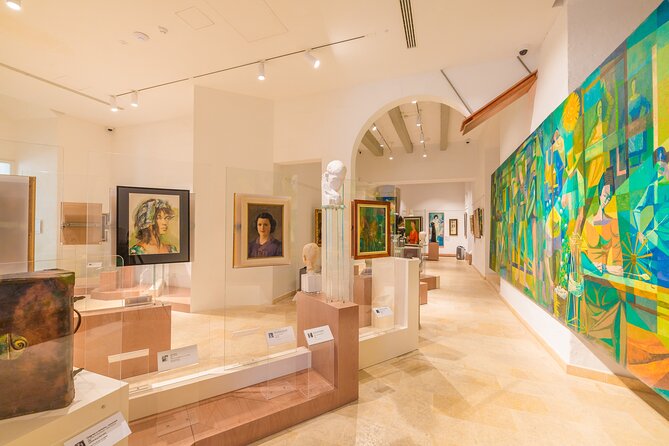
If you want your Malta days to feel varied, underground stops are your secret weapon.
St. Paul’s Catacombs are one of Malta’s most prominent early Christianity sites. You’ll explore a system of underground galleries and tombs dated from the 3rd to the 8th centuries CE. The complex includes over 30 hypogea across St. Paul’s and St. Agatha’s, with more than 20 open to the public. A neat historical detail from the provided information: the site was first fully investigated in 1894 by Dr. Antonio Annetto Caruana.
Then connect the theme of underground survival with Ghar Dalam near Birżebbuġa. This is a 144-metre phreatic tube cave with remains of animals that became extinct in Malta at the end of the Last Glacial Maximum. The cave even lends its name to the Għar Dalam phase in Maltese prehistory.
What to watch for: underground spaces can make you want to hurry, especially in warm weather. Bring a light layer and take your time. These are not just “rooms.” You’re looking at how Malta’s story continued underground when the surface changed.
Megaliths in the south: Ħaġar Qim, Mnajdra, and Tarxien
Now for the part that makes Malta feel impossibly old.
Start with Ħaġar Qim, a megalithic complex on the southern edge of the island. Builders used locally available globigerina limestone for the temple architecture. There’s something calming about megalith sites: they don’t care about your schedule. But you should care about timing, so you’re not rushing through carved detail.
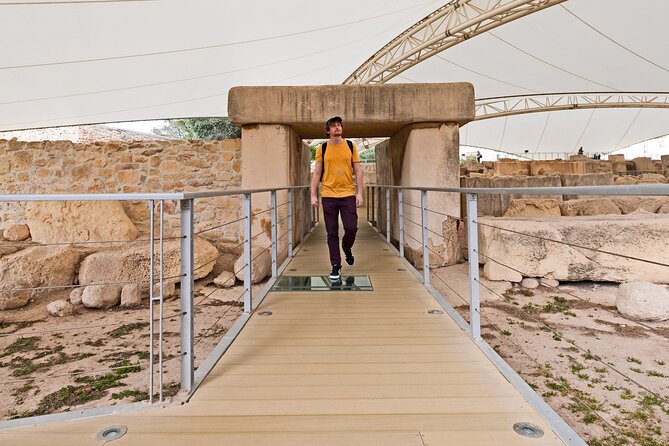
Next is Mnajdra, very close by—about 497 metres from Ħaġar Qim. Mnajdra was built around the 4th millennium BCE, and the protected context is visible in the form of a protective tent (work completed in 2009, per the provided info). Mnajdra, like the rest, is UNESCO-recognized as one of the world’s earliest religious sites.
Finally, add Hal Tarxien, the Tarxien Temples made of three attached temple structures. Here’s what you’ll like: the main entrance is a reconstruction dating from 1956, and many decorated slabs found on site were moved indoors for protection at the Museum of Archaeology in Valletta. It’s a good reminder that preservation decisions are part of the story too.
Tip for your day: if you’re combining these three, aim to visit one first, then let the others build your understanding. Malta’s temples look similar at first glance; they become easier to read once you’ve seen one site in person.
Older temples across the island: Ta’ Ħaġrat, Skorba, and Borġ in-Nadur
To round out the “ancient Malta” arc, spread out across different corners of the island.
- Ta’ Ħaġrat (Mġarr): UNESCO World Heritage with megalith temples among the world’s oldest religious sites. The provided description dates the larger temple to the Ġgantija phase (3600–3200 BCE) and the smaller to the Saflieni phase (3300–3000 BCE).
- Skorba Temples near Żebbiegħ: another megalithic UNESCO-linked site, excavated only in the early 1960s compared to others studied earlier. It’s valued for insights into Malta’s early Neolithic culture.
- Borġ in-Nadur near St George’s Bay by Birżebbuġa: a site combining a Tarxien phase megalithic temple with remains of a Bronze Age village, including what the provided info calls the earliest fortification in Malta. You’ll also see references to Bronze Age cart ruts and silos nearby.
These three stops are for people who enjoy piecing together time periods like a puzzle. If you’re more “see it, snap it, move on,” keep your expectations lighter and focus on one site in detail.
Cruising time: Valletta harbor, Three Cities, and the Comino–Gozo route with Wi-Fi
This pass isn’t only about land. You also get two cruise styles.
First, a harbor cruise of Valletta and the Three Cities. It’s included and comes with free Wi-Fi onboard. Even if you already have a full day, a short cruise can reset your legs and give you a different view of Malta’s fortifications from the water.
Second, there’s a coastal pass route to Comino and Gozo. Again, onboard free Wi-Fi is included, so you can coordinate your return and check where your next hop-on pickup lines up.
One honest note: cruises and day trips can grow long in the sun. Bring sunscreen and water, and pick your pace. If you want temples and catacombs too, avoid turning Comino/Gozo into an all-day marathon that pushes your underground timing.
So should you book the Heritage Pass in Malta?
Book it if you want a simple way to cover a lot of Malta without buying every entry ticket separately. It’s especially worth it when you’re excited by Malta’s extremes: massive fort walls, knightly armor, megalith temples, and underground catacombs—all on one pass.
Don’t book it (or at least be cautious) if you’ll only use a few sites. The value depends on your willingness to visit enough of what’s included. Also, keep your schedule flexible and verify opening times using the pass QR code, because some places can close or adjust at short notice.
If you’re the kind of traveler who likes structure but hates ticket lines, this pass fits your style.
FAQ
What is the price of the Malta Heritage Pass?
The listed price is $92.69 per person.
How long is the pass valid for?
The duration is listed as about 3 days. In the provided information, there’s also a clarification saying the pass can be available over a six-day period, so it’s smart to confirm the validity window on your ticket.
What does the pass include besides heritage site entry?
It includes unlimited use of the hop-on hop-off bus, a harbor cruise of Valletta and the Three Cities, and a coastal route to Comino and Gozo. Both cruises offer free Wi-Fi on board.
Do I need to buy separate tickets for each stop?
The included stops list admission as free, but you still need to check opening times for each place using the QR code linked to your pass.
What are the general opening hours?
The pass info lists opening hours as 8:00 AM to 6:00 PM, Monday through Sunday.
Are any of the included sites subject to short-notice closure?
Yes. The State Rooms (Presidential Palace) information notes it can occasionally close at short notice by order of the President.