REVIEW · TAKAYAMA
Departing from Takayama [Regular sightseeing bus] World Heritage Sites Shirakawago and Gokayama Ainokura
Book on Viator →Operated by Nohi Bus · Bookable on Viator
This day trip turns Takayama into a gateway to UNESCO gassho villages. You ride a comfortable coach to Gokayama Ainokura and Shirakawa-go, then spend time walking the old farm-village layout with a Nohi Bus guide.
I especially like the combo of a quieter first stop and a bigger, famous second stop. You get a guided briefing on how to spend your time, plus real-world tips for the Hida area that don’t sound like they were copied from a brochure.
I also love how the pacing builds in “own-time.” Ainokura gives you 50 minutes to slow down, and Shirakawa-go gives you a longer block to wander, shop, and line up for lunch on your schedule. The guide also helps you map out what to see, and in at least some cases the guide can be someone like Yamashia or Ikuichinami, who are called out in past experiences for clear, practical direction.
One drawback to consider: this is a shared bus day, so your time depends on traffic and crowds—especially at Shirakawa-go. If you’re the type who needs total freedom from group timing, you may find the schedule a bit strict.
In This Review
- Key highlights worth knowing
- Why this day trip works from Takayama
- Ainokura Gassho Community: Gokayama’s quieter start
- Shirakawa-go historic houses: the main event, with real crowd energy
- Minkaen (included): how to make the roofs make sense
- Tenshukakau Observatory (included): the poster view, timed right
- The guide role: more than facts, it’s time management
- Value and what you should count in your budget
- Timing tips that make or break your day
- Who should book this (and who might not)
- Should you book the Nohi Bus Ainokura and Shirakawa-go trip?
- FAQ
- FAQ
- Where do I meet for the tour?
- What time does the tour start?
- How long does the tour take?
- Which World Heritage villages are included?
- Is lunch included in the price?
- How much time do I get in Ainokura and Shirakawa-go?
- Are entrance tickets included for the stops?
- What if Shirakawago Gassho Zukuri Minkaen is closed?
- Can I join on the day of departure?
- What happens if the weather is bad?
Key highlights worth knowing
![Departing from Takayama [Regular sightseeing bus] World Heritage Sites Shirakawago and Gokayama Ainokura - Key highlights worth knowing](https://l.myfavoritehistorytour.com/wp-content/uploads/departing-from-takayama-regular-sightseeing-bus-world-heritage-sites-shirakawago-and-gokayama-ainokura-1.jpg)
- Two UNESCO villages in one day: Ainokura in Gokayama, then Shirakawa-go
- Ainokura first can feel calmer: you see the “mountain prayer houses” before the main crowd
- Shirakawa-go has built-in options: free streets time plus an included stop at Minkaen
- Tickets included where it counts: Gassho Zukuri Minkaen and Tenshukakau Observatory are covered
- Seasonal talk during the ride: expect info on Hida foods and dialects, not just dates and roofs
Why this day trip works from Takayama
![Departing from Takayama [Regular sightseeing bus] World Heritage Sites Shirakawago and Gokayama Ainokura - Why this day trip works from Takayama](https://l.myfavoritehistorytour.com/wp-content/uploads/departing-from-takayama-regular-sightseeing-bus-world-heritage-sites-shirakawago-and-gokayama-ainokura-2.jpg)
Takayama to gassho villages is one of those “worth it, but a pain alone” routes. The towns are in mountainous terrain, and getting there and back without a plan can eat your day. This tour solves the hardest part: reliable transportation on an air-conditioned vehicle with a guide to set you up for the visit.
The price—about $64.80 per person—isn’t just for a bus seat. You’re also paying for guided orientation, a structured sequence of stops, and included entry for two key experiences at Shirakawa-go. Lunch isn’t included, so you’ll still make that choice yourself, but the rest of the day is lined up so you don’t waste time figuring out what matters most.
This isn’t a private car deal. The tour is shared and runs on a medium or large bus, so you’ll be part of a group rhythm. In exchange, you get the comfort of not worrying about transfers, and you get the kind of route explanation that makes the villages easier to enjoy.
You can also read our reviews of more tours and experiences in Takayama.

Ainokura Gassho Community: Gokayama’s quieter start
![Departing from Takayama [Regular sightseeing bus] World Heritage Sites Shirakawago and Gokayama Ainokura - Ainokura Gassho Community: Gokayama’s quieter start](https://l.myfavoritehistorytour.com/wp-content/uploads/departing-from-takayama-regular-sightseeing-bus-world-heritage-sites-shirakawago-and-gokayama-ainokura.jpg)
Your first stop is Ainokura Gassho Community in Gokayama (Nanto City, Toyama). The tour focuses on the remaining gassho-zukuri houses—traditional farmhouses built with the steep triangular roof shape made for heavy snow. Admission for this stop is listed as free, so you’re paying for access and guidance rather than entry fees.
You get about 50 minutes here. That may sound short, but it’s a smart length. It’s enough time to walk the village streets, absorb the mountain setting, and understand the layout without feeling rushed into the next location. A lot of people prefer this stop as the “storybook warm-up,” since Ainokura tends to feel less crowded than Shirakawa-go.
Practical tip: wear shoes with grip. Even without snow, village walkways can be uneven. Also, give yourself a few minutes early in the stop to orient—when you walk in right away, you often miss the easiest angles for photos and the most logical loop.
Shirakawa-go historic houses: the main event, with real crowd energy
![Departing from Takayama [Regular sightseeing bus] World Heritage Sites Shirakawago and Gokayama Ainokura - Shirakawa-go historic houses: the main event, with real crowd energy](https://l.myfavoritehistorytour.com/wp-content/uploads/departing-from-takayama-regular-sightseeing-bus-world-heritage-sites-shirakawago-and-gokayama-ainokura-4.jpg)
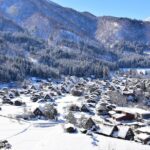
Next up is the Historic Villages of Shirakawa-go Gassho Style Houses. This is where you’ll recognize the classic image of the gassho rooflines—114 thatched gassho-zukuri houses are noted as still retaining the old-Japan scenery. The tour lists admission as free for this stop too.
You’ll have about 2 hours at Shirakawa-go in this portion. That time matters because this village does not move like a museum. It’s more like an outdoor neighborhood with lanes, shops, small viewpoints, and long-photo temptations around every corner. The guide’s job here is to help you decide what to do first so you don’t lose your whole stop in wandering.
You also eat lunch here. The tour summary says to have lunch at Gassho Village in Shirakawago, but lunch itself is not included. That means you can choose what fits your appetite and your budget—comfort food, quick bites, or something more sit-down—without feeling locked into one restaurant.
Real-world tradeoff: Shirakawa-go can be busy, and queue lines can steal time. If you want both a meal and a viewpoint, plan your lunch with momentum in mind. Pick a spot, check whether it’s going to turn into a long wait, and commit. If you stall too long, you may have to skim the rest of the sightseeing elements.
Minkaen (included): how to make the roofs make sense
![Departing from Takayama [Regular sightseeing bus] World Heritage Sites Shirakawago and Gokayama Ainokura - Minkaen (included): how to make the roofs make sense](https://l.myfavoritehistorytour.com/wp-content/uploads/departing-from-takayama-regular-sightseeing-bus-world-heritage-sites-shirakawago-and-gokayama-ainokura-5.jpg)
After the historic village area, the tour takes you to Shirakawa-go Gassho Zukuri Minkaen. This is an open-air style park where, during your walk, you can enter the museum area. The entrance fee is included in the tour.
Time on the clock is about 30 minutes. That’s short, so you’ll get the most out of it if you treat it like a quick “how it worked” stop, not a slow read. The goal is to connect what you’re seeing on the village streets to how these houses were built and used—especially how the roof structure functioned in heavy snow regions.
There’s also a winter contingency. The park is listed as closed on Thursdays from December to March. If it’s closed on the day you go, the tour notes you’ll receive an original mascot instead. It’s a tiny detail, but it’s the kind of thing that prevents a mood-killer—now you know it’s planned, not a mistake.
Tenshukakau Observatory (included): the poster view, timed right
Next comes Tenshukakau Observatory. This spot is on a hill in the northwest of Shirakawa-go and is described as the view often shown on posters. You’ll get about 20 minutes here, which is enough to take photos, look over the “Ogimachi” village area, and decide if you want to head back down for more street-level exploring.
Because the stop is short, it’s best not to treat it as a long sit-and-stare. Think of it as a reset button. You’ll likely return to the village below with a better mental map—what roads you came in on, where the denser house clusters sit, and how the village layout flows.
Photo tip: if it’s snowy or foggy, the scene can still be magical, but lighting may be tricky. In that case, take a few quick shots from different angles rather than trying to nail one perfect exposure.
The guide role: more than facts, it’s time management
This tour is guided by a bus guide, and the guide’s job isn’t just telling you what you’re seeing. The tour description promises the guide shares information on the world heritage sites and how to spend your time there, plus seasonal information about foods and dialects in the Hida region that won’t be covered in most quick guidebooks.
That matters because gassho villages can feel like a wall of rooftops if you don’t have a framework. When the guide gives you the “where to look first” plan, you walk farther with less confusion. Several experiences also mention the guide giving maps and explaining layouts so you can explore with confidence instead of wandering without a purpose.
Also, plan to hear updates during the bus ride. The tour runs as a shared trip, so the schedule is built around seat time and stop timing. A guide who keeps everyone oriented helps prevent that classic “we all arrived, but nobody knows what’s next” problem.
One more note: the tour is run by Nohi Bus, so you’ll be dealing with a professional local operator. If your guide speaks both English and Japanese, you’ll get a smoother flow, especially when they’re pointing out where lunch options are likely to be and which directions make sense first.
Value and what you should count in your budget
Let’s break down the $64.80 price in a useful way. The tour includes air-conditioned transportation, guided interpretation, and free admissions at Ainokura and the historic villages section of Shirakawa-go. It also includes entry into Shirakawago Gassho Zukuri Minkaen and Tenshukakau Observatory.
What’s not included is lunch. That’s actually a fair setup. It lets you choose what works for you—quick and casual, a proper sit-down meal, or something local you’ve been craving. It also means the tour price doesn’t force you into one food stop you might not like.
If you’re budget-conscious, it’s smart to do a quick value check. One past customer suggested you can buy a Nohi Bus option directly at the bus center (they cited 8000 yen) instead of booking through a reseller. I can’t promise the exact pricing or availability will match your dates, but it’s worth checking if saving money matters more than picking a pre-set date/time through an app.
Timing tips that make or break your day
![Departing from Takayama [Regular sightseeing bus] World Heritage Sites Shirakawago and Gokayama Ainokura - Timing tips that make or break your day](https://l.myfavoritehistorytour.com/wp-content/uploads/departing-from-takayama-regular-sightseeing-bus-world-heritage-sites-shirakawago-and-gokayama-ainokura-6.jpg)
Your day is roughly 7 hours 20 minutes. That’s enough to do both UNESCO sites without feeling frantic, but it’s still a day trip, not an overnight.
Here’s how I’d protect your experience:
- Plan lunch like a mission. With Shirakawa-go’s popularity, queues can eat time. Decide what matters most: a meal, a museum-style stop, and the observatory.
- Arrive mentally ready to walk. Even if you’re on a bus all morning, you’ll be on your feet at each village stop. Comfortable footwear beats fashion.
- Use the guide briefing as your route plan. The best payoff of this tour is when you take the map and use it immediately at each village.
- If it’s snowy, slow down and look up. Snow changes the village feel fast, and roofs become more dramatic. It also can make paths slick, so take it easy.
Season helps a lot. Some past experiences highlight snowy conditions that made the villages feel like a storybook, while others mention enjoying gassho sights in autumn. The tour’s emphasis on seasonal talk during the ride can add context to what you’re seeing—food traditions and regional speech patterns—so the day feels more anchored in local life.
Who should book this (and who might not)
This tour is a great fit if you:
- Want two UNESCO destinations in one day without wrestling with transportation
- Like having a guide to get oriented fast, then prefer time to explore independently
- Care about practical context: how long to spend where, what to prioritize, and how to move through the village streets
It may be less ideal if you:
- Want total freedom from schedules and group pacing
- Don’t like crowd energy, especially at Shirakawa-go
- Hate queue lines and dislike making tradeoffs between lunch and viewpoints
Should you book the Nohi Bus Ainokura and Shirakawa-go trip?
Yes, if you want an efficient, low-stress way to hit both UNESCO gassho villages from Takayama. The biggest strength is that the day is structured so you don’t waste time figuring things out, and key paid components—Minkaen and the observatory—are already covered.
Book it with eyes open about timing. Shirakawa-go is the one that can feel tight if queues swell, so plan your lunch choices early in your stop. If you’re okay making a few sensible tradeoffs, you’ll come away with a clear sense of how both villages compare—quiet Ainokura first, then the more famous Shirakawa-go.
FAQ
FAQ
Where do I meet for the tour?
You’ll meet at 6-chōme-125 Hanasatomachi, Takayama, Gifu 506-0026, Japan. The activity also ends back at the same meeting point.
What time does the tour start?
The tour starts at 8:30 am.
How long does the tour take?
It runs for about 7 hours 20 minutes.
Which World Heritage villages are included?
You visit Ainokura Gassho Community in Gokayama, and the historic gassho-style houses in Shirakawa-go. You also stop at Shirakawago Gassho Zukuri Minkaen and Tenshukakau Observatory.
Is lunch included in the price?
No. The tour says to eat your lunch at Gassho Village in Shirakawago, but lunch itself is not included.
How much time do I get in Ainokura and Shirakawa-go?
Ainokura has about 50 minutes. The Historic Villages of Shirakawa-go Gassho Style Houses stop has about 2 hours.
Are entrance tickets included for the stops?
Ainokura and the Historic Villages of Shirakawa-go are listed as free admission. Shirakawago Gassho Zukuri Minkaen has an admission fee included, and Tenshukakau Observatory also has an admission fee included.
What if Shirakawago Gassho Zukuri Minkaen is closed?
The park is listed as closed on Thursdays from December to March. If it’s closed, the tour says they will provide an original mascot instead.
Can I join on the day of departure?
The tour description says you can join on the day of departure if there’s a seat, though they may refuse if the seats are full.
What happens if the weather is bad?
The experience requires good weather. If it’s canceled due to poor weather, you’ll be offered a different date or a full refund.